
Can Bearded Dragons Eat Zucchini? The Safe Feeding Guide
This post contains affiliate links. As an Amazon Associate, we earn from qualifying purchases.
Yes, bearded dragons can eat zucchini. Serve it raw, peeled, and deseeded, cut into pieces no bigger than the space between their eyes. It is a supplemental food, not a staple, due to its poor calcium-to-phosphorus ratio and high water content. Offer it 1-2 times per week, mixed with calcium-rich greens like collard or mustard greens.
Most owners get into trouble by treating zucchini like a daily vegetable. They see their dragon gobble it up, it’s soft, easy to eat, and full of water, and assume it’s a healthy mainstay. That mistake leads directly to two problems: nutritional imbalance and digestive upset.
This guide covers the exact preparation steps, the science behind the weekly limit, and how to balance zucchini with the right greens to keep your dragon healthy.
Key Takeaways
- Zucchini has a calcium-to-phosphorus ratio of roughly 1:2, meaning phosphorus blocks calcium absorption. You must pair it with high-calcium greens.
- The compound cucurbitacin E in zucchini can cause mouth irritation or vomiting if fed in large, frequent quantities.
- Always peel and deseed. The skin is waxy and indigestible; the seeds offer no benefit and can be a choking hazard.
- Juveniles get half a teaspoon, adults get a tablespoon max, mixed into their primary salad. Frequency stays at 1-2 times weekly for both.
- Never replace staple greens like collard greens or mustard greens with zucchini. It’s a hydrating supplement, not a nutritional foundation.
Why Zucchini is a Supplemental Food, Not a Staple
Head design changes the entire process. Look at the business end of your trimmer.
Zucchini provides hydration, modest amounts of vitamin C and potassium, and has an alkaline pH around 9.0. This alkalinity can help neutralize stomach acidity from other foods, but its critical nutritional flaw is an inverse calcium-to-phosphorus ratio that hinders essential mineral absorption.
That ratio is the deal-breaker. Reptiles need more calcium than phosphorus in their system for bone health and metabolic function. Phosphorus binds to calcium in the gut, making it unavailable. When a vegetable has twice as much phosphorus as calcium, every bite actively works against your supplementation efforts.
The high water content, about 95%, is a double-edged sword. It’s great for hydration, especially for dragons that are poor drinkers. But that same water dilutes the nutrient density of the meal and, in excess, leads directly to loose stools or diarrhea.
I learned this the hard way with a rescue dragon named Spikes. His previous owner fed him zucchini and cucumber daily because he loved them. After three months of that diet, he presented with weak back legs and a soft jaw. His calcium was critically low. We had to do a full dietary overhaul, injectable calcium supplements, and months of UVB therapy to correct it. Now zucchini is a Tuesday treat.
TL;DR: Zucchini’s poor calcium ratio and high water content mean it can’t be a daily food. It’s a weekly hydrating add-in.
The Nutritional Breakdown: What’s Actually in Zucchini?
You need to know what you’re feeding beyond “it’s a squash.” The nutrient profile explains the rules.
Zucchini is mostly water and carbohydrates. Its notable vitamins include vitamin C, which supports immune function, and vitamin B6. The mineral potassium is present, which aids nerve function. These are benefits. The problem, again, is the mineral competition.
| Nutrient | Role for Bearded Dragons | The Catch with Zucchini |
|---|---|---|
| Water | Essential hydration | Comprises ~95% of weight, dilutes other nutrients, causes diarrhea if overfed. |
| Vitamin C | Antioxidant, supports healing | Modest amount; easily obtained from better staples like bell peppers. |
| Potassium | Nerve and muscle function | Present, but the high phosphorus content overshadows this benefit. |
| Calcium | Bone growth, muscle function | Very low concentration (~15 mg per 100g). |
| Phosphorus | Energy metabolism, bone formation | Higher than calcium (~30 mg per 100g). Binds to calcium, blocking absorption. |
Compare it to a true staple green. Collard greens have a calcium-to-phosphorus ratio of 14.5:1. Mustard greens are 4.5:1. Zucchini’s 1:2 ratio is upside down. This is why it can’t anchor a salad.
Feeding it without this context is like filling a gas tank with a fuel that has an engine-damaging additive. It runs, but it wears the system down. For a comprehensive feeding guide that balances all these ratios, look at the core principles.
TL;DR: Zucchini offers hydration and some vitamins, but its upside-down calcium-to-phosphorus ratio makes it nutritionally weak compared to staple greens.
How to Prepare Zucchini for Your Bearded Dragon
Skipping any of these steps introduces risk. The preparation is non-negotiable.
Before you start: Always use raw zucchini. Cooking breaks down the cell structure, leaching nutrients and creating a mushy texture that offers no chewing resistance and can cause impaction. Wash your hands and tools to prevent cross-contamination from other foods.
Follow this sequence. Deviate and you’ll have a waxy, seedy mess that your dragon might reject or struggle to digest.
- Select and Wash. Choose a firm, dark green zucchini without soft spots. Run it under cold water and scrub the surface with a vegetable brush. This removes dirt and potential pesticide residue. Organic is best, but washing is mandatory either way.
- Peel Completely. Use a standard vegetable peeler. Remove every bit of the dark green skin. The skin is tough, waxy, and contains higher concentrations of cucurbitacin E, the compound that causes gastrointestinal irritation.
- Deseed. Slice the zucchini in half lengthwise. The central core is soft and filled with immature seeds. Use a small spoon to scrape this pulpy seed section out and discard it. The seeds offer no nutritional value and are a choking hazard.
- Dice to Size. Cut the peeled, deseeded flesh into small cubes. The universal rule: no piece should be larger than the space between your dragon’s eyes. For a juvenile, this means pieces the size of a pea. For an adult, a small bean.
- Mix, Don’t Heap. Combine the diced zucchini with a larger volume of your dragon’s primary greens. A good ratio is one part zucchini to four or five parts staple greens like turnip greens or collard greens. This ensures they get their calcium first.
- Serve Immediately. Place the mix in a clean feeding dish. Remove any uneaten salad after 2-3 hours to prevent bacterial growth.
Common mistake: Feeding zucchini with the skin on, the waxy coating and cucurbitacin E concentrate can cause mouth irritation within a few hours, leading to head shaking and food refusal.
The goal is a safe, manageable piece that integrates into a balanced meal. It should never be the star of the bowl.
How Often Can Bearded Dragons Eat Zucchini?
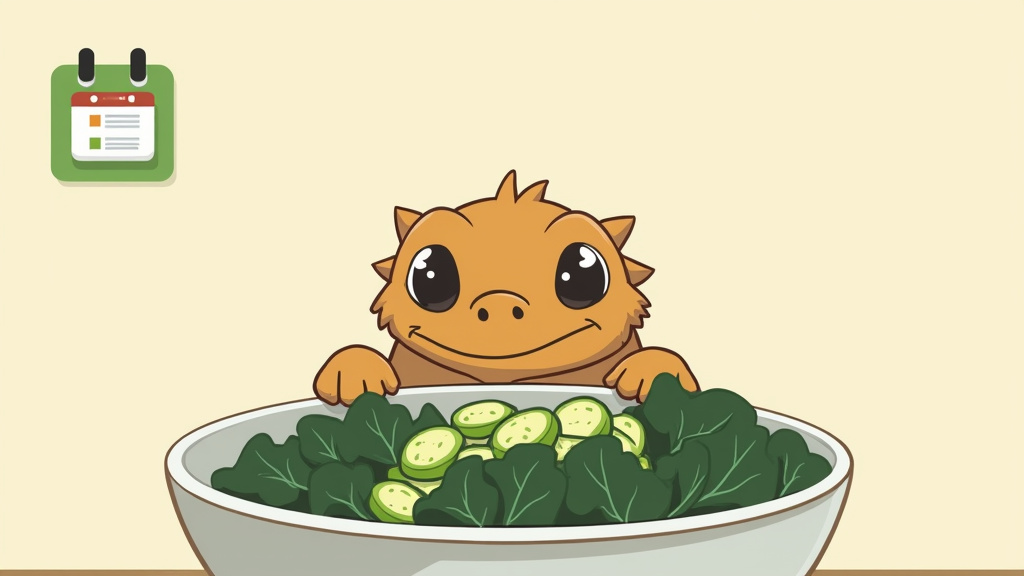
Frequency is where most plans fall apart. Enthusiasm overrides the schedule.
The consensus from veterinary sources like VCA Animal Hospitals is clear: zucchini belongs in the “smaller percentage of the diet” category. For a healthy adult dragon, that translates to 1-2 times per week. Never on consecutive days.
This frequency limits the cumulative impact of the bad calcium ratio and the intake of cucurbitacin E. It also prevents your dragon from developing a preference for its soft texture over more fibrous, beneficial greens.
Juveniles vs. Adults: A Portion Guide
Age changes the quantity, not the rules.
| Dragon Age | Maximum Zucchini Portion | Frequency | Critical Note |
|---|---|---|---|
| Juvenile (0-12 months) | 1/2 teaspoon, finely diced | 1-2 times per week | Their primary focus is insect protein for growth. Zucchini is a tiny salad accent. |
| Adult (12+ months) | 1 tablespoon, diced | 1-2 times per week | Should never comprise more than 10-15% of the total vegetable offering in a meal. |
A juvenile’s portion is smaller because their total salad size is smaller. Their growing bodies are even more sensitive to calcium deprivation. An adult’ tablespoon might look small in a big bowl, that’s the point. It’s a supplement.
If you’re building a safe vegetables list, rotate zucchini with other weekly veggies like green beans or brussel sprouts. Never let it become the default.
TL;DR: Feed zucchini 1-2 times weekly. Juveniles get a half-teaspoon, adults get a tablespoon, always mixed into a base of calcium-rich greens.
What to Mix with Zucchini: The Calcium Balancing Act
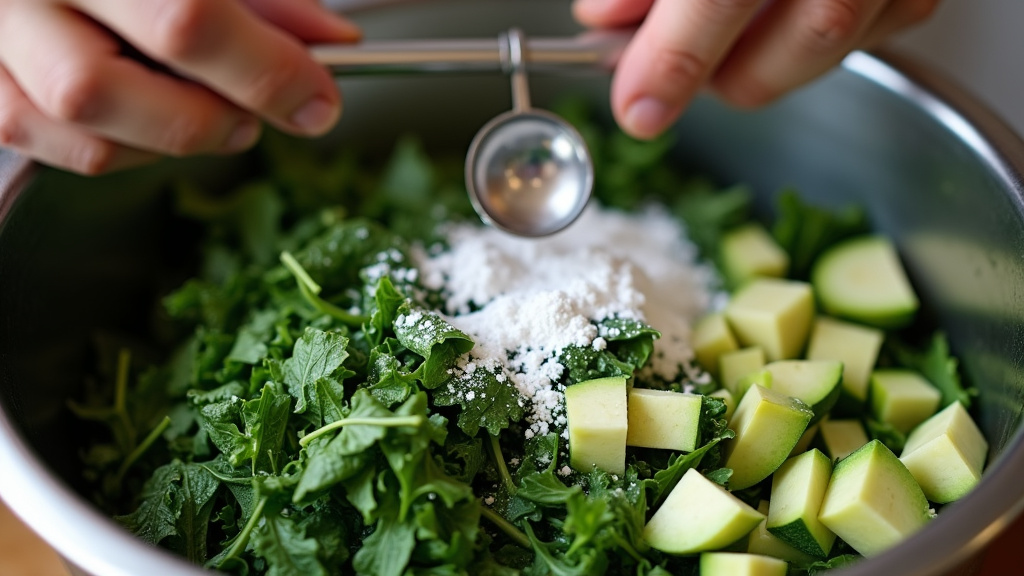
Zucchini alone is a nutritional deficit. You must pair it with a winner.
The fix for the bad calcium ratio is simple: overwhelm it with calcium. This means zucchini should only ever be served alongside, and vastly outnumbered by, high-calcium staple greens.
The Best Pairings:
- Collard Greens: The gold standard. High calcium, low oxalates, excellent fiber.
- Mustard Greens: Another top-tier staple with a great nutrient profile.
- Turnip Greens: A fantastic option, detailed in our turnip greens guidelines.
- Dandelion Greens: Rich in calcium and vitamins, if you can source them pesticide-free.
How to Build the Meal:
Take a handful of chopped collard greens. That’s your base. Sprinkle in your allotted portion of diced zucchini. Toss lightly. This ensures every bite of zucchini is taken with a bite of calcium-rich green, mitigating the phosphorus block.
Dust this combined salad with a phosphorus-free calcium powder supplement. The powder will adhere to the slightly damp zucchini pieces as well as the greens, delivering an extra boost right where it’s needed.
I prefer a 4:1 greens-to-zucchini ratio. Not because it’s faster, but because the dragon fills up on nutrition first. The zucchini becomes a hydrating treat within a nutritionally complete meal.
Avoid mixing zucchini with other low-calcium, high-phosphorus foods in the same meal. Don’t pair it with corn or spinach. That stacks the mineral imbalance.
Risks and What to Watch For
Knowing the risks lets you spot trouble early. Watch for two specific reactions.
The primary risks are digestive upset and nutritional deficiency. Both have clear signs.
Digestive Issues from Overfeeding:
The high water content is the culprit. If you see loose, watery, or unusually frequent droppings within 12-24 hours of a zucchini meal, you’ve fed too much. Scale back the portion next time. Chronic overfeeding can lead to dehydration from fluid loss, the opposite of your hydration goal.
Cucurbitacin E Reaction:
This natural compound defends the plant against pests. In large amounts, it irritates a reptile’s digestive tract. Symptoms to watch for:
* Head shaking or gaping after eating.
* Vomiting or regurgitation (rare, but serious).
* Lethargy or lack of interest in food at the next meal.
If you see any of these, remove zucchini from the diet immediately and consult your reptile vet. The reaction typically subsides once the irritant is gone. This is why peeling, where the compound concentrates, is mandatory.
Long-Term Nutritional Deficiency:
This is the silent risk. A dragon fed zucchini too often, without proper calcium balancing, will develop metabolic bone disease (MBD). Early signs include trembling, weakness in the limbs, and a soft, rubbery jaw. This is preventable. Stick to the frequency and pairing rules.
Always cross-reference any new food with a toxic foods list to be certain. When in doubt, leave it out.
Frequently Asked Questions
Can bearded dragons eat zucchini skin?
No. The skin is tough, waxy, difficult to digest, and contains higher levels of the irritant cucurbitacin E. Always peel it completely before serving.
Can baby bearded dragons eat zucchini?
Yes, but in tiny amounts. A few pea-sized pieces, once a week, mixed thoroughly into their finely chopped greens. Their primary diet must be insect protein for proper growth.
Is cooked zucchini safe for bearded dragons?
No. Cooking makes zucchini mushy, strips vitamin content, and removes the beneficial chewing texture. It also increases the risk of impaction. Only serve it raw and fresh.
What about yellow squash or other squash varieties?
Summer squashes like yellow crookneck have similar nutritional profiles to zucchini, high water, poor calcium ratio. The same preparation and frequency rules apply. Always refer to a detailed vegetable guide for specifics.
My bearded dragon loves zucchini and refuses other greens now. What do I do?
This is a food strike. Stop offering zucchini entirely for two to three weeks. Continue offering their staple greens daily, perhaps topped with a small amount of a safe fruit like blueberry as a lure. They will eat when hungry. Reintroduce zucchini later as a rare treat within a mixed salad.
Can I feed zucchini daily for hydration?
Absolutely not. Daily feeding guarantees an imbalanced diet and leads to diarrhea and calcium deficiency. For hydration, ensure fresh water is available, mist their greens, and offer watery veggies like zucchini on its designated weekly schedule.
The Bottom Line
Zucchini is a safe, hydrating occasional food. Its role is fixed: a weekly supplement, never a staple.
Peel it, deseed it, dice it small. Mix a tablespoon or less into a mountain of collard or mustard greens. Do this once or twice a week and not on back-to-back days. That’s the entire protocol.
The vegetable adds variety and moisture to the diet. It is not a nutritional powerhouse. Your dragon’s health depends on the calcium-rich greens you pair it with. Keep zucchini in its lane, a supporting actor in the salad bowl, and your bearded dragon gets the benefit without the risk.