
Can Bearded Dragons Eat Eggs? Cooked, Safe, and How Often
This post contains affiliate links. As an Amazon Associate, we earn from qualifying purchases.
Yes, bearded dragons can eat cooked eggs as an occasional protein treat. Offer plain, thoroughly cooked chicken, quail, or duck eggs chopped into bite-sized pieces. Feed juveniles 1-2 times per week and adults only once a week or every other week. Never feed raw eggs or use oils or seasonings.
Most owners get this wrong by focusing on the “can they” and missing the “how they should.” The mistake isn’t giving an egg, it’s giving the wrong egg, prepared wrong, too often. That leads to a sluggish, overweight dragon with a real risk of liver problems within a few months.
This guide breaks down the safe types, the exact cooking methods that work, and the age-based feeding schedule that matches their shifting biology. You’ll also learn why the raw egg white is toxic and how a simple eggshell can become a calcium supplement.
Key Takeaways
- Cook eggs thoroughly, raw egg white contains avidin, which blocks biotin absorption and can cause a deficiency.
- Match portion size to age: a juvenile can handle a small scrambled quail egg twice a week; an adult needs a half-teaspoon of chicken egg once a week at most.
- Chop pieces smaller than the space between their eyes. An uncut chunk is a direct choking hazard.
- Eggs are a treat, not a staple. Overuse leads to obesity and fatty liver disease (hepatic lipidosis).
- Always cool cooked eggs to room temperature. A hot piece can burn the mouth lining.
Why Eggs Are a Conditional “Yes”
Their omnivorous diet includes animal protein, especially for growing dragons. Eggs deliver a dense hit of protein, vitamin A, B12, and selenium. A malnourished or underweight juvenile can benefit from that boost.
A chicken egg provides about 6 grams of protein and 5 grams of fat, alongside vitamins A, D, E, and B12. The yolk is a source of choline, which supports liver function, but the high fat content is why moderation is non-negotiable.
The conditional part is their life stage. According to the VCA Animal Hospitals feeding guide, bearded dragons transition from a carnivorous-heavy diet as juveniles to a primarily herbivorous one as adults. An adult dragon’s system isn’t built to process high-protein, high-fat meals regularly. Feed an adult egg too often, and you’re forcing its liver to work overtime metabolizing fat. That’s the direct path to hepatic lipidosis.
TL;DR: Eggs are a useful protein supplement for growing or underweight dragons but a risky, fatty treat for adults that should be used sparingly.
The Raw Egg Danger Most Guides Gloss Over
You should never feed a raw egg. The reason is specific and mechanical.
Raw egg whites contain a protein called avidin. This protein binds tightly to biotin (a B vitamin) in the gut, preventing its absorption. A biotin deficiency leads to metabolic problems, skin issues, and lethargy. Cooking denatures the avidin protein, neutralizing its binding ability. The second danger is Salmonella. Reptiles can be asymptomatic carriers, but introducing a large bacterial load from a contaminated raw egg can trigger severe digestive upset, think diarrhea, lethargy, and a vet visit.
I learned this the hard way years ago with a rescued juvenile. The previous owner had been occasionally feeding raw egg yolk “for shine.” The dragon was lethargic and had patchy skin. The vet’s first question was about unusual protein sources. We switched to a proper insect diet with cooked egg only as a weekly supplement, and the improvement within a month was stark. The skin cleared, and the energy returned.
Common mistake: Assuming a little raw yolk is harmless, the avidin in even trace amounts of raw white blocks biotin uptake, and deficiencies show up as skin lesions and low energy within 3-4 weeks.
How to Prepare Eggs for Bearded Dragons
The rule is plain and simple. Any added fat, dairy, or seasoning is harmful and indigestible.
Step 1: Choose Your Cooking Method
- Hard Boiling: Easiest and safest. Boil an egg for 10-12 minutes, cool in cold water, peel, and chop. The solid texture is easy for them to grab.
- Scrambling: Scramble in a non-stick pan with only a drop of water to prevent sticking. No oil, no butter. Cook until fully set and dry.
- Poaching: Poach in simmering water. This avoids any need for cooking fat.
Microwaving is fine if you use a covered dish with a little water and stir halfway to avoid rubbery spots. The goal is fully coagulated, dry egg.
Step 2: Cool and Portion
Let the egg sit until it’s room temperature. A hot piece will burn their mouth. Portion size is critical. For an adult bearded dragon, a serving of chicken egg should be no larger than half a teaspoon. A juvenile can have a slightly larger piece, but it should never exceed the volume of their head.
Step 3: Chop to Safe Size
Use a sharp knife and chop the egg into pieces smaller than the space between their eyes. This is the universal choking-hazard gauge for reptile feeding. Do not skip this. A dragon will often try to swallow a large piece whole.
Step 4: Serve and Clean Up
Place the pieces in a shallow dish. Remove any uneaten egg within 20 minutes. Egg spoils quickly in the warm tank environment and attracts bacteria and pests.
Chicken, Quail, or Duck: Which Egg is Best?
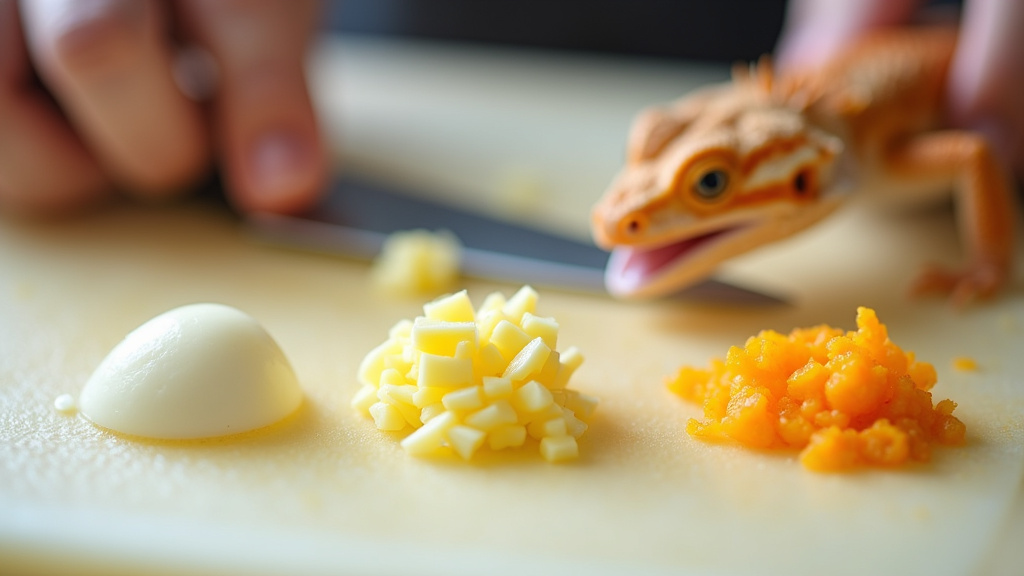
All three are safe when cooked, but their size and nutrient profile make them suited for different dragons.
| Egg Type | Best For | Serving Size Guide | Key Consideration |
|---|---|---|---|
| Chicken | Adult dragons, occasional treat | 1/2 tsp chopped for adult | Higher fat content; limit strictly. |
| Quail | Juveniles, picky eaters | 1 whole cooked egg, chopped | Smaller size allows whole feeding; lower fat than chicken. |
| Duck | Underweight dragons needing boost | 1/3 tsp chopped for adult | Highest fat and protein; use rarely for weight gain only. |
Quail eggs are a common favorite. Their small size means you can offer a whole one to a juvenile without overdoing it. The shell is also thinner and can be baked, ground, and used as a calcium supplement, more on that later.
Duck eggs are the powerhouse. They contain more of everything: more protein, more fat, more vitamins. This makes them excellent for a rescue dragon that needs to put on weight fast. For a healthy adult, a duck egg is overkill and should be avoided.
Chicken eggs are the standard. They’re easy to find and portion. Just remember the half-teaspoon rule for adults.
I prefer quail eggs for juveniles and underweight adults. The size is perfectly portioned, and my dragons seem to find the small pieces more enticing. I buy them from a local farmer’s market and hard-boil a batch every few weeks.
Feeding Frequency by Age: The Weekly Rule
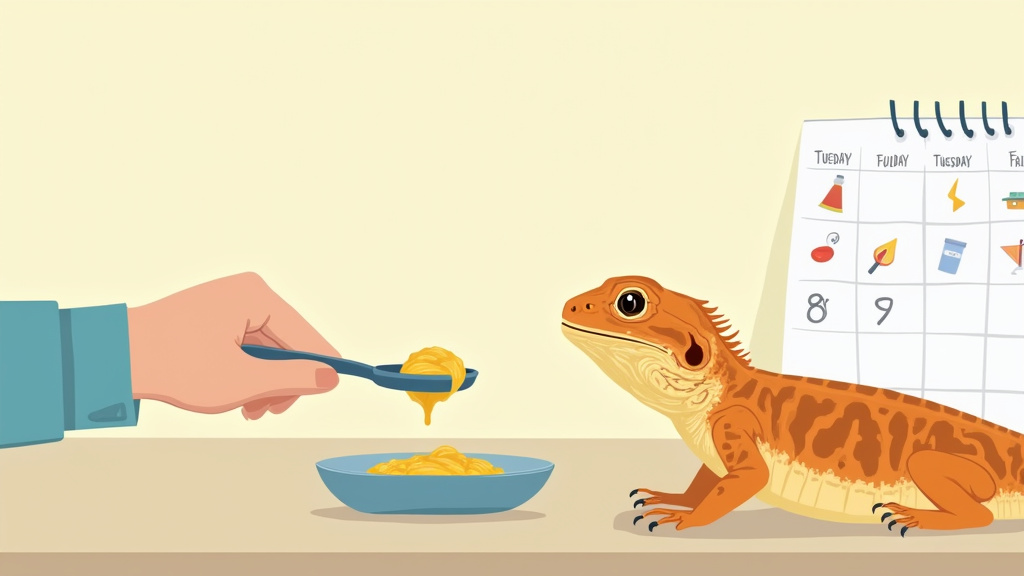
This is where most feeding charts fail. They give a range like “once a week” without tying it to the dragon’s physiological shift from carnivore to herbivore.
- Babies & Juveniles (0-12 months): High protein needs. Can be offered cooked egg 1-2 times per week. Quail eggs can be given up to 3 times weekly if they are the primary protein source that day, displacing some insects.
- Adults (18+ months): Primarily herbivorous. Offer cooked egg once a week at most, or once every two weeks. This is a treat, not a dietary component.
Think of it as fuel for growth versus maintenance. A juvenile uses the protein and fat to build bone and muscle. An adult stores that excess fat in the liver. An obese dragon or one with a history of kidney issues should not get eggs at all.
Here is a simple weekly meal planner for a juvenile vs. an adult:
Juvenile Dragon Sample Week:
- Monday: Collard greens, 10 small crickets
- Tuesday: Mustard greens, 5 dubia roaches, 1/2 scrambled quail egg
- Wednesday: Turnip greens, 10 small crickets
- Thursday: Dandelion greens, 5 dubia roaches
- Friday: Collard greens, 10 small crickets, 1/2 scrambled quail egg
- Weekend: Leafy greens mix, hydration
Adult Dragon Sample Week:
- Monday: Large salad of collard, mustard, and turnip greens
- Tuesday: Same greens, 3-4 dubia roaches
- Wednesday: Leafy greens mix with grated squash
- Thursday: Greens, 3-4 dubia roaches
- Friday: Greens, 1/2 tsp cooked chicken egg
- Weekend: Leafy greens mix, hydration
This schedule integrates eggs without making them a focus. It also shows how an adult’s baby bearded dragon diet of frequent protein shifts to a salad-based plan with insects and eggs as accents.
Nutritional Breakdown and the Calcium Question
Eggs are not a significant source of calcium, which is the cornerstone of reptile health. They contain some, but the ratio of phosphorus to calcium is poor. This is why eggs cannot replace dedicated calcium supplementation.
The shell, however, is almost pure calcium carbonate. You can make a supplement from it.
1. Rinse the eggshell thoroughly.
2. Bake the shells at 200°F (93°C) for 10 minutes to sterilize.
3. Grind them into a fine powder using a coffee grinder or mortar and pestle.
4. Dust this powder onto salads or insects once a week.
This is a homemade alternative to store-bought calcium powder. It works. Just ensure the powder is fine, gritty pieces can irritate the gut.
Common mistake: Feeding eggshell chunks, sharp edges can cut the digestive tract lining. Always grind to a dust.
While eggs provide protein, balance them with calcium-rich nutritious greens like kale and dandelion greens and flowers. A diet of only protein and fat, even from good sources like eggs and insects, will cause metabolic bone disease.
What About Eggshells and Other Egg Products?
We covered ground eggshell as a calcium source. What about other forms?
- Eggshell Membrane: The thin film inside the shell is safe but nutritionally irrelevant. It will pass through.
- Commercial Dried Egg Products: Avoid. These often contain preservatives, added salt, or other ingredients not suited for reptiles.
- Egg Yolk Alone: You can separate and cook just the yolk. It’s higher in fat and lower in the avidin risk, but the fat content is even more concentrated. Use it even more sparingly.
Stick with the whole, plain, cooked egg. It’s the simplest and safest vector.
Signs Your Dragon Shouldn’t Eat Eggs
Observe your dragon after the first few times you offer egg. Some simply don’t like the texture and will ignore it. Don’t force it.
Stop feeding eggs and consult a vet if you notice:
– Lethargy within 12 hours of eating.
– Swelling or bloating in the abdomen.
– Diarrhea or unusually smelly stool.
– Loss of appetite for their regular food.
These can signal an intolerance, an impaction from a piece that was too large, or the beginning of a more systemic issue like liver stress. An obese dragon, identified by fat pads on the head and a thick tail base, should not get any egg treats until it reaches a healthy weight.
Remember, variety is security. Eggs are one tool. A robust diet includes a rotation of safe vegetables for bearded dragons like bell peppers and squash, along with safe fruits for bearded dragons as occasional sweets. For other specific veggies, check our guides on feeding zucchini and bell peppers for dragons.
Frequently Asked Questions
Can bearded dragons eat scrambled eggs?
Yes, if scrambled plain without oil, butter, milk, or seasoning. Use a non-stick pan or a drop of water. Cool completely and chop finely before serving.
How many eggs can a bearded dragon eat?
Not a whole one. An adult bearded dragon should eat no more than half a teaspoon of cooked chicken egg at a single feeding. A juvenile can eat one small quail egg, chopped.
Can bearded dragons eat eggshells?
Not in chunks. Cleaned, baked, and finely ground eggshell powder can be used as a weekly calcium supplement. Sharp shell pieces are an internal injury risk.
Are raw eggs okay for bearded dragons?
No. Raw egg white contains avidin, which causes a biotin deficiency. Raw eggs also carry a high risk of Salmonella bacteria, which can cause serious illness.
Can baby bearded dragons eat eggs?
Yes, in moderation. Babies and juveniles have higher protein needs and can have cooked, chopped egg 1-2 times per week as part of a varied diet rich in insects and greens.
Do eggs cause constipation in bearded dragons?
They can if fed in large quantities or without adequate hydration. Eggs are binding. Always ensure fresh water is available and balance egg treats with hydrating vegetables like summer squash like zucchini.
The Bottom Line
Eggs are a safe, nutrient-dense occasional treat for your bearded dragon when prepared correctly. Cook them plain, cool them down, and chop them small. Match the frequency to your dragon’s age: a couple of times a week for a growing juvenile, once a week or less for an adult.
The real risk isn’t the egg itself, it’s the portion size and the feeding schedule. Overdo it, and the high fat content will stress the liver. Pair this protein treat with a foundation of calcium-rich greens and appropriate insects. When in doubt, especially for dragons with health issues, your reptile veterinarian’s advice overrules any online guide.