
Can Bearded Dragons Eat Tomatoes? Vet-Approved Safety Guide
This post contains affiliate links. As an Amazon Associate, we earn from qualifying purchases.
Yes, a bearded dragon can eat the ripe red flesh of a tomato in very small amounts as an occasional treat. The green parts of the plant, stems, leaves, vines, and unripe green tomatoes, contain solanine, a toxic glycoalkaloid, and are poisonous. Feed only a teaspoon of finely chopped, seedless red flesh once every 10 to 14 days.
Most owners get this wrong by focusing on the fruit and forgetting the plant. They see a ripe tomato as a healthy vegetable snack, not realizing the real danger sits an inch away on the vine. That mistake can send a dragon to the vet.
This guide breaks down the exact risks, the safe preparation steps most articles skip, and what happens when you ignore the timing rule. You’ll also get a clear list of safer fruit alternatives that won’t upset your dragon’s stomach.
Key Takeaways
- Only the ripe red flesh of a tomato is safe. Every green part, stem, leaf, vine, unripe skin, contains solanine and is toxic.
- Feed a maximum of one teaspoon of chopped tomato once every 10-14 days. More frequent feeding leads to digestive acidity and calcium absorption issues.
- Always remove the seeds and jelly. They offer no nutritional value and are a choking hazard.
- Cherry and grape tomatoes have higher sugar content. Use them even more sparingly than regular tomatoes.
- Processed tomato products like sauce, juice, or canned tomatoes are never safe due to added salt, sugar, and preservatives.
Why Tomatoes Are a “Rare Treat,” Not a Staple
Bearded dragons are opportunistic omnivores. In the wild, their diet shifts from mostly insects as juveniles to about 80% plant matter as adults. This plant portion should be built on nutrient-dense, low-oxalate leafy greens like collard, mustard, and dandelion greens. Fruits, including tomatoes, are the occasional garnish.
The fruit of the tomato plant (Solanum lycopersicum) is botanically a berry. The solanine content, concentrated in all green tissues, decreases to negligible levels in the ripe red flesh, which is why only that specific part is considered non-toxic for reptile consumption.
Tomatoes fail as a staple for two mechanical reasons. First, their acidity can irritate the mucosal lining of a bearded dragon’s simple stomach. Second, and more critically, their mineral balance is wrong. They contain phosphorus, which binds to calcium in the gut. Even the small amount of calcium in a tomato becomes mostly unavailable.
This phosphorus interference matters because bearded dragons are prone to Metabolic Bone Disease (MBD), a crippling condition caused by chronic calcium deficiency. Every meal that skews the calcium-to-phosphorus ratio away from the ideal 2:1 is a step toward that risk. Tomatoes have a Ca:P ratio of roughly 1:5. That’s the opposite of helpful.
TL;DR: Tomatoes are acidic and have a terrible calcium-to-phosphorus ratio. Feeding them too often directly undermines skeletal health.
The Tomato’s Nutritional Trade-Off
Looking at a nutrition label doesn’t tell the whole story for a bearded dragon. You have to look at what the nutrients do, and what they block.
| Nutrient in Tomato | Potential Benefit | The Reality for Bearded Dragons |
|---|---|---|
| Vitamin A | Supports vision, skin, and immune function. | Benefit is real, but easily obtained from safer staples like squash and carrots without the acidic downside. |
| Vitamin C | Antioxidant, supports healing. | Dragons synthesize their own Vitamin C; dietary intake is non-essential. |
| Water Content | ~95% water, provides hydration. | Hydration is good, but the water comes with problematic acidity and poor mineral balance. |
| Calcium | Essential for bone health. | The amount is low and its absorption is inhibited by the high phosphorus content and presence of oxalates. |
| Fiber | Aids digestive motility. | Again, available from better sources like staple greens without the gut-irritating acid. |
The trade-off is clear. Any minor benefit is canceled by significant drawbacks. This is why authoritative sources like VCA Animal Hospitals list tomatoes as an acceptable fruit but emphasize feeding them “sparingly” due to their low mineral content.
Compare this to a papaya or a blueberry. Those fruits have better calcium ratios, less acid, and more antioxidant punch. They’re still treats, but they don’t actively work against your dragon’s diet.
Common mistake: Assuming the vitamin content makes tomatoes a healthy regular addition, the acidity and poor calcium balance mean the vitamins come at too high a cost for frequent feeding.
The Real Danger: Solanine Poisoning from Green Parts
This is the non-negotiable rule. The tomato plant is a member of the nightshade family (Solanaceae). It produces solanine and tomatine, glycoalkaloid toxins, as a natural defense against insects and animals. These compounds are concentrated in all green tissues.
- Stems and leaves: Highest concentration.
- Vines: High concentration.
- Unripe (green) tomatoes: Significant concentration that dissipates only upon full ripening to red.
- Ripe red flesh: Negligible, safe levels.
Solanine inhibits an enzyme called acetylcholinesterase, disrupting nerve signals. In mammals, it causes gastrointestinal and neurological distress. In reptiles, the exact toxic dose isn’t as well documented, but the symptoms follow a similar pattern.
If your bearded dragon ingests a green tomato part, watch for these signs within 2-12 hours:
1. Lethargy and weakness.
2. Loss of appetite.
3. Gastrointestinal upset: regurgitation, diarrhea, or bloating.
4. In severe cases, tremors or difficulty coordinating movement.
The response is time-sensitive. If you see any of these symptoms and suspect solanine ingestion, contact an exotic veterinarian immediately. Do not wait for it to “pass.” Treatment may involve activated charcoal and supportive care.
I learned this the hard way with a bundle of organic tomato vines I thought were fine. My dragon, Calcifer, nibbled a leaf before I could stop him. He was sluggish and refused food for two days. The vet bill was a stark reminder that “organic” doesn’t mean “non-toxic.” Now I clear the entire kitchen counter before bringing any plant material near his tank.
How to Safely Prepare a Tomato for Your Bearded Dragon
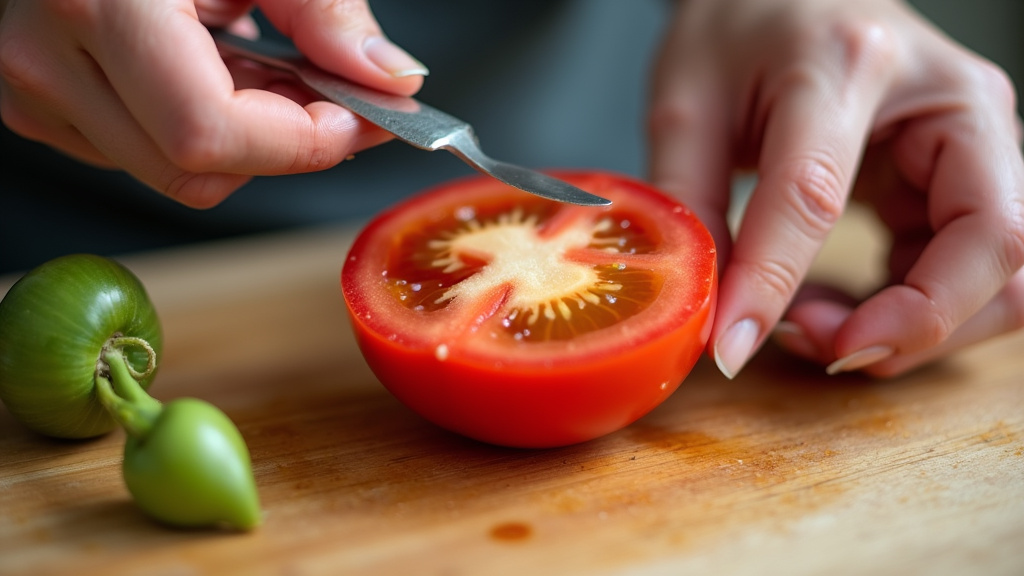
If you’ve weighed the risks and decided to offer this rare treat, precision in preparation is everything. Sloppy prep introduces risk.
Wash the tomato under cool running water, scrubbing the skin with a vegetable brush for at least 30 seconds. Commercial tomatoes often have pesticide or wax residues that water alone won’t remove. Dry it with a paper towel.
Step 1: Select the right tomato. Use a common beefsteak or salad tomato. Cherry and grape tomatoes are acceptable but require stricter portion control due to higher sugar. They must be fully red, with no green tinge at the stem scar.
Step 2: Remove all hazardous parts. Place the tomato on a cutting board. Cut out the core and stem area generously, ensuring no green flesh remains. Slice the tomato open and use a small spoon to scrape out all the seed pulp and gelatinous interior. The seeds are a choking risk and the jelly offers nothing nutritionally.
Step 3: Chop to the correct size. Take the remaining solid red flesh and dice it into pieces no larger than a pea. Bearded dragons don’t chew; they swallow food whole. A piece that’s too big can cause impaction.
Step 4: Measure the portion. Do not guess. One level teaspoon of chopped tomato is the absolute maximum portion for an adult dragon. For a juvenile, skip it entirely, their diet must focus on insect protein and calcium-rich greens for proper growth.
Step 5: Serve and observe. Mix the tiny amount of tomato into a large salad of their staple greens (collard, mustard, or turnip greens). This encourages them to eat the good stuff. Remove any uneaten salad, including the tomato pieces, within 15-20 minutes to prevent spoilage.
TL;DR: Scrub, core, de-seed, dice pea-sized, and limit to one teaspoon every other week mixed into greens.
Tomato Varieties: A Quick Comparison Guide
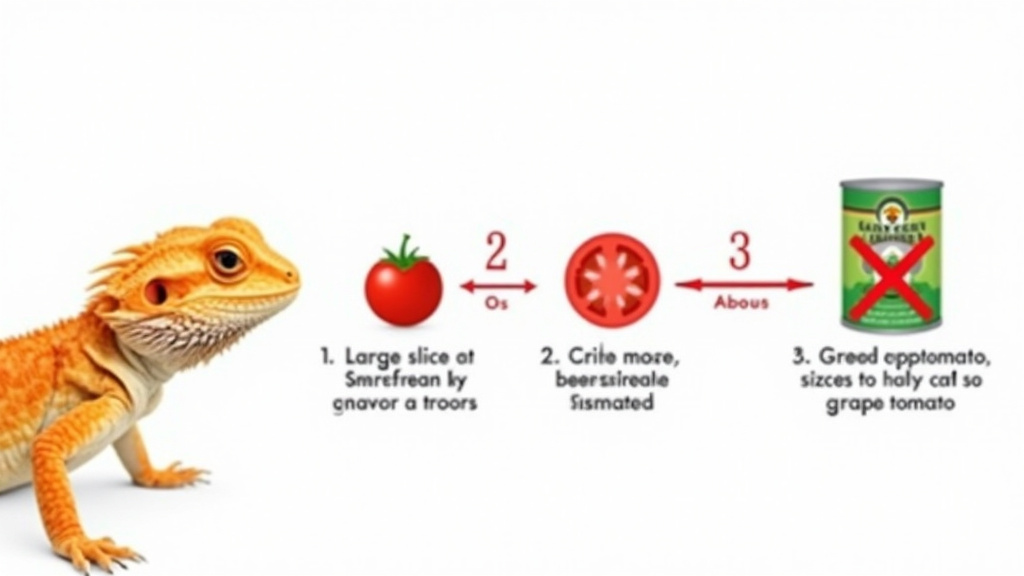
Not all tomatoes are created equal. The size and sugar content change the feeding math.
| Tomato Type | Key Consideration | Safe Serving Equivalent |
|---|---|---|
| Beefsteak / Salad Tomato | Standard. Use the flesh, avoid skin if it’s tough. | 1 thin slice, chopped (about 1 tsp). |
| Cherry Tomato | Higher sugar-to-flesh ratio. Sweeter, more appealing to dragons. | Half of one cherry tomato, finely chopped. |
| Grape Tomato | Highest sugar concentration. Highest risk for digestive upset. | One quarter of one grape tomato, or avoid entirely. |
| Green / Unripe Tomato | Contains solanine. | Never. Toxic. |
| Canned / Processed Tomato | Contains added salt, citric acid, preservatives. | Never. Toxic. |
Cherry tomatoes are a common pick because they’re small, but that’s the trap. Their sweetness makes dragons go for them, bypassing the healthier greens in their bowl. This can encourage picky eating. If you use one, chop it finely and disperse it well.
Grape tomatoes have the highest sugar density. I don’t use them. The potential for diarrhea and dehydration isn’t worth the minuscule amount of flesh you’d get from a safe portion.
What About Tomato Leaves, Stems, or Sauce?
The rules are absolute here. There is no safe amount.
- Leaves & Stems: Pure solanine. Never allow them in the tank, even as decoration.
- Tomato Sauce/Ketchup/Juice: These are human food products. They contain onions, garlic, salt, sugar, and spices like oregano, all of which are toxic or harmful to bearded dragons. The cooking process also concentrates the natural acids.
- Sun-dried Tomatoes: These are packed with salt and often preserved with sulfites. They are a severe dehydration and toxicity risk.
Your dragon’s digestive system is not built for processed foods. Stick to raw, freshly prepared, single-ingredient items. The safe fruits for bearded dragons like papaya or berries are always a better choice than rolling the dice with processed tomato products.
Safer Fruit Alternatives to Tomatoes
If you want to give a fruit treat, choose an option that doesn’t fight your dragon’s biology. These fruits have better nutrient profiles and less acidity. They should still be limited to 10% or less of the plant portion of the diet.
Here are superior occasional treats:
– Papaya: Excellent source of Vitamin A and digestive enzymes. Chop finely.
– Blueberries & Raspberries: Low in sugar, high in antioxidants. Mash slightly.
– Mango: Rich in Vitamins A and C. Use sparingly due to higher sugar.
– Watermelon: Mostly water, but low in sugar and acid. A hydrating summer tidbit.
Each of these should be prepared with the same care: washed, peeled if necessary, pitted, and chopped small. For specific guides on these safer options, see our articles on feeding apples to bearded dragons and blueberries for bearded dragons. The principles of moderation and preparation are consistent.
A fruit “salad” for your dragon should be 95% staple greens, 5% treat fruit. The fruit is the flavoring, not the food.
Frequently Asked Questions
Can bearded dragons eat tomato seeds?
No. You should always remove the seeds. While not toxic like the green parts, they are a choking hazard and offer no nutritional value. The gelatinous pulp around the seeds can also cause messy stools.
My bearded dragon ate a piece of tomato leaf. What should I do?
Remove any remaining plant material from the enclosure immediately. Monitor your dragon closely for the next 12-24 hours for signs of lethargy, loss of appetite, or regurgitation. If you observe any symptoms, contact your exotic veterinarian promptly. Provide fresh water and stick to their known safe foods.
How often can I feed my bearded dragon tomatoes?
The consensus among reptile veterinarians and nutrition guides is no more than once every 10 to 14 days. This low frequency minimizes the cumulative impact of the fruit’s acidity and poor calcium-to-phosphorus ratio. For most owners, once a month is an even safer, easier schedule to remember.
Are cherry tomatoes safer than regular tomatoes?
Not safer, just different. They are safe in the sense that the ripe red flesh is non-toxic. However, they have a higher sugar concentration by volume, which increases the risk of digestive upset and weight gain. If you feed cherry tomatoes, use half the volume you would of regular tomato.
Can baby bearded dragons eat tomatoes?
It is not recommended. Juveniles (under 12 months) have extremely high calcium demands for rapid bone growth. Their diet should be focused on appropriately sized, gut-loaded insects and calcium-rich leafy greens. Introducing a fruit with a bad calcium ratio like tomato is counterproductive during this critical development phase.
Before You Go
Tomatoes sit in a rare category: safe in theory, risky in practice. The margin for error is small, a bit of green skin or a weekly feeding can cause problems that aren’t immediately obvious. The ripe red flesh is the only part that’s ever safe, and even then, it’s a once-in-a-while curiosity, not a food group.
Stick to the rule of one teaspoon, once a fortnight, meticulously prepared. Your dragon won’t miss it if you skip it altogether. There are dozens of other safe fruits and nutritious greens that support their health without the hidden trade-offs. When in doubt, the leaf is always greener on the other side of the nightshade family.