
Bearded Dragons and Carrots: The Definitive Feeding Guide
This post contains affiliate links. As an Amazon Associate, we earn from qualifying purchases.
Yes, bearded dragons can eat carrots, but only as an occasional treat, not a staple food. The safe method involves grating a small amount of raw carrot and mixing it with their regular calcium-rich greens once or twice a week. The primary risks are oxalic acid binding calcium and potential digestive upset from overfeeding, not Vitamin A toxicity from the carrot’s beta-carotene.
Most owners get this wrong because they focus on the wrong danger. They worry about Vitamin A overdose from the orange color, but that’s not the real problem. The real issue is oxalates and phosphorus.
This guide walks through the exact nutritional math, shows you how to prepare carrots without choking your dragon, and lists the safe foods you should pair them with to balance their diet.
Key Takeaways
- Feed raw, grated carrots only 1–2 times per week, never daily. A single baby carrot’s worth is enough for one serving.
- The calcium-to-phosphorus ratio in carrots is nearly 1:1, which is safe, but the oxalic acid content can still bind calcium if carrots dominate the diet.
- Vitamin A toxicity from carrots alone is a myth; dragons convert only the beta-carotene they need. The risk comes from over-supplementing with pre-formed Vitamin A.
- Always grate carrots into rice-sized pieces. Whole or large chunks are a choking hazard and can cause gut impaction.
- Pair a pinch of shredded carrot with high-calcium staple greens like collard greens, mustard greens, or turnip greens to offset the oxalate load.
Can Bearded Dragons Eat Carrots? The Short Answer
Carrots are safe in strict moderation. Think of them as a dietary garnish, not a main ingredient.
The confusion stems from two separate compounds: beta-carotene and Vitamin A. Carrots are packed with beta-carotene, the orange plant pigment. A bearded dragon’s liver converts this beta-carotene into active Vitamin A only as the body needs it. Any excess beta-carotene is excreted. This means you cannot cause Vitamin A toxicity by feeding too many carrots. The actual danger is twofold.
First, carrots contain oxalic acid. This compound binds with calcium in the gut, making that calcium unavailable for absorption. Over time, a diet high in oxalates can contribute to metabolic bone disease (MBD). Second, while the calcium-to-phosphorus ratio in carrots is decent (about 1:1.6), it’s not ideal. You need to pair carrots with foods that have a much better ratio to keep your dragon’s calcium metabolism in the green.
A 100-gram serving of raw carrot contains roughly 0.5 grams of oxalic acid. For comparison, spinach, a known high-oxalate food to avoid, contains over 0.97 grams per 100g. Carrots sit in the middle of the oxalate scale, which is why they are a treat, not a daily green.
TL;DR: Carrots are a safe weekly treat because of their beta-carotene, but their oxalate content demands you pair them with high-calcium greens.
The Carrot Nutrition Breakdown (And Why Beta-Carotene Isn’t the Enemy)
Understanding what’s actually in a carrot stops the fear-based feeding. The macronutrient profile is less important than the micronutrient interplay.
A standard carrot is about 88% water. It’s low in protein and fat, which aligns with an adult bearded dragon’s plant-heavy diet. The key numbers are in the vitamins and anti-nutrients. Per 100 grams, a carrot offers about 835 micrograms of Vitamin A activity (from beta-carotene), 33 mg of calcium, and 35 mg of phosphorus. That 1:1.06 Ca:P ratio is workable. The problem child is the 0.5 grams of oxalic acid.
The beta-carotene conversion process is what makes carrots uniquely safe in one regard. Mammals can overdose on pre-formed Vitamin A (retinol) found in liver and supplements. Reptiles, including bearded dragons, regulate the conversion of beta-carotene to retinol very efficiently. They only make what they need. This is a critical distinction often missed in generic pet advice.
I learned this the hard way. I once had a dragon, Rex, who turned his nose up at his usual greens. In a panic to get him eating, I offered grated carrot daily for a week. He loved it. He didn’t get Vitamin A toxicity. He did, however, start showing the first signs of calcium deficiency, a slight tremor in his front legs. The vet confirmed his calcium levels were low. The carrots weren’t poisoning him with Vitamin A; they were blocking the calcium from his other foods.
Common mistake: Assuming orange vegetables cause Vitamin A overdose, the real risk is oxalates binding calcium, which shows as muscle tremors or soft jaw bones within a few weeks of overfeeding.
How to Prepare Carrots for Your Bearded Dragon
Preparation is non-negotiable. A whole baby carrot is a choking hazard. A cooked carrot mushes into a paste that can cause digestive slowdown.
You need a fine grater. The kind you’d use for Parmesan cheese or citrus zest works perfectly. The goal is shreds no longer than your dragon’s eye width, about the size of a grain of rice. This size is small enough to swallow safely but still provides fiber.
Wash and scrub the carrot under cold water first. Even organic carrots can have dirt. Do not peel it. The skin holds nutrients and a bit of fiber. After grating, you’ll have a small pile. A serving is one generous pinch mixed thoroughly into a larger salad.
| Preparation Method | Why It Works | Risk If Skipped |
|---|---|---|
| Raw, finely grated | Preserves nutrients, provides fiber, mimics natural forage texture. | Choking or gut impaction from large pieces. |
| Mixed with staple greens | Dilutes oxalates, ensures calcium intake from greens continues. | Oxalate load concentrates, increasing calcium-binding risk. |
| Served fresh, removed after 20 min | Prevents bacterial growth and nutrient degradation. | Spoiled food causes diarrhea or loss of appetite. |
Never boil or steam carrots for your dragon. Cooking breaks down the cell walls, releasing more simple sugars and water. This can lead to watery stools and throws off the careful moisture balance in their hindgut. Stick to raw.
TL;DR: Grate raw, unpeeled carrots into rice-sized shreds and mix a pinch into a salad of calcium-rich greens. Discard leftovers quickly.
The 3-Step Carrot Feeding Routine
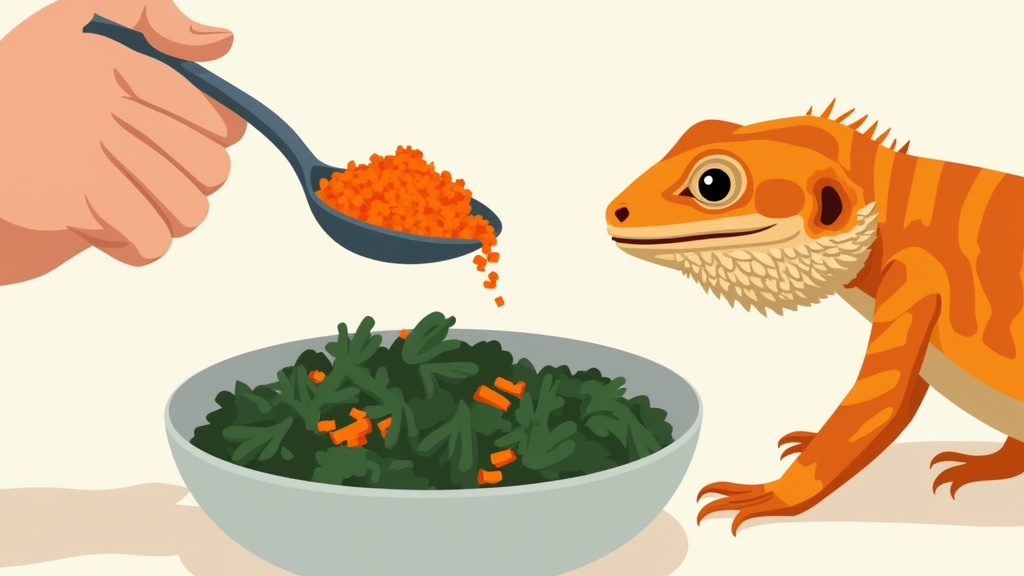
Getting the frequency and portion size right prevents nutrient lockout. This isn’t a guessing game.
Step 1: Measure the portion. For an adult dragon, a serving is about one tablespoon of finely grated carrot. That’s roughly the amount from one-third of a standard carrot. For a juvenile over six months, halve that. Juveniles need more insect protein, so vegetables are a smaller part of their diet. Skipping measurement leads to accidentally overfeeding every time you offer it.
Step 2: Mix it aggressively. Don’t just toss the carrot shreds on top of the greens. Fold them in thoroughly. The goal is to ensure your dragon can’t selectively eat only the carrot. They will try. A thorough mix forces them to ingest the beneficial dandelion greens and collard greens along with the tasty orange treat.
Step 3: Time the offering. Serve the carrot-enriched salad in the morning, after your dragon has basked for at least an hour. Their metabolism is active, and they’ll digest it best. Remove any uneaten salad, especially the wet carrot shreds, within 20 minutes. Carrot shreds wilt and grow bacteria fast in a warm tank.
What happens if you get lazy with step three? The leftover carrot starts to ferment. Your dragon might nibble it later and end up with a sour, upset stomach. You’ll see this as lethargy and a lack of interest in food the next day.
What to Feed With Carrots (The Calcium Balancing Act)
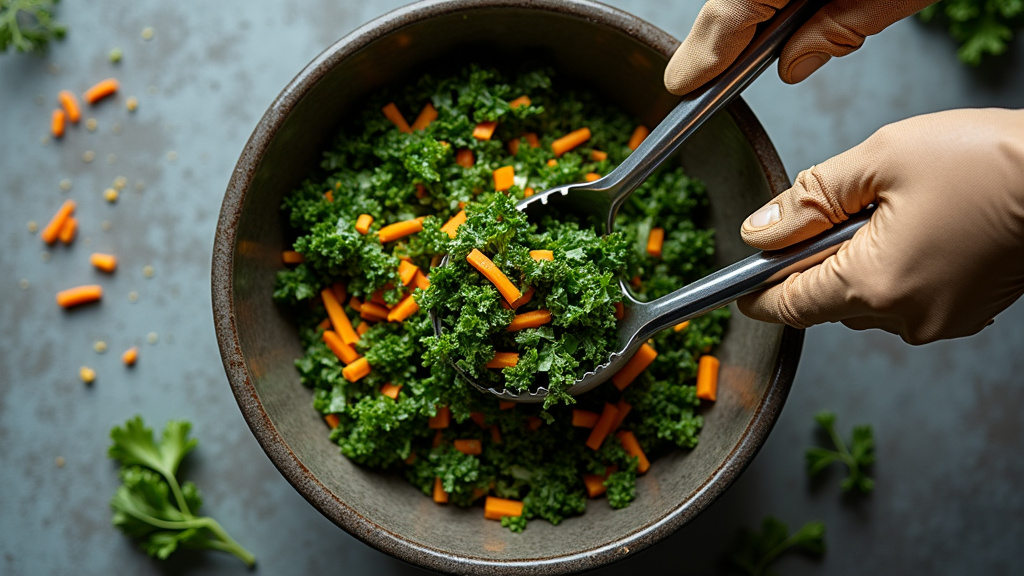
Carrots need a chaperone. That chaperone is a high-calcium, low-oxalate green.
The ideal pairing has a calcium-to-phosphorus ratio of 2:1 or better and minimal oxalates. This counters the calcium-binding effect of the carrot’s oxalic acid. Your best options are collard greens, mustard greens, and turnip greens. These are true staple greens you can feed daily.
Here is the shortlist of what to mix with that pinch of carrot:
- Collard greens (Ca:P 14.5:1) – The gold standard. Chop them finely.
- Mustard greens (Ca:P 2.4:1) – A bit peppery, some dragons love it.
- Endive (Ca:P 1.9:1) – Good for hydration and variety.
- Butternut squash (shredded, Ca:P 2:1) – Another orange vegetable, but with less oxalate.
Avoid pairing carrots with other moderate-oxalate foods like kale or beet greens in the same meal. You’re stacking the deck against calcium absorption. This is where understanding a full bearded dragon vegetable diet is critical. Variety is key, but not all variety is helpful at once.
I prefer mixing carrots with collard greens over mustard greens. Not because of nutrition, they’re both excellent, but because the tougher collard green holds the grated carrot better. The shreds stick to the damp collard leaves, making it harder for my dragon to pick out just the carrot.
Carrot Tops, Baby Carrots, and Other Carrot Questions
The greens attached to your carrot bunch are not trash. They are food.
Carrot tops are safe and nutritious. They are leafy greens with a different nutrient profile than the root, higher in vitamin K and potassium. Chop them finely and treat them like any other occasional green. They have a slightly bitter, parsley-like taste that some dragons enjoy.
What about those bagged, peeled “baby carrots”? Skip them. They are not actually young carrots. They are larger carrots mechanically whittled down into small, uniform pieces. This process removes the nutrient-rich outer layer, and they are often washed in a chlorine solution to extend shelf life. You’re feeding a less nutritious, chemically rinsed product. Stick to whole, organic carrots when you can.
All common carrot colors, orange, purple, yellow, white, are safe. The different colors come from various antioxidants (like anthocyanins in purple carrots), but the core nutritional values and oxalate levels are similar. The variety is more for our interest than a dietary necessity for the dragon.
| Carrot Form | Safe to Feed? | Preparation Notes |
|---|---|---|
| Raw, whole carrot | No | Choking hazard. Always grate. |
| Cooked carrot | Not recommended | Becomes mushy, high in simple sugars, can cause diarrhea. |
| Carrot tops (greens) | Yes | Chop finely, feed as an occasional leafy green. |
| Bagged “baby carrots” | Avoid | Less nutritious, often chlorine-washed. |
| Canned carrot | No | High in sodium and preservatives. |
TL;DR: Feed the tops, avoid processed baby carrots, and don’t worry about carrot color. Just grate the root.
Signs You’re Feeding Too Many Carrots
Moderation is simple in theory, easy to mess up in practice. Watch for these signals.
The first sign is often a change in stool. Carrots are high in water and fiber. A sudden increase can cause loose, unusually orange-tinted droppings. This isn’t an emergency, but it’s a clear sign to cut back.
More serious is the impact on calcium absorption. Early signs are subtle: decreased appetite for insects (a key calcium source), slight lethargy, or a subtle tremor in the legs when walking. These symptoms can take a few weeks of overfeeding to appear. They mirror early metabolic bone disease because, physiologically, that’s what’s happening, calcium isn’t getting into the bloodstream.
If you’ve been heavy-handed with carrots and also offer fruits like peaches or cherries, you’re compounding the problem with excess sugar and phosphorus. The dragon’s system gets overwhelmed.
Common mistake: Not connecting loose, orange stools with carrot overfeeding, it’s the most immediate digestive feedback that the portion size is too large or frequency is too high.
Compare this to the effects of feeding other sugary foods. A dragon that eats too much kiwi fruit might get watery stools, but not the orange hue. A dragon that overeats asparagus might have strong-smelling urine due to the asparagusic acid. Each food has its own signature.
Frequently Asked Questions
Can baby bearded dragons eat carrots?
Yes, but in much smaller amounts and less frequently. A baby’s diet should be 70-80% insect protein. The tiny amount of grated carrot you offer should be a dusting over their greens once a week at most. Their primary focus needs to be calcium for rapid bone growth.
How often can I feed my bearded dragon carrots?
Once or twice a week is the safe maximum for an adult dragon. I stick to once a week as a rule. This frequency provides enrichment without letting oxalates build up. Some sources suggest a tiny amount daily can be safe due to the beta-carotene conversion, but that daily habit crowds out more nutritious staple greens.
Are carrot greens better than the carrot?
They’re different, not necessarily better. The greens are a leafy vegetable with their own vitamin profile (high in Vitamin K). They are low in oxalates compared to the root. You can feed them more freely as part of your rotation of safe greens, like basil or parsley.
Can carrots cause diarrhea in bearded dragons?
Yes, if fed in large quantities or if introduced too quickly. The high water content (88%) and fiber can speed up gut transit. If you see loose stools, eliminate carrots for a week, then reintroduce a much smaller portion.
What about other orange vegetables like sweet potato or pumpkin?
These are also safe in moderation. Butternut squash is an excellent choice because it has a good calcium-to-phosphorus ratio. Sweet corn kernels, while not orange, are another starchy vegetable to treat like carrots, rarely, and in small amounts. Always research each specific vegetable; don’t assume color is the only guide.
The Bottom Line
Carrots are a safe, nutritious treat that can add color and variety to your bearded dragon’s diet. The key is to treat them as a garnish, not a main ingredient. Grate them finely, mix them thoroughly with a calcium-rich staple green like collard or mustard greens, and offer them no more than once or twice a week.
Remember, the beta-carotene in carrots is not a toxicity threat. The real limit is the oxalic acid, which can interfere with calcium over time. Balance is everything. Pair that pinch of carrot with the right greens, keep an eye on your dragon’s droppings and energy levels, and you’ve got a happy, healthy reptile enjoying a crunchy, orange snack.