
Can Bearded Dragons Eat Blueberries? A Safe Feeding Guide
This post contains affiliate links. As an Amazon Associate, we earn from qualifying purchases.
Yes, bearded dragons can eat blueberries as an occasional treat. Feed 2-4 small pieces, once or twice a week at most. The key is controlling portion size to manage their high natural sugar (nearly 10g per 100g) and acidity (pH around 3.2), which can cause digestive upset and weight gain if overfed.
Most owners get this wrong by focusing only on the “can they eat it” safety check. They miss the follow-up math on sugar accumulation and acid load over a month. A dragon that gets one blueberry three times a week is consuming a different diet than one that gets three blueberries once a week.
This guide breaks down the nutritional trade-offs, shows you the exact prep steps that prevent choking, and explains the long-term consequences of getting the frequency wrong.
Key Takeaways
- Blueberries are safe in strict moderation but are a treat food, not a staple, due to their sugar and acid content.
- Always cut blueberries for juveniles and for any berry larger than the space between your dragon’s eyes to eliminate choking risk.
- The primary long-term risk isn’t immediate toxicity; it’s metabolic disorder and calcium deficiency from frequent sugar and phosphorus intake.
- Mixing a few blueberry pieces into a salad of staple greens can trick a picky eater into consuming their vegetables.
- Frozen blueberries are fine if they are plain, unsweetened, and fully thawed to room temperature before serving.
Why Blueberries Are a Conditional “Yes”
The short answer is relief for a worried owner. The long answer requires looking at a label humans don’t see.
Blueberries pack antioxidants like anthocyanins, Vitamin C, and manganese. For a human, that’s a superfood banner. For a bearded dragon, those are minor benefits overshadowed by two numbers: sugar and acid. The average blueberry has almost 10 grams of sugar per 100-gram serving and a pH of about 3.2.
A bearded dragon’s digestive tract is not built for high-sugar, acidic foods. Frequent exposure to low pH can irritate the gut lining, leading to discomfort and reduced appetite for their core greens. The sugar, while natural, is metabolized similarly to candy in a system designed for low-glycemic leafy vegetation.
I learned this the hard way with a rescued dragon named Spikes. His previous owner fed him a “berry medley” every other day. When I got him, he was obese, lethargic, and would turn his nose up at collard greens. It took three weeks of a strict greens-and-insects diet to reset his palate and energy. The berries were the culprit.
TL;DR: Blueberries are safe because they’re low in outright toxins, but their sugar and acid profile makes them a strictly limited treat, not a dietary component.
The Nutritional Trade-Offs: Benefits vs. Real Risks
You need a chart to see the conflict. The good stuff is real, but the bad stuff has concrete consequences.
| Nutrient Factor | Potential Benefit for Dragons | The Real Risk If Overfed |
|---|---|---|
| Antioxidants (Anthocyanins) | May support cellular health. | Negligible benefit compared to risk from sugar. |
| Vitamin C | Supports immune function. | Dragons synthesize their own Vitamin C; dietary source is non-essential. |
| Fiber | Aids in digestion. | Too much fiber from fruit can cause loose stools. |
| Sugar (~10g/100g) | Quick energy. | Leads to obesity, fatty liver disease, and tooth decay over months. |
| Acidity (pH ~3.2) | None. | Irritates digestive tract, can cause appetite loss for staple greens. |
| Calcium:Phosphorus Ratio | Often cited as ~1:1.5, which is better than some fruits. | Excess phosphorus binds to calcium, blocking its absorption and risking Metabolic Bone Disease long-term. |
The fiber and antioxidant points are what convince owners to feed more. They think they’re giving a health supplement.
The mechanism behind the acidity risk is direct chemical irritation. A stomach accustomed to a near-neutral pH from greens and insects gets a surge of acid. This doesn’t just cause temporary discomfort. It can alter the gut microbiome, making it harder for the dragon to extract nutrients from its primary food later. It’s a hidden tax on their overall health.
The sugar risk is slower but more certain. A dragon’s pancreas isn’t designed for regular sugar spikes. Over time, this leads to fat storage, not energy. I’ve seen dragons so obese from fruit-heavy diets they struggle to lift their own bellies off the ground.
TL;DR: The advertised benefits are marginal for dragons. The risks from sugar, acid, and phosphorus are significant and cumulative.
How to Prepare Blueberries for Your Bearded Dragon
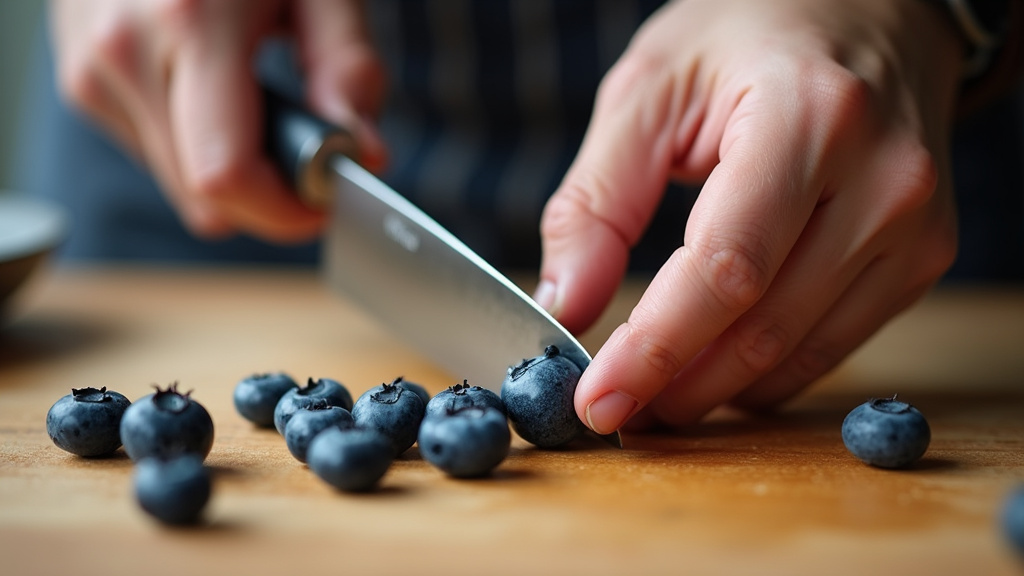
Serving a blueberry isn’t just dropping it in a bowl. Getting the prep wrong turns a safe treat into a hazard.
First, source matters. Organic blueberries reduce the pesticide load you have to wash off. Conventional ones are fine with a vigorous rinse. Wild blueberries are smaller and often tarter, which might mean slightly lower sugar—a minor plus. Cultivated ones are the standard.
The wash is non-negotiable. Run them under cool water in a colander, rubbing gently. You’re trying to remove chemical residues, not bruise the fruit.
Before you start: Always cut blueberries for dragons under 16 inches long (juveniles). Even for adults, if the berry is wider than the space between their eyes, cut it. An intact blueberry can lodge in their throat. They don’t chew thoroughly. The choking event is silent and fast.
Now, the cut. Don’t just halve it. For a small juvenile, quarter it. The pieces should be no larger than a pea. Use a sharp knife so you don’t crush and lose all the juice—that’s the enticing part.
Frozen blueberries are a convenient option. Ensure they are unsweetened—check the ingredients for added sugars or syrups. Thaw them completely in a sealed bag in the refrigerator or under cool running water. Let them sit out to reach room temperature. Never feed a cold blueberry; it can shock their system and slow digestion.
Finally, inspect each piece. Discard any that are mushy, have broken skin, or show signs of mold. A spoiled berry can cause a bacterial infection.
TL;DR: Wash thoroughly, cut to appropriate size (smaller than the space between their eyes), and always serve at room temperature.
How Often and How Many Blueberries Can They Eat?
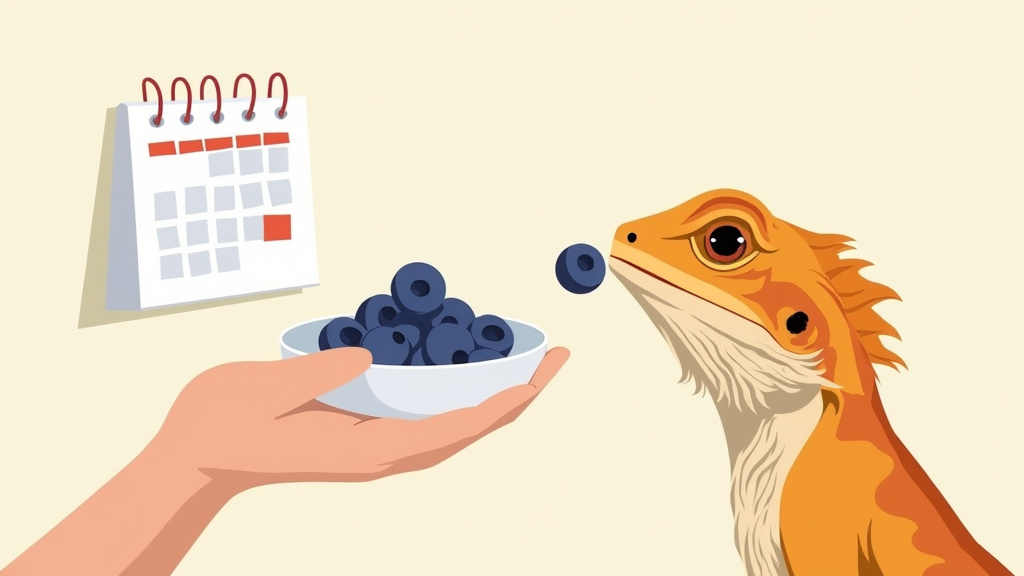
This is where discipline replaces enthusiasm. The “how many” question has a clear ceiling.
Feed blueberries a maximum of 1-2 times per week. Never on consecutive days. A single serving should be 2-4 small pieces total, depending on your dragon’s size. A large adult (over 18 inches) might handle four pea-sized pieces. A younger dragon gets two.
Common mistake: Feeding a whole blueberry daily because it’s small — this delivers a weekly sugar load equivalent to a human eating a large slice of cake every day. Within two months, you’ll likely see weight gain and green refusal.
The weekly cap is critical because of phosphorus binding. Even with a decent Ca:P ratio, every blueberry adds phosphorus molecules that can latch onto dietary calcium in the gut. If this happens repeatedly, your dragon’s calcium supplementation becomes less effective. You’re fighting your own dusting schedule.
I keep a feeding journal. Every treat gets logged. If I give blueberries on a Tuesday, the next fruit treat (like blackberries for bearded dragons) can’t happen until Saturday at the earliest. This forced spacing is the only way to ensure treats stay under 10% of the total plant intake.
Compare this to their main diet. The bulk of their calories and nutrients must come from a healthy salad mix of staple greens like collard, mustard, and turnip greens. This is detailed in any optimal bearded dragon diet guide. Fruits are the sprinkle on top.
TL;DR: Absolute max is twice weekly, 2-4 small pieces per session. Space treat days out to protect calcium absorption and prevent sugar accumulation.
What Are the Best and Worst Times to Offer Blueberries?
Timing the treat can mitigate some risks and even help you out.
The best time is mixed into a salad. Tuck 2-3 blueberry pieces into a bowl of chopped greens. The sweet juice coats the leaves, encouraging a picky dragon to eat their vegetables. This also dilutes the acid impact with bulky, neutral-pH greens.
Another good time is as a hand-feeding reward during bonding sessions. The positive association is powerful. Just count it as that week’s treat allowance.
The worst time is when your dragon is unwell or off its food. If they have diarrhea, a sugary, acidic fruit will worsen it. If they’re refusing staples, a blueberry will reward that behavior, making the food strike harder to break.
Also avoid feeding blueberries right before or after a calcium-dusted insect meal. You want the calcium supplement to be absorbed cleanly, not compete with fruit phosphorus.
For a broader view on incorporating fruits, our comprehensive fruit guide covers frequencies for other options like raspberries for bearded dragons and strawberries as a treat.
TL;DR: Use blueberries as a salad mixer or training reward. Never use them to coax a sick dragon or when you’ve just provided calcium supplementation.
What to Watch For After Feeding Blueberries
Most dragons handle an occasional blueberry with zero issues. You still need to watch the clock and the poop.
Observe them for the next 24-48 hours. The first sign of trouble is usually a change in stool. Loose, watery, or unusually smelly feces can indicate the sugar or acid didn’t agree with them. If this happens, skip blueberries next week and try an even smaller portion later.
Watch their appetite for their next regular meal. If they snub their greens after having blueberries, you’ve proof the treat spoiled their palate. The fix is to withhold all treats until they reliably eat their staples again.
Common mistake: Not connecting diarrhea two days later to a blueberry feed — the gut transit time for a dragon is 24-48 hours, so the cause isn’t always immediate.
Lethargy is a more serious, but rarer, sign. If your dragon seems unusually sluggish after eating one, stop all fruit and consult a vet. It could signal an underlying metabolic issue the sugar stress exposed.
Consistent, appropriate treat feeding should cause no observable changes. That’s the goal. For more on normal eating behavior and signs of imbalance, that resource is essential.
TL;DR: Monitor stool consistency and subsequent appetite for 2 days. Loose stools or green refusal means cut back or eliminate blueberries.
Blueberries vs. Other Common Fruits
How does this treat stack up against the competition? Knowing the hierarchy helps you make better choices.
Let’s compare them head-to-head. This table uses sugar content and calcium-to-phosphorus ratio as the primary decision metrics.
| Fruit | Sugar Content (per 100g) | Ca:P Ratio | Verdict for Bearded Dragons |
|---|---|---|---|
| Blueberries | ~10g | ~1:1.5 | Better choice. Moderate sugar, okay ratio. Treat 1-2x/week. |
| Strawberries | ~4.9g | ~1:1.5 | Good choice. Lower sugar, similar ratio. Can be fed slightly more often. |
| Raspberries | ~4.4g | ~1:1.2 | Excellent choice. Very low sugar, near-ideal ratio. Top fruit pick. |
| Blackberries | ~5g | ~1:1 | Excellent choice. Low sugar, balanced ratio. Another top pick. |
| Grapes | ~16g | ~1:2.5 | Poor choice. Very high sugar, high phosphorus. Avoid or extreme rarity. |
| Banana | ~12g | ~1:3 | Avoid. High sugar, terrible ratio. Causes rapid weight gain. |
The data shows berries are generally the safest fruit category. Notice raspberries for bearded dragons and blackberries as a treat have superior numbers. They should rotate with blueberries in your treat schedule.
This comparison is a subset of a larger safe fruits list. Always cross-reference.
TL;DR: Among fruits, berries are best. Raspberries and blackberries have better nutritional stats than blueberries, but all are safe in the same limited, rotating schedule.
Frequently Asked Questions
My bearded dragon loves blueberries. Can I give them one every day?
No. Daily feeding, even of one small blueberry, builds up a significant weekly sugar load and chronic acid exposure. This disrupts their gut health, risks obesity, and can interfere with calcium absorption over time. Stick to the 1-2 times per week rule.
Are frozen blueberries okay?
Yes, provided they are plain, unsweetened frozen blueberries with no added sugars or syrups. Thaw them completely and bring them to room temperature before serving. The freezing process doesn’t significantly alter the nutritional profile relevant to dragons.
Do I need to peel blueberries?
No. The skin is thin and contains many of the antioxidants. It poses no digestion problem when the berry is cut to an appropriate size. Just ensure it’s washed clean.
Can baby bearded dragons eat blueberries?
Extremely sparingly, and only if prepared correctly. For dragons under 6 months old, fruits should be almost entirely avoided as their diet needs to be protein-heavy for growth. If you do offer a piece, it must be a quarter of a small blueberry, no more than once every two weeks. Their primary focus must be insects and finely chopped greens.
What if my dragon accidentally eats a moldy blueberry?
Monitor closely for signs of gastrointestinal distress: lethargy, loss of appetite, or unusual stool. If you see any of these, contact a reptile veterinarian. Mold can contain toxins harmful to reptiles. In the future, inspect each berry before serving.
Where can I find detailed nutritional profiles for other foods?
For authoritative, specific breakdowns, consult resources like the Reptile Nutrition Profile on blueberries. It’s a reliable reference for making informed feeding decisions.
The Bottom Line
Blueberries are a safe, enjoyable treat when you follow three non-negotiable rules: cut them small, feed them rarely, and never let them replace greens. Their sugar and acid content make them a conditional food, not a staple.
The goal is enrichment, not nutrition. A couple of blueberry pieces twice a month is plenty for that happy head bob. More than that, and you’re trading a moment of joy for long-term metabolic stress.
Stick to the schedule. Mix them into a nutritious salad mix to encourage veggie eating. And always prioritize the essential bearded dragon foods that form the foundation of a healthy life. That balance is what keeps your dragon thriving for years.