
Can Bearded Dragons Eat Nuts? The Risks of Almonds & Walnuts
This post contains affiliate links. As an Amazon Associate, we earn from qualifying purchases.
No, bearded dragons cannot eat nuts. Almonds, walnuts, peanuts, pecans, and hazelnuts are all dangerous and should never be offered. Their high fat and phosphorus content, tough fiber, and risk of fungal toxins directly oppose a bearded dragon’s digestive system and nutritional needs, leading to severe impaction, metabolic bone disease, and liver damage.
People see a dragon eyeing a dropped peanut and think, “It’s just a nut.” They don’t see the internal mechanics. A reptile’s gut isn’t built for dense, oily blocks of plant matter wrapped in insoluble fiber. That single nut acts like a cork in a narrow pipe, and the metabolic cost of processing it can shut down their entire system.
This guide breaks down the four specific risks that make nuts toxic, explains what to do if an accident happens, and lists the safe, nutrient-appropriate treats you should use instead.
Key Takeaways
- Nuts cause life-threatening impaction due to their size and insoluble fiber, blocking the digestive tract.
- The extreme calcium-to-phosphorus imbalance in nuts leaches calcium from a dragon’s bones, directly fueling metabolic bone disease.
- Oxalates in almonds and walnuts bind to dietary calcium, creating painful kidney stones over time.
- Aflatoxins, common fungal contaminants on peanuts and tree nuts, cause irreversible liver damage at microscopic doses.
- Safe treat alternatives like blueberries, strawberries, and chopped apples exist, they just require proper preparation and strict moderation.
The 4 Direct Risks of Feeding Nuts to Bearded Dragons
The danger isn’t one thing. It’s a cascade of physical and chemical failures that starts when the nut hits the stomach.
First, look at the shape and texture. A walnut half is often wider than the space between a juvenile dragon’s eyes, the standard rule for maximum food item size. Its irregular, hard surface doesn’t break down in a simple gastric acid bath. The dragon’s stomach acid is weaker than a mammal’s, designed for chitinous insects and soft leaves.
Common mistake: Assuming a bearded dragon can “pass” a small piece of nut, the insoluble fiber swells slightly with moisture, creating a dense plug that lodges in the lower intestine. Impaction signs appear within 24-48 hours.
You get a physical blockage. But the chemistry is already doing damage.
1. Gastrointestinal Impaction and Stasis
This is the immediate, mechanical failure. A bearded dragon’s intestinal tract is a long, narrow tube with minimal peristaltic force compared to a mammal. It relies on moisture and the right kind of fiber to move food along.
Nuts provide the wrong fiber, lignin and cellulose that are largely indigestible. In the moist, warm environment of the gut, these fibers can swell. They form a dry, matted mass that the intestinal muscles cannot push forward.
The dragon becomes lethargic. Its basking spot feels wrong because digestion has stopped, a condition called gastrointestinal stasis. Without movement, bacteria ferment the trapped food, producing gas and toxins. The belly may visibly bloat. This is a veterinary emergency requiring X-rays and possibly surgery.
TL;DR: A nut’s insoluble fiber swells into an intestinal plug. A dragon’s gut lacks the muscle power to move it, causing a life-threatening blockage within two days.
2. Catastrophic Calcium-to-Phosphorus Imbalance
All animal nutrition runs on mineral ratios. For bearded dragons, the calcium-to-phosphorus ratio (Ca:P) in their total diet must be at least 2:1. This means for every milligram of phosphorus they ingest, they need two milligrams of calcium available to process it.
Nuts invert this need disastrously.
| Nut Type | Calcium (mg per 100g) | Phosphorus (mg per 100g) | Ca:P Ratio |
|---|---|---|---|
| Almonds | 264 | 484 | 1:1.8 |
| Walnuts | 98 | 346 | 1:3.5 |
| Peanuts | 92 | 376 | 1:4.1 |
| Pecans | 70 | 277 | 1:4.0 |
The data from the Nordic Nutrition Recommendations 2023 report confirms that tree nuts and peanuts are universally high in phosphorus. When a dragon eats a nut, its body must neutralize that phosphorus. It pulls calcium from its bloodstream. When blood calcium drops, the body robs it from bones. This is the direct pathway to metabolic bone disease (MBD), soft, rubbery jaws, tremors, and paralysis.
Even if you dust the nut with calcium powder, you cannot overcome this inherent ratio. The dragon will still waste its skeletal calcium.
3. Oxalate Binding and Kidney Stress
Almonds and walnuts are notably high in oxalates, natural compounds that bind tightly to calcium. When oxalates meet calcium in the digestive tract or kidneys, they form calcium oxalate crystals.
In a dragon, these crystals are sharp. They irritate the lining of the gut, reducing nutrient absorption. More dangerously, they can accumulate in the kidneys, forming stones. Kidney stones in reptiles are excruciating and often require surgical intervention. The damage is slow and cumulative, not showing symptoms until the organ is severely compromised.
This is a silent risk. A dragon might seem fine after sneaking an almond sliver, but the oxalates are now in its system, seeking calcium to bind to and weaken.
4. Aflatoxin Contamination and Liver Failure
This is the invisible killer. Peanuts, tree nuts, and seeds are commonly contaminated with Aspergillus molds, which produce aflatoxins. These are among the most potent natural carcinogens and liver toxins known.
Aflatoxin contamination is not visible to the naked eye. A nut can look, smell, and taste perfectly normal but carry a lethal dose for a small animal like a bearded dragon.
The nuts and seeds health outcomes review published in ScienceDirect details the strong link between aflatoxin exposure and liver damage. A bearded dragon’s liver is proportionally small. A microscopic amount of aflatoxin that a human liver can process can cause acute liver necrosis in a dragon. Symptoms include jaundice (yellowing of the skin and gums), loss of appetite, and sudden death. There is no antidote.
What About Nut Butters or Ground Nuts?
The form doesn’t change the chemistry. Smooth peanut butter or ground almond flour eliminates the impaction risk but concentrates the other dangers.
Nut butter is pure fat, phosphorus, and potential aflatoxins in a sticky paste. It will coat the mouth and can cause aspiration pneumonia. The fat content alone, often over 50%, can trigger pancreatitis, a severe inflammation of the pancreas that is difficult to diagnose and treat in reptiles.
Ground nuts are still nutritionally imbalanced and oxalate-rich. They offer no benefit and all the same metabolic hazards. They have no place in a comprehensive feeding guide.
What If My Bearded Dragon Ate a Nut?
Stay calm. Panicking helps no one, especially your dragon. The action plan depends on the size of the dragon and the nut.
For a large adult dragon that ingested a tiny fragment (e.g., a sliver of almond), the risk is lower but not zero. Monitor closely for the next 72 hours.
Immediate Steps:
- Do not induce vomiting. Reptiles cannot vomit effectively. Trying to make them will cause more stress and potential injury.
- Offer a warm bath. Place your dragon in shallow, 95-100°F water for 15-20 minutes. This encourages hydration and can stimulate bowel movements. Supervise constantly.
- Ensure optimal basking heat. Check that the basking spot surface temperature is 100-110°F. Proper heat is critical for digestive motility.
- Hydrate and offer wet greens. Mist greens like collard greens or dandelion greens with water to increase fluid intake. You can also offer a drop of water on the snout.
Watch for these red flags. If you see any, go to an exotic vet immediately:
- Lethargy or inability to lift its body off the ground.
- No defecation for more than 48 hours with a distended abdomen.
- Refusal to eat its normal staple insects or greens.
- Straining or appearing to push without producing feces.
- Any signs of pain, like flinching when the belly is touched.
The vet will likely take an X-ray to confirm impaction. Treatment may involve fluids, laxatives like lactulose, or in severe cases, surgery.
Safe Treat Alternatives to Nuts
Your dragon doesn’t need nuts. It does enjoy variety. The key is picking treats that align with its biology, high in moisture, low in phosphorus and oxalates, and soft.
Fruits should be treats, not staples. They are high in sugar. Offer them no more than once or twice a week, in pieces smaller than the space between the dragon’s eyes.
Here are proven, safe alternatives that provide enjoyment without risk:
- Berries: Blueberries, strawberries, raspberries, and blackberries are excellent. They are soft, hydrating, and packed with antioxidants. A single blueberry or a small slice of strawberry is perfect.
- Melons: Watermelon, cantaloupe, and honeydew (seedless and rind-free) are great for hydration on hot days.
- Squash: Cooked, mashed butternut or acorn squash is a favorite. It’s vitamin-rich and easy to digest.
- “Flowers”: Dandelion greens and flowers (from pesticide-free areas) are fantastic. Interestingly, false dandelion (Hypochaeris radicata) is also considered reptile-safe and provides similar enrichment.
This table compares the occasional treat options you should use versus the nuts you must avoid.
| Safe Occasional Treat | Key Benefit | How to Serve | Nut to Avoid |
|---|---|---|---|
| Blueberry | Antioxidants, hydration | One whole or halved | Walnut |
| Strawberry slice | Vitamin C, fiber | Slice thinner than eye space | Almond |
| Mashed butternut squash | Vitamin A, soft texture | Cooled, pea-sized amount | Peanut |
| Dandelion flower | Enrichment, natural foraging | Washed, whole flower | Pecan |
When preparing safe fruits like apples, always remove seeds and chop finely. The same goes for chopped grape pieces or pitted cherry treats. This careful preparation is what separates a responsible treat from a dangerous one.
Why the Question “Can Bearded Dragons Eat Nuts?” Even Comes Up
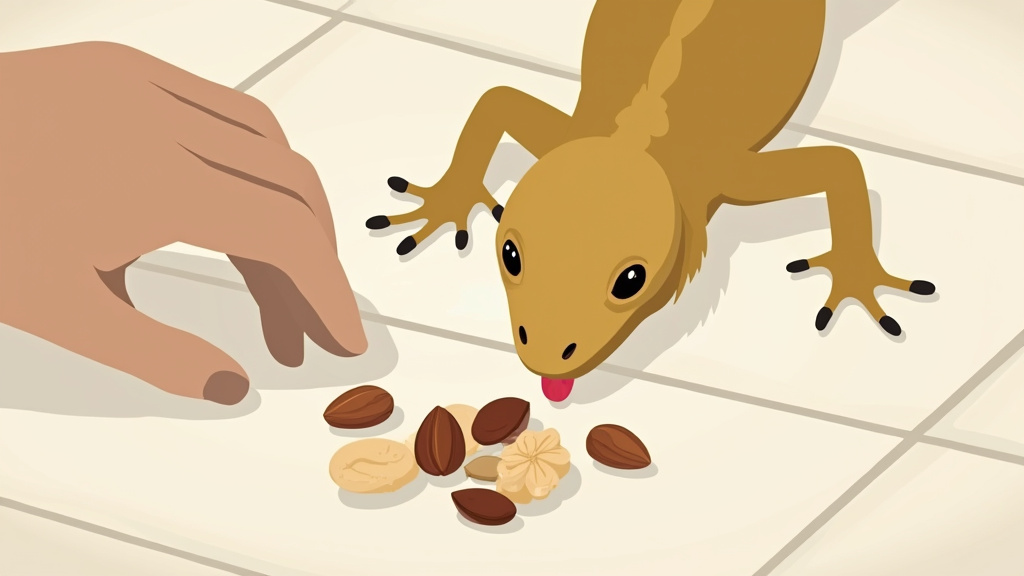
It’s a logical human projection. We see nuts as healthy, protein-packed snacks. We forget our omnivore metabolism is radically different from their insectivore-herbivore one.
Online misinformation plays a role. A poorly researched blog post from a decade ago might still surface in search results, claiming “a peanut as a rare treat is okay.” That advice is biologically bankrupt and has likely caused harm.
Behavior also confuses owners. In spring, during breeding season, bearded dragons can get restless. A Reddit user recently described their rescued dragon “going nuts to get out” of its new, proper enclosure. This heightened activity and curiosity can make them investigate, and try to eat, anything novel, including food items that fall on the floor during human snack time. It’s not hunger for nuts; it’s general foraging curiosity during a hormonally active period.
The drive to explore is strong. Your job is to manage their environment so that exploration doesn’t lead to the emergency vet. Knowing the full list of toxic foods for bearded dragons, from avocado to nuts, is the first step in that management.
Frequently Asked Questions
My bearded dragon licked peanut butter off my finger. Will it be okay?
Probably, but don’t do it again. A tiny taste is unlikely to cause impaction or immediate toxicity, but it introduces unnecessary fat, salt, and risk. Watch for any changes in appetite or stool over the next day. The sugar and additives in commercial peanut butter are also problematic.
Are any nuts or seeds ever safe?
No common household nuts are safe. Some keepers very occasionally offer a single, soft-shelled pumpkin seed (pepita) or a sunflower seed as rare foraging enrichment, but it’s debated. The risks of impaction and poor Ca:P ratio still exist. It is universally safer to avoid all seeds and nuts entirely. Focus on approved greens and insects.
What about coconut? Isn’t that a nut?
Botanically, coconut is a drupe. Shredded, unsweetened coconut meat is not toxic like almonds, but it is extremely high in saturated fat and offers minimal nutritional value. It can cause digestive upset and diarrhea. It’s not recommended. Stick to treats with actual benefit, like antioxidant-rich berries.
Can nuts be used as a calcium source if they have calcium?
Absolutely not. This is a critical misunderstanding. While almonds contain calcium, their phosphorus content is nearly double, creating a negative net effect. The oxalates in them also bind to that calcium, making it unusable. For calcium, use a dedicated supplement powder dusted on insects and offer calcium-rich greens like collard greens.
How do I stop my dragon from going after my snacks?
Manage the environment. Don’t eat nut-containing snacks near the enclosure or during out-of-tank time. If your dragon is persistently curious during its active period, offer a distracting, safe foraging opportunity instead. Scatter a few chopped blueberry pieces in its salad or hide a piece of chopped peach under a leaf.
Before You Go
The rule is simple and non-negotiable: never feed your bearded dragon nuts. The combination of physical blockage, bone-weakening mineral imbalance, kidney-irritating oxalates, and invisible liver toxins makes them one of the most dangerous food categories you can introduce.
Your dragon’s curiosity is not a diet guide. Its health depends on your ability to translate its natural behaviors into safe choices. When you want to offer a treat, reach for a piece of vitamin C-rich strawberry or a bit of mashed squash. These provide the novelty and enjoyment without the cascade of internal failures.
Stick to the staples, leafy greens and gut-loaded insects, supplemented correctly. That’s the foundation. Everything else is just a tiny, careful bonus on top.