
Can Bearded Dragons Eat Grapes? The Vet-Approved Guide
This post contains affiliate links. As an Amazon Associate, we earn from qualifying purchases.
Yes, bearded dragons can eat grapes, but only as a rare, occasional treat. Feed one to two seedless grapes, chopped into pieces no larger than the space between your dragon’s eyes, no more than once every two weeks. This strict limit exists because grapes have a poor calcium-to-phosphorus ratio and contain oxalates, which together can lead to Metabolic Bone Disease (MBD) if fed regularly.
The universal mistake is treating grapes like a daily vegetable. They are not. They are a high-sugar fruit that disrupts the delicate mineral balance in a reptile’s body. A dragon that gets grapes weekly will start refusing its staple greens within a month, chasing the sugar hit instead of the nutrition it needs.
This guide breaks down the exact risks, specifically how oxalates bind to calcium, and provides a step-by-step prep method to minimize danger. You’ll also learn when to absolutely avoid grapes and why the leaf might be a better option than the fruit.
Key Takeaways
- Grapes are a treat food only, making up no more than 5% of an adult dragon’s total diet. One to two grapes every other week is the safe ceiling.
- The primary danger is Metabolic Bone Disease (MBD). Grapes contain oxalates that bind to dietary calcium and a high phosphorus level that further blocks calcium absorption.
- Always choose seedless grapes and chop them into pieces smaller than the space between your dragon’s eyes to prevent choking and life-threatening impaction.
- Grape leaves are a superior occasional feed compared to the fruit. They are higher in calcium, lower in phosphorus, and contain beneficial vitamin A.
- If your dragon has any history of kidney issues, MBD, or chronic diarrhea, grapes are off the menu permanently.
Why Grapes Are a Tricky Treat, Not a Staple
Bearded dragons are opportunistic omnivores. In the wild, their diet shifts from mostly insects as juveniles to about 80% plant matter as adults. Fruits are a tiny, seasonal part of that plant intake. A grape is a concentrated sugar bomb compared to the fibrous leaves and flowers they evolved to eat. Offering it too often doesn’t just risk obesity, it reprograms their feeding response.
A bearded dragon’s digestive system is not designed for frequent fructose. The sugar ferments quickly in the gut, altering the pH and slowing the motility of other, more important foods like leafy greens. This is why a dragon on a weekly grape schedule often becomes constipated on its salads.
I learned this the hard way with a rescued adult named Smaug. His previous owner fed him red seedless grapes three times a week as a “hydration boost.” When I got him, he would actively nose-toss his collard greens to search for fruit. It took six weeks of a strict, grape-free diet before he reliably ate his greens first. His previous poop had been consistently runny, a direct result of that excess sugar and water.
TL;DR: Grapes are a diversion from the core diet. Use them sparingly as a rare enrichment tool, not a nutritional source.
The Nutritional Pros and Cons of Grapes
You need to understand what you’re actually putting in the bowl. The benefits are real but narrow; the drawbacks are systemic and long-term.
A grape’s value is in its water content (about 80%), vitamin C, vitamin K, and trace potassium. The antioxidants in the skin of red or purple grapes, like resveratrol, can support immune function. That’s the short list.
The problem list is longer and carries more weight. Every grape contains oxalic acid (oxalate). This compound binds with calcium in the digestive tract to form calcium oxalate, an insoluble crystal that passes through the body unused. It literally steals the calcium you’re dusting on their insects and greens.
Compounding this theft is the abysmal calcium-to-phosphorus (Ca:P) ratio. Herpetologists target a 2:1 or 1.5:1 ratio where calcium exceeds phosphorus. Grapes have a reverse 1:5 ratio, five times more phosphorus than calcium. High phosphorus further inhibits calcium absorption by triggering hormone responses that leach calcium from the bones. This one-two punch is the direct biochemical pathway to Metabolic Bone Disease.
| Nutrient Factor | In Grapes | Why It Matters for Bearded Dragons |
|---|---|---|
| Calcium (Ca) | Low (~10 mg per 100g) | Must be the dominant mineral in the diet to prevent MBD. |
| Phosphorus (P) | High (~20 mg per 100g) | High P blocks Ca absorption. The Ca:P ratio here is a dangerous 1:5. |
| Oxalates | Present | Binds with dietary Ca, making it unavailable. Adds to calcium deficiency. |
| Sugar | High (~16g per 100g) | Promotes obesity, digestive upset, and picky eating behavior. |
| Water | Very High (~80%) | Can cause watery stools and diarrhea if overfed, leading to dehydration. |
TL;DR: The sugars, oxalates, and inverted mineral ratio in grapes actively work against the foundational nutritional requirements of a captive bearded dragon.
How to Prepare Grapes for Your Bearded Dragon
If you’ve weighed the risks and decided to offer a rare treat, this process is non-negotiable. Skipping any step increases the risk of impaction or illness.
Before you start: Wash your hands and all surfaces. Reptiles are susceptible to bacterial contaminants like Salmonella. Unwashed grapes can also carry pesticide residues harmful to your dragon.
Step 1: Select the right grapes.
Buy fresh, seedless grapes. The seedless part is critical, grape seeds are a direct impaction risk. Opt for red or purple varieties over green; the darker skins have higher antioxidant content. Organic is ideal but not mandatory if you wash thoroughly. Never, ever use wild grapes.
Step 2: Wash them like you mean it.
Place the grapes in a colander and run cool water over them for a full 30 seconds, agitating them with your fingers. This removes surface pesticides and dirt. Pat them dry with a paper towel. A wet grape piece is a slipping hazard in a food bowl and dilutes calcium powder.
Step 3: Chop to the correct size.
This is the most common mistake. The piece must be smaller than the space between your dragon’s eyes.
– For an adult dragon, cut one grape into quarters.
– For a juvenile or sub-adult, cut each of those quarters in half again.
Use a sharp knife on a clean cutting board. Mushy, torn pieces are a choking hazard.
Step 4: Dust with calcium.
Place the chopped pieces in a small bowl. Lightly sprinkle them with a plain calcium carbonate powder (no added vitamin D3). The dusting helps offset, but never fully corrects, the poor calcium ratio. Gently toss to coat.
Step 5: Serve and supervise.
Mix one or two pieces into a robust salad of staple greens. Never offer a bowl of just grapes. Watch your dragon eat. If it swallows without thorough chewing, your pieces are still too big. Remove any uneaten fruit from the enclosure within an hour.
Common mistake: Feeding a whole grape to an adult dragon, the round shape can lodge in the throat, and the sheer volume of sugar and water at once almost guarantees digestive upset within 12 hours.
How Often Can Bearded Dragons Eat Grapes?
The frequency is where most online advice gets dangerously vague. “Occasionally” is not a schedule. Here is the commitment: for a healthy adult bearded dragon, one to two prepared grape pieces every two weeks is the maximum. That translates to roughly 3-4 times a year per grape.
For juveniles, the answer is simpler: don’t. Their bodies are allocating immense resources to skeletal growth. Every ounce of calcium intake is vital. Introducing a food that actively depletes calcium reserves is irresponsible. Wait until they are over 18 months old and fully grown before considering a grape as a very rare novelty.
I keep a feeding log for each of my dragons. In the “treats” column, entries like “1/4 grape” appear maybe six times a year, always marked with which calcium supplement I used that day. This isn’t overkill, it’s how you trace a health problem back to a dietary cause.
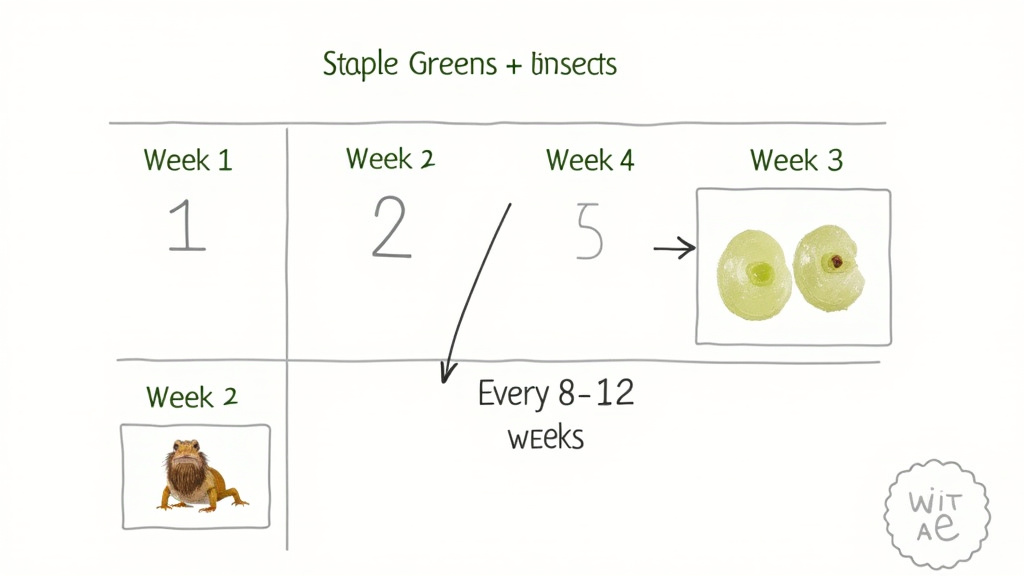
Create a “Fruit Schedule” to avoid overfeeding:
- Week 1: Staple greens + insects.
- Week 2: Staple greens + insects.
- Week 3: Staple greens + insects. Possible treat week: Offer 1-2 blueberry pieces or a single raspberry.
- Week 4: Staple greens + insects.
- Next Month, Week 3: Staple greens + insects. Possible treat week: Offer 1-2 prepared grape pieces.
This staggered schedule ensures fruits of any kind never constitute more than 5% of the annual diet.
What About Grape Leaves and Stems?
This is the part most guides miss. The leaf of the grapevine is a fundamentally different, and better, food item than the fruit.
Grape leaves are a legitimate, calcium-rich green. They have a favorable calcium-to-phosphorus ratio, are high in fiber and vitamin A, and contain minimal oxalates compared to the fruit. You can offer a freshly washed, chopped grape leaf as part of your dragon’s green rotation once every week or two. It’s a safe way to provide variety and trace nutrients without the sugar burden.
The stems, however, are trash. They are fibrous, difficult to digest, and offer no nutritional value. They go in the compost, not the terrarium.
When You Should Never Feed Grapes
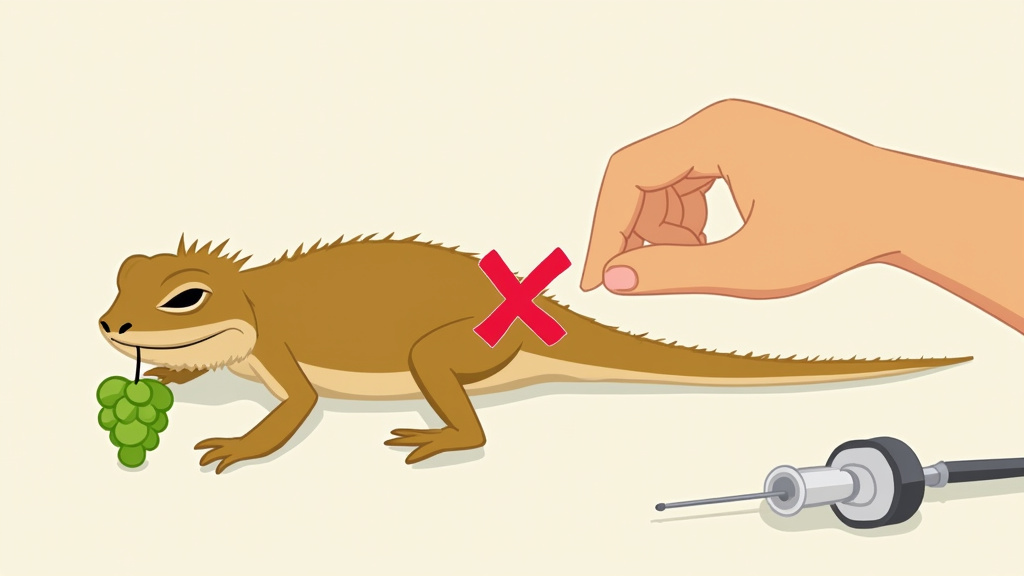
There are specific health conditions where a grape’s risks become unacceptable. Do not experiment.
- Diagnosed Metabolic Bone Disease (MBD): If your dragon is undergoing treatment for MBD, its calcium metabolism is already compromised. Adding an oxalate-rich food is counterproductive.
- Kidney (Renal) Issues or Gout: Oxalates are processed through the kidneys. A compromised renal system cannot handle the extra load, potentially worsening the condition.
- Chronic Diarrhea or Dehydration: The high water content will exacerbate diarrhea. Paradoxically, the resulting fluid loss can lead to dehydration.
- Picky Eaters Who Refuse Greens: If your dragon already turns its nose up at collard greens, introducing a sweet fruit will make the problem permanent. You must correct the green-eating habit first.
Common mistake: Offering grapes to a lethargic dragon as an “energy boost”, the sugar spike can further disrupt their metabolism and gut flora, making the underlying illness worse.
If you suspect impaction (symptoms include lethargy, lack of defecation, dragging hind legs, a firm swollen abdomen), grapes or any food are the last thing to offer. Seek immediate veterinary care. The timeline from obstruction to systemic failure can be less than 72 hours.
Better Fruit Alternatives to Grapes
If you want to provide fruity enrichment with a slightly better risk profile, these options have their own strict rules but are often preferable.
| Fruit | Better Because… | Feed Even Less Than Grapes? |
|---|---|---|
| Raspberries & Blackberries | Lower in sugar, higher in fiber and antioxidants. | Yes. Feed 1-2 berries once a month. Their seeds are tiny and generally safe. |
| Blueberries | Powerful antioxidants, small size. | Yes. One blueberry, halved, once a month. |
| Watermelon | Extremely high water content, good for occasional hydration. | Yes. One tiny cube, de-seeded, once a month in summer only. |
| Papaya | Contains papain, an enzyme that can aid digestion. | Yes. One small cube once a month. |
Notice the pattern? These are still monthly, not weekly, treats. A single piece of cantaloupe or mango falls into the same category. Citrus fruits like oranges are typically avoided due to high acidity. For a deep dive on any of these, our guides on feeding raspberries and blueberries cover the specifics.
The goal is variety without frequency. A single blackberry one month and a cube of watermelon two months later is a safer strategy than a weekly grape.
Frequently Asked Questions
Can bearded dragons eat green grapes?
Yes, but red or purple are marginally better. The nutritional difference is minor, the same strict rules for preparation, portion, and frequency apply regardless of color. The key is that they are seedless.
Are grapes toxic to bearded dragons like they are to dogs?
No. Grapes are not acutely toxic to bearded dragons as they are to dogs, where they can cause sudden kidney failure. The danger for dragons is chronic: long-term mineral imbalance leading to MBD, not acute poisoning.
My bearded dragon ate a grape seed. What should I do?
Monitor closely for the next 48-72 hours. Ensure its basking temperature is optimal (100-110°F) to promote digestion. Watch for signs of impaction: loss of appetite, no bowel movements, bloating, or hind-leg weakness. If any symptoms appear, contact your reptile vet immediately. Do not feed any more fruit.
Can baby bearded dragons eat grapes?
It is strongly discouraged. Juveniles require precise, high-calcium nutrition for skeletal development. The oxalates and poor calcium ratio in grapes pose a significant threat to their growth. Stick to staple greens and appropriately sized insects.
How do I get my bearded dragon to eat its greens instead of waiting for fruit?
Stop offering fruit entirely for at least two months. Consistently provide fresh, varied greens daily. You can try “sprinkling” the movement of live insects like dubia roaches through the greens to stimulate foraging. Patience is required. They will eat when hungry enough.
Can bearded dragons eat grape jelly or raisins?
Absolutely not. Processed jelly is pure sugar and preservatives. Raisins are dehydrated grapes, concentrating the sugar and oxalates to dangerous levels. Both can cause severe digestive distress and are completely unsuitable.
The Bottom Line
Grapes are not a forbidden food, but they are a food that demands respect for the science of reptile nutrition. That respect translates to a tiny piece, once in a blue moon, prepared with surgical care.
The real risk isn’t the grape itself, it’s the pattern it creates. A pattern of sugar preference, calcium depletion, and eventual metabolic breakdown. Your dragon’s health hinges on the 95% of its diet that is not fruit: the collard greens, the dubia roaches, the consistent calcium dusting.
So yes, you can share a fragment of your snack. But make it a genuine celebration, not a routine. Your dragon’s strong bones and clear eyes will thank you for the restraint.