
Can Bearded Dragons Eat Spinach? The Truth About Oxalates
This post contains affiliate links. As an Amazon Associate, we earn from qualifying purchases.
Bearded dragons can eat spinach, but you must treat it as a rare, minor ingredient, not a staple. A single small leaf, finely chopped and mixed with calcium-rich greens, is the maximum safe serving for an adult dragon no more than once every three to four weeks. The high oxalate content in spinach binds to dietary calcium, blocking absorption and creating a long-term risk for metabolic bone disease.
Most owners see spinach in the produce aisle and think “healthy greens.” They miss the invisible chemical inside it that actively steals calcium from their pet’s body. This mistake doesn’t cause immediate illness. It slowly drains bone density over months until the dragon’s jaw softens and its legs tremble.
This guide breaks down the oxalate mechanism, shows you the exact symptoms of calcium deficiency, and gives you a concrete list of superior daily greens that won’t sabotage your dragon’s health.
Key Takeaways
- Spinach contains oxalates that bind to calcium in the gut, preventing absorption and leading to deficiency over time.
- For adult dragons, a single small leaf every 3–4 weeks, finely chopped and mixed with staple greens, is the absolute maximum safe frequency.
- Never feed spinach to baby or juvenile bearded dragons under 12 months old; their rapid growth demands unimpeded calcium intake.
- Superior daily greens with ideal calcium-to-phosphorus ratios include collard greens, mustard greens, turnip greens, and dandelion greens.
- Early signs of calcium deficiency include lethargy, a softer lower jaw, and subtle tremors in the legs or tail.
How Oxalates in Spinach Harm Your Bearded Dragon
The problem isn’t the vitamins. Spinach contains vitamin A, vitamin C, and some iron. The problem is oxalic acid, a natural compound that binds to minerals.
Oxalates latch onto calcium molecules inside the digestive tract. They form calcium oxalate, an insoluble compound the dragon’s body cannot absorb. This bound calcium passes through the system unused. Even if you dust your dragon’s insects with calcium powder, the oxalates in a concurrent spinach meal can neutralize that supplement before it reaches the bloodstream.
Spinach contains approximately 970 mg of oxalates per 100-gram serving, ranking it among the highest-oxalate leafy greens. When fed regularly, these oxalates chelate dietary calcium, creating a net calcium deficit regardless of supplementation. This deficit must then be pulled from the dragon’s skeletal reserves.
The body prioritizes blood calcium levels. When dietary calcium is locked up by oxalates, the parathyroid gland pulls calcium from the bones to maintain critical functions like nerve transmission and muscle contraction. Do this for a few months, and the bones weaken. This is the direct path to metabolic bone disease (MBD).
TL;DR: Oxalates are chemical thieves that steal calcium. Spinach is packed with them, making it a net negative for calcium balance no matter what else you feed.
Spinach Feeding Guidelines: The Strict Rules
If you choose to offer spinach, follow this protocol. Deviation introduces risk.
For Adult Bearded Dragons (12+ months old):
- Frequency: Once every 3–4 weeks. Treat it as a novelty, not nutrition.
- Serving Size: One small leaf. Not a handful, not a stem. One leaf.
- Preparation: Wash thoroughly. Chop it into pieces smaller than the space between your dragon’s eyes.
- Method: Always mix the chopped spinach into a much larger portion of a safe staple green. The goal is dilution.
For Baby/Juvenile Bearded Dragons (Under 12 months old):
- Frequency: Never.
- Reason: Growing dragons are building bone mass at a phenomenal rate. Their calcium demand is extreme. Introducing a calcium-blocking food during this critical window is negligent. Stick to proven nutritious staple greens and appropriate insect prey.
Common mistake: Feeding spinach weekly because the dragon seems to like it — the calcium depletion is silent. The first visible symptom, a slightly wobbly gait, appears only after significant skeletal damage has already occurred.
The Step-by-Step Safe Spinach Protocol
- Select one fresh leaf. Discard any wilted or slimy parts.
- Rinse under cold water for 30 seconds. This removes surface contaminants.
- Chop meticulously. Use a sharp knife. Tiny pieces prevent choking and spread the oxalate load.
- Mix with a calcium-rich base. Use a hearty portion of collard or mustard greens. The spinach should be less than 10% of the total salad volume.
- Serve immediately and remove leftovers. Uneaten wet greens spoil quickly and breed bacteria.
Skipping the mixing step concentrates the oxalates. Your dragon might eat just the spinach pieces, guaranteeing a high dose. Forcing it into a blend ensures incidental, diluted consumption.
Symptoms of Calcium Deficiency from Spinach
Metabolic bone disease doesn’t arrive with a siren. It creeps in. Knowing the early signs lets you intervene before permanent deformity sets in.
| Symptom | What You’ll See | Timeline with Regular Spinach Feeding |
|---|---|---|
| Lethargy | Less basking, reduced activity, reluctance to climb | Can appear within 4–8 weeks |
| Softened Jaw (Rubber Jaw) | The lower jaw feels pliable when gently pressed; difficulty biting through insects | A later sign, often after 3+ months |
| Tremors | Fine shaking in the fingers, legs, or tail tip, especially when trying to move | Early neurological sign, 6–10 weeks |
| Swollen Limbs | Forearms or thighs appear thickened or bent | Advanced stage, indicating bone remodeling |
| Fractures | Broken toes or legs from minor falls or jumps | Severe deficiency, chronic case |
The first dragon I lost to MBD came from a well-meaning client who fed “spinach salads” twice a week. The dragon was a year old, eating well, and active. The only hint was a slight hesitation before jumping off a low perch. By the time the front legs began bowing, the spinal damage was irreversible. We stabilized him with injectable calcium and UVB therapy, but his mobility was never the same. That experience rewrote my entire approach to client education.
TL;DR: Watch for subtle tremors and decreased climbing. These are your early warnings that calcium levels are dropping, long before bones visibly deform.
A Superior Daily Greens Menu
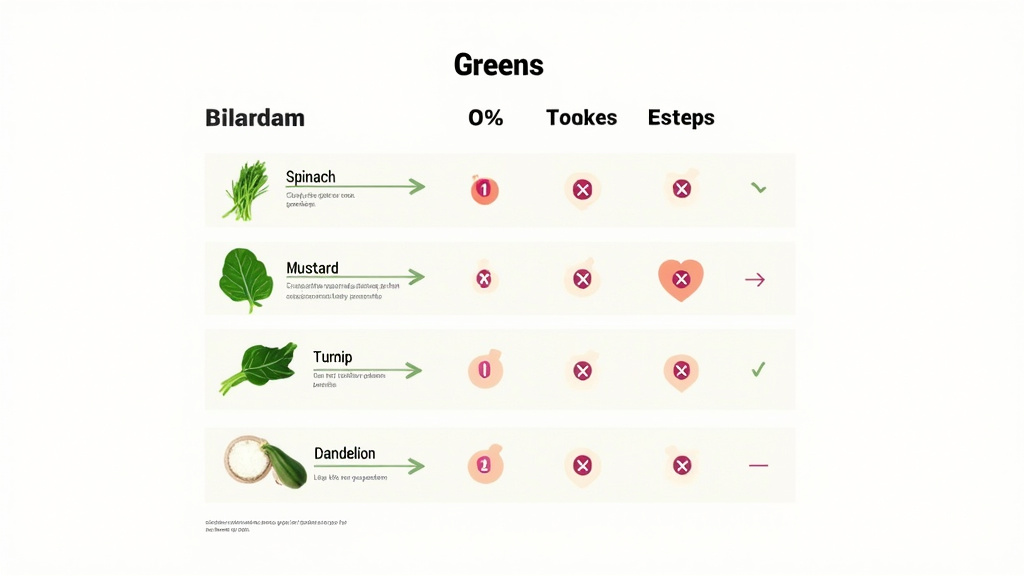
Replace spinach with greens that have a favorable calcium-to-phosphorus (Ca:P) ratio. You want a ratio of 2:1 or higher. These greens provide bioavailable calcium without anti-nutrients.
Here is a comparison of common greens, based on standard nutritional databases. Spinach is included for contrast.
| Green | Calcium (mg/100g) | Phosphorus (mg/100g) | Ca:P Ratio | Oxalate Level | Verdict |
|---|---|---|---|---|---|
| Collard Greens | 232 | 25 | 9.3:1 | Low | Excellent Daily Staple |
| Mustard Greens | 115 | 42 | 2.7:1 | Low | Excellent Daily Staple |
| Turnip Greens | 190 | 42 | 4.5:1 | Low | Excellent Daily Staple |
| Dandelion Greens | 187 | 66 | 2.8:1 | Low | Excellent Daily Staple |
| Spinach | 99 | 49 | 2.0:1 | Very High | Avoid / Rare Treat Only |
| Kale | 254 | 55 | 4.6:1 | Moderate | Feed in Rotation (2x/week) |
Your dragon’s daily salad should be built from the top four greens on that list. Rotate between collard, mustard, turnip, and dandelion greens to provide variety and a broad nutrient profile. You can incorporate other safe vegetables for bearded dragons like bell peppers or shredded squash for color and texture.
Dandelion greens are a particular powerhouse. They are highly nutritious, often grow pesticide-free in your yard (away from roads), and many dragons relish them. Always wash foraged greens thoroughly.
I prefer a base of collard greens for their sturdy texture and superior calcium ratio. They hold up better in the enclosure than softer greens, reducing mess and waste. My dragons consistently eat them when they’d sometimes ignore more delicate options.
What If Your Dragon Loves Spinach?
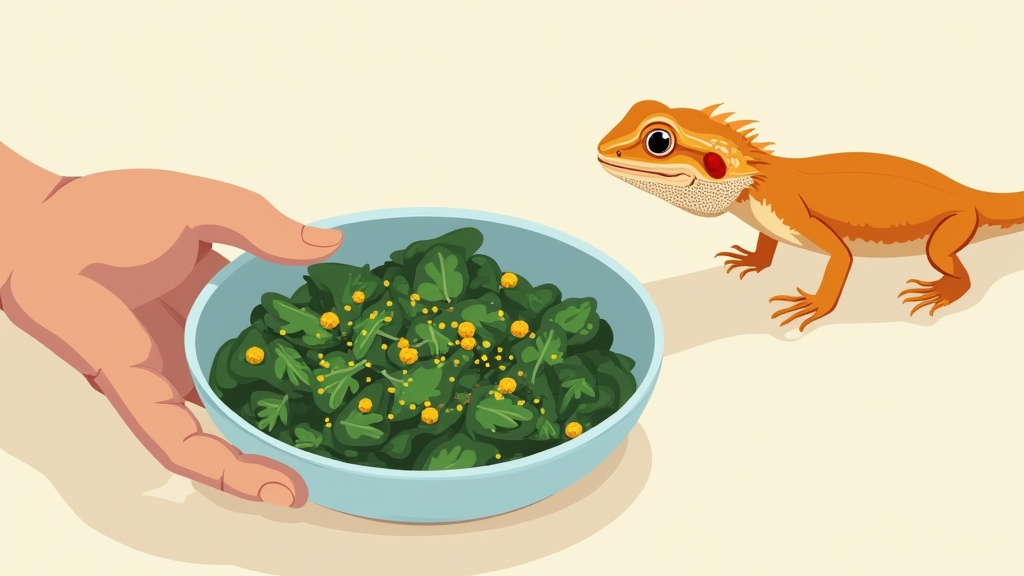
Some dragons develop a taste for it. The solution is not to give in.
A dragon refusing other greens for spinach is exhibiting the reptile equivalent of a child holding out for candy. It’s a behavioral standoff. The Reddit archives are full of owners whose dragons went on hunger strikes for bugs. The unanimous solution from experienced keepers is tough love: offer only the correct greens daily until they capitulate. A healthy dragon will not starve itself.
To make staple greens more appealing:
– Chop everything finely and mix thoroughly so preferred and non-preferred items are combined.
– Add a sprinkle of bee pollen. This sweet, fragrant powder is a potent appetite stimulant for many reptiles.
– Ensure proper basking temps. A dragon that isn’t warm enough (105-110°F at the basking spot) will not have the appetite or metabolism to digest greens properly.
– Try different textures. Sometimes ribbon-cut collard greens work where chopped turnip greens fail.
Remember, arugula for bearded dragons is a safe, low-oxalate alternative that has a slightly peppery taste some dragons enjoy. It can be a useful tool to break a spinach fixation.
Frequently Asked Questions
My bearded dragon ate a whole bowl of spinach. What do I do?
Do not panic. A single large dose is unlikely to cause acute toxicity. The danger is chronic, cumulative binding of calcium. Immediately stop all spinach. For the next two weeks, ensure perfect husbandry: provide a strong, new UVB tube light (Reptisun 10.0 or Arcadia 12%), dust insects daily with a phosphorus-free calcium powder, and offer a daily salad of high-calcium greens like collard or mustard greens. Monitor for lethargy or tremors.
Can cooking spinach reduce the oxalates for bearded dragons?
No. Do not feed cooked spinach. Cooking can break down some oxalates, but it also destroys water-soluble vitamins and creates a mushy texture that offers no nutritional benefit for dragons. It introduces unnecessary moisture to their diet, which can cause loose stools. Stick to raw, approved greens.
Are other high-oxalate foods also dangerous?
Yes. Foods like beet greens, Swiss chard, and rhubarb are also very high in oxalates and should be avoided entirely. This is why a comprehensive vegetable guide is essential. When evaluating new foods, always check their oxalate content and calcium-to-phosphorus ratio first.
Can I feed spinach if I also provide extra calcium powder?
This is the most common logical fallacy. Adding more calcium powder does not solve the oxalate problem. The oxalates will bind to the extra powder in the gut just as easily as they bind to dietary calcium. You are creating more insoluble calcium oxalate waste, not increasing usable calcium. You are literally throwing your supplement money away. Focus on reducing the binder (oxalates), not overloading the system with more bindable calcium.
The Bottom Line
Spinach is a nutritional trap for bearded dragons. The short-term benefit of a vitamin-rich leaf is utterly negated by the long-term calcium theft performed by its oxalates. You have a clear, simple choice.
Build your dragon’s diet on proven, calcium-rich foundations: collard greens, mustard greens, turnip greens, and dandelion greens. Use dandelion greens and flowers and turnip greens as a staple for variety and robust health. If you feel compelled to offer spinach, remember it is a condiment, not a component. One tiny leaf, once a month, buried in a mountain of better greens.
Your dragon’s strong bones and steady gait depend on the calcium you put in its bowl today. Don’t let a leafy green thief steal it.