
Feeding Broccoli to Bearded Dragons: A Vet-Approved Guide
This post contains affiliate links. As an Amazon Associate, we earn from qualifying purchases.
Yes, bearded dragons can eat broccoli. It’s safe as an occasional treat, fed raw and chopped small, two or three times per month. Never make it a staple. Broccoli contains phosphorus and oxalates that can interfere with calcium absorption, which over time leads to metabolic bone disease. The key is pairing it with calcium-rich greens like collard greens and limiting the portion.
Most owners see a list of safe vegetables and assume everything on it is a daily staple. Broccoli sits on that list, but its nutritional profile is a trap. Feeding it weekly turns a minor phosphorus imbalance into a chronic calcium drain.
This guide covers the exact ratio, the one preparation mistake that causes choking, and the calcium-rich greens you must serve alongside it to keep your dragon’s bones strong.
Key Takeaways
- Broccoli is an occasional treat, not a staple. Feed it two or three times per month at most.
- The calcium-to-phosphorus ratio in broccoli is 0.7:1. Phosphorus binds calcium, so you must counterbalance it with high-calcium greens like collard greens or kale in the same meal.
- Raw broccoli is superior. Cooking leaches out water-soluble vitamins like C and B, and softens the fiber to a mush that can cause impaction.
- Chop pieces smaller than the space between your dragon’s eyes. A chunk the size of a fingernail is a choking hazard for adults; for juveniles, it’s a direct blockage risk.
- Broccoli leaves are safer than florets. The leaves have a slightly better mineral profile and lower goitrogen content. If you have a choice, use the leaves.
The Phosphorus Problem You Can’t Ignore
Broccoli’s real issue isn’t toxicity. It’s mineral math.
The vegetable carries a decent amount of calcium, about 47 milligrams per 100 grams. But it also carries about 66 milligrams of phosphorus. That gives it a calcium-to-phosphorus (Ca:P) ratio of roughly 0.7:1. Phosphorus wins.
In a dragon’s gut, phosphorus binds with calcium. It makes the calcium unavailable for absorption. Your dragon eats the broccoli, gets some vitamins, but loses access to the calcium in that meal and even from other foods eaten at the same time.
Common mistake: Feeding broccoli without a calcium-rich counterbalance, the phosphorus binds dietary calcium, and within three months of weekly feeding you’ll see weakened bones, lethargy, and trouble climbing.
Metabolic bone disease (MBD) starts this way. It’s a slow drain. The dragon isn’t getting enough usable calcium to maintain bone density. The bones become flexible, almost rubbery. The jaw softens. The spine can curve.
The fix is immediate. Never serve broccoli alone.
TL;DR: Broccoli’s phosphorus content steals calcium from your dragon’s diet. Always pair it with a high-calcium green like collard greens or kale in the same meal.
How Much Broccoli Is Safe?
The math is simple. For an adult bearded dragon, a safe portion is one teaspoon of chopped broccoli florets, mixed into a larger salad of staple greens. Offer this portion no more than two or three times per month.
I used to think “occasional” meant once a week. My dragon, a five-year-old male named Rex, got a small broccoli floret every Sunday salad for about four months. He was still eating, still basking. Then he started hesitating before jumping off his log. His landings were awkward. A vet check showed early-stage MBD. We cut the broccoli entirely, upped his calcium dusting, and switched his staple to collard greens. His mobility came back in six weeks. But the bone density scan showed permanent thinning.
That weekly floret was the culprit.
For juvenile dragons under a year old, the answer is different. Their diet should be 50-70% insects for protein growth. Their tiny digestive systems are more vulnerable to mineral imbalances.
| Dragon Age | Broccoli Frequency | Maximum Portion | Critical Rule |
|---|---|---|---|
| Juvenile (<12 months) | Avoid or once a month | Half a teaspoon, finely chopped | Must be mixed with 3x the volume of staple greens (collard greens, mustard greens) |
| Adult (12+ months) | 2–3 times per month | One teaspoon, chopped | Always serve with a calcium-rich base green (kale, collard greens) |
| Senior (>8 years) | 1–2 times per month | Half a teaspoon, chopped | Monitor stool consistency; broccoli fiber can slow digestion in older dragons |
Baby dragons shouldn’t get broccoli at all. Their primary risk is impaction from fiber, not just mineral imbalance. A piece too large blocks their gut.
The smell of fresh broccoli is sharp, almost metallic. That’s the sulfur compound. Dragons usually go for it because the scent is novel. Don’t let enthusiasm dictate frequency.
TL;DR: Adults get a teaspoon-sized treat twice a month. Juveniles get half that, once a month. Babies get none.
Raw vs Cooked: Why Cooking Ruins It
You might steam broccoli for yourself to soften it. For a dragon, that’s a mistake.
Cooking broccoli, especially boiling, leaches out the water-soluble vitamins. C and B complex, into the cooking water. What remains is a softer, mushy fiber. That mush doesn’t clean the gut the way raw fibrous vegetables do. It can clump and slow digestion.
Light steaming is less destructive than boiling, but it still softens the structure. Raw broccoli provides mechanical scrubbing action in the intestines. It helps move food along.
Steaming broccoli for your dragon reduces its vitamin C content by about 25% per the USDA nutrient retention data. The texture change also increases the risk of gut slowdown in older dragons.
Then there the added risk. If you steam broccoli, you might accidentally add a trace of oil, salt, or seasoning from your own kitchen. Even a tiny amount of salted water residue on the vegetable is harmful. Reptile kidneys aren’t built to process added sodium.
Frozen broccoli is a compromise. It’s usually blanched before freezing, which means it’s lightly cooked. Thaw it completely. Check the label for added salts or preservatives. If it’s plain frozen broccoli, it’s acceptable as an occasional option, but raw fresh is always better.
The rule is firm. Serve it raw, washed, and chopped.
The 3-Step Prep That Cuts Choking Risk
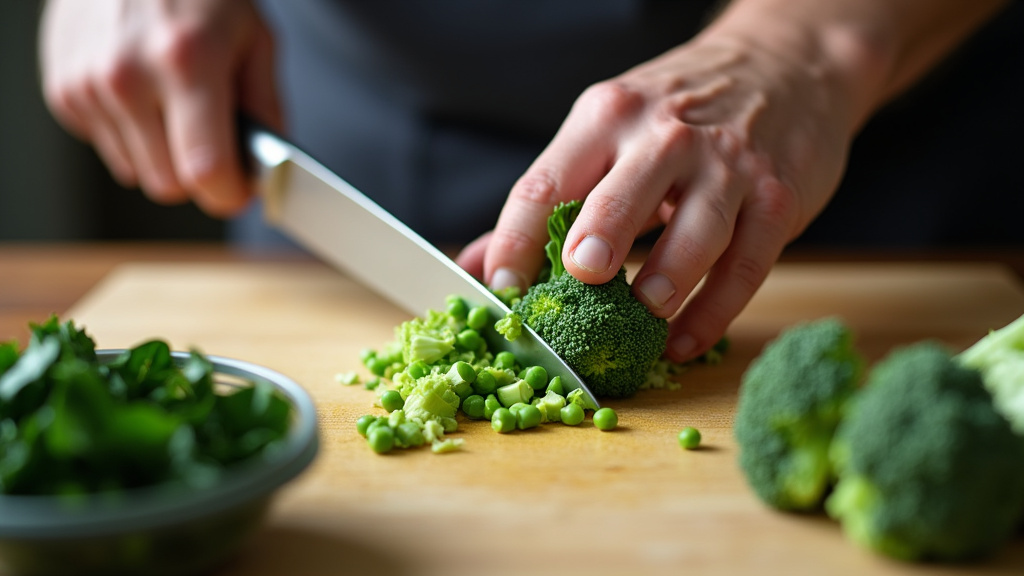
Preparation isn’t just about making it edible. It’s about making it safe.
Step 1: Wash the florets under cold running water for 30 seconds. Pesticide residue on conventional broccoli isn’t a huge dose for humans, but for a 500-gram reptile it’s a concentrated toxin. Rinsing removes surface chemicals. Dry them with a paper towel.
Step 2: Cut with a sharp knife. Discard the main stem and any thick stalks. They’re too fibrous and tough. Use only the florets and the tender leaves. Now chop the florets into pieces no larger than the space between your dragon’s eyes. For an adult, that’s about the size of a pea. For a juvenile, it’s half that.
Step 3: Mix immediately with staple greens. Do not serve a pile of broccoli pieces. Take your one teaspoon of chopped broccoli and mix it thoroughly into a bowl of chopped collard greens, mustard greens, or kale as a staple green. The dragon will eat the broccoli pieces incidentally while foraging for the greens.
Skipping step three is where most choking happens. A dragon sees a pile of bright green broccoli pieces and gobbles them. One large piece gets lodged. The choking reflex in reptiles is weak; they can’t cough it out.
The Calcium Counterbalance
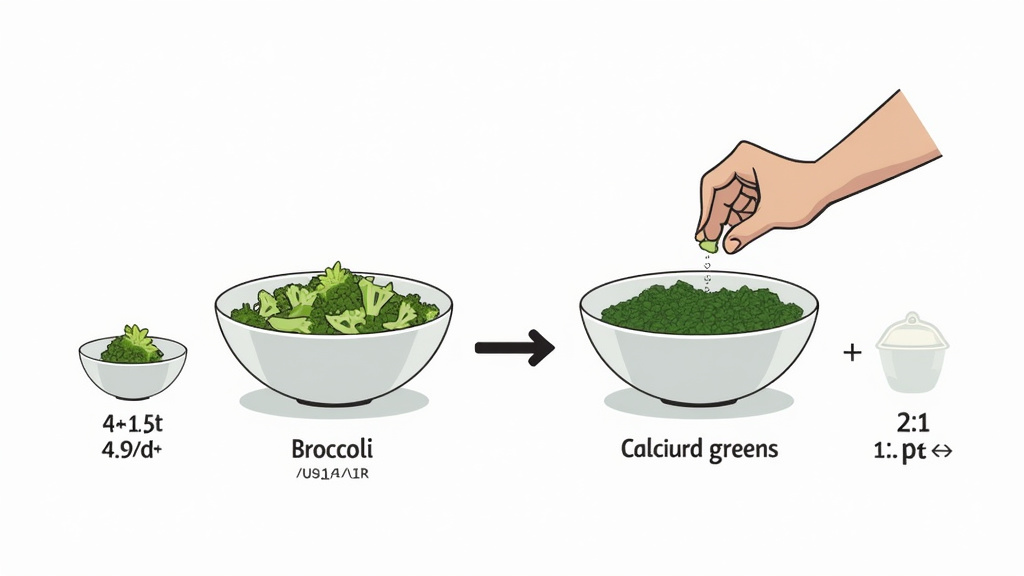
Broccoli alone is a net calcium loss. Pairing it turns it into a neutral treat.
The goal is to surround the broccoli with greens that have a high Ca:P ratio, where calcium dramatically outweighs phosphorus. That surplus calcium in the meal offsets the phosphorus binding in the broccoli.
Collard greens are the first choice. Their Ca:P ratio sits around 14.5:1. That’s a massive surplus. Mustard greens run about 7.5:1. Kale as a staple green has a ratio around 4.5:1, which is still strong.
Common mistake: Serving broccoli with low-calcium vegetables like lettuce or cucumber, the meal’s total calcium drops, and the broccoli’s phosphorus actively blocks what little is there.
Here’s the mix that works:
– 1 part chopped broccoli (1 teaspoon)
– 3 parts chopped collard greens or mustard greens
– A light dusting of calcium carbonate powder (without D3 if your UVB lighting is adequate)
Stir it together in the feeding bowl. The dragon eats the whole mix.
Other safe vegetables like zucchini for bearded dragons or bell peppers as a treat can be added to this base, but they shouldn’t replace the high-calcium green. Those are extras.
This counterbalance principle applies to other occasional vegetables with poor Ca:P ratios, like green beans as a vegetable or asparagus for bearded dragons. Always anchor them to a calcium-rich green.
TL;DR: Mix one teaspoon of broccoli with three teaspoons of collard greens. The greens’ calcium surplus protects your dragon from the broccoli’s phosphorus.
Oxalates and Goitrogens: The Secondary Risks
Oxalates are organic acids that bind calcium, similar to phosphorus. Goitrogens are compounds that can interfere with thyroid hormone production.
Broccoli contains both, but at relatively low levels compared to spinach or kale. The oxalate content in broccoli is about 10 milligrams per 100 grams. Spinach has over 200 milligrams per 100 grams. So broccoli’s oxalate risk is minor, unless you feed it daily.
The goitrogen content is also low. It’s not a concern for occasional feeding.
The real danger is cumulative. If you feed broccoli weekly, and also feed kale weekly (which has higher goitrogens), and maybe cabbage for bearded dragons occasionally (which has goitrogens), the combined load can affect thyroid function over years. Thyroid issues in dragons show as weight gain, lethargy, and poor shedding.
Feed broccoli, kale, and cabbage on different weeks. Never stack them in the same month.
This is why a varied diet is non-negotiable. Rotate your greens. Use arugula as a leafy green one week, celery for bearded dragons another, collard greens another. Broccoli gets its two slots per month, spaced apart.
The The Bearded Dragon nutrition guide lists the oxalate and goitrogen numbers for common vegetables. It’s a reference worth checking.
What About Broccoli Leaves?
The dark green leaves attached to the broccoli stalk are nutritionally different from the florets.
They have a slightly higher calcium content and a lower goitrogen load. Their texture is also less dense, making them easier to chop into safe sizes. If you have a choice between florets and leaves for your dragon, choose the leaves.
Prepare them the same way: wash, chop to between-the-eyes size, mix with a calcium-rich base. They still contain phosphorus, so the calcium counterbalance rule remains.
Leaves are often discarded at the store. If you buy whole broccoli crowns, salvage those leaves. They’re a marginally safer occasional treat.
When to Never Feed Broccoli
Three scenarios veto broccoli entirely.
First, if your dragon has a history of gut slowdown or impaction. The fiber in broccoli, even raw, can exacerbate this. Stick to easily digestible vegetables like cucumbers for hydration or corn for bearded dragons (though corn is high-sugar, so use sparingly).
Second, if your dragon is under six months old. Juveniles need protein for growth. Their digestive systems are too small for broccoli’s fiber volume. The risk of blockage outweighs any vitamin benefit.
Third, if your dragon is showing early signs of metabolic bone disease. Any food that hinders calcium absorption is off the menu until the condition is stabilized with vet guidance, calcium supplements, and corrected UVB lighting.
In those cases, the safe vegetable list shifts to high-calcium, low-phosphorus, low-oxalate options. Collard greens, mustard greens, and dandelion greens become the daily staples.
Frequently Asked Questions
Can bearded dragons eat broccoli stems?
No. The stems are tough, fibrous, and difficult to chop safely. They pose a higher choking risk and offer less nutritional value. Use only the florets and tender leaves.
Is frozen broccoli safe?
Yes, if it’s plain frozen broccoli with no added salt, sauces, or preservatives. Thaw it completely to room temperature before chopping and serving. Frozen broccoli is typically blanched, which means it’s lightly cooked, so it loses some vitamin C compared to raw.
Can baby bearded dragons eat broccoli?
It’s not recommended. Babies should focus on insect protein and easily digestible greens. The fiber volume and phosphorus risk are too high for their small systems. Wait until they are at least 12 months old.
How do I know if my dragon is getting too much broccoli?
Watch for lethargy, decreased climbing activity, and softer jaw structure. These are early signs of calcium deficiency. If stools become drier or less frequent, the fiber may be slowing digestion. Cut broccoli out for a month and see if symptoms improve.
What are the best greens to mix with broccoli?
Collard greens are the top choice due to their high calcium-to-phosphorus ratio. Mustard greens and kale are also excellent. Avoid mixing broccoli with lettuce, cucumber, or zucchini as the base, those are low-calcium and won’t counterbalance the phosphorus.
The Bottom Line
Broccoli is a conditional yes. It offers vitamins and fiber, but its phosphorus content demands a strict protocol.
Feed it raw, chopped pea-sized, two or three times a month. Always mix it with a triple portion of a calcium-rich green like collard greens. Never serve it alone.
Skip the stems. Use the leaves if you have them. Avoid it entirely for juveniles under a year and dragons with existing gut or bone issues.
That weekly floret habit I had with Rex taught me the math. The bones don’t show the damage until months later. Follow the ratio, follow the frequency, and your dragon gets the benefit without the risk.