
Can Bearded Dragons Eat Apples? Vet-Approved Feeding Guide
This post contains affiliate links. As an Amazon Associate, we earn from qualifying purchases.
Yes, bearded dragons can eat apples as an occasional treat, not a staple food. Offer one or two tiny, peeled, seedless cubes no more than once every two weeks. The high sugar and moderate oxalate content make frequent feeding risky for obesity and kidney strain.
Most owners get this wrong by focusing on the vitamin C and forgetting the fructose. They see a happy dragon gobble up a sweet piece and think it’s a healthy daily snack. That’s how you end up with a pudgy, sluggish reptile facing long-term metabolic issues.
This guide covers the exact preparation to remove risks, which apple varieties to avoid, and how to spot the first signs of trouble. You’ll also learn what to feed instead for a balanced diet that keeps your dragon lean and active.
Key Takeaways
- Feed only peeled, seedless apple cubes once every 10–14 days as a minor treat.
- Always remove the skin (pesticide risk) and every seed (cyanide risk).
- Sweet varieties like Gala or Fuji are safer than tart Granny Smith apples.
- High sugar content can lead to obesity and fatty liver disease if overfed.
- Watch for watery stools or lack of appetite within two days as a sign of intolerance.
The Apple Nutrition Breakdown: Good Stuff and Bad Stuff
Apples offer a mix of nutrients that are both beneficial and problematic for a bearded dragon’s unique physiology. The primary benefit is vitamin C, an antioxidant that supports immune function. A 100-gram serving of apple provides about 4.6 mg of vitamin C. For a reptile that doesn’t synthesize its own vitamin C, this is a useful dietary source.
The problem is the delivery system. That same 100-gram serving contains about 10.4 grams of sugar, almost entirely fructose.
Common mistake: Assuming “natural sugar” is safe for reptiles, a bearded dragon’s liver processes fructose inefficiently. Weekly apple treats can overwhelm hepatic function, leading to fatty deposits visible around the limbs and tail base within four to six months.
Fiber is the other positive. At 2.4 grams per 100-gram serving, the pectin in apple flesh can aid digestion. This is useful for dragons that occasionally get bound up from a diet too heavy in insects. But you can get the same benefit from safer, lower-sugar fruits like raspberries.
The final hidden risk is oxalates. Apples contain a moderate amount of oxalic acid. This compound binds to calcium in the gut, preventing its absorption and increasing the risk of metabolic bone disease over time. It’s a slow, cumulative effect.
TL;DR: Apples give vitamin C and fiber but deliver too much sugar and oxalates for regular consumption. They are a treat, not a food group.
How Often Can They Actually Eat Apples?
The safe feeding frequency is once, maybe twice, a month. I stick to a strict once every 14 days schedule for my adults. For a juvenile dragon under a year old, I skip fruit treats altogether. Their bodies are growing bone and muscle mass, and they need every bit of calcium they can get without oxalate interference.
This isn’t a arbitrary rule. The VCA Animal Hospitals feeding guide for bearded dragons classifies fruits as “occasional” items, to be offered sparingly within a salad. It places the nutritional priority on leafy greens and appropriate insects.
Think of an apple cube as the reptile equivalent of a single cookie. You wouldn’t feed your kid cookies daily. The metabolic stakes are similar.
| Dragon Age | Recommended Apple Frequency | Maximum Serving Size | Primary Risk if Overfed |
|---|---|---|---|
| Juvenile (<12 months) | None | 0 cubes | Calcium malabsorption, stunted growth |
| Adult (1–7 years) | Once every 10–14 days | 1–2 pea-sized cubes | Obesity, fatty liver disease |
| Senior (>7 years) | Once a month or less | 1 small cube | Kidney strain from oxalates |
The table shows a clear downgrade as the animal ages. Senior dragons have less efficient kidneys and a slower metabolism. That monthly treat is pushing it. I’ve had older dragons completely refuse fruit anyway, their appetite for sweets often fades.
A single extra feeding might seem harmless. But reptile nutrition is a compounding game. That apple, plus a piece of mango the next week, plus a blackberry the week after adds up to a significant sugar load. You won’t see the weight gain immediately. It creeps up over a season.
Which Apple Varieties Are Safest (And Which to Avoid)
Not all apples are created equal in a bearded dragon’s bowl. The sugar-to-acid ratio varies dramatically by cultivar, and that changes the risk profile.
Sweet, low-acid varieties are the best choice. Gala, Fuji, and Golden Delicious apples have higher natural sugar, but their low malic acid content is gentler on your dragon’s digestive tract. The sweetness also means they’ll likely eat it, which is the point of a treat. The peel on these is typically thinner, too, making it easier to remove completely.
Tart, high-acid apples are a problem. Granny Smith is the main offender here.
I made this mistake with a rescue dragon named Spike. He loved the crisp bite of a Granny Smith piece. Two hours later, he was gaping, holding his mouth open in discomfort, and passed unusually watery stool the next morning. The malic acid had irritated his gut. We switched to Fuji and the issue vanished.
The acidity can cause immediate gastric upset. It’s not worth the risk. Red Delicious apples, while not overly acidic, often have a thick, waxy peel that’s harder to remove and may harbor more pesticides. Avoid them for practicality.
Here is a quick comparison to keep on hand:
| Apple Variety | Sugar Content | Acidity Level | Safe for Beardies? | Notes |
|---|---|---|---|---|
| Gala | High | Low | Yes | Sweet, thin skin, good first choice |
| Fuji | Very High | Low | Yes | Very sweet, often a favorite |
| Granny Smith | Low | Very High | No | High malic acid causes gut irritation |
| Red Delicious | Medium | Medium | Not Recommended | Thick, waxy skin is difficult to clean |
Stick with what’s known. If you’re buying apples for yourself, set aside a small slice of a Gala or Fuji for your dragon’s next treat day. Skip the gourmet or unusually tart varieties altogether.
How to Prepare Apples for Your Bearded Dragon

Preparation is everything. Skipping a step here introduces real physical hazards. Follow this sequence exactly.
Before you start: Wash your hands and all utensils. A bearded dragon’s immune system is sensitive to bacteria like Salmonella, which can be present on fruit skins and transfer to the flesh during cutting.
First, select a single, fresh apple. Organic is ideal but not mandatory. What’s mandatory is washing. Hold the apple under cool running water and scrub the entire surface with a clean vegetable brush. This isn’t just about dirt. It’s about removing pesticide residues and surface microbes. Dry it with a paper towel.
Second, peel the entire apple. Use a standard vegetable peeler and remove every bit of skin. The peel is difficult for them to digest and is the primary reservoir for chemicals. You should see only the smooth, naked flesh.
Third, cut the apple in half through the core. Lay each half flat on the cutting board. Now, cut out the core. You need to remove every seed. Apple seeds contain amygdalin, which metabolizes into cyanide. While a single seed likely won’t poison a large dragon, it’s a completely unnecessary risk and the compound is a gut irritant.
Fourth, slice the peeled, seedless flesh into small, flat pieces. The piece should be no larger than the space between your dragon’s eyes. For most adults, this is a cube about 1/4 inch on each side. Cutting it flat prevents it from rolling and makes it easy to pick up.
Finally, mix one or two of these cubes into their regular salad of chopped greens. The apple should never be served alone. Bury it within collard greens, mustard greens, or dandelion greens. This encourages them to eat their staples first and treats the apple as a hidden prize.
TL;DR: Wash, peel, de-seed, cube tiny, and mix into greens. The skin and seeds are non-negotiable removal items.
What Happens If You Feed Apples Too Often?
The consequences of overfeeding apples are slow-moving but serious. They mirror the health issues seen in humans with poor diets, just on a reptilian timeline.
The first and most common issue is weight gain. Excess dietary fructose is converted to fat in the liver. Bearded dragons store this fat in their abdomen, tail base, and limbs. You’ll notice your dragon’s sides becoming rounder, and the fat pads on the top of its head may bulge. This extra weight stresses their joints and heart, leading to lethargy. A dragon that used to scramble around its enclosure will become a couch potato.
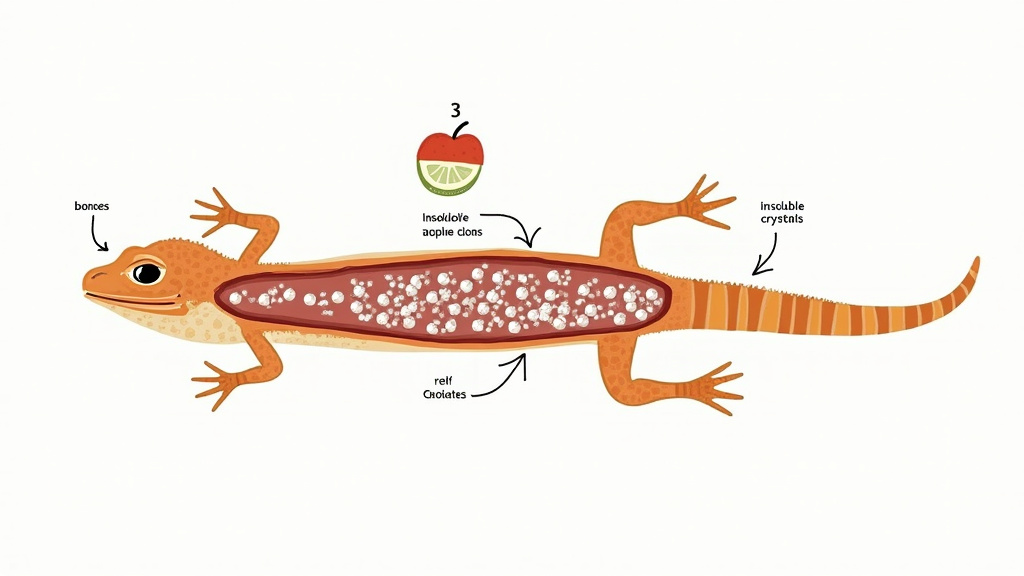
The second issue is nutritional secondary hyperparathyroidism, or metabolic bone disease (MBD). The oxalates in apples bind to dietary calcium, forming insoluble calcium oxalate crystals that pass through the feces. This steals usable calcium from the bloodstream. The body then leaches calcium from bones to maintain critical blood levels, weakening the skeleton. Early signs include a softer, flexible lower jaw, tremors in the legs, and difficulty climbing.
Common mistake: Believing calcium powder dusting cancels out oxalates, the binding happens in the gut before absorption. Once oxalates and calcium meet in the digestive tract, that calcium is already lost. You cannot supplement your way out of a high-oxalate diet.
The third risk is digestive upset. The high sugar and acidity can disrupt the delicate balance of gut flora, leading to diarrhea. Reptile diarrhea is serious because it leads to rapid dehydration. If your dragon’s stool is watery or unusually foul-smelling within 48 hours of an apple treat, discontinue fruit immediately and ensure they are drinking.
These problems are preventable with strict moderation. A treat is defined by its rarity. If it’s not rare, it’s just a bad habit.
Better Treat Alternatives to Apples
If you want to offer variety without the sugar load, several fruits are superior choices. These options provide similar benefits with fewer drawbacks.
Berries are the best fruit category. Raspberries and blackberries are lower in sugar than apples and higher in fiber and antioxidants. They are also very easy to prepare, just mash one berry and mix a tiny bit into the salad. Blueberries are another good option, though their skin is slightly tougher.
Melons like cantaloupe are fantastic for hydration. They are mostly water with a very mild sugar content. A single small cube of cantaloupe on a hot day can be a refreshing treat. The soft texture is also easy for senior dragons to eat.
For a deep dive on other options, our safe fruits for bearded dragons list covers over a dozen choices. It compares sugar, oxalate, and serving size for each one.
When considering tropical fruits like mango or pineapple, remember they are still high in sugar. They share the “occasional treat” status with apples. Acidic fruits like pineapple require the same caution as tart apples.
The golden rule is that no fruit should ever replace a staple green. Collard greens, escarole, and dandelion greens must constitute about 80-90% of the plant matter an adult dragon eats. Fruit is the sprinkles on top of the salad, not the lettuce itself.
The Right Diet Balance: Where Apples Fit In
A healthy bearded dragon diet is a pyramid. The broad base is leafy greens. The middle layer is protein from appropriate insects like dubia roaches and black soldier fly larvae. The tiny apex is the occasional fruit or vegetable treat, things like apple, squash, or bell pepper.
For an adult dragon, the daily salad might look like this:
– 1 cup chopped collard greens (base)
– 1 tablespoon grated butternut squash (vitamin A source)
– 2-3 edible flowers like nasturtium (enrichment)
– Once every 2 weeks: 1 tiny cube of peeled Gala apple (treat)
The apple is a flavor enhancer and a source of mental stimulation. Its rarity makes it interesting. This is the correct role for fruit.
Contrast this with a problematic diet where fruit appears weekly. The pyramid inverts. The dragon fills up on sweet, sugary items, ignores its greens, and the insectivore protein balance gets thrown off. The result is malnutrition wrapped in obesity, a dragon that is both fat and deficient in key vitamins and minerals.
Referencing a trusted bearded dragon diet guide from an established reptile community helps validate this structure. These resources consistently place fruit at the very top of the feeding chart, denoting “sparing” or “occasional” use.
Your dragon doesn’t need apple to survive. It needs proper greens, calcium, and protein. The apple is for you, to enjoy the interaction of giving a treat. Keep that perspective, and you’ll feed it correctly.
Frequently Asked Questions
My bearded dragon loves apples and seems fine eating them weekly. Should I stop?
Yes, you should stop and reduce the frequency. Reptiles are very good at masking health issues. Weight gain and early metabolic bone disease are not externally visible until they are advanced. The “seems fine” stage is when the internal damage is accumulating. Shift to a bi-weekly schedule and monitor their weight.
Can I leave the apple peel on for extra fiber?
No. The fiber benefit is not worth the risk. The peel is harder to digest and is the primary site for pesticide residue, even on washed fruit. It can also cause impaction in smaller dragons. Always peel the apple completely.
Are apple seeds really that dangerous?
single seed likely won’t cause acute cyanide poisoning in a large adult, but why risk it? The seeds are also a choking hazard and an intestinal irritant. Proper preparation means removing the entire core and every seed. It takes ten extra seconds.
What are the first signs my dragon shouldn’t eat apples?
Watch for two things: changes in stool and changes in behavior. Watery diarrhea or unusually smelly feces within two days of feeding is a clear sign of intolerance. Lethargy, lack of appetite for their staple foods, or gaping (holding the mouth open) can indicate digestive discomfort from acidity.
Can baby bearded dragons eat apples?
No. Juveniles should not be given any fruit. Their dietary focus must be on high-protein insects and calcium-rich greens to support rapid bone and tissue growth. Introducing sugar and oxalates during this critical period can hinder development and set them up for health problems as adults.
What about other fruits like cherries or peaches?
They share the same treat status. High-sugar fruits like cherries must be pitted and offered even less frequently than apples due to their higher sugar concentration. High oxalate fruits like peaches also require careful limitation to protect calcium absorption.
The Bottom Line
Apples are a permissible treat, not a dietary requirement. The strict rules, peeling, de-seeding, tiny portions, and a bi-weekly limit, exist because the risks of sugar, oxalates, and pesticides are real. Your dragon’s enthusiasm for the sweet crunch is not a nutritional guide.
Stick to sweet varieties, prepare them meticulously, and always mix them into a salad of staple greens. Watch closely after the first feeding of any new food. There are plenty of other safe fruits and vegetables to rotate for variety, like cantaloupe or berries like blackberries.
When in doubt, lean toward feeding more greens, not more fruit. That principle has kept more bearded dragons healthy than any sweet treat ever will.