
Can Bearded Dragons Eat Basil? The Safe Feeding Guide
This post contains affiliate links. As an Amazon Associate, we earn from qualifying purchases.
Yes, bearded dragons can eat basil. It is a non-toxic, fragrant herb that provides vitamins and minerals. Feed it in strict moderation, no more than once a week, due to its high Vitamin A content and a calcium-to-phosphorus ratio of 3:1. Always serve it fresh, chopped, and mixed with staple greens like collard or mustard greens.
The mistake most keepers make is treating “safe” as “unlimited.” They see their dragon eagerly munch the aromatic leaves and think it’s a daily green. That enthusiasm is the trap. Basil’s nutritional profile, while beneficial in small doses, creates imbalances that accumulate silently.
This guide covers the precise risks, the correct weekly portion, how to prepare it, and what to watch for after feeding. You will also learn which staple greens to pair with basil for a balanced diet.
Key Takeaways
- Basil is safe but acidic and vitamin-rich, making once-a-week the hard ceiling for feeding frequency.
- Its 3:1 calcium-to-phosphorus ratio is higher than the ideal 2:1, requiring you to balance it with other greens.
- Vitamin A toxicity is a real risk with overfeeding, especially if you use vitamin supplements.
- Always use fresh, organic basil; never offer dried basil or seeds.
- Chop it finely and mix it into a salad dominated by staple greens like collard greens or mustard greens.
Why Basil Isn’t a Daily Green
Head design changes the entire process. Look at the business end of your trimmer.
Basil’s safety profile is good, but its nutrient density is the problem. The herb packs a concentrated punch of Vitamin A and possesses a calcium-to-phosphorus (Ca:P) ratio of 3:1. For a bearded dragon, the target Ca:P ratio for any single food item is between 1:1 and 2:1. This is non-negotiable for preventing Metabolic Bone Disease (MBD), a crippling condition caused by calcium deficiency.
A 3:1 ratio sounds like extra calcium, which is good, right? Not exactly. It disrupts the delicate balance the dragon’s body uses to metabolize both minerals. Consistently high ratios from a single food source can interfere with the absorption of calcium from other, better-balanced foods in the diet.
Common mistake: Feeding basil several times a week, the cumulative Vitamin A and imbalanced Ca:P ratio can suppress appetite for staple greens within a month, leading to nutritional gaps.
The high Vitamin A content (as beta-carotene) is the other major constraint. While essential for vision and immune function, Vitamin A is fat-soluble. This means excess amounts are stored in the liver, not excreted like water-soluble vitamins. Chronic over-supplementation, whether from diet or liquid supplements, leads to Vitamin A toxicity (hypervitaminosis A). Symptoms include swelling, lethargy, and joint pain.
TL;DR: Basil’s 3:1 Ca:P ratio and potent Vitamin A levels make it a weekly treat, not a staple. Daily use crowds out nutritionally balanced greens.
The Nutritional Breakdown: What’s Actually in Basil?
You need to know what you’re serving. Fresh basil (Ocimum basilicum) offers a suite of nutrients beneficial in the right context.
The primary value comes from vitamins K, A, and B6, along with minerals like manganese, calcium, and magnesium. Vitamin K aids in blood clotting and bone metabolism. The calcium content is decent, but as we’ve seen, it’s paired with even less phosphorus. The fragrant oils that make basil appealing to us (and our dragons) also contain compounds like eugenol, which have mild anti-inflammatory properties.
Here’s how basil stacks up against two common staple greens. Notice the Ca:P column.
| Green | Key Benefit | Calcium:Phosphorus Ratio | Best For |
|---|---|---|---|
| Basil | High in Vitamins A & K | 3:1 | Occasional flavor variety |
| Collard Greens | Excellent calcium, low oxalates | 14.5:1 | Daily staple green |
| Mustard Greens | Good fiber, vitamin variety | 2.4:1 | Regular salad base |
Collard greens have a sky-high ratio, but they are also extremely low in oxalates, compounds that bind to calcium and make it unusable. This makes their calcium highly bioavailable. Basil doesn’t have that same pass. Its ratio is the main figure to manage.
The acidity (low pH) of basil is the final note. A bearded dragon’s digestive system is designed for mostly neutral to slightly alkaline vegetation. Large amounts of acidic food can upset their gut flora, leading to diarrhea or loss of appetite.
I learned the acidity lesson the hard way with a particularly fragrant Genovese basil plant. My adult dragon, Smaug, devoured a handful over two days. By the third day, his stool was runny and he ignored his usual collard greens. It took three days of a bland diet of squash and dandelion greens to reset his system. Now, one or two leaves per week is the absolute limit.
TL;DR: Basil provides vitamins and minerals, but its 3:1 Ca:P ratio and acidity mean it should never be the main ingredient in a salad.
How to Prepare and Feed Basil Safely
Preparation eliminates most risks. The goal is to integrate the herb without letting it dominate the meal.
First, source matters. Always choose fresh, organic basil. Non-organic herbs can carry pesticide residues that are toxic to reptiles. Give the leaves a thorough rinse under cool water. Pat them dry with a paper towel, excess water can waterlog a salad and discourage eating.
Before you start: Wash your hands before and after handling reptile food. Human bacteria like salmonella can transfer to the greens, and vice versa. Always use a clean, dedicated cutting surface and knife for reptile food prep.
Chop the leaves into pieces no larger than the space between your dragon’s eyes. For an adult, that’s roughly 1 cm squares. For a juvenile, aim for half that size. This prevents choking and makes the basil easier to mix evenly through the salad.
Never serve basil alone. It must be a garnish. The bulk of the meal should be a proven staple green. Here’s the mixing ratio:
- Base (80%): Start with a generous handful of a staple green like collard greens, mustard greens, or turnip greens.
- Mix-in (15%): Add other beneficial veggies, like shredded butternut squash or bell pepper.
- Garnish (5%): Sprinkle the chopped basil over the top. For an adult dragon, this is about 2-3 medium leaves. For a juvenile, one small leaf is plenty.
This method ensures your dragon gets the aroma and taste of basil, driving them to eat their nutritious base greens, without overconsuming the herb itself.
Offer raw basil only. Cooking destroys the nutrient profile and concentrates the oils, which can upset their stomach. The texture of raw, chopped basil is also more natural for them to eat.
TL;DR: Wash organic basil, chop it finely, and use it as a 5% garnish on a salad built from staple greens like collard or mustard greens.
What About Baby Bearded Dragons?
Juveniles have different priorities. Their diet should be roughly 70% insect protein and 30% plant matter to support rapid growth. This means their exposure to any single plant item, including basil, is inherently lower.
You can offer basil to a baby bearded dragon. The rules are just stricter. Use a single, tiny leaf chopped into the finest pieces possible. Mix it into a small portion of shredded arugula or kale (another calcium-rich green). Offer this mix once every other week at most.
The primary risk with juveniles isn’t just the Ca:P ratio, it’s that introducing strong flavors too early can create a picky eater. If a baby dragon decides it only wants fragrant basil and ignores blander, more important staples like dandelion greens, you have a problem. Their growing bodies cannot afford those nutritional deficits.
Monitor their droppings closely after the first introduction. A baby’s digestive system is more sensitive. If you see any change in consistency or frequency, remove basil from the menu for several months.
TL;DR: Baby dragons can have a tiny amount of basil very rarely, but the priority is establishing a taste for staple greens to avoid picky eating later.
Risks and What to Watch For
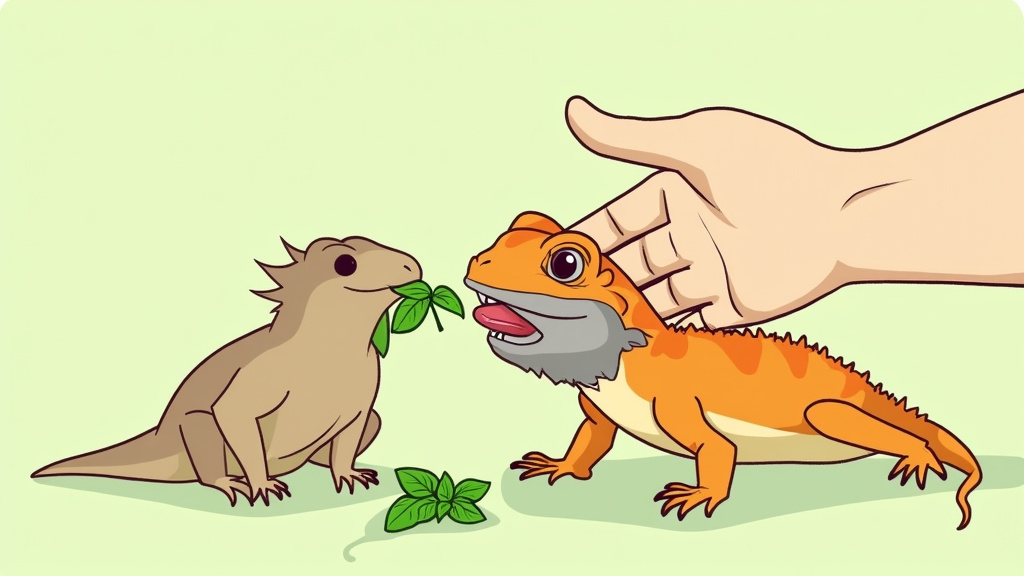
Knowing the failure modes keeps your dragon safe. Overfeeding basil manifests in specific ways.
The most immediate reaction is digestive upset due to the herb’s acidity. Symptoms include:
* Runny or unusually smelly stools within 24 hours.
* Lethargy or lack of interest in food the next day.
* Visible discomfort, like frequent scratching at the mouth or glass surfing.
The long-term, silent risk is Vitamin A toxicity. This builds up over months of overfeeding basil or combining it with a diet already high in Vitamin A (like frequent feedings of orange vegetables or using a multivitamin powder too often). Signs include:
* Swelling around the eyes, neck, or limbs.
* Difficulty shedding.
* Loss of appetite and weight loss.
* Reluctance to move or climb.
If you observe any of these signs, stop feeding basil immediately. Revert to a simple diet of a trusted staple green like collard greens and mustard greens and plain, gut-loaded insects. Ensure your UVB lighting is fresh (replaced every 6-12 months) to support calcium metabolism. If symptoms persist beyond 48 hours, consult an exotic veterinarian.
Common mistake: Using dried basil, the nutrients are concentrated, the moisture is gone, and it often includes seeds that can be a choking hazard. It offers no benefit and only increases risk.
TL;DR: Watch for diarrhea after feeding (acidity) and long-term swelling (Vitamin A toxicity). Dried basil is never safe.
Building a Balanced Diet With Basil
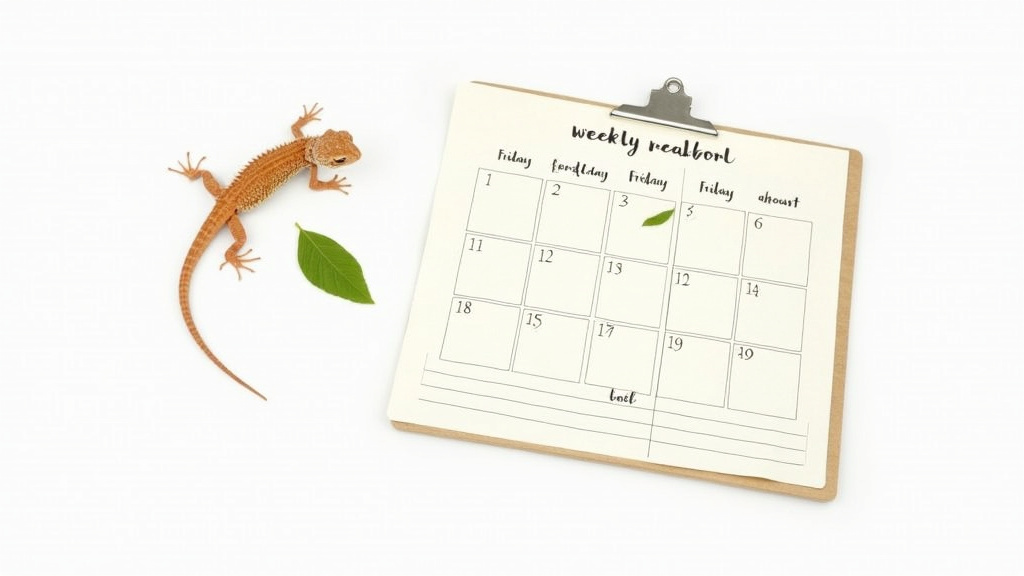
Basil is one color in the palette. A healthy bearded dragon diet is a rotating variety of safe plants and appropriate insects.
For adult dragons (over 18 months), the diet should be about 80% plant matter and 20% insects. Your weekly meal plan should pull from different categories:
- Staples (Feed Daily): Collard greens, mustard greens, turnip greens, dandelion greens, and escarole.
- Vegetables (2-3 times weekly): Butternut squash, bell peppers, snap peas, and parsnips.
- Occasional Treats (Once weekly or less): Basil, parsley, cilantro, thyme, fruits like berries or mango.
- Insects (2-3 times weekly): Dubia roaches, crickets, black soldier fly larvae, all properly gut-loaded.
This variety ensures they get a spectrum of nutrients and prevents the mineral imbalances that come from relying on one “favorite” food. Think of basil, sage, and dill as the herbs that make the staple greens more exciting, not the foundation.
For a visual guide, here is a simple weekly framework for an adult dragon’s salad days:
| Day | Base Green | Add-In Vegetable | Herb Garnish (if any) |
|---|---|---|---|
| Monday | Collard Greens | Shredded Squash | None |
| Tuesday | Mustard Greens | Bell Pepper | Cilantro |
| Wednesday | Dandelion Greens | Snap Peas | None |
| Thursday | Escarole | Butternut Squash | Thyme |
| Friday | Collard Greens | Bell Pepper | Basil |
| Weekend | Mix of Leftovers | Varies | None |
This rotation prevents boredom and nutritional monotony. Notice basil appears just once.
TL;DR: Basil fits into the “occasional treat” slot of a varied diet built on daily staple greens, regular vegetables, and limited insects.
Frequently Asked Questions
Can bearded dragons eat dried basil?
No. Dried basil is not recommended. The drying process concentrates the nutrients and oils, making it much easier to overdose on Vitamin A. It also loses all moisture, which provides no hydration benefit, and can be a choking hazard. Always stick to fresh leaves.
Are basil seeds safe for bearded dragons?
It’s best to avoid them. While not inherently toxic, basil seeds are tiny and can pose a choking risk or cause impaction if consumed in quantity. There is no significant nutritional benefit to justify the risk. Remove any seeds you see and only feed the fresh leaves.
Can bearded dragons eat other herbs like mint or oregano?
Some are safe in strict moderation, like sage and dill, while others are risky. Mint can be too potent and cause digestive upset. Oregano is safe in tiny amounts but is very strong. Lavender and other aromatic ornamental herbs should be avoided due to unknown essential oil content. When in doubt, stick to the well-documented safe herbs.
My bearded dragon loves basil. Can I grow it for them?
Yes, growing your own organic basil is an excellent idea. It ensures a pesticide-free source. You can snip a fresh leaf directly from the plant, wash it, and chop it. This is the ideal way to source this occasional treat.
What if my bearded dragon ate a large amount of basil?
Monitor them closely for the next 24-48 hours. Provide plenty of fresh water and offer their favorite staple green to encourage normal eating. Watch for signs of diarrhea or lethargy. If they stop eating entirely or show signs of swelling, contact your exotic vet.
The Bottom Line
Basil is a safe, flavorful herb that most bearded dragons enjoy. The key is restraint. Treat it as a weekly garnish, not a food group.
Its high Vitamin A content and 3:1 calcium-to-phosphorus ratio demand that you pair it with nutritionally balanced staples like collard greens and mustard greens. Always serve it fresh, washed, and chopped. Avoid dried basil and seeds completely.
By integrating basil this way, you add variety to your dragon’s diet without introducing the risks of nutrient imbalance or toxicity. Their enthusiasm for the fragrant leaves is a bonus, not a license to overfeed.