
Can Bearded Dragons Eat Peaches? Vet-Approved Feeding Guide
This post contains affiliate links. As an Amazon Associate, we earn from qualifying purchases.
Bearded dragons can eat fresh, ripe peaches as a rare treat, provided you peel the skin, remove the pit, and cut the flesh into tiny pieces. The key is extreme moderation, once a month at most, due to the fruit’s high phosphorus content, acidity, and sugar levels, which can cause nutritional imbalances and health issues over time.
Most owners see their beardie go nuts for the sweet taste and make the mistake of offering it weekly. That’s the fastest path to a calcium deficiency.
This guide breaks down the three specific risks inside a peach, shows you the exact preparation method that avoids them, and gives you a clear schedule to keep your dragon safe and happy.
Key Takeaways
- Peel the skin and remove the pit every single time. The skin holds pesticides and the pit contains trace cyanide.
- Limit peach servings to once a month for adults and avoid them entirely for babies under six months old. Their developing bones are too sensitive to the phosphorus imbalance.
- Always mix 1-2 small peach pieces into a salad of calcium-rich greens like collard or mustard greens. Never serve peach alone.
- Canned, dried, or frozen peaches are banned. The added sugars, syrups, and preservatives will cause digestive upset and obesity.
- If you feed peaches, you must be diligent with calcium supplementation on the days you don’t offer fruit to counteract the phosphorus.
Why Peaches Are a “Handle With Care” Treat
The short answer is yes, peaches are non-toxic. The real answer lives in the numbers. A 100-gram serving of peach contains about 8 grams of sugar and a calcium-to-phosphorus ratio of roughly 1:3. The average pH is 3.7.
Fresh peach flesh offers vitamins A and C, plus a hydration boost from its high water content. However, its phosphorus content is three times higher than its calcium, its acidity level can irritate oral tissues, and its natural sugars are a dense energy source not suited for regular reptile consumption.
Those three figures, the sugar, the mineral ratio, and the acidity, dictate every rule you’re about to read. Ignore them, and you’re not just giving a treat. You’re slowly unbalancing a delicate system.
TL;DR: Peaches have three strikes against them: high phosphorus, high acidity, and moderate sugar. This makes them a “sometimes food” with strict preparation rules.
The 3 Real Risks of Feeding Peaches Too Often
Every common health warning ties back to a physical mechanism. Understanding the “why” prevents the “oh no.”
1. The Calcium-Phosphorus Imbalance and Metabolic Bone Disease
This is the big one. Peaches contain about 12 mg of calcium and 22 mg of phosphorus per 100 grams. In a bearded dragon’s gut, excess phosphorus binds to calcium, forming an insoluble compound that can’t be absorbed.
If this happens repeatedly, the dragon pulls calcium from its own skeletal reserves. The bones gradually weaken, becoming rubbery and prone to fractures, a condition called Metabolic Bone Disease (MBD). The first visible signs are often a softened jaw or difficulty climbing.
Common mistake: Offering peach weekly because your dragon loves it, the chronic phosphorus load will bind dietary calcium, and within 4-6 months you may see the first signs of limb tremors or a wobbly gait.
2. Acidity and Digestive Irritation
A pH of 3.7 is quite acidic. For comparison, orange juice sits around 3.5. This acidity doesn’t just affect taste.
In a bearded dragon’s mouth and stomach, low-pH foods can cause low-grade inflammation. You might not see outright sores, but a dragon fed acidic foods too often may show reduced appetite for its regular greens. The stomach discomfort is real, even if they can’t tell you.
3. Sugar Content and Obesity
Eight grams of sugar per 100 grams isn’t catastrophic, but it’s significant for an animal that evolved eating insects and leafy plants. A bearded dragon’s digestive system isn’t designed for frequent sugar intake.
Consistent sugar consumption leads to fat storage, particularly in the tail base and abdomen. It also promotes unhealthy gut bacteria. Obesity in reptiles is a silent killer, straining their organs and shortening their lifespan.
| Risk Factor | Mechanism in the Dragon’s Body | Visible Consequence Timeline |
|---|---|---|
| High Phosphorus | Binds dietary calcium in the gut, preventing absorption. | Bone weakening signs in 4-6 months with monthly feeding. |
| Acidity (pH 3.7) | Irritates oral and gastric mucosa, causing inflammation. | Reduced appetite for staple greens within 1-2 days of feeding. |
| Natural Sugars | Promotes fat storage and alters gut microbiome. | Weight gain noticeable after 2-3 months of weekly treats. |
How to Safely Prepare Peaches for Your Bearded Dragon
Skipping any step here introduces a hazard. Follow this sequence exactly.
Before you start: Wash your hands and all utensils. A bearded dragon’s immune system is sensitive to human-borne bacteria. Use a dedicated cutting board you don’t use for onions or other pungent foods.
Step 1: Select the Right Peach
Choose a fresh, ripe, organic peach if possible. The flesh should give slightly under gentle pressure. Avoid any fruit with bruises, mold, or overly soft spots. Never use canned, dried, or frozen peaches. The canning syrup and added sugars are instant gut disruptors.
Step 2: Wash and Peel Thoroughly
Even organic peaches need washing. Soak the fruit in a solution of 3 parts water to 1 part white vinegar for three minutes, then scrub under cold running water. This removes surface pesticides and dirt.
Next, peel the skin completely. The fuzzy skin is difficult for them to chew and digest, and it’s where pesticide residues concentrate.
Step 3: Remove the Pit and Cube the Flesh
Slice the peach and cut out the pit. Discard the pit and any flesh immediately surrounding it.
The pit contains amygdalin, which metabolizes into cyanide. While a single accidental nibble likely won’t be fatal, it’s a completely unnecessary toxin and a choking hazard. Get it out of the kitchen.
Dice the remaining flesh into pieces no larger than the space between your dragon’s eyes. This size prevents choking and makes it easy to mix into a salad.
Step 4: Serve Correctly (The Most-Skipped Step)
Do not drop peach pieces into the enclosure alone. This teaches them to hunt for sweet treats and ignore their greens.
Instead, take one or two tiny peach cubes and mix them thoroughly into a base of calcium-rich greens. Collard greens, mustard greens, or turnip greens are perfect. The peach acts as a “salad dressing,” encouraging them to eat the nutritious base. Remove any uneaten salad after 2 hours.
TL;DR: Wash, peel, pit, dice small, and always mix into greens. Serving peach alone creates a picky eater and misses the chance to boost veggie intake.
Peach Feeding Schedule: How Much and How Often?
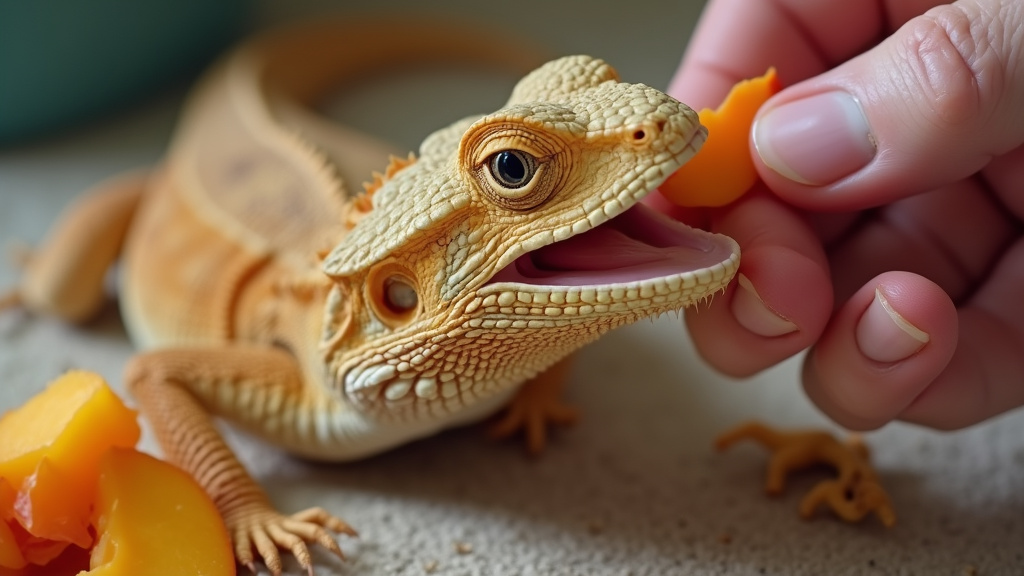
This is where most online guides get vague. Let’s be specific.
For adult bearded dragons (over 18 months old), peach is a once-a-month treat. A single serving is 1-2 pieces the size described above. That’s it.
For juveniles (6-18 months), it’s best to avoid peaches altogether. Their bodies are growing bone at a massive rate and require a perfect calcium balance. The phosphorus interference is too risky.
For baby bearded dragons (under 6 months), peaches are not appropriate. Their diet should be heavily focused on insect protein and finely chopped greens.
| Dragon Life Stage | Recommended Feeding Frequency | Serving Size | Reason for Restriction |
|---|---|---|---|
| Baby (<6 months) | Avoid | N/A | Critical bone development phase; diet is 80% insects. |
| Juvenile (6-18 mos) | Avoid / Extreme Rare | Tiny taste once | High growth demands optimal calcium absorption. |
| Adult (18+ mos) | Once per month | 1-2 small cubes | Maintains dietary variety without disrupting mineral balance. |
The day you give peach, do not also give other high-sugar fruits like mango or cherries for bearded dragons. Stick to the monthly schedule. Mark it on a calendar.
I learned this schedule the hard way. My adult dragon, Pogo, adored peach. I thought a small piece weekly was fine. After three months, he started refusing his staple bearded dragon salad mixes. He was holding out for the sweet stuff. It took two weeks of “greens only” discipline to reset his expectations. Now, the monthly peach piece is a celebrated event, and he cleans his bowl every day.
What to Pair With Peaches (And What to Avoid)
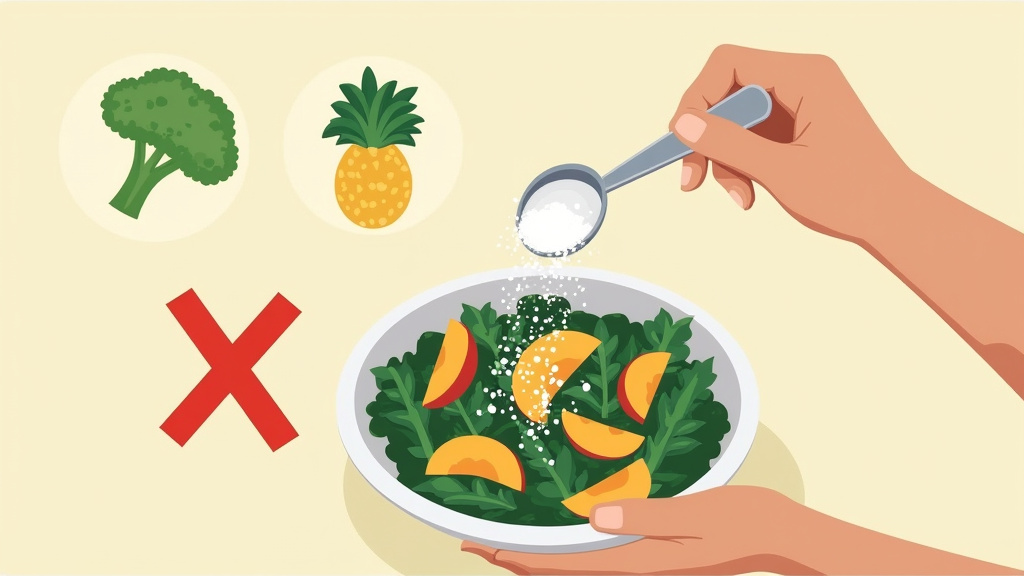
Since peaches are high in phosphorus, you must pair them with calcium-rich foods to help offset the ratio. Think of it as nutritional compensation.
Best Pairings: Mix your peach pieces into a base of collard greens, mustard greens, or dandelion greens. These are high in calcium and low in phosphorus. A light dusting of plain calcium powder (without D3 if using UVB lighting) over the whole salad is also wise.
Avoid These Pairings: Never combine peach with other high-phosphorus foods like broccoli, spinach, or beet greens in the same meal. You’d be doubling down on the problem. Also avoid other acidic fruits like pineapple for bearded dragons or tomatoes at the same time.
For a broader view on constructing a healthy diet, our complete dietary guide outlines how treats fit into the overall balanced feeding plan.
Canned, Dried, or Frozen Peaches: The Straight Answer
No. Do not feed processed peaches.
Canned peaches are packed in syrup with added sugar or artificial sweeteners. These can cause severe diarrhea and yeast infections in a bearded dragon’s gut. The canning process also leaches nutrients.
Dried peaches have all the water removed, concentrating the sugar to a dangerous level. They are also a serious choking hazard, becoming a sticky mass.
Frozen peaches often have preservatives and lose textural integrity when thawed, becoming a mushy, unappealing mess.
Stick to fresh. If fresh peaches are out of season, choose a different, in-season safe fruits for bearded dragons like cantaloupe for bearded dragons or apricots for bearded dragons.
Frequently Asked Questions
My bearded dragon ate a piece of peach skin. What should I do?
Monitor them closely for the next 48 hours. A single piece of skin will likely pass without issue, but watch for signs of lethargy, lack of appetite, or constipation. Ensure they are well-hydrated. If any symptoms appear, consult a reptile vet. In the future, peel meticulously.
Can baby bearded dragons eat peaches?
It is not recommended. Babies require a precise calcium-to-phosphorus ratio for rapid skeletal growth. The phosphorus in peaches can hinder calcium absorption during this critical window. Focus on their healthy bearded dragon diet of insects and finely chopped greens.
Are peaches or nectarines better for bearded dragons?
They are nutritionally similar. Nectarines have smoother skin, which might hold slightly fewer pesticides, but the same rules apply: wash, remove the pit, and serve sparingly. The choice is negligible; moderation is the key factor for both.
How does the acidity in peaches actually harm them?
The low pH (high acidity) can cause chemical irritation to the sensitive tissues lining the mouth and esophagus. Over time, this can lead to inflammation, making the dragon reluctant to eat its abrasive, healthy greens which are necessary for gut motility.
Can I use peaches to hydrate a sick dragon?
The water content is helpful, but the sugar is not ideal for a compromised system. For a sick dragon refusing water, a vet-recommended electrolyte soak or critical care formula is a better choice. Use peach only as a last-resort enticement for a dragon that is otherwise stable but not eating, and only with veterinary approval.
The Bottom Line
Peaches are a safe, enjoyable treat when you respect their risks. Peel them, pit them, and cut them small. Serve a piece or two once a month, always mixed into a calcium-rich green salad.
This isn’t about depriving your pet of a sweet snack. It’s about using that snack strategically to promote a healthier overall diet. That monthly peach piece will mean more to them, and you’ll have the peace of mind that comes from knowing you’re supporting their long-term health, not undermining it.
For a complete list of options, always cross-reference with a reliable Reptile fruit safety profile or our own fruits guide for bearded dragons.