
How to Breed Bearded Dragons: The Essential Process & Tips
This post contains affiliate links. As an Amazon Associate, we earn from qualifying purchases.
To breed bearded dragons, you must ensure proven adult health, simulate a seasonal brumation cycle, and provide precise incubation conditions. The female should be at least 18 months old and 350 grams, and both dragons need a vet check including a negative atadenovirus test.
Successful bearded dragon breeding requires matching three things: proven adult health, a simulated seasonal brumation cycle, and precise incubation conditions for the soft-shelled eggs. The female must be at least 18 months old and 350 grams, the male at least two years old. Both need a clean bill of health from a reptile vet, including a negative atadenovirus test. After a controlled cool-down period, introduction triggers mating. Fertile eggs then need stable 84°F and 75% humidity in a sealed box for 55 to 75 days.
Most first-time breeders fail because they skip the vet visit. They see two healthy-looking dragons and assume genetics are clean. Atadenovirus is a stealth killer in bearded dragons; adults can be asymptomatic carriers. They breed, the female lays a seemingly perfect clutch, and every hatchling dies within six months from incurable liver and neurological disease. That’s a heartbreak and an ethical disaster you prevent with one blood test.
This guide walks through the six-step process, from the mandatory health screening to housing the hatchlings. It also covers the three warnings that make most hobbyists reconsider: the real cost, the space for dozens of babies, and the legitimate ethical debate within the reptile community.
Key Takeaways
- Breeding is an expert-level commitment requiring significant time, space, and financial investment, rarely turning a profit.
- A pre-breeding veterinary exam, including an atadenovirus test, is non-negotiable for both dragons to prevent passing on fatal diseases.
- Females can store sperm for up to a year, potentially producing 3-5 fertile clutches from one mating, resulting in 60+ hatchlings to house and feed.
- Bearded dragon eggs are soft and must never be turned during incubation; use a still-air incubator, not a turning poultry model.
- Have a detailed plan for housing and rehoming all potential hatchlings before you begin, as overcrowding leads to aggression and stress.
Pre-Breeding Health and Age Requirements
You cannot eyeball breeding fitness. The single most important step happens before the dragons ever see each other: a full veterinary workup. A reptile-savvy vet will check body condition, parasite load, and organ function. The critical request is the atadenovirus (ADV) test. This virus is widespread, often latent, and 100% transmissible to offspring. Hatchlings from ADV-positive parents almost always die.
The female needs the most scrutiny. She must be a minimum of 18 months old, but two years is safer. Her weight should hit at least 350 grams. This isn’t just about size; it’s about calcium reserves. Producing a clutch of 20+ eggs leaches massive amounts of calcium from her bones. A female bred too young or underweight risks severe metabolic bone disease (MBD) and fatal egg-binding.
Before you start: Egg-binding (dystocia) is a life-threatening emergency. If a gravid female strains for more than 24 hours without passing eggs, becomes lethargic, or has a swollen cloaca, she needs an emergency vet. Delaying treatment by even 12 hours can lead to sepsis and death.
Males should be at least two years old. Younger males can be sexually active but may lack the stamina for successful mating and produce weaker sperm. Verify their health with the same vet checks. This upfront investment, often $200-$400 for two exams and tests, filters out casual attempts. It’s the barrier to entry that separates responsible breeding from reckless reptile multiplication.
The 6-Step Bearded Dragon Breeding Process
Follow this sequence after confirming health. Missing a step or rushing the timeline is how projects fail.
Step 1: Brumation Simulation. This is not optional. In the wild, breeding follows a cool, dormant period. You must replicate this by gradually reducing temperatures and daylight hours over two weeks. Final brumation conditions are 60-70°F with 8 hours of light daily for 8-10 weeks. Weigh both dragons weekly; a weight loss over 10% means you need to warm them up and abort. After the cool period, gradually return to normal basking temperatures (100-110°F) over a week.
Step 2: Post-Brumation Conditioning. For the next three weeks, feed both dragons heavily with nutrient-dense foods. For the female, this means daily salads dusted with Rep-Cal calcium powder and weekly offerings of hornworms or silkworms for hydration and protein. This builds her reserves.
Step 3: Introduction and Mating. Place the female into the male’s enclosure. Never reverse this, the male will see his territory invaded and may attack. Watch for specific courtship rituals: intense head bobbing from the male, slow arm waves from the female. Copulation is brief but may be repeated over a few days. Separate them after three days of cohabitation to prevent stress and injury to the female.
Step 4: Gravid Female Care. A pregnant bearded dragon’s appetite will spike, then plummet about two weeks before laying. You must increase her calcium supplementation to daily dusting on all insects. Provide a permanent laying box, a 20-gallon tub filled with a moist 50/50 mix of play sand and organic soil. It must be deep enough for her to fully bury herself. If she starts digging test holes but abandons them, the substrate isn’t damp enough.
Step 5: Egg Laying. The actual laying can take several hours. She will seem exhausted and deflated afterward. Immediately offer a water bowl and a high-calcium food like dubia roaches dusted with more calcium. Remove the egg box for incubation once she has completely covered the nest and left it.
Step 6: Post-Laying Recovery. The female is now in a severe calcium deficit. Keep supplementing daily and monitor her weight. She may produce another clutch in 4-6 weeks from stored sperm. If she shows signs of weakness, lethargy, or tremors, she needs a vet for a calcium injection.
TL;DR: Force a winter via brumation, fatten them up, introduce the female to the male’s tank, then feed the mom calcium like it’s her job until she lays in a pre-moisted sand pit.
Incubation Setup and Timeline
Forget everything you know about bird eggs. Bearded dragon eggs are leathery, moisture-dependent, and extremely sensitive to rotation. Using a standard chicken egg incubator that automatically turns eggs will kill every embryo.
| Incubation Factor | Target Setting | Consequence of Deviation |
|---|---|---|
| Temperature | 82-86°F (84°F ideal) | Below 80°F: development stalls, eggs mold. Above 88°F: fatal deformities. |
| Humidity | 70-80% RH | Below 65%: eggs collapse and desiccate. Above 85%: fungal blooms suffocate embryos. |
| Substrate | Vermiculite mixed 1:1 with water by weight | Perlite works but holds less moisture. Soil or sand introduces pathogens. |
| Airflow | Still-air (sealed box, opened weekly for air exchange) | Constant airflow dries the substrate. No airflow allows CO2 buildup. |
| Orientation | Do not turn or rotate. Mark top with pencil. | Turning severs the delicate chorioallantoic membrane, killing the fetus. |
The core of your setup is a plastic shoebox with a tight-fitting lid. Half-fill it with your prepared, moist vermiculite. Bury the eggs halfway, spacing them an inch apart. Close the lid. This box then goes into a larger incubator for temperature stability. A Hovabator Genesis still-air incubator works. You must use a separate, calibrated digital thermometer and hygrometer inside the egg box, don’t trust the incubator’s built-in dial.
Place eggs in the incubation box exactly as you found them in the nest. Rolling them over to “neaten” the arrangement is the most common fatal error in the first 24 hours.
Candle eggs after one week using a small LED flashlight in a dark room. Fertile eggs will show a pinkish glow and a network of red veins. Infertile or “slugs” will be yellow and uniform. Remove slugs immediately to prevent mold spread. The total egg incubation period ranges from 40 to 90 days, with 55-75 days being standard at 84°F. Higher temperatures speed development but increase deformity risk.
TL;DR: Eggs go in a sealed plastic box with wet vermiculite, kept at a steady 84°F. Never turn them. Check for veins at one week and prepare for a two-month wait.
Housing and Feeding the Hatchlings
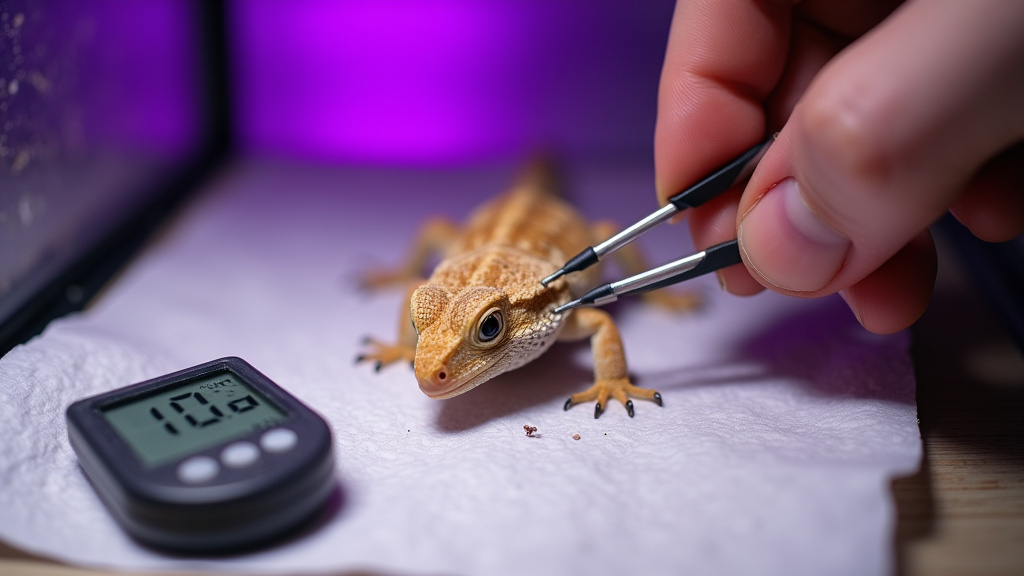
The eggs pipped. Congratulations, now the real work starts. You have 20-30 fragile, two-inch-long lizards that will immediately try to eat each other if stressed. They cannot live in the same enclosure as adults or even with each other for long.
Your first setup is a simple 10-gallon tank or plastic storage tub for the entire clutch, but this is temporary, for two weeks max. Use paper towel substrate. They need a basking spot of 105-110°F, which is hotter than an adult’s. The cool side must stay above 80°F. UVB lighting is non-negotiable; use a T5 HO 10.0 or 12% tube spanning the enclosure.
Common mistake: Feeding hatchlings mealworms or large crickets, the chitin is indigestible and causes fatal impaction within 48 hours. The first food must be pinhead crickets or flightless fruit flies.
The baby bearded dragon diet is relentless. They need 3-5 feedings per day of appropriately sized insects. Each feeding should last 10 minutes, offering as many pinhead crickets or dubia nymphs as they will eat. Every insect must be dusted with calcium powder at one feeding daily. Offer finely chopped collard greens and butternut squash daily, but expect them to ignore it for the first month.
After 2-3 weeks, you must separate them. Aggression and competition for food and basking spots become severe. This is where your pre-planned housing comes in. You’ll need multiple 20-gallon tanks or a rack system. This sudden need for space and equipment is the second biggest reason hobbyist breeding fails financially. For a detailed plan, read our care for hatchlings guide.
| Hatchling Challenge | Solution | Timeline |
|---|---|---|
| Sibling Aggression | Separate into groups of 3-4 by size, then individually by week 6. | Starts at 3 weeks, severe by 6 weeks. |
| Failure to Thrive (FTT) | Isolate the runt, assist-feed with slurries, ensure optimal basking temp. | Identify by week 2; intervene by week 3. |
| Parasite Blooms | Fecal test at 4 weeks; treat entire clutch if one tests positive. | Coccidia often appears at 4-6 weeks post-hatch. |
| Rehoming Readiness | Wait until they are consistently eating and 6-8 inches long (6-8 weeks old). | Do not rehome before 6 weeks. |
The Real Cost and Ethical Considerations
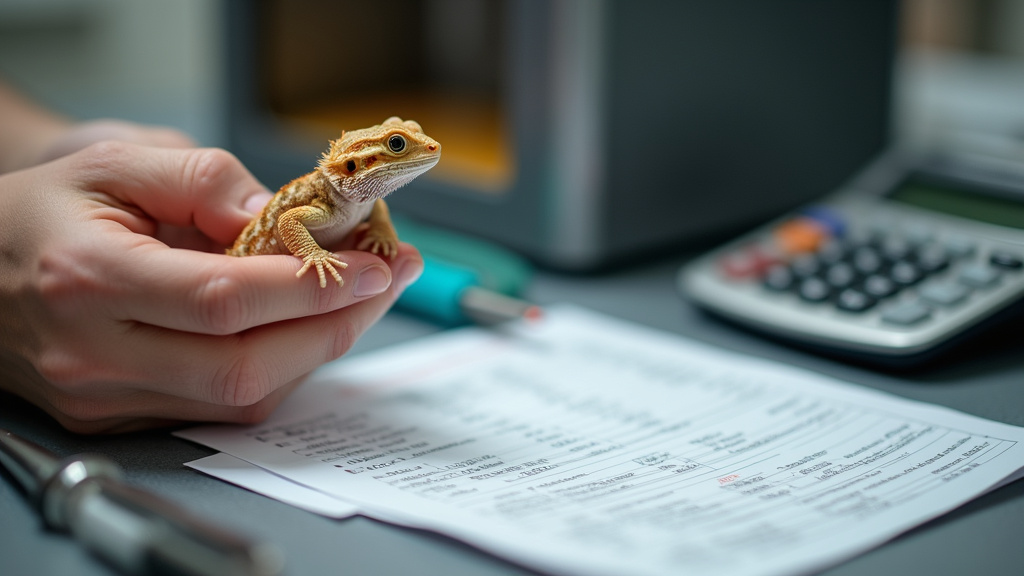
Let’s talk numbers without fantasy. A single breeding project will likely cost you money, not make it.
The upfront costs are clear: vet bills ($300), a quality incubator ($150), extra tanks and lighting for hatchlings ($400+), and months of increased food costs ($200). That’s over $1,000 before you sell a single dragon. Now consider the market. Standard morph hatchlings sell for $50-$100 each. If you perfectly rehome 25 babies at $75 each, you gross $1,875. Subtract your costs, and your profit for six months of intensive labor is under $800. One sick clutch or a failed rehoming wipes that out.
I bred a clutch of hypo trans dragons once, a desirable morph. The incubation went perfectly, and I had 28 healthy babies. I sold ten quickly. The next ten took months. The last eight I ended up keeping, requiring me to suddenly build a dedicated rack system I hadn’t budgeted for. The “profit” evaporated into equipment I was forced to buy.
The ethical weight is heavier. Reptile rescues are full of unwanted bearded dragons. Breeding adds more animals to a market that often cannot absorb them responsibly. Your obligation doesn’t end at sale. You must vet buyers, ensure they understand essential care for juveniles, and be willing to take dragons back if things don’t work out. This is a lifetime commitment to the offspring, not just a transaction.
Ask yourself if your goal is to improve the species’ health in captivity or just to see babies. If it’s the latter, volunteer at a rescue. You’ll handle more dragons and fulfill a real need without contributing to potential overpopulation.
Frequently Asked Questions
How can I tell if my bearded dragon is pregnant?
Look for a swollen abdomen that feels firm, not squishy. About two weeks before laying, she’ll stop eating but may drink more. You’ll see pronounced digging behavior, even in her food bowl or water dish. These nesting behaviors are the clearest sign. An experienced reptile vet can also palpate or ultrasound for eggs.
Can a female lay fertile eggs without a male present this season?
Yes, absolutely. Bearded dragons can store viable sperm in their oviducts for up to 12 months. If she was with a male last year, she can produce fertile clutches this entire season without a new mating. This is why proper sexing bearded dragons and housing them separately is crucial if you don’t want surprises.
What is the single biggest risk to the female?
Egg-binding (dystocia). It’s caused by poor nutrition (low calcium), improper laying site, or genetic issues. Symptoms include prolonged straining, lethargy, and a visible egg stuck at the cloaca. This is a dire emergency requiring immediate veterinary intervention, often surgery. Prevention through proper calcium supplementation and a perfect laying box is your best defense.
How do I set up the incubation substrate correctly?
Weigh your dry vermiculite. Use an equal weight of water. Mix thoroughly. The substrate should clump when squeezed but release no free water. This creates the perfect 1:1 water-to-vermiculite ratio by weight, which maintains the stable incubation environment needed for gas exchange without drowning the eggs.
When can baby bearded dragons be sold or rehomed?
Wait until they are 6-8 weeks old, eating aggressively on their own, and have had at least two parasite-free fecal exams. They should be a minimum of 6 inches long. Rehoming earlier risks the baby failing to thrive in a new environment. Always provide new owners with a detailed care sheet covering the critical juvenile feeding schedule.
The Bottom Line
Breeding bearded dragons is a serious project that tests your resources, knowledge, and ethics. It begins and ends with veterinary science, health checks first, and a plan for dozens of lives at the finish. The process itself is a mechanical checklist: brumation, introduction, incubation at 84°F. The reality is a logistical marathon of feeding schedules, separating aggressive juveniles, and finding responsible homes.
If your dragons are healthy, your setup is precise, and your commitment extends years beyond the hatch date, you can do it successfully. But for every breeder who carefully places 30 babies, there are ten who create 30 problems. Look at your available space, your bank account, and the local rescue’s adoption page before you decide to add more dragons to the world. Often, the most expert choice is to provide a stellar life for the pets you already have.