4 Signs of a Lethargic Bearded Dragon (And When to Panic)
This post contains affiliate links. As an Amazon Associate, we earn from qualifying purchases.
The four signs of a lethargic bearded dragon are a drastic drop in activity, loss of appetite, unresponsiveness to stimuli, and prolonged hiding. This is a medical red flag, not laziness. It signals the body is fighting issues like incorrect temperatures, impaction, or serious infections such as Adenovirus, requiring immediate habitat checks and often a vet visit.
Lethargy in a bearded dragon is a profound and noticeable decrease in normal activity, responsiveness, and appetite. It goes beyond a lazy day and signals the body is conserving energy to fight an underlying problem, which could range from incorrect habitat temperature to a serious infection like Adenovirus.
Most owners miss the early signs because they look like simple laziness. They write off a dragon sleeping in the cool hide all day as “just relaxing,” when it’s actually a core symptom of failing digestion or metabolic distress.
This guide breaks down the four non-negotiable signs of true lethargy, shows you how to rule out natural brumation, and gives you a five-minute checklist to run before you call the vet.
Key Takeaways
- True lethargy is a profound shutdown, not just low energy. The dragon appears “zoned out,” unresponsive, and ignores favorite treats.
- Daytime sleep with closed eyes is a major red flag. Healthy dragons rest with eyes open; closed eyes during daylight hours almost always mean illness.
- Always rule out brumation first by checking the calendar (October-February) and ensuring weight remains stable. Weight loss during a dormant period means it’s not brumation.
- Improper heating and UVB lighting cause over 70% of “mystery” lethargy cases according to reptile vet consensus. An infrared temp gun is your most important diagnostic tool.
- If lethargy is paired with sunken eyes, labored breathing, or tremors, skip the home audit and go straight to an exotic vet.
The 4 Core Signs of Lethargy
Forget “less active.” We’re talking about a dragon that seems to have its pilot light blown out. The shift is dramatic to anyone who knows their pet’s normal rhythm. The first sign is often a gut feeling that something is just off.
You know your dragon’s personality better than any guide. If your intuition is pinging, it’s time to look for these four concrete signals.
A lethargic bearded dragon exhibits a significant reduction in voluntary movement and environmental engagement. Key behavioral markers include prolonged stillness outside of basking, failure to react to visual stimuli like feeder insects, and sleeping during normal daylight hours with eyes fully or partially closed. This state represents a physiological conservation of energy, distinct from deliberate resting or thermoregulating postures.
1. Profound Inactivity and Lack of Exploration
A healthy bearded dragon, even a calm one, moves with purpose. It will cruise from the basking spot to the cool side, glass surf when it wants out, and reposition itself throughout the day. Lethargy strips away all that intent.
The dragon will park itself in one spot, often the coolest corner or on the cage floor, and stay there for hours. It won’t climb its usual branches. It ignores novel objects. You might see it try to move and then just… stop, as if the effort is too great. This isn’t a dragon choosing to rest; it’s a dragon that cannot muster the energy to do otherwise.
TL;DR: If your dragon transforms from a curious rover to a motionless statue for most of the day, that’s sign number one.
2. Daytime Sleep and Closed Eyes
This is the single most reliable visual cue. Bearded dragons are diurnal. When they rest during the day, they typically do so with their eyes open, simply sitting still. A dragon that is consistently sleeping, head down, eyes fully closed, during its normal awake hours is sending a distress signal.
I learned this the hard way with a rescue dragon named Smaug. He’d sit under his basking lamp with his eyes shut. I thought he was just really content. After three days of this, he stopped eating entirely. The vet diagnosed a advanced parasitic load. The sleep was his body shutting down non-essential functions to survive.
| Eye State | During Daytime | Likely Meaning |
|---|---|---|
| Open, alert | Normal resting, basking | Healthy behavior |
| Partially closed | May be too hot, or early illness | Monitor closely |
| Fully closed | Sleeping for extended periods | High concern – likely illness |
3. Complete Disinterest in Food
A picky dragon might refuse collard greens but go nuts for dubia roaches. A lethargic dragon refuses everything. It won’t track movement. It won’t open its mouth for a juicy hornworm waved in front of its nose. It might even turn its head slowly away.
This isn’t a skipped meal. It’s a system-wide shutdown of the feeding response. When you combine this with inactivity, you have a clear picture of a dragon not engaging with its world. This is a critical differentiator from other common feeding problems that might be related to stress or food presentation.
4. Flattened “Pancake” Posture and Unresponsiveness
The “pancake” pose, belly flattened against a surface, is normal when a dragon is basking to maximize heat absorption. It’s a problem when the dragon is pancaked in the cool end of the tank, looking limp and unresponsive.
Gently wave your hand near the enclosure glass. A healthy dragon will usually track the movement, turn its head, or at least flick an eye. A lethargic dragon will stare blankly or not react at all. It seems “zoned out.” This lack of reaction to environmental stimuli is a hallmark of true lethargy, separating it from simple relaxation or the onset of a dormant state in dragons.
Is It Lethargy or Just Brumation?
This is the first question you must answer. Brumation is a natural, seasonal slowdown, not an illness. Getting it wrong means either stressing a healthy dragon or ignoring a sick one.
Brumation typically occurs in the cooler months (October through February in the Northern Hemisphere). The dragon will sleep more, eat little to nothing, and stay in its hide. However, key differences exist. A brumating dragon, when disturbed, will often seem alert and may even move to a different spot before settling again. Its weight should remain stable over weeks. A lethargic, sick dragon loses weight rapidly and appears weak when handled.
Common mistake: Assuming winter inactivity is always brumation, if your dragon is losing weight, has sunken eyes, or sleeps with eyes closed, it’s sick, not brumating. Waiting for “spring” can be fatal.
Use this quick checklist:
– Time of Year? Is it fall/winter? (Supports brumation)
– Weight Stable? Weigh weekly. Any loss points to illness.
– Eyes Closed? Brumating dragons often rest with eyes open.
– Response when Woken? A brumating dragon should seem briefly alert.
If you confirm it’s brumation, follow proper brumation care practices. If any red flags appear, treat it as lethargy and investigate the root causes of inactivity.
The 5-Minute Husbandry Check (Fix the Obvious First)
Before you spiral into diagnosing rare diseases, check the fundamentals. In my experience, over half of all lethargy cases resolve after fixing one of these three things. You need an infrared temperature gun for this. Guesswork doesn’t cut it.
Basking Surface Temperature: The spot directly under the lamp where your dragon sits must be 100-110°F (38-43°C) for adults. Point the temp gun at the basking rock or branch. If it’s reading 90°F, your dragon cannot digest its food. Its gut is stalled, leading to weakness and lethargy. If it’s over 115°F, it’s overheating and hiding in the cool end to survive. Both look like laziness.
UVB Lighting Status: The T5 or T8 UVB tube above the mesh must be replaced every 6-12 months, even if it still lights up. UV output degrades long before the bulb dies. Without adequate UVB, your dragon cannot synthesize vitamin D3 or absorb calcium. The early stage of Metabolic Bone Disease (MBD) is profound weakness and lethargy. Check our guide on ideal temperature gradients for a complete heating and lighting setup.
Hydration Level: Many dragons don’t drink from bowls. Dehydration causes immediate weakness. Perform the skin pinch test: gently pinch a fold of skin on the dragon’s side. In a well-hydrated dragon, the skin will snap back instantly. If it retracts slowly or tents, your dragon is dehydrated. Offer water via a dropper on the snout or a warm bath (no deeper than the elbows).
When Lethargy Becomes an Emergency
Some symptoms paired with lethargy mean you stop troubleshooting and go to the vet. Exotic vets are used to this; call and say it’s an urgent reptile case.
Here are the pairings that demand immediate action:
- Lethargy + Labored Breathing: Look for open-mouth breathing, puffing of the throat, or a clicking sound with each breath. This is a probable respiratory infection.
- Lethargy + Tremors or Twitching: Especially in the limbs or jaw. This is a classic sign of advanced Metabolic Bone Disease (MBD) from calcium deficiency.
- Lethargy + Sunken Eyes and Wrinkled Skin: This indicates severe dehydration or systemic illness. The hydration pinch test will show dramatic tenting.
- Lethargy + Swollen or Firm Belly: Could be impaction (bowel blockage) or egg-binding in females. Both are life-threatening.
- Lethargy + Paralysis of Limbs: This is a dire neurological sign, potentially from injury, Adenovirus, or severe MBD.
I won’t use a heat rock, ever. A client’s dragon laid on one and got a severe thermal burn because the malfunctioning thermostat failed. The dragon became lethargic from the pain and infection. We saved it, but the scar tissue is permanent. Stick to overhead heating.
If you see these critical illness symptoms, your at-home audit is over. Your job is now safe transport to a professional who can diagnose the specific underlying health issues.
Building a Baseline to Spot Trouble Early
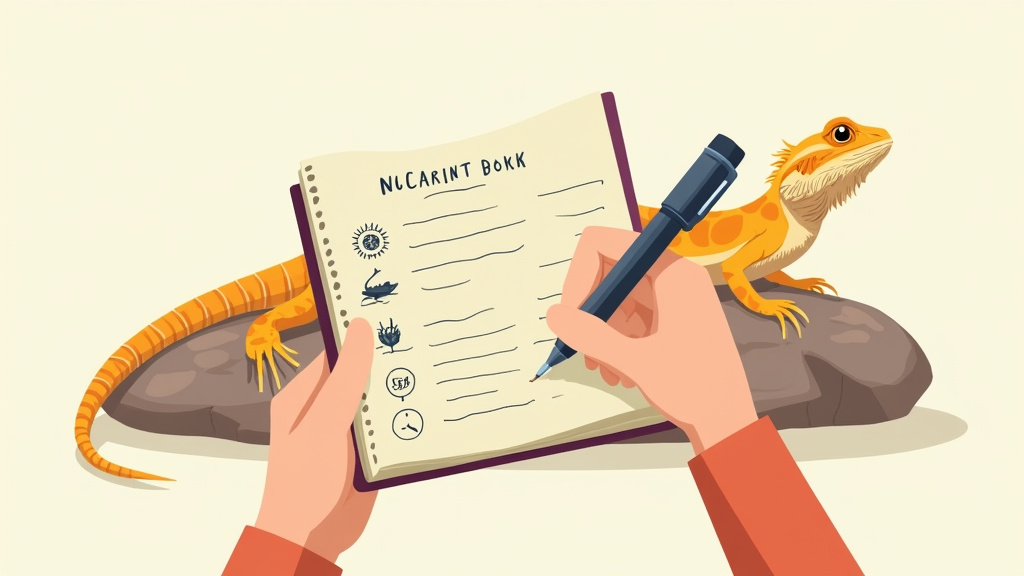
The best way to identify lethargy is to know what “normal” looks like for your dragon. Spend a week observing and logging.
- Daily Activity Log: Note when it basks, explores, and sleeps.
- Weekly Weight: Use a digital kitchen scale. Stable weight is the best health indicator.
- Appetite Tracking: How many insects does it eat in a sitting? How often does it eat greens?
- Bowel Movement Frequency: Note the consistency and schedule.
This baseline makes you an expert on your own pet. A deviation from these personal norms is more telling than any generic guide. This practice is the cornerstone of good essential care requirements. When you know its normal behavioral health indicators, you’ll spot a problem days before the obvious severe lethargy signs appear.
Frequently Asked Questions
My bearded dragon is lazy but eats. Is that lethargy?
Probably not. True lethargy almost always includes a loss of appetite. A dragon that eats eagerly, even if it’s not very active, is likely just calm or content. Monitor its weight and alert posture and energy levels, but a good appetite is a strong positive sign.
How long can a bearded dragon be lethargic before it’s dangerous?
Any noticeable lethargy lasting more than 24-48 hours warrants investigation. If the dragon is also refusing food, you should start your husbandry check immediately. Prolonged weakness quickly leads to a starvation risk window and compromises the immune system.
Can stress alone cause lethargy?
Yes. Chronic stress from an inadequate enclosure, too much handling, or visible predators (like a cat staring at the tank) can suppress the immune system and lead to a lethargic appearance. This is why providing proper hides and a calm environment is part of basic habitat maintenance basics.
What’s the first thing I should do for a lethargic dragon?
Check the basking temperature with a reliable gun. Then, check the UVB bulb’s age. Those two factors are the most common correctable causes. Offer water via a dropper. If those are perfect and the dragon doesn’t improve within a day, or if any emergency symptoms are present, consult a vet.
The Bottom Line
Lethargy is your dragon’s most obvious cry for help. It’s not a mood. It’s a metabolic flag. Start by verifying the simple stuff, heat, light, water, because those fixes are in your hands today. Use the four signs to separate true illness from normal rest or brumation.
Trust your gut. You notice the subtle shift in behavior that a stranger would miss. If your checks don’t yield an answer, or if you see any pairing with breathing problems or tremors, get professional help. Catching the cause early, whether it’s a health-related appetite change or a failing UVB bulb, is what turns a worried owner back into a confident one.