
Where to Sell Your Bearded Dragon: Platforms & Proven Tips
This post contains affiliate links. As an Amazon Associate, we earn from qualifying purchases.
Sell your bearded dragon on platforms that match your dragon’s value and your goals. For common pet-store morphs, use Facebook Marketplace or Craigslist. For rare morphs or high-standard sales, use specialized reptile sites like FaunaClassifieds or HappyDragons. Always verify local laws and vet buyers for the dragon’s safety.
Most sellers fail by choosing the wrong platform. A common red hypo sold on a general site gets lowball offers from unprepared buyers. A high-end citrus tiger sold on a breeder forum commands its real price from someone who knows what they’re buying.
This guide walks through seven specific places to sell, how to price accurately, the legal fine print most miss, and how to spot a good buyer in the first three messages.
Key Takeaways
- Platform choice dictates price. General marketplaces (Facebook, Craigslist) are for quick, local sales of common dragons. Specialized reptile sites (FaunaClassifieds, Kingsnake) attract knowledgeable buyers willing to pay for quality and rare morphs.
- Vetting buyers is non-negotiable. Ask for pictures of their setup. A buyer who can’t describe their UVB bulb or basking temperature is a red flag for future neglect.
- Legal compliance is your responsibility. Many states and counties require a permit or license to sell reptiles, even casually. Failing to check can result in fines exceeding the dragon’s sale price.
- Shipping is a liability minefield. If you ship, you are responsible for the animal’s life until delivery. Use only approved overnight reptile carriers and never ship outside their prescribed temperature windows.
- Honesty in the listing prevents returns. Disclose everything: recent shed, slight calcium deficiency history, quirky temperament. An omitted detail is the number one reason for disputed sales and bad reviews on breeder forums.
The 7 Best Places to Sell Your Bearded Dragon
Your platform choice sets the price ceiling and filters the buyer pool. Posting a $50 dragon on a breeder site wastes everyone’s time. Listing a $500 dragon on Craigslist invites scams.
1. Facebook Marketplace & Local Reptile Groups
Facebook Marketplace is the default for local, casual sales. Listings are free and reach thousands in your area. The real power is in dedicated reptile rehoming or specific bearded dragon groups. These groups often have rules requiring specific photos and care info in the post, which filters out the completely unprepared.
Common mistake: Posting a single blurry photo with “bearded dragon for sale” as the description. This attracts time-wasters and lowballers who see the dragon as a disposable commodity. A detailed post with a clear price gets serious replies within hours.
TL;DR: Use Facebook for local, quick sales. Join specific reptile groups for slightly better buyer vetting, but expect to screen heavily.
2. Craigslist
Craigslist is a bare-bones, wide-audience option. It requires the most buyer vetting on your part. The advantage is sheer local visibility with zero fees. The disadvantage is the highest concentration of flaky and suspicious inquiries.
You must insist on a safe, public meet-up spot, like a police station parking lot. Never give out your home address initially. Cash only. Its simplicity is its only virtue for a straightforward sale of a pet-quality animal.
3. Reptile-Specific Classifieds: FaunaClassifieds & Kingsnake.com
These are the industry bulletin boards. FaunaClassifieds and Kingsnake.com attract breeders, collectors, and serious hobbyists. The audience understands morphs, lineage, and proper husbandry.
Selling a bearded dragon requires matching three things: the animal’s genetics and health to the right platform, the seller’s responsibility to local wildlife laws, and the transaction’s safety to a verified payment and shipping method.
Listings here should read like a spec sheet: exact morph (e.g., “Citrus Tiger 100% Het Hypo”), hatch date, feeding regimen, parent lineage if known. You can also check the “Wanted” forums to see if someone is actively seeking a dragon like yours.
| Platform | Best For | Buyer Quality | Fee Structure |
|---|---|---|---|
| Facebook Marketplace | Quick local sales, common morphs | Mixed; requires heavy vetting | Free |
| FaunaClassifieds | Rare morphs, breeder-quality animals | Knowledgeable; understands value | Small posting fee |
| HappyDragons | High-standard, vetted transactions | Pre-screened, committed buyers | Credit card processing only |
TL;DR: Use FaunaClassifieds or Kingsnake for dragons with known genetics or rare traits. The buyers are informed, but you compete with professional breeders.
4. Vetted Marketplaces: HappyDragons
HappyDragons represents the premium, concierge model. They vet their breeders through a rigorous application involving facility tours and interviews. As a seller, this means you’re listed alongside high-quality operations, which boosts buyer trust.
The platform handles payment coordination and has strict, safe shipping protocols (FedEx priority overnight to hubs on Tuesdays/Wednesdays). There are no seller fees, only standard credit card processing fees. This is the ideal platform if you have a small, quality-focused breeding operation or a truly exceptional dragon and want to avoid the noise of classifieds.
5. Integrated Marketplaces: Breeders Direct & ReptiPlace
Platforms like Breeders Direct and ReptiPlace offer modern features. Breeders Direct has live auctions, breeder shops, and a rehoming board. ReptiPlace includes tools for tracking your collection and charges a 5% commission on sales.
These are good middle-ground options. They’re more structured than classifieds but less exclusive than HappyDragons. They’re excellent for sellers who plan to sell more than one animal and appreciate built-in management tools. Always read their terms of service to understand your responsibilities, as outlined on the ReptiPlace Terms of Service page.
6. Local Pet Stores & Reptile Shops
Some local shops offer trade-in for store credit or consignment options. This is the easiest, fastest path if your primary goal is to rehome without financial gain. Call ahead. Policies vary wildly.
A reputable store will ask about the dragon’s health and may require a vet check. Do not expect to get cash or full retail value. This is a convenience play, not a profit-maximizing one.
7. Reptile Expos & Swap Meets
These events provide face-to-face selling. You rent a table, bring your dragons, and interact directly with buyers. It’s high-effort but offers immediate payment and the chance to assess a buyer in person.
You must check the expo’s rules for sellers. Many require proof of health or vendor permits. It’s a fantastic way to move multiple animals at once and network with other keepers, which can be valuable for understanding the true bearded dragon price landscape.
Pricing Your Dragon: Reality vs. Fantasy
The emotional value you place on your pet has zero market value. Price is dictated by genetics, age, health, and demand.
A common normal/wild type juvenile from a pet store might sell for $40-$80. A stunning, proven breeder male with a rare morph like “Zero” or “Witblits” can command $400-$800+. The dragon’s health is a multiplier. A dragon with a clean bill of health from a reptile vet can justify a 20% premium.
Here is a blunt breakdown:
– Hatchlings (0-4 months): Highest demand, but also the most competition from breeders. Price by morph.
– Juveniles/Sub-Adults (5-12 months): Still desirable. Buyers can see the developing colors and structure.
– Adults (1+ years): Lower demand unless it’s a proven breeder. Many buyers want a “starter” dragon.
– Seniors (7+ years): Very difficult to sell. Most sales here are adoption/rehoming with a small fee.
Be brutally honest in your description. “Eats great, shed last week, handled regularly” is good. “Might have early signs of MBD, needs calcium supplements” must be disclosed. Hiding flaws guarantees a dispute.
The Legal Fine Print Everyone Skips
You are not just selling a pet. You are engaging in wildlife commerce, which is regulated.
Before you start: Selling an animal without required permits can lead to confiscation and fines. Shipping reptiles improperly violates carrier policies and animal welfare laws, potentially resulting in dead animals and civil liability.
Many states require a “hobbyist breeder” or “pet dealer” license if you sell over a certain number of animals per year—sometimes as low as two. Your county or city may have additional ordinances. The only way to know is to call your state’s wildlife agency or department of agriculture. This due diligence is as crucial as any bearded dragon husbandry practice.
Selling across state lines often involves USDA permits and health certificates from a veterinarian. For a single dragon, this process costs more than the animal is worth. Stick to in-state sales unless you are a licensed breeder.
How to Vet a Buyer in 5 Questions
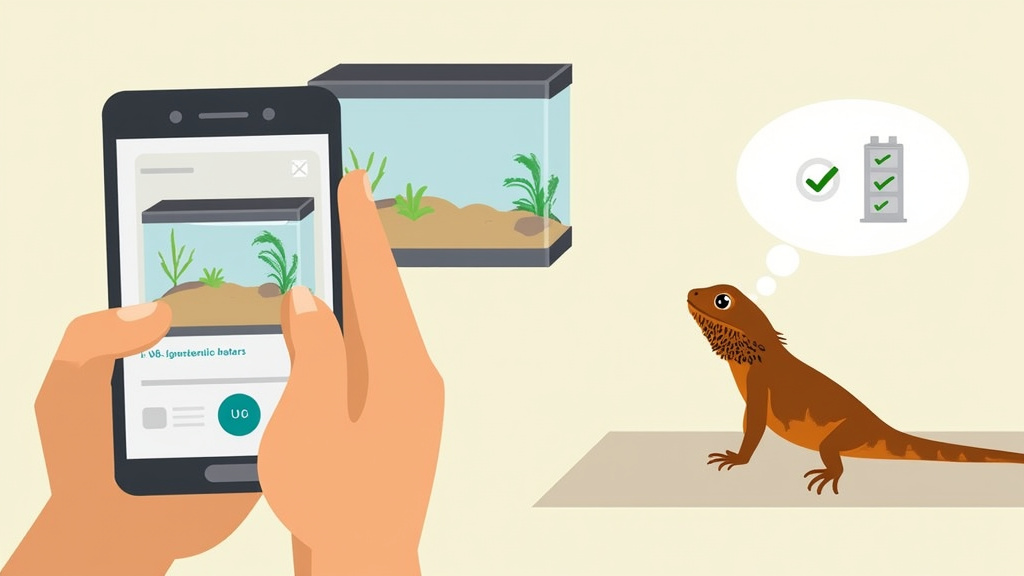
Your goal is to filter out impulsive buyers and find a prepared home. The first message tells you everything.
- “Can you describe your setup?” A good answer includes tank size (a 40-gallon breeder minimum for an adult), UVB bulb brand and fixture, basking temperature (105-110°F), and substrate (tile, paper towel, not loose sand).
- “What’s your experience with bearded dragons or reptiles?” Listen for specifics, not “I’ve had one before.” Ask what happened to the previous pet.
- “Are you aware of their average lifespan and ongoing costs?” This screens for budget readiness. If they balk at the cost of vet visits or feeder insects, they can’t afford the dragon.
- “Why are you interested in this particular dragon?” Someone who mentions your dragon’s specific color or morph has done some research. “I just want a lizard” is a warning sign.
- “Can you send a photo of the empty enclosure?” This is the ultimate test. It proves they have the habitat ready, not just an idea.
A buyer who gets defensive or refuses to answer is not a buyer you want. It’s easier to say no now than to wonder about the dragon’s welfare later.
Safe Shipping: A Step-by-Step Guide
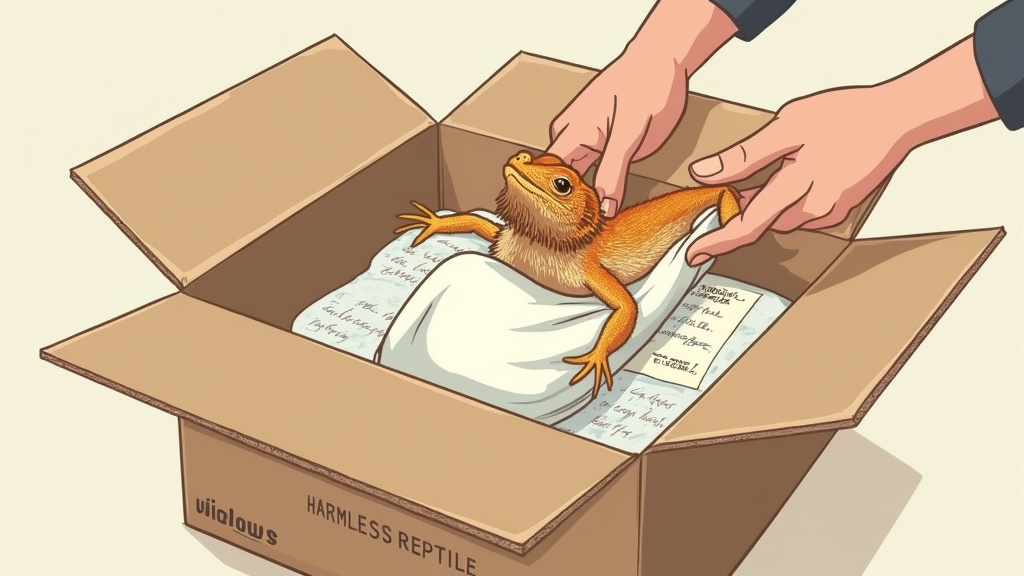
If you choose to ship, you assume full risk. Follow this sequence exactly.
- Use an approved reptile carrier. ShipYourReptiles.com and Reptiles2You are dedicated services with temperature guarantees and overnight delivery. Do not use standard USPS/UPS/FedEx without their explicit live animal protocols.
- Package for survival. Place the dragon in a breathable cloth bag, knotted closed. Put that in a insulated foam-lined box with a heat pack or cool pack as needed for the forecast. Include a note with the animal’s information.
- Ship overnight only. The box must be marked “LIVE HARMLESS REPTILE” and “PERISHABLE.” Drop off early in the day to ensure it makes the flight.
- Communicate. Provide the buyer with the tracking number and a clear expectation of delivery window. Require someone to be home to receive the package immediately.
Skipping any step risks a dead animal. The guilt isn’t worth it. For most individual sellers, local sales eliminate this entire risk profile and are strongly recommended, especially if you’re still mastering the essential care requirements.
Red Flags and Common Scams
The reptile market has its share of bad actors. Know the patterns.
- The Overpayment Scam: Buyer sends a check for more than the asking price and asks you to wire the difference back. The check is fake.
- The Third-Party Shipper Scam: Buyer insists on using “their” shipping agent, who is fake. You pay the agent and never hear from the buyer again.
- The Emotional Sob Story: A long tale about a child’s dying wish, a fire, or a lost pet. They promise a wonderful home but want you to ship immediately, often offering to pay later. It’s fiction.
- The “I’ll Send a Courier” Scam: Similar to the shipper scam. A legitimate buyer picking up locally does not need to send an unknown third party to your home.
The rule is simple: cash in hand for local sales, or use a secure payment platform with buyer/seller protection (like PayPal Goods & Services, not Friends & Family) for shipped sales. Never deviate from this.
Rehoming vs. Selling: When Not to Take Money
Sometimes, the best outcome isn’t a sale. If your dragon is elderly, has chronic health issues, or has special needs, finding a knowledgeable, compassionate home is more important than profit.
Consider posting on rehoming-specific boards (like the one on Breeders Direct) or working with a reptile rescue. You can ask for a small rehoming fee to deter flippers, but the primary goal is placement. This approach aligns with the ethics of responsible ownership, acknowledging the significant responsibilities involved.
Frequently Asked Questions
Is it illegal to sell bearded dragons on Facebook Marketplace?
Facebook’s policy prohibits the sale of live animals. However, many local reptile groups and individual sellers use it without issue. The listing can be removed if reported. It’s a gray area. Using dedicated reptile platforms avoids this risk entirely.
What paperwork should I provide to the buyer?
At minimum, provide a basic receipt with the date, sale price, dragon’s approximate age and morph, and your contact information. For higher-end sales, a brief health guarantee (e.g., 72-hour guarantee against pre-existing illness) and a record of feeding/shedding is standard practice.
How do I prove the morph of my bearded dragon?
Without paperwork from the breeder, you can’t “prove” a morph genetically. You can describe the visual traits (color, pattern, scale type) accurately. For expensive morphs, buyers will expect the breeder’s paperwork with the dragon’s lineage and genetic hets.
Can I sell a bearded dragon that is sick?
You must disclose any known illness. Selling a sick animal without disclosure is unethical and can lead to legal action if the buyer incurs vet bills. It also ruins your reputation in the small world of reptile communities. It’s better to treat the animal first or rehome it through a rescue with full disclosure.
What’s the best time of year to sell a bearded dragon?
Spring and early summer are peak seasons. Demand drops around the winter holidays. Hatchlings sell best from late spring to fall. Avoid planning a sale around major holidays or extreme weather events that complicate shipping.
The Bottom Line
Selling a bearded dragon is a transaction with living consequences. The right platform connects you with a buyer who sees the animal’s value beyond the price tag. Your diligence in vetting and compliance ensures the dragon’s next chapter is a good one.
Price honestly, disclose everything, and trust your instincts when a buyer feels off. The goal isn’t just to complete a sale. It’s to transfer a life into capable hands. That responsibility doesn’t end when the money changes hands. It ends when you’re confident the dragon’s needs for a proper habitat and informed care will be met for its full lifespan.