
Glass Tanks for Bearded Dragons: What Works, What Breaks
This post contains affiliate links. As an Amazon Associate, we earn from qualifying purchases.
Glass tanks for bearded dragons work if you follow three rules: a 120-gallon (4x2x2 foot) minimum size, a dimmer thermostat on the basking lamp, and the UVB bulb mounted inside. This setup creates the necessary heat gradient and overcomes glass’s poor insulation and UV-blocking properties.
Using a glass tank for a bearded dragon works if you follow three rules: a 120-gallon (4x2x2 foot) minimum size, a dimmer thermostat on the basking lamp, and the UVB bulb mounted inside the enclosure. The extra six inches of depth in a 120-gallon tank creates the space needed for a proper temperature gradient, which is impossible in a smaller tank. A thermostat compensates for glass’s poor heat retention. Mounting the UVB inside bypasses the fact that glass blocks those rays completely.
Most failures start with a 40-gallon tank bought from a pet store. That size is marketed for adults, but it’s a trap. The dragon can’t thermoregulate, the heat lamp scorches one end, and the animal starts glass surfing within a month. You see the behavior, blame the enclosure material, and swap to PVC, but the real problem was the dimensions.
This guide walks through the math on heat loss, the setup steps that actually work in glass, and the long-term costs you sign up for when you choose a tank over an insulated cage.
Key Takeaways
- A 40-gallon glass tank is only for hatchlings. An adult bearded dragon needs a 120-gallon (4x2x2 foot) glass enclosure to create a usable temperature gradient.
- Glass has an R-value of about 1. It loses 40–50% more heat than an R-4 PVC cage. You need a dimmer thermostat on the basking lamp to manage the swings, and your annual electricity cost will be $50–80 higher.
- UVB light does not penetrate glass. The bulb must be inside the tank or directly over a mesh top. Placing it outside a glass lid makes it useless.
- Humidity evaporates faster in glass. You’ll need a digital meter and a shallow water bowl to keep it in the 30–40% range. Dry air leads to respiratory irritation within weeks.
- Front-opening doors are better than top-opening lids. Reaching down from above stresses the dragon every time you need to feed or clean.
Why the 40-Gallon Tank Is a Trap
Pet stores sell 40-gallon tanks as bearded dragon starter kits. The packaging says “for adults.” It’s wrong. A 40-gallon tank measures 36 inches long, 18 inches wide, and 18 inches tall. That’s not enough room for an adult bearded dragon to establish a thermal gradient.
A thermal gradient is the difference between the hot basking spot and the cool retreat zone. Your dragon needs a basking surface temperature of 105–110°F. The cool side needs to sit around 75–80°F. In a 36-inch tank, the heat from a 100-watt bulb bleeds across the entire space. The cool side never drops below 85°F. The dragon can’t cool down. It paces the glass, trying to find a cooler spot that doesn’t exist. That’s glass surfing.
A 40-gallon glass tank cannot hold a proper temperature gradient for an adult bearded dragon. The heat from the basking lamp spreads too far, the cool side stays too warm, and the animal exhibits stress behaviors like pacing and refusal to eat within two to three weeks.
The community standard is a 4x2x2 foot enclosure, 120 gallons. The extra six inches of depth is the critical variable. It gives the heat lamp’s radiation a place to fall off. You can actually get a 30-degree difference from one end to the other. If you’re shopping for glass, that’s the floor. Anything smaller is a temporary juvenile box.
TL;DR: Buy a 120-gallon glass tank, not a 40-gallon. The extra six inches of depth is what makes the temperature gradient possible.
The Glass vs. PVC Trade-Off (Heat, Cost, Weight)
Glass tanks are cheap and available. PVC enclosures are expensive and often custom. The choice isn’t just about money. It’s about heat retention, weight, and how much you’ll pay to run the lights for the next decade.
Glass has an R-value of about 1. PVC has an R-value between 4 and 6. R-value measures resistance to heat flow. A lower number means heat escapes faster. In a glass tank, 40–50% more of the heat your basking lamp produces leaks through the walls. Your lamp runs longer and hotter to maintain the same internal temperature. That adds about $50–80 to your annual electricity bill. Over ten years, that’s $500–800 extra, often more than the price difference between a glass tank and a PVC cage upfront.
| Factor | Glass Tank | PVC Enclosure |
|---|---|---|
| Heat Retention (R-value) | ~1 (poor) | 4–6 (good) |
| Annual Electricity Cost | $50–80 higher | Baseline |
| Weight (120-gallon) | ~150 lbs, difficult to move | ~70 lbs, manageable |
| Upfront Cost | $200–400 | $400–800 |
| Durability | 10–15 years before seals fail or glass cracks | 20+ years |
| Visibility | Excellent | Good (often front acrylic panel) |
PVC wins on insulation and lifespan. Glass wins on initial cost and clarity. If your room temperature stays above 72°F year-round, glass is manageable. If you run AC or live in a cold climate, the heat loss becomes a real problem. The basking lamp will cycle on and off constantly, and the cool side temperature will dip overnight.
Common mistake: Using a glass tank in a room that drops below 70°F overnight, the cool side hits 65°F by morning, the dragon’s metabolism slows, and digestion stops. You’ll see undigested food in the feces.
Your house’s ambient temperature decides whether glass is a viable long-term home. A dimmer thermostat is mandatory in glass to smooth out those cycles. It’s not optional.
TL;DR: Glass loses heat fast, costs more to run, and is heavy. PVC holds heat, lasts longer, and is lighter. Your room temperature decides which one you can afford to manage.
Setting Up a Glass Tank That Actually Works
A glass tank can work. It just needs a stricter checklist than an insulated cage. You compensate for the material’s weaknesses with specific equipment and placement.
The first thing you do is apply a background to three sides. Bearded dragons see their reflection in glass and interpret it as another dragon. That causes stress. A non-adhesive background panel, not paint, blocks the reflection. Leave the front clear for viewing.
Mount the UVB bulb inside the enclosure. Glass blocks 100% of UVB rays. If you place the bulb on top of a glass lid, your dragon gets zero UVB. Metabolic bone disease starts within a few months. Use a T5 or T8 tube with a 10.0 or 12.0 output. Secure it inside the tank with the manufacturer’s mounting clips, or suspend it directly over a mesh lid if the tank has one.
The basking lamp also needs to be inside. The same heat-loss principle applies. A dimmer thermostat plugs between the lamp and the outlet. You set the target basking surface temperature, and the thermostat adjusts the lamp’s power output to hold it. Without a thermostat, the temperature in a glass tank swings wildly, 110°F at noon, 85°F by evening. That swing stresses the animal’s digestive system.
- Choose the 120-gallon size. This is the step everyone tries to skip. Skipping it guarantees failure. A smaller tank cannot hold a gradient.
- Apply a three-sided background. Use a static-cling or vinyl panel. Adhesive backgrounds can trap moisture and peel.
- Mount UVB and heat inside. Use internal mounting hardware. If the tank has a mesh top, place the bulbs directly above it, no glass in between.
- Install a dimmer thermostat. Plug the basking lamp into it. Set the probe on the basking rock surface.
- Add a digital humidity meter. Place it on the cool side. Glass tanks dry out faster than PVC; you need to monitor it daily.
- Use a shallow water bowl. It adds ambient humidity. A deep bowl risks drowning and spills.
- Select front-opening doors if possible. Top-opening lids make the dragon feel attacked every time you reach in.
Front-opening doors matter. When you approach from above, the dragon’s instinct is to flee or flatten. A front door lets you enter laterally, which is less threatening. It also makes cleaning easier. You aren’t leaning over the entire tank to scrub the far corner.
I used a 40-gallon glass tank for my first bearded dragon for a year because the pet store employee said it was fine. The dragon glass-surfed constantly. I upgraded to a 120-gallon PVC enclosure, and the behavior stopped in two days. The problem wasn’t the glass, it was the size. But in that PVC cage, the heat lamp ran 30% less often. The glass tank was a constant fight against the room’s temperature.
TL;DR: A working glass setup requires a 120-gallon tank, a background, internal UVB and heat mounting, a dimmer thermostat, and daily humidity checks.
Why UVB Placement Is Non-Negotiable
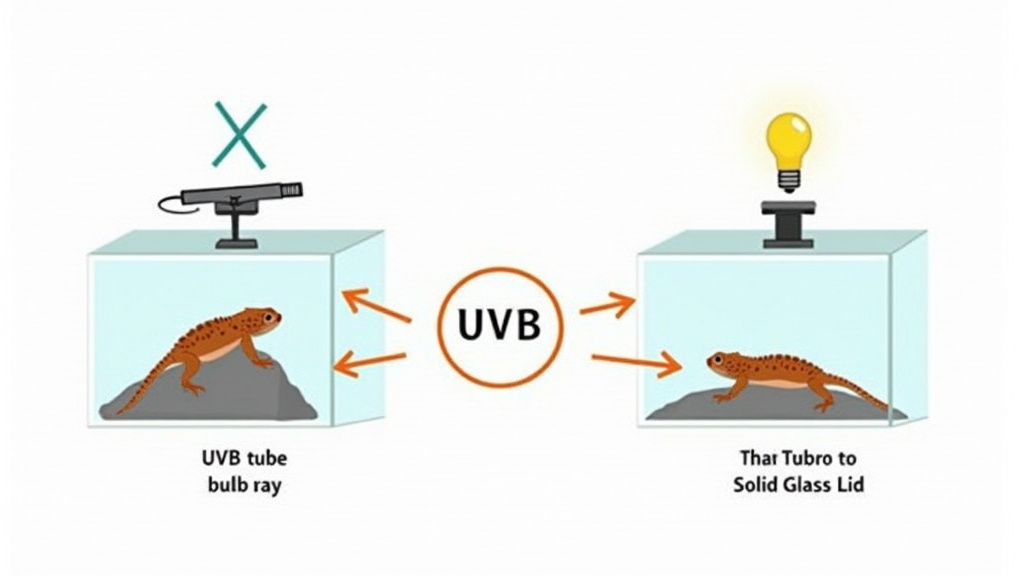
UVB light is ultraviolet B radiation. It triggers vitamin D3 synthesis in your dragon’s skin, which is required for calcium absorption. Without UVB, calcium cannot be metabolized. The bones soften. That’s metabolic bone disease.
Glass blocks UVB. Acrylic blocks UVB. Clear plastic blocks UVB. Any transparent solid material filters out the wavelengths needed. If your UVB bulb sits on top of a glass lid, your dragon receives zero effective UVB. The bulb might still glow, but the useful radiation is gone.
You have two options. Mount the UVB tube inside the tank using the manufacturer’s clips. Or, if the tank has a mesh or screen top, place the bulb directly over that mesh without any glass layer between. Mesh allows about 40% of the UVB to pass through. That’s enough if the bulb is strong and placed close.
A T5 HO 10.0 UVB tube is the standard. A T8 10.0 works but is weaker. The “10.0” refers to 10% UVB output. For a 120-gallon tank, you need a tube that spans at least half the length, 24 inches. Place it alongside the basking lamp so the dragon gets UVB while heating.
Common mistake: Placing a UVB bulb on top of a glass tank lid, the dragon develops metabolic bone disease within 3–4 months, showing symptoms like soft jaw, bowed legs, and reluctance to move.
The fixture must be secure. Dragons climb. They will knock a loose fixture down. Use the mounting hardware that comes with the bulb or purchase separate clips. Never rely on tape or temporary rigging.
TL;DR: UVB does not pass through glass. The bulb must be inside the tank or directly over a mesh top. A T5 HO 10.0 tube spanning half the tank is the minimum.
Humidity and Glass: The Evaporation Problem
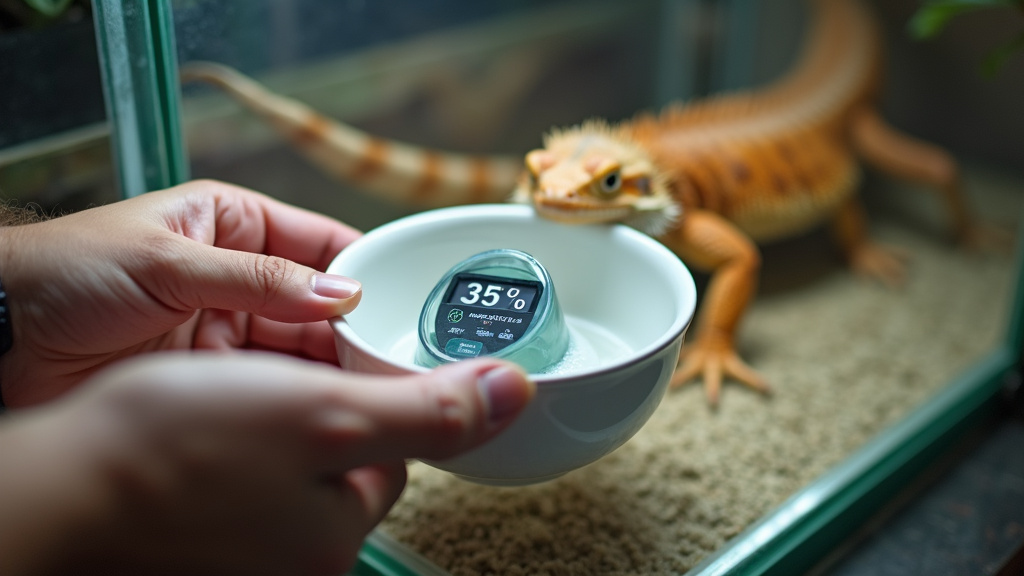
Bearded dragons need 30–40% ambient humidity. Higher humidity leads to respiratory infections. Lower humidity causes skin irritation and dehydration. Glass tanks accelerate evaporation. The material doesn’t buffer moisture; it lets it escape.
You need a digital humidity meter, not an analog dial. Place it on the cool side of the tank. Check it daily. If the reading drops below 30%, add a shallow water bowl. The bowl increases ambient humidity through evaporation. A deep bowl is a drowning risk and can spill. A shallow ceramic dish about two inches deep works.
If the reading climbs above 40%, reduce the water bowl size or remove it temporarily. Increase ventilation by cracking the lid slightly, but don’t create a draft. Drafts cause stress.
The substrate matters. Sand holds moisture and can raise humidity too high in a glass tank. Reptile carpet or tile dries out faster and helps maintain the lower range. If you use a bioactive setup with soil, monitor even more closely, the soil will release moisture steadily.
Room humidity affects the tank. If your house is dry in winter, the tank will be dry. You might need to add the water bowl year-round. In summer, you might remove it. The meter tells you.
A shallow water bowl raises ambient humidity by about 5–10% in a 120-gallon glass tank. A deep bowl raises it by 15–20% and risks spillage. Use a two-inch ceramic dish and watch the meter.
Humidity management in glass is active, not passive. You adjust components based on daily readings. In a PVC enclosure, the material itself moderates the swings, you check weekly.
When to Skip Glass Entirely
Glass is a material choice. It’s not inherently bad. But it’s wrong for some situations.
If your room temperature fluctuates wildly, like an old house with poor insulation or a basement that gets cold, glass will fight you. The heat loss will require a higher wattage bulb, the thermostat will cycle constantly, and the dragon’s environment will be unstable. Choose PVC.
If you plan to move the enclosure often, glass is a poor choice. A 120-gallon glass tank weighs around 150 pounds. A PVC cage of the same size weighs about 70 pounds. The weight difference is real, especially when you need to relocate it for cleaning or room changes.
If you live in a humid climate, glass might help by letting excess moisture escape. But if you live in a dry climate, you’ll be adding water bowls and monitoring constantly. That’s extra work. PVC buffers the dryness better.
If you want a setup that lasts 20 years, glass isn’t the answer. Glass tanks degrade. The silicone seals dry out and crack after 10–15 years. The glass itself can chip or crack from impact. PVC enclosures are essentially plastic boxes, they don’t degrade on that timeline.
| Scenario | Recommendation | Reason |
|---|---|---|
| Room temp below 70°F often | PVC enclosure | Glass loses heat too fast; stable gradient impossible |
| Need to move enclosure often | PVC enclosure | Glass is too heavy; PVC is lighter and more portable |
| Dry climate (low humidity) | PVC enclosure | Glass evaporates moisture quickly; PVC buffers better |
| Long-term (15+ years) | PVC enclosure | Glass seals fail; PVC doesn’t degrade |
| Warm, stable room | Glass tank (120-gallon) | Manageable with thermostat and internal UVB |
The decision matrix is straightforward. Match your environment to the material’s properties. If your conditions fall into the left column, buy PVC. If they fall into the right, glass is viable with the specific setup rules.
Frequently Asked Questions
Can I use a 40-gallon glass tank for an adult bearded dragon?
No. A 40-gallon tank is only suitable for hatchlings and juveniles up to about 10 inches long. An adult bearded dragon needs a 120-gallon (4x2x2 foot) enclosure to establish the required temperature gradient. In a 40-gallon tank, the heat spreads too evenly, the cool side stays too warm, and the dragon exhibits stress behaviors like glass surfing.
Does UVB light pass through glass?
UVB light does not pass through glass. Glass blocks 100% of the ultraviolet B wavelengths needed for vitamin D3 synthesis. Your UVB bulb must be mounted inside the enclosure or placed directly above a mesh lid without any glass layer in between.
Why is a dimmer thermostat mandatory for a glass tank?
Glass has poor heat retention (R-value ~1). It loses heat rapidly to the surrounding room. A dimmer thermostat regulates the basking lamp’s output to compensate for these swings, maintaining a stable basking surface temperature. Without it, the temperature fluctuates wildly, stressing the dragon’s digestive system.
How much more does a glass tank cost to run annually?
glass tank loses 40–50% more heat than an insulated PVC enclosure. This requires the basking lamp to run longer and hotter, adding approximately $50–80 to your annual electricity bill. Over a decade, the extra operational cost can exceed the initial price difference between glass and PVC.
What size water bowl should I use in a glass tank?
Use a shallow ceramic dish about two inches deep. A deep bowl raises humidity too much and poses a drowning risk. The shallow bowl adds about 5–10% ambient humidity through evaporation, which helps counteract the rapid drying inherent to glass enclosures.
The Bottom Line
Glass tanks are not evil. They’re just unforgiving. If you follow the rules, 120 gallons, internal UVB, dimmer thermostat, daily humidity checks, they work. But each of those rules compensates for a weakness glass has. PVC enclosures don’t have those weaknesses.
The pet store 40-gallon kit is the real problem. It’s undersized, and it teaches new owners that glass is the default. It isn’t. The default is a habitat that holds heat, holds humidity, and gives the animal space to thermoregulate. Glass can do that, but only at the 120-gallon size and with extra equipment.
Your room temperature decides the fight. If your house stays above 72°F, glass is a battle you can win. If it dips lower, PVC is the smarter long-term investment. Either way, buy the size first. The material is secondary.