
Is Play Sand Safe for Bearded Dragons? The Vet’s Truth
This post contains affiliate links. As an Amazon Associate, we earn from qualifying purchases.
Pure, loose play sand is not safe as a sole substrate for bearded dragons. Its fine, dusty particles pose a high risk of respiratory irritation and impaction, especially for juveniles, sick, or poorly-hydrated dragons. For healthy adults, safety is conditional; a prepared mix of sterile topsoil and specific sands like fine quartz can be used with strict husbandry.
The mistake is treating all sand as equal. A bag labeled “sand” at the hardware store and a bag from the pet store are chemically and physically different. Choosing wrong because it’s cheap or looks natural can lead to a veterinary emergency within weeks.
This guide breaks down the specific dangers of play sand, explains when a sand blend might be an option, and gives you a clear checklist of safe alternatives. We’ll cover the chemistry, the particle physics, and the husbandry non-negotiables that separate a healthy dig box from a death trap.
Key Takeaways
- Play sand is a respiratory hazard. Its ultra-fine silica dust stays airborne, irritating lung tissue and leading to infections like pneumonia. Sterilizing it doesn’t remove this dust.
- Impaction is a multi-factor failure. Sand ingestion becomes deadly when combined with dehydration, incorrect basking temperatures, or inadequate UVB lighting, issues that weaken gut motility.
- Calcium sand is poison, not substrate. Products like Vita-Sand clump with stomach acid, neutralize digestion, and cement into intestinal blockages. It is the most dangerous option sold.
- Safety is only for healthy adults. Dragons under 18 months, seniors over 7 years, or any animal with health issues must be on solid, disposable substrates like paper towel or tile.
- If you use a blend, mix it right. A common safe ratio is 70% organic topsoil to 30% fine quartz sand, providing digging enrichment without the risks of pure, loose sand.
The Two Real Dangers: Impaction and Respiratory Stress
Play sand threatens bearded dragons through two primary, mechanical pathways: their digestive system and their respiratory system. Understanding the how is more important than just the what.
Impaction is a intestinal blockage. When a dragon accidentally ingests sand while hunting or exploring, a healthy gut should pass it. Problems start with husbandry failures. Inadequate basking temperatures (below 100-110°F surface temp) slow digestion to a crawl. Without proper UVB lighting, the dragon cannot synthesize vitamin D3, leading to calcium deficiency and weakened muscle function throughout the body, including the intestinal tract.
A dehydrated dragon on a cool basking spot has gut motility like cold molasses. Sand grains settle and stick. More food and sand pile up behind them. Within days, the dragon stops defecating, loses appetite, and becomes lethargic. That’s an impaction.
The sand itself isn’t always the primary cause, it’s the final plug in a system already failing. This is why dragons on perfect heat and UVB with occasional sand ingestion often pass it uneventfully, while a slightly sub-par setup turns the same sand lethal.
Respiratory stress comes from the dust. Play sand is milled to a fine, powdery consistency for children’s sandboxes. In the dry environment of a reptile enclosure, every dig, every scamper, kicks a cloud of silica particles into the air.
Common mistake: Using play sand straight from the bag, the dust coats the dragon’s nostrils and the delicate lung tissue (alveoli) with every breath, causing inflammation that can lead to bacterial infections like pneumonia within a month.
These fine particles are too small to be filtered out by the nasal passages. They embed. Sterilizing play sand in an oven kills microbes but does nothing to change the particle size or dust generation. A dragon on play sand often develops a faint, persistent wheeze or clicks when breathing, the first sign of trouble.
TL;DR: Impaction happens when sand meets a slow gut; respiratory issues happen when dust meets lungs. Play sand excels at causing both.
The Substrate Blacklist: What to Never Use
Some products are marketed directly to reptile owners with dangerous claims. Others are cheap alternatives from the hardware aisle. All of these belong in the trash, not the terrarium.
| Substrate | Why It’s Dangerous | Timeline to Trouble |
|---|---|---|
| Calcium Carbonate Sand (Vita-Sand, Reptilite) | Dissolves in stomach acid, neutralizes it, and clumps into a cement-like plug. Also disrupts calcium metabolism. | Can cause impaction in as little as 1-2 feedings. |
| Pure Play Sand | Extreme dust causes silicosis-like lung irritation; fine grains easily ingested and impacted. | Respiratory signs in 2-4 weeks; impaction risk is constant. |
| Walnut Shell Substrate | Sharp, irregular particles can lacerate the gut lining and promote bacterial growth. Does not pass smoothly. | Internal cuts and infections can develop over several months. |
| Wood Chips / Bark | Splinters cause impaction and internal punctures. Harbors mold and mites. | Impaction risk is immediate; mold exposure varies. |
| Dyed or Scented Sand | Unknown chemical dyes and adhesives are toxic when ingested or inhaled. | Poisoning symptoms can be rapid and severe. |
Calcium sand is the worst offender. The marketing suggests it’s a digestible calcium source. The reality is biochemical sabotage. A dragon’s stomach uses hydrochloric acid to break down food and kill pathogens. Calcium carbonate neutralizes that acid. Digestion halts. The damp, neutralized sand then binds into an insoluble mass that surgical vets have to remove in chunks.
I learned this the hard way early on. A client’s dragon came in lethargic after a switch to a popular “digestible” calcium sand. X-ray showed a dense, radio-opaque mass in the intestines. During surgery, the material removed wasn’t just sand, it was a solid, plaster-like brick. The dragon survived, but recovery took months. I now treat all calcium sand products as a severe poisoning risk.
TL;DR: If a substrate bag has the word “calcium” on it, or comes from the garden/play section without being part of a mix, consider it banned for life.
When Could Sand Be Part of the Equation?
For a healthy, thriving adult bearded dragon over 18 months old, a prepared mixture containing specific sands can provide legitimate enrichment. The key is conditional safety, which requires checking every box on a strict list.
A bioactive enclosure, using a mix of clean topsoil, sand, and excavator clay, can support natural digging behaviors and establish a cleaner micro-ecosystem. This is an advanced setup, not a beginner’s shortcut.
The conditional safety checklist looks like this:
- The Dragon is an Adult: At least 18 months to 7 years old. Juveniles and seniors lack the robust gut motility.
- Perfect Health: No history of illness, strong appetite, regular bowel movements. Any deviation means solid substrates only.
- Impeccable Husbandry:
- Basking Surface Temp: 100-110°F, measured with an infrared temp gun.
- UVB Lighting: A linear T5 HO tube (like Arcadia 12% or Zoo Med ReptiSun 10.0) covering 1/2 to 2/3 of the enclosure, replaced every 12 months.
- Hydration: Regular baths, hydrated greens, and possibly a dripper system. The dragon is never dehydrated.
- The Sand is the Right Type: Only fine quartz mineral sand is considered. It has harder, more rounded grains and produces less dust than play sand. It is always sterilized and used as a minority component of a mix.
- It’s Always a Mix: Sand is never used alone. It’s a texture component. Common mixes are 70% organic topsoil (no fertilizers) / 30% fine quartz sand, or an even 1:1:1 blend of topsoil, sand, and excavator clay for better burrow stability.
If you miss one box, say the UVB is 14 months old, or the dragon is 8 years old, the risk outweighs the benefit. The safe substrate options for non-ideal cases are numerous and effective.
TL;DR: Sand-inclusive mixes are a “bonus level” for perfect husbandry with a prime-age dragon. They are never the default.
Safe Substrate Alternatives for Every Scenario
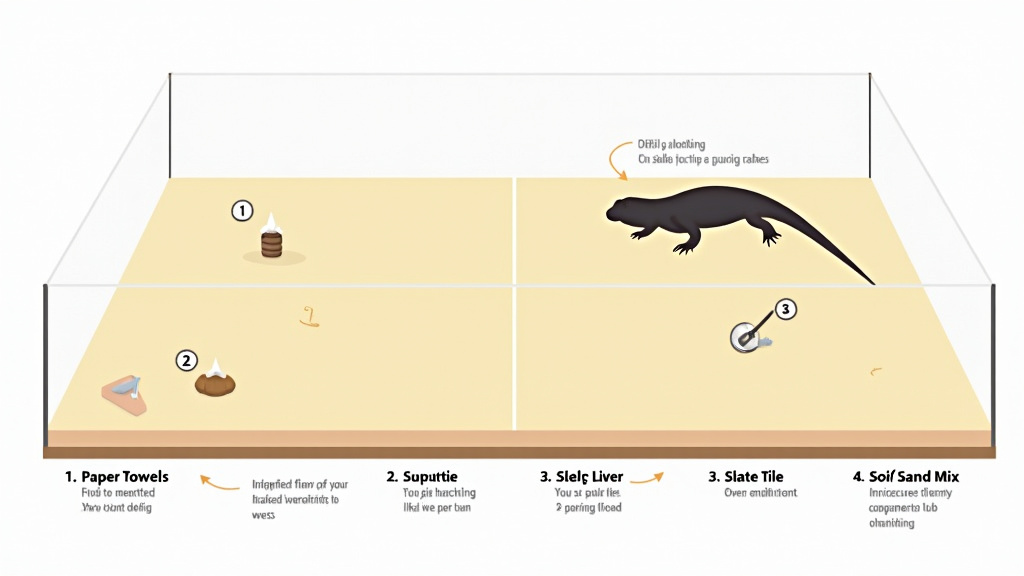
Your dragon’s life stage and health dictate the floor of their home. Here is the decision matrix I use with new owners.
| Scenario | Recommended Substrate | Primary Reason | Maintenance |
|---|---|---|---|
| Hatchlings & Juveniles (<12 mo) | Paper towel, butcher paper, or slate tile. | Prevents accidental ingestion during clumsy feeding; allows for easy health monitoring (stool checks). | Change paper daily; spot-clean tile. |
| Quarantine / Sick Dragons | Paper towel or non-adhesive shelf liner. | Sterile, disposable, and eliminates all substrate-related risks during recovery. | Change completely every 1-2 days. |
| Healthy Adults (Simplified) | Slate or ceramic tile, textured reptile carpet. | Provides secure footing, files nails naturally, and is easy to clean. Zero impaction risk. | Remove and scrub tile weekly; wash carpet thoroughly. |
| Healthy Adults (Enrichment) | 70/30 topsoil/quartz sand mix or bioactive blend. | Allows natural digging and burrowing behaviors in a controlled, safe mixture. | Spot clean daily; replace mix every 4-6 months. |
For beginners and most owners, tile is the champion. Unglazed ceramic or slate tile is cheap, indestructible, and replicates the hard-packed ground of a dragon’s arid homeland. It conducts heat from the basking lamp beautifully. It won’t harbor bacteria like reptile carpet can, and it doesn’t need replacing like paper towel.
The argument against hard substrates is long-term joint health. Some keepers theorize that a completely unyielding surface for years might contribute to arthritis or pressure sores. While not proven, it’s a consideration for a dragon you plan to keep for a decade. This is where a high-quality reptile carpet alternative or a partial dig box can offer a compromise.
Bioactive setups are the premium option. This involves creating a living substrate with clean soil, sand, clay, and a “clean-up crew” of isopods and springtails that break down waste. It’s a self-cleaning ecosystem that offers incredible enrichment. It’s also complex, expensive to start, and requires research. It is the ultimate expression of the bioactive setup guide principles, but it’s not for your first dragon.
TL;DR: Match the substrate to the dragon’s needs. Start simple with tile or paper. Evolve to mixes or bioactive only when your husbandry is flawless.
How to Prepare a Safe Sand and Soil Mix (If You Qualify)
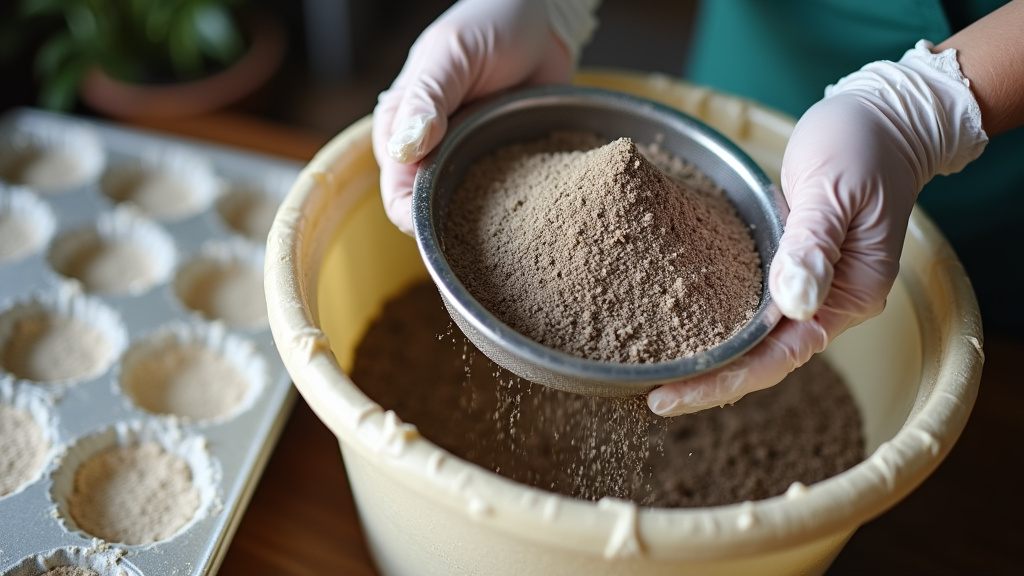
If your dragon and your setup pass the conditional safety checklist, here is the method for preparing a safe, naturalistic substrate blend. This process is about risk mitigation.
You will need:
- Organic topsoil (no vermiculite, perlite, or fertilizers)
- Fine quartz sand (sold as aquarium or pool filter sand)
- Excavator clay (optional, for burrow stability)
- A large baking tray and oven
- A fine mesh sieve or sifter
- A large mixing tub
Step 1: Sterilize the Sand.
Bake the fine quartz sand on a baking tray at 250°F for 45 minutes. This kills any parasites, fungal spores, or bacteria. Let it cool completely. Do not skip this step, bagged sand is not sterile.
Step 2: Sift and Mix.
Sift your topsoil through the mesh sieve to remove large sticks, rocks, and debris. In your mixing tub, combine the materials. A standard blend is 70% topsoil to 30% sand by volume. For more stable burrows, a 1:1:1 ratio of soil, sand, and excavator clay works well. Mix until the color is uniform.
Step 3: Install and Monitor.
Add at least 4-6 inches of mix to the enclosure. Provide a solid basking platform (like a flat stone) on top. For the first week, watch for excessive dust when your dragon digs, if it’s dusty, the sand fraction might be too high or too fine.
Common mistake: Feeding directly on the loose mix, crickets kick substrate onto salad, and dragons will ingest it. Always use a heavy, shallow food dish placed on a tile or stone.
This mix should be completely replaced every 4 to 6 months to prevent a gradual buildup of waste and bacteria. This routine is part of the commitment to using a loose substrate pros and cons approach safely.
Frequently Asked Questions
Can I use play sand if I bake it first?
Baking kills germs but does not change the particle size. Play sand’s defining hazard is its fine, dusty silica particles, which will still irritate the lungs. Baking makes sterile dust, not safe dust. Choose a coarser, hard-grained sand like fine quartz instead.
My dragon ate a little sand. What should I do?
Do not panic. Ensure your basking spot is at the correct temperature (100-110°F surface temp) and offer a warm bath to encourage hydration and gut motility. Monitor for the next 1-2 bowel movements. If the dragon stops eating, becomes lethargic, or does not pass stool within 3-4 days, contact a reptile veterinarian immediately.
What about reptile carpet? Is it safe?
Reptile carpet is safe from impaction but poses other risks. It can snag claws and teeth, and it harbors bacteria between washes. It must be cleaned thoroughly with reptile-safe disinfectant weekly and replaced frequently. Many keepers prefer the hygiene of tile or the simplicity of paper towel for this reason.
Is a sand mat or sandpaper liner okay?
No. These products are often just loose sand glued to a backing. The glue can be toxic if ingested, and the sand can still be picked off. They offer no benefit and introduce chemical risks. Stick with solid, non-particle surfaces.
Why do pet stores sell bad sand if it’s dangerous?
Pet stores sell products based on demand and profit margin, not always on optimal animal welfare. Calcium sand and pure play sand are cheap to produce and have attractive marketing. It is the owner’s responsibility to research beyond the store shelf. Your safe sand brands guide is a better resource than a store employee’s recommendation.
Before You Go
The play sand question boils down to an acceptable risk calculation. For the vast majority of bearded dragon owners, especially those with young dragons or less-than-perfect setups, the risk is unacceptably high. The respiratory dust and impaction potential are real, measurable dangers.
The safer path is to use solid, cleanable substrates like tile or paper towel while you master the fundamentals of heat, light, and hydration. These are the pillars of health; substrate is secondary. Once those pillars are rock-solid and your dragon is a thriving adult, you can explore the advanced option of a carefully prepared soil and sand mix for enrichment.
Your goal isn’t to replicate the Australian outback in a glass box. It’s to create a captive environment that prioritizes health and longevity. Often, the simplest, cleanest floor is the one that leads to the longest, healthiest life.