
Can I Smoke Near My Bearded Dragon? Essential Safety Guide
This post contains affiliate links. As an Amazon Associate, we earn from qualifying purchases.
No. You cannot safely smoke anything, tobacco, marijuana, or vape, around your bearded dragon. Their respiratory system lacks the defenses to filter smoke, making even secondhand exposure a direct threat that can cause respiratory infections, neurological damage, and death.
The mistake is thinking ventilation, another room, or “just a little” makes it okay. Smoke chemicals are heavier than air and cling to everything, your clothes, your hair, the walls of the tank. A bearded dragon doesn’t just breathe it in; they absorb it through their skin and ingest it when they lick surfaces.
This guide breaks down the exact toxins in each type of smoke, the immediate physical signs of distress to watch for, and the non-negotiable rules for keeping your dragon’s air clean. We’ll also cover what to do if exposure has already happened.
Key Takeaways
- All smoke and vapor contains fine particulates and toxic chemicals (nicotine, THC, formaldehyde) that a reptile’s simple lung structure cannot process, leading to inflammation and infection.
- Secondhand smoke is not diluted enough to be safe. Chemicals settle on decor and substrate, where your dragon ingests them during normal behavior, creating a double exposure risk.
- Vaping is not a safe alternative. The propylene glycol, vegetable glycerin, and flavoring chemicals in vapor condense into a sticky film that coats the lungs, impairing oxygen exchange.
- Juvenile dragons and those with existing health issues, like early-stage Metabolic Bone Disease or a history of parasitic infections, have zero resilience and will show symptoms fastest.
- The only safe mitigation is total prevention: smoke outdoors away from air intakes, use a HEPA purifier, and maintain strict habitat cleaning routines.
What Makes Smoke So Dangerous to a Bearded Dragon?
A bearded dragon’s lungs are a one-way street. Unlike mammalian lungs that expand and contract with diaphragms, reptiles use rib muscles to draw air in and push it through a series of branching chambers. There are no tiny, protective alveoli with cilia to trap debris.
Smoke particulates, thousands of times smaller than a grain of sand, flow directly into the deepest lung chambers. The tissue reacts with inflammation, fluid builds up, and oxygen absorption plummets. This process can begin within hours of exposure in a small enclosure.
The biological reality is simple. They evolved in arid, open environments with pristine air. Their system interprets any chemical irritant as a foreign invader, triggering a massive immune response that often does more damage than the irritant itself. This is why a minor smoke incident for you can become pneumonia for them. A strong foundation in bearded dragon husbandry emphasizes that clean air is as critical as correct heat and UVB.
TL;DR: Their lungs are structurally incapable of filtering smoke. Particles cause immediate inflammation, fluid buildup, and oxygen starvation.
The Three Types of Smoke and Their Specific Threats
Not all smoke is equal, but all of it is bad. The specific cocktail of chemicals changes the primary risk from respiratory to neurological.
| Smoke Type | Primary Toxic Agent | Target System in Dragons | Onset of Visible Symptoms |
|---|---|---|---|
| Tobacco/Cigarette | Nicotine, Carbon Monoxide, Tar | Respiratory, Cardiovascular | 24–48 hours (wheezing, lethargy) |
| Marijuana | THC, Combustion Byproducts | Neurological, Respiratory | 2–6 hours (ataxia, disorientation) |
| E‑Cigarette/Vape | Propylene Glycol, Flavorants, Nicotine | Respiratory (coating) | 3–7 days (chronic mucus, loss of appetite) |
Tobacco Smoke: A Slow Burn
Nicotine is a potent neurotoxin that absorbs through mucous membranes. For a 400-gram dragon, the trace amounts clinging to your hand after a cigarette are a measurable dose. Carbon monoxide binds to their red blood cells 200 times more readily than oxygen does. The result is a dragon that seems tired, basks constantly but never warms up, and develops a weak, wheezy breath. This chronic low-level exposure directly weakens their immune system, making them susceptible to opportunistic bacterial infections.
Marijuana Smoke: The Neurological Crisis
THC is fat-soluble. In a reptile, it disrupts cerebellar function, which controls motor coordination. The first sign is often a dragon that can’t walk a straight line, misses its food when striking, or tumbles off a basking branch. This isn’t them being “chill”, it’s ataxia, a serious neurological dysfunction. The combustion also produces benzene and tar, attacking the lungs simultaneously. As the EnviroLiteracy reptile smoke safety guide states, the combination presents a dual respiratory and neurological emergency.
E‑Cigarette Vapor: The Sticky Lie
The “water vapor” myth is dangerous. The aerosol is a suspension of ultra-fine liquid particles. When inhaled by a dragon, these particles, propylene glycol, vegetable glycerin, and synthetic flavorings, condense into a thin, sticky film inside the lung chambers.
This film traps bacteria, reduces lung elasticity, and slowly suffocates the animal. The symptoms are insidious: a persistent, slight bubble in the nostril, a faint clicking sound on inhalation, and a gradual loss of appetite as oxygen levels drop.
Common mistake: Thinking vaping in another room is safe, the aerosol travels through HVAC systems and settles on every surface, including the dragon’s salad greens. They ingest the residue.
TL;DR: Tobacco starves oxygen, marijuana scrambles the brain, and vape coats the lungs. Each has a unique pathway to making your dragon critically ill.
How to Actually Protect Your Bearded Dragon
Mitigation is a strict protocol, not a suggestion. If you smoke, these are the non-negotiable rules. Your dragon’s health depends on the consistency of these barriers between the contaminant and their environment.
- Smoke Outside, Far Away. This is rule one. Step outside, ensure you are downwind from any open window, door, or air conditioner intake. The minimum distance is 15 feet. A porch isn’t enough if the smoke can drift back inside.
- The Air Lock Protocol. Before you re-enter the house, change your shirt. The outer layer holds the most residue. Wash your hands and forearms with soap and water. This is a non-negotiable step before any tank maintenance or handling, crucial for preventing bacterial spread.
- Deploy a HEPA Filter. Place a true HEPA air purifier in the same room as the enclosure. Run it continuously on a medium setting. It won’t catch everything, but it will capture a significant portion of airborne particulates that sneak in. Change the filter every 3 months, not 12.
- Double Your Cleaning Schedule. Smoke residue settles on tank walls and decor. Increase glass cleaning to twice a week with a 50/50 white vinegar and water solution. Rinse thoroughly. Wash fabric hides and plastic plants weekly. This removes the ingestion vector.
- Monitor Like a Hawk. For the next 48 hours after any potential exposure, watch for the subtlest signs: a single extra blink, a slightly longer pause between breaths, spending 10 minutes more under the heat lamp. These are the early warnings.
Why the air lock protocol works. Smoke chemicals like nicotine are sticky and bind to cotton and skin oils. Changing your shirt removes the primary contamination vector. Handwashing removes what touched the cigarette and your face. Skipping this step means directly transferring toxins to the tank rim, where your dragon will climb and lick.
Recognizing Smoke Exposure Symptoms and Emergency Response
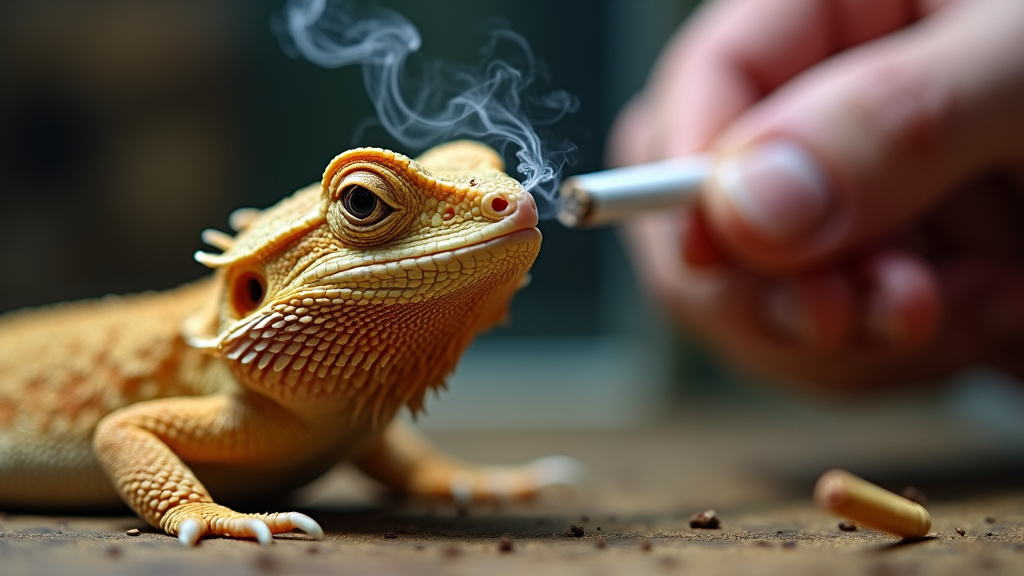
Bearded dragons hide illness until they can’t. You must know the progression from early distress to critical failure. The timeline is faster than you think.
Early Stage (First 12 Hours)
- Subtle Behavioral Shift: Less active during normal awake hours. May sit with eyes slightly closed.
- Appetite Change: Ignores favorite feeders or takes one bite of salad and walks away.
- Breathing Cue: A single, small, clear mucus bubble appears at a nostril once or twice a day. It pops and is gone.
Common mistake: Waiting for “obvious” symptoms, by the time the wheeze is audible, lung inflammation is severe and recovery requires aggressive veterinary intervention.
Moderate Stage (12–48 Hours)
- Audible Breathing: A faint, wet clicking or popping sound on inhalation. This is fluid in the lungs.
- Open-Mouth Breathing: Sitting under the heat lamp with mouth slightly agape, not for thermoregulation but because nasal passages are inflamed. This is a key respiratory infection sign.
- Postural Change: Body flattened against the ground to maximize lung expansion, neck extended.
Critical Stage (48+ Hours)
- Cyanosis: The gums and tongue inside the mouth turn pale grey or blue from lack of oxygen.
- Neurological Signs: Head tilting, inability to right itself, circular crawling.
- Complete Anorexia: Refusal of all food and water.
Emergency Response Protocol:
- Immediate Relocation: Gently move the dragon, in its entire enclosure if possible, to a well-ventilated room with an open window (if outdoor air is clean) or directly next to the HEPA purifier on high.
- Provide Supportive Care: Ensure the basking spot is at the correct high-end temperature (105-110°F). Warmth supports immune function. Offer water via a dropper on the snout.
- Contact a Vet Immediately. Call an exotic animal veterinarian. Describe the exposure type and all symptoms. Do not wait to see if they improve. Time is lung tissue.
TL;DR: Symptoms progress from lethargy to audible breathing to cyanosis within days. At the first sign, move them to fresh air, provide warmth, and call the vet.
The Ethical Responsibility and Long-Term View
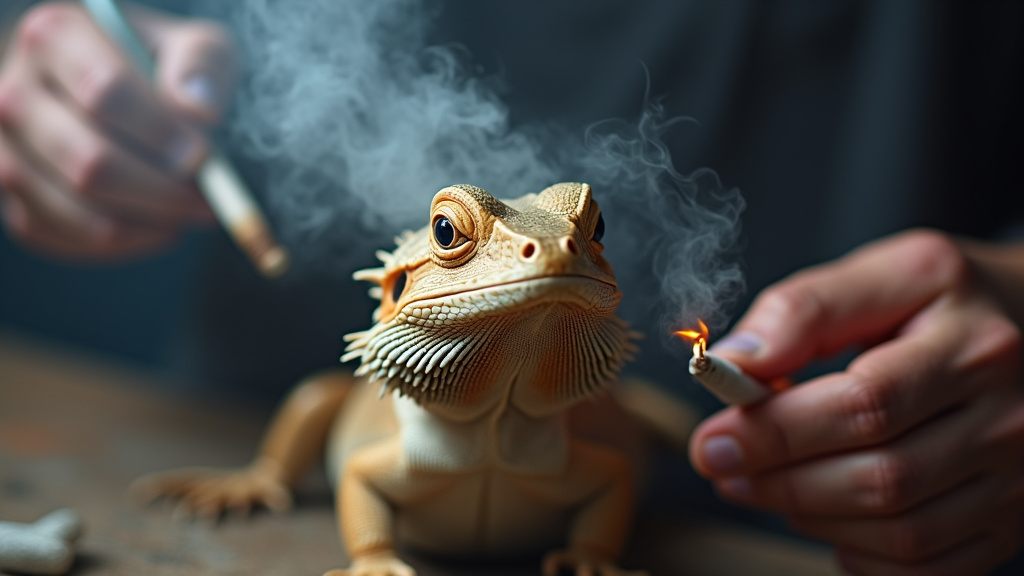
Owning a bearded dragon is a contract. You provide a controlled environment that mimics the safety of their native habitat. Introducing a known, potent airborne toxin violates that contract at a fundamental level.
Chronic, low-level exposure, the kind from smoking in the garage or vaping in the bathroom, has a cumulative effect. It doesn’t cause a dramatic crisis next Tuesday. It shaves months, then years, off their lifespan. It manifests as a dragon that is perpetually slightly off, prone to every passing common illness, and never reaches its full vibrant potential. It’s a slow fade instead of a bright life.
The standards are clear. Reputable sources like the WSU Veterinary Teaching Hospital husbandry guide list clean air as a core component of proper care. Providing it isn’t optional. Making the choice to smoke away from your pet is the bare minimum of responsible ownership. Their entire world is the environment you build. Make it a safe one.
Frequently Asked Questions
Can I smoke in a different room with the door closed and an air purifier?
No. HVAC systems circulate air throughout the house. Smoke and vapor particulates are microscopic and will travel through vents, under doors, and through ceiling spaces. The purifier helps but cannot create a perfect seal. The risk remains unacceptably high.
My dragon was in a smoky room for one night. What should I do?
Immediately move the enclosure to the cleanest air possible. Perform a full tank cleaning, including wiping down walls and washing all decor. Monitor closely for the next 72 hours for any signs of lethargy or respiratory change. If you see anything, a preemptive check-up with an exotic vet is wise.
Are incense, candles, or essential oil diffusers safe?
Generally, no. Any strong particulate or volatile organic compound (VOC) in the air is an irritant. Incense smoke is particularly thick. Scented candles and oil diffusers release chemicals that can cause respiratory irritation. If you use them, do so sparingly in a distant, well-ventilated room and observe your dragon for any signs of stress-related behaviors.
What about non-nicotine, non-THC herbal smoking blends?
The danger is less about the specific herb and more about combustion. Burning any organic material produces carbon monoxide, tar, and fine particulates. These are the primary agents of lung damage. “Natural” smoke is still smoke and is still harmful to their respiratory tract.
How long do smoke chemicals linger in the enclosure?
Heavy chemicals like tar and nicotine can adhere to glass and plastic for weeks. This is why intensive cleaning after exposure is critical. Regular habitat cleaning with gentle disinfectants is your best defense against this lingering residue.
The Bottom Line
The question isn’t about finding a safe way to smoke near your bearded dragon. It doesn’t exist. The question is whether you’re willing to prioritize their biological need for clean air over your convenience. Their lungs are fragile, their world is small, and they depend entirely on your choices. Make the right one. Step outside, change your shirt, wash your hands. Every time. Their long, healthy life is worth the hassle.