
Soaking Behaviour in Bearded Dragons: Reasons & Safety Guide
This post contains affiliate links. As an Amazon Associate, we earn from qualifying purchases.
Soaking behavior in bearded dragons is a natural thermoregulatory and hydration aid, but frequent or prolonged soaking can signal overheating, dehydration, or impaction. A safe bath requires water at 90-95°F (32-35°C), a depth no higher than the front leg joint, and constant supervision for 10-15 minutes.
The biggest mistake keepers make is misunderstanding why their dragon is in the water. You see a soaked lizard and assume it’s just cooling off. That assumption misses the seven other messages your pet might be sending, some harmless, some urgent.
This guide breaks down every reason bearded dragons soak, from normal shedding to critical health warnings. You’ll learn the exact science behind hydration, the step-by-step safe bath protocol, and how to tell a happy soak from a cry for help.
Key Takeaways
- Soaking aids shedding and can encourage defecation, but it is not a primary hydration method, bearded dragons hydrate by drinking the water, not absorbing it through their skin.
- The water depth rule is non-negotiable: water must never rise above the joint where the front leg meets the shoulder to prevent drowning risk.
- Frequent, frantic soaking paired with other symptoms like lethargy or chalky urates often points to overheating, dehydration, or impaction requiring environmental or veterinary intervention.
- Never use soap, shampoo, or electrolyte additives in a bearded dragon’s bath; these substances can be ingested or absorbed through the vent, causing toxicity.
- Bathing frequency is individual: a healthy adult may need a soak 2-3 times a week, while a shedding dragon or one in hot weather might benefit from daily sessions.
The 7 Most Common Reasons Your Bearded Dragon Soaks
Your dragon isn’t just taking a casual dip. Each soak has a motive. Ignoring the context turns a helpful routine into a missed diagnosis.
The first three reasons are benign, part of normal dragon life. The last four demand a closer look at your husbandry.
1. Thermoregulation and Cooling Down
Bearded dragons self-regulate temperature by moving between hot and cool zones. If the basking area creeps above 110°F or the cool end stays above 85°F, the water bowl becomes the only escape. A dragon soaking to cool off will often sit still, maybe partially submerged, and leave the bath once it feels comfortable.
A 2023 review of reptile thermoregulation in Journal of Thermal Biology notes that aquatic cooling is a last-resort behavior when gradient-based options fail.
TL;DR: If your dragon soaks briefly and calmly, check your thermometer. The basking spot should be 95-110°F, and the cool end must stay between 75-85°F.
2. Assistance with the Shedding Process
Soaking is a cornerstone of safe shedding assistance. The warm water softens the old keratin layer, making it easier for your dragon to rub off. You’ll see this most often when patches on the limbs, head, or tail look dull and greyish. A shedding soak is usually relaxed. The dragon might rub its head or body against the container’s sides.
Skipping baths during a shed leads to retained skin, especially around the toes and tail tip. That retained skin can constrict blood flow within a week, leading to necrosis. It’s a slow, preventable injury.
3. Encouraging Defecation (The “Poop Bath”)
The warm water relaxes the abdominal muscles and can stimulate the bowels. This is a well-known trick for mild constipation. Many keepers use a scheduled bath soaks for constipation as part of their routine. It’s effective and non-invasive.
If your dragon only defecates during baths and never in its enclosure, that’s a flag. It suggests the enclosure temperature might be too low for proper digestion. Gut motility depends on heat.
4. Dehydration and Seeking Hydration
This is the most misinterpreted reason. A dehydrated dragon will seek water. Signs include sunken eyes, loose skin that doesn’t snap back quickly when gently pinched, and dry, chalky urates (the white part of their poop). The soak itself isn’t the cure. The cure happens if the dragon drinks.
Common mistake: Assuming the soak hydrates through the skin, your dragon stays dehydrated unless it drinks from the bath. A 1966 study by Bentley & Schmidt-Nielsen proved reptile skin is largely impermeable to water.
This is where the myth of cloacal absorption persists. A 2001 follow-up by Peterson & Greenshields found negligible water uptake through the vent in desert species. Hydration is an oral event. If your dragon isn’t drinking, the soak is just a temporary cool-off.
5. Digestive Issues or Impaction
Impaction, a blockage in the digestive tract, causes discomfort. A dragon might soak trying to relieve pressure or stimulate movement. This soak looks different. It’s often more frantic or prolonged. The dragon might strain, arch its back, or seem restless.
| Symptom | Possible Cause | Action Required |
|---|---|---|
| Frequent soaking + no poop for 5+ days | High risk of impaction | Vet visit within 24 hours |
| Soaking + lethargy, back arching | Impaction or severe constipation | Vet visit immediately |
| Soaking + normal appetite and poop | Likely thermoregulation | Monitor, adjust enclosure temperature |
Impaction is a veterinary emergency. Warm water can’t dissolve a blockage of insect chitin or substrate.
6. Underlying Health Issues: Parasites or Kidney Strain
Internal parasites like coccidia or pinworms cause intestinal inflammation and discomfort. Kidney issues, often from chronic dehydration or excessive protein, can make a dragon feel unwell and seek water. Soaking is a symptom here, not a behavior.
These soaks are accompanied by other red flags: weight loss despite appetite, runny or foul-smelling stools, or swelling in the limbs or abdomen. A dragon soaking due to illness often lacks the vigor of a healthy one. It just sits, listless.
7. Stress or Behavioral Habituation
Sometimes, a dragon soaks because it has learned the routine leads to attention or because it’s stressed by something in its environment. Glass surfing, then soaking, is a common stress cycle. Check for stressors: reflections on the glass, a new pet in the room, or an enclosure that’s too bare or too cluttered.
My first dragon, a rescue named Groot, would soak for 20 minutes every afternoon at 3 PM. It wasn’t thirst or heat, it was the shadow of a tree branch that crossed his tank, spooking him. I moved the enclosure, and the obsessive soaking stopped in two days.
How to Give a Safe Bearded Dragon Bath
Getting the bath right matters more than the frequency. A bad bath causes stress, risks drowning, and teaches your dragon to fear water.
The Non-Negotiable Safety Setup
Before you start: An unsupervised dragon can drown in under 30 seconds. A water temperature off by 10 degrees can send it into thermal shock. Always have a towel ready before you begin.
Your container must be escape-proof and easy to clean. A plastic storage bin or a clean sink works. The water depth is your first safety check. It should reach the dragon’s chest, or the front leg joint, when standing. For a juvenile, this might be half an inch. Never fill water to where the dragon must swim to keep its head up.
Use a digital kitchen thermometer. Your wrist is not a reliable gauge. Aim for 90-95°F (32-35°C). This feels pleasantly warm, not hot, to your inner wrist.
The Step-by-Step Bathing Protocol
- Prepare the space. Fill your container with tempered water, check the temperature, and place it in a warm, draft-free area. Have a soft towel laid out nearby.
- Gently introduce your dragon. Lower it into the water, supporting its belly and legs. Let its feet touch the bottom immediately. A startled drop causes stress.
- Supervise without hovering. Stay within arm’s reach for the entire 10-15 minutes. You can gently trickle water over its back with a cup, but avoid pouring water near its nose. Watch for the telltale head tilt that signals drinking.
- End the session correctly. If your dragon starts frantic paddling, glass-surfing the container walls, or gaping in distress, end the bath early. Gently lift it out and place it on the towel.
- Dry and rewarm thoroughly. Pat the dragon dry, paying attention to the folds under the legs and the armpits. Return it directly to the enclosure under the basking light. A wet, chilled dragon is at risk for respiratory infection.
Skipping the dry-and-warm step is how you get a sick lizard. Their body temperature plummets when wet.
Encouraging Your Dragon to Drink
Most bearded dragons won’t drink from a still bowl. The bath is your best chance. Try these techniques:
* Gently ripple the water in front of its snout with your finger.
* Use a plastic dropper to place a single water droplet on its nose. The lick reflex often kicks in.
* Slowly trickle a thin stream of water from a cup onto the tip of its snout.
If it drinks, you’ve solved the hydration mission. If not, you’ll need to rely on gut-loading feeder insects with watery veggies and regular assisted bathing for moisture.
The Science of Hydration: What Soaking Actually Does (And Doesn’t Do)
Let’s kill the myth permanently. Your bearded dragon’s skin is a desert-adapted barrier designed to prevent water loss. Soaking does not pump water into its system.
The seminal research dates back decades. In 1966, physiologists Bentley and Schmidt-Nielsen demonstrated that the reptile integument is highly impermeable to water. Later work, like Peterson and Greenshields’ 2001 paper, specifically measured cloacal uptake in bearded dragons and found it physiologically insignificant for hydration.
The water your dragon gets from a soak comes through its mouth, not its skin or vent. Any electrolyte or “reptile hydration” bath solution implying otherwise is selling you a myth confirmed false by 20th-century science.
The real benefit of the soak is behavioral. It presents water in a way that triggers a drinking response in a species that doesn’t recognize standing water well. The warmth also increases circulation, which can help with shedding and digestion. That’s it. It’s a delivery method, not an absorption hack.
When Soaking Becomes a Problem: Warning Signs
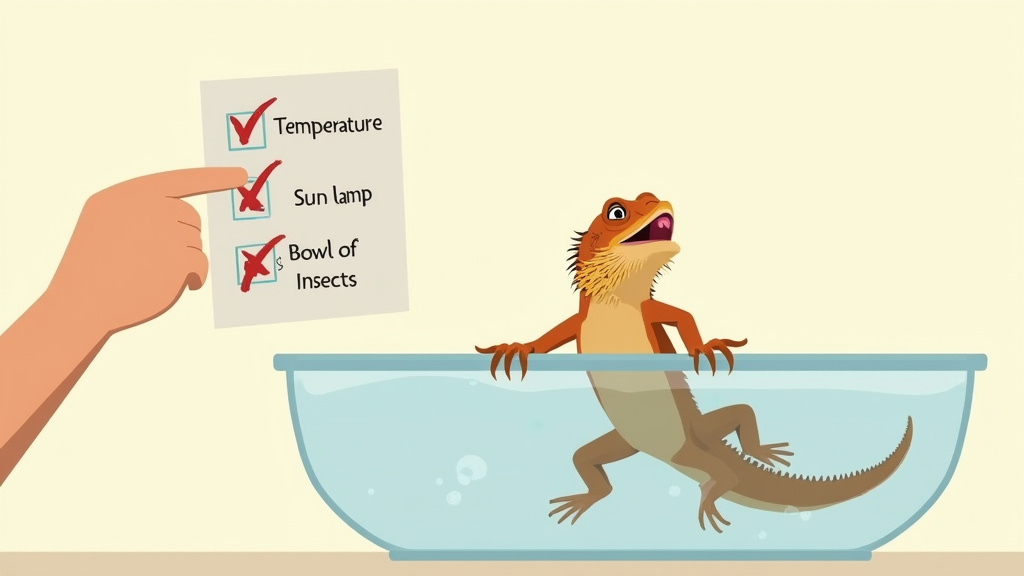
Not all water time is good time. You need to distinguish a healthy soak from a symptom.
Soaking is likely normal if:
- It happens during a shed.
- It’s brief (10-20 min) and occurs during the hottest part of the day.
- Your dragon is alert, active, and has a good appetite otherwise.
- It results in a healthy bowel movement.
Soaking is a red flag if:
- It’s frequent, frantic, or lasts over 30 minutes.
- Your dragon seems lethargic during or after the soak.
- It’s accompanied by a loss of appetite or weight loss.
- You notice other symptoms like swollen joints, labored breathing, or abnormal stools.
- The urates are consistently hard and chalky.
Common mistake: Bathing a visibly sick dragon to “help”, the stress of handling and temperature change can crash their compromised immune system. Stabilize the environment and see a vet first.
If you see red-flag soaking, your first move is to audit the enclosure. Is the temperature gradient correct? Is the UVB lamp older than 12 months? Has the diet been too high in protein or dry insects? Often, the fix is in the habitat, not the hospital.
Frequently Asked Questions
How often should I bathe my bearded dragon?
For a healthy adult, 2-3 times a week is a good maintenance schedule. Increase to daily during heavy shedding spells, heatwaves, or if you notice dry urates. Hatchlings and juveniles can be bathed 3-4 times a week, as they dehydrate faster. Let your dragon’s behavior and physical signs guide you more than a rigid calendar.
Can my bearded dragon drown in its water bowl?
Yes, especially if the bowl is too deep or the dragon is weak, young, or sick. The bowl should be shallow and heavy enough not to tip. Many keepers prefer to offer water via bathing and misting and forgo a permanent bowl to eliminate this risk and control humidity.
Do bearded dragons absorb water through their skin or cloaca?
No. This is a persistent myth debunked by scientific research. Bearded dragons are desert reptiles with skin adapted to retain moisture, not absorb it. Any meaningful hydration occurs when they drink the water orally during a bath. The cloaca absorbs minimal amounts, not enough to combat dehydration.
Why does my bearded dragon poop in the bath every time?
The warm water relaxes the abdominal muscles and stimulates the cloacal sphincter, making it easier to pass stool. This is normal and convenient for cleanup. However, if your dragon never poops in its enclosure, review your basking temperatures. Inadequate heat leads to poor digestion and a reliance on the bath’s warmth to complete the process.
What should I do if my bearded dragon hates baths and gets stressed?
Forced bathing does more harm than good. Stop full baths and switch to alternatives: use a spray bottle to mist its snout and encourage drinking, offer water-rich greens like cucumber and bell pepper, and ensure feeder insects are well gut-loaded. You can also try a “sauna” by placing the dragon in a warm, humid hide box for 10 minutes to aid shedding without submersion.
The Bottom Line
Soaking behavior is a useful window into your bearded dragon’s health. It can be a simple bath for shedding or a complex signal for impaction. Your job is to read the context, the duration, the demeanor, the accompanying signs.
Master the safe bath protocol: shallow, warm, and short. Remember the water goes in through the mouth, not the pores. Finally, trust your observation. If a soak seems off, it probably is. Adjust the heat lamp, the veggies, or pick up the phone for a vet consult. That’s the difference between reacting to a behavior and understanding it.