How to Get a Bearded Dragon to Poop: 7 Vet-Approved Fixes
This post contains affiliate links. As an Amazon Associate, we earn from qualifying purchases.
To get a bearded dragon to poop, you must address the root cause: dehydration, low basking heat, or poor diet. Start with a 15-30 minute warm bath (90-95°F) and gentle belly massage. If that fails, offer a laxative like pure pumpkin puree or a few drops of olive oil, and immediately check your enclosure’s basking surface temperature and UVB lighting.
Most owners panic and reach for the bath first. That works maybe half the time. The other half, you’re dealing with a deeper husbandry failure that a soak won’t fix. You’re treating a symptom, not the disease.
This guide walks through the immediate fixes, explains the seven most common causes, and shows you how to build a habitat that prevents constipation for good. We’ll cover when a bath is appropriate, when you need a vet, and what a healthy poop should actually look like.
Key Takeaways
- A warm bath with belly massage is the first-line home remedy, but it’s a temporary fix for a chronic problem.
- Basking surface temperature is non-negotiable. If the spot under the lamp isn’t 95-110°F for an adult, digestive enzymes shut down and food sits rotting.
- Urate plugs, hard, chalky white blocks, are a classic sign of chronic dehydration and often require a vet to remove.
- Loose substrate like sand is a leading cause of life-threatening impaction, especially in juveniles. Switch to tile, paper towel, or reptile carpet.
- If your dragon hasn’t pooped in over two weeks or shows a swollen belly and lethargy, skip home remedies and go straight to an exotic vet.
Before You Start: Safety First
Before you start: A constipated bearded dragon can quickly become an impacted, critically ill one. Never force a bowel movement if your dragon is lethargic, has a rock-hard swollen abdomen, or is dragging its hind legs. These are signs of a severe gastrointestinal blockage that requires immediate veterinary intervention. Attempting home remedies first in this case wastes precious hours.
The Warm Bath Method (Step-by-Step)
The bath isn’t magic. It works by relaxing the cloacal muscles and providing gentle hydration through the vent. The water temperature is the critical variable.
Use a digital kitchen thermometer. Fill a clean sink or plastic tub with dechlorinated water warmed to 90-95°F. The depth should reach your dragon’s shoulders when it’s standing normally. Too deep risks drowning if it panics; too shallow does nothing.
Place your dragon in the water and let it soak for 15 to 30 minutes. You might see it drink, which is a bonus. After about 10 minutes, take two fingers and gently massage its lower abdomen. Start just behind the ribcage and apply light, downward pressure toward the vent.
Common mistake: Using bath water that’s too hot, above 100°F can cause thermal stress and worsen dehydration. You’ll see frantic scratching and trying to escape. That’s your cue to check the temperature.
If it poops in the bath, great. Clean up immediately. If not, don’t make bath-popping a habit. A dragon that only goes in the water is a dragon with an underlying husbandry issue you haven’t fixed.
TL;DR: A 90-95°F shoulder-deep soak for 30 minutes with gentle belly massage can stimulate a bowel movement, but it’s a band-aid, not a cure.
What to Feed a Constipated Bearded Dragon
When the bath fails, look at the fuel. The wrong diet creates slow, dense stool. The right one adds moisture and fiber.
First, increase hydration. Drip water onto its snout with a syringe or your finger. Some dragons will lick it off. Offer watery vegetables like cucumber or bell pepper, but don’t rely on them long-term, they’re low in nutrients.
For a natural laxative, pure pumpkin puree (not pie filling) is the gold standard. Offer a quarter-teaspoon on a spoon or mix it with a little water in a 1ml syringe. Another option is one or two drops of olive oil or sunflower oil dabbed on a favorite insect, like a dubia roach.
I keep a jar of organic pumpkin puree in the pantry for this exact reason. A dragon that hasn’t pooped in five days will usually pass something within 12 hours of eating half a teaspoon. It’s messy, but it works.
Cut out binding foods immediately. This means no mealworms, especially for juveniles. Their high chitin shell is notorious for causing blockages. Also pause on hard-bodied insects like large crickets if they’re wider than the space between your dragon’s eyes.
This is where a solid feeding guide prevents future problems. A balanced juvenile diet heavy on appropriate-sized bugs and leafy greens establishes good healthy bowel habits from the start.
| Food to Offer | How It Helps | Amount / Frequency |
|---|---|---|
| Pure Pumpkin Puree | High fiber & moisture softens stool | 1/4 tsp as needed |
| Olive/Sunflower Oil | Lubricates the intestinal tract | 1-2 drops, 1x daily for 2 days |
| Dandelion Greens | Natural diuretic & fiber source | Small piece mixed in daily salad |
| Hornworms | Extremely high water content | 1-2 worms as a hydrating treat |
The 7 Most Common Reasons Your Bearded Dragon Won’t Poop
Baths and pumpkin are reactions. Prevention means fixing the environment. Here are the seven culprits, ranked by how often I see them.
1. Incorrect Basking Surface Temperature
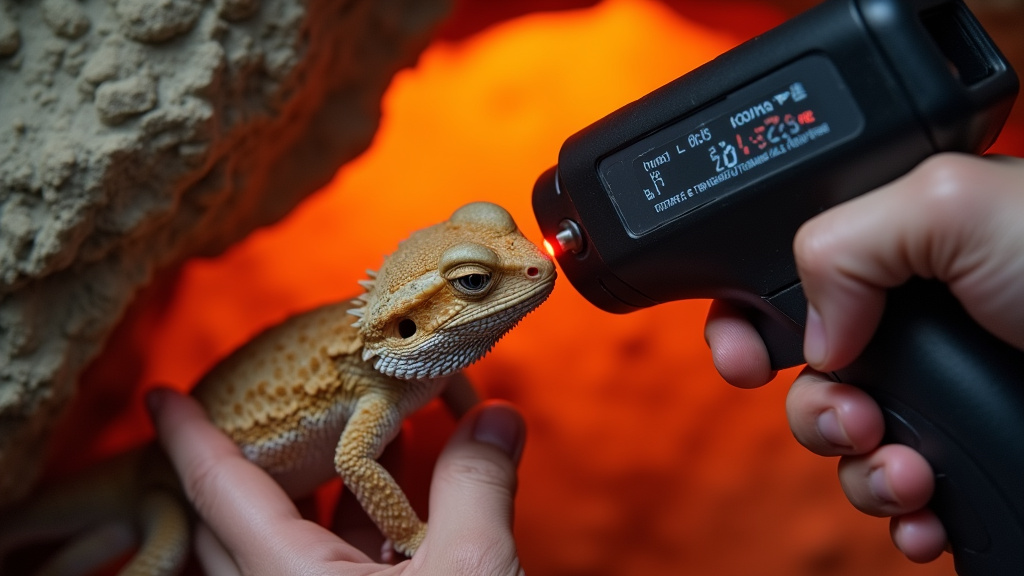
This is the number one cause of chronic constipation that owners miss. You check the air temp with a digital gauge and see 90°F. But the actual surface under the basking lamp, the rock or tile your dragon lies on, needs to be 95-110°F for an adult. That heat is required for their digestive enzymes to function. No surface heat, no digestion. Food sits and ferments. Invest in an infrared temperature gun. Point it at the basking spot. This single tool diagnoses more digestive issues than any other.
2. Chronic Dehydration
Bearded dragons are terrible drinkers. A still water bowl is often ignored. Chronic dehydration leads to hard, dry fecal matter and the formation of urate plugs, hard, chalky white masses that block the vent. The fix isn’t just a bowl. It’s soaking for constipation a few times a week, offering water via syringe, and feeding water-rich greens.
3. Inadequate UVB Lighting
UVB is required for calcium metabolism and overall metabolic function. A weak or old UVB bulb (they degrade after 6-12 months) slows everything down, including gut motility. Your dragon needs a strong, linear UVB tube (like a ReptiSun 10.0 T5) spanning half the enclosure, replaced on a strict schedule.
4. Poor Diet / Overfeeding
Too many insects, especially fatty ones like waxworms, or insects that are too large, create a protein-heavy, fiber-low gut content that’s difficult to pass. Adults should be eating 80% vegetables, 20% insects. Juveniles are the reverse, but the insect size is critical.
5. Lack of Exercise
A dragon that sits all day in a small tank has sluggish digestion. Encourage movement with climbing branches and occasional supervised time outside the enclosure.
6. Stress
New enclosure, loud noises, a visible predator (like a cat), or an aggressive tank mate can cause enough stress to halt digestion. This is why a proper basking area with hides and a correct temperature gradient is essential for security.
7. Impaction from Substrate
Loose substrate, calcium sand, walnut shell, even plain play sand, is a huge risk. Dragons lick their environment and ingest it. The particles can clump inside the gut, causing a true physical blockage. This is a veterinary emergency. The safest substrates are solid: slate tile, paper towel, or non-adhesive shelf liner.
What Healthy Poop Looks Like (And What Doesn’t)
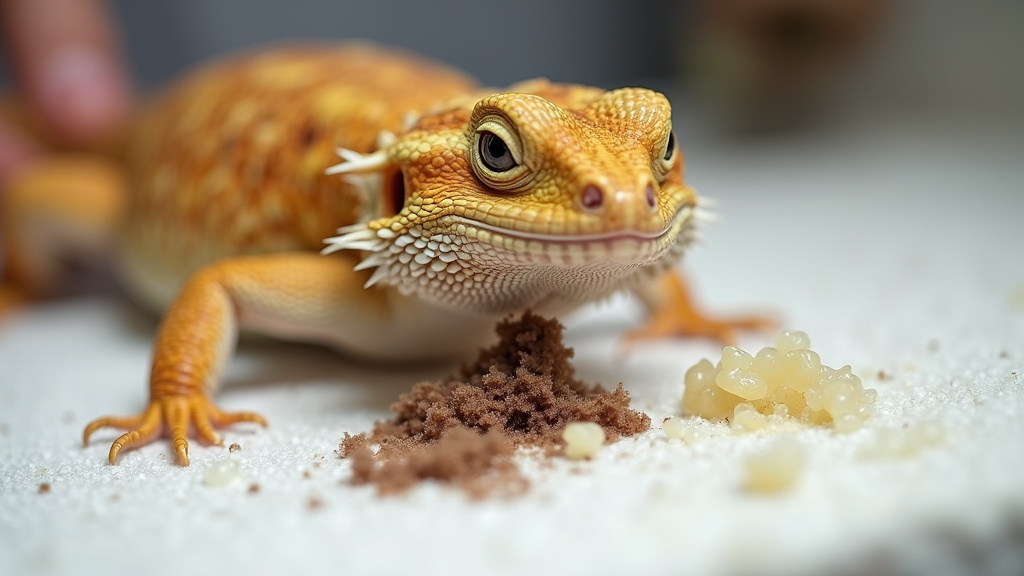
You need to know the target. Healthy bearded dragon poop has three distinct parts.
The fecal portion should be firm, well-formed, and brown. It may contain visible bits of undigested insect exoskeleton or plant matter. The urate, the white part, should be soft, like toothpaste, and off-white. The third part is a small amount of clear liquid.
Now, the warning signs.
Common mistake: Ignoring a hard, chalky-white urate, this is a urate plug in its early stages, signaling chronic dehydration. Left alone, it will harden further and completely block the vent, preventing any feces from passing.
A red tinge in the stool or urate can indicate internal parasites or straining. Runny, watery, or excessively smelly feces points to parasites or a bacterial infection. A swollen, hard abdomen that’s tender to the touch is a red flag for impaction.
If you see these signs, especially with a loss of appetite, your next step isn’t a bath. It’s a vet visit and a fecal exam. Your cleaning feces routine becomes a vital diagnostic tool, always check the stool before you discard it.
When to Stop Home Remedies and See a Vet
You’ve done the bath. You’ve offered pumpkin. You’ve checked the temperatures. Nothing has worked for 48 hours. It’s time.
Other immediate vet-worthy symptoms include:
* A visibly distended, firm belly.
* Lethargy or weakness, especially in the hind legs.
* Loss of appetite for more than two days.
* No bowel movement for two weeks or more.
* Straining or prolapse from the vent.
A reptile vet will perform a physical exam, likely take an X-ray to confirm impaction, and may administer fluids (subcutaneous or intraosseous), an enema, or prescribe a laxative like lactulose. In severe cases, surgery is needed to remove the blockage.
Delaying this visit because “he might go tomorrow” is how a $150 office visit turns into a $1200 emergency surgery. I’ve seen it. The X-ray shows a gut packed with sand, the dragon is listless, and the owner says they were just waiting for the bath to work.
Long-Term Prevention Checklist
Constipation is a husbandry problem. Fix the environment, and you fix the gut. Run through this list weekly.
- Temperature Gun Check: Basking surface = 95-110°F. Cool end = 80-85°F.
- UVB Status: Is your linear tube bulb less than 6 months old? Is it unobstructed by mesh?
- Hydration: Offer a hydration soak 2-3 times weekly. Mist greens. Consider a reptile water fountain.
- Diet: Adults get a large salad daily (collard, mustard, dandelion greens). Insects are treats. Always follow a supplement schedule with calcium dusting.
- Substrate: Tile, paper towel, or reptile carpet only. No sand.
- Exercise: Provide climbing structures. Allow for supervised exploration outside the tank.
- Observation: Weigh your dragon monthly. Track its regular pooping patterns. Know what’s normal for your dragon.
This isn’t a one-time fix. It’s the new standard. A dragon with a proper balanced diet and correct ideal temperatures will have a reliable digestive system.
Frequently Asked Questions
How long can a bearded dragon go without pooping?
healthy adult can go 7-14 days between bowel movements and be fine. Juveniles, who eat more, should go every 1-3 days. The timeline that matters is the change from their normal. If your adult that usually goes weekly hasn’t gone in three weeks, that’s a problem, even if it’s still eating.
Can I use mineral oil for bearded dragon constipation?
Veterinarians sometimes use mineral oil as a laxative, but you should never administer it yourself without direct instruction. The dosing is critical, and improper administration can lead to aspiration pneumonia if inhaled. Stick to safer, oral options like pumpkin puree or the olive oil method mentioned above.
Why is my bearded dragon pooping in the bath but not in the tank?
This usually means the enclosure is too cold. The warm bath provides the external heat needed to kickstart digestion that the tank’s basking spot is failing to provide. Check your surface temperatures with a gun. It also can become a learned behavior if over-relied upon.
Does brumation cause constipation?
No. During brumation, a state of dormancy, their metabolism slows to a crawl. They eat little to nothing, so they don’t produce waste. This is normal. The concern is if they stop pooping before they enter brumation, indicating a blockage that will become dangerous while they’re dormant.
Is a urate plug an emergency?
It can be. A small, slightly firm urate isn’t a crisis. A large, rock-hard white mass visibly blocking the vent is. It often requires a vet to gently remove it with lubrication and tools. Attempting to pull it out yourself can tear delicate tissue and cause a prolapse.
The Bottom Line
Getting a bearded dragon to poop starts with a warm bath and ends with a critical look at your care sheet. The bath is the easy part. The real work is in the daily details: the temperature gun reading, the date on the UVB bulb, the pile of greens in the food dish.
Most constipation cases resolve with corrected heat and hydration. The ones that don’t are shouting for professional help. Listen to your dragon. A swollen belly and weak legs aren’t a puzzle to solve at home, they’re a direct order to get in the car.
Stop looking for a single trick. Start auditing your enclosure against the prevention checklist. That’s how you move from reacting to blockages to building an animal that thrives.