
Can Bearded Dragons Eat Strawberries? (Yes, With Rules)
This post contains affiliate links. As an Amazon Associate, we earn from qualifying purchases.
Bearded dragons can eat strawberries, but only as a rare, measured treat. The safe method involves feeding 1-2 medium strawberries (12-25g total) to an adult dragon no more than once per week, always cut into tiny pieces and mixed with calcium-rich greens to counterbalance the fruit’s poor nutritional profile. The core risks are its high phosphorus content, which blocks calcium absorption and can lead to metabolic bone disease, and its natural acidity, which can irritate a dragon’s digestive tract.
Most owners get this wrong by focusing on sugar. The real danger isn’t the 4.9 grams of sugar per 100g serving. It’s the calcium-phosphorus ratio and the cumulative effect of fruit acids on a system built for tough greens and insects. You can’t see metabolic bone disease until the jaw softens and the legs bow. That happens months after the weekly strawberry habit starts.
This guide breaks down the exact portion sizes by age, explains the two chemical reasons strawberries are a nutritional trap, and shows you how to use them safely as a high-value training treat without risking your dragon’s skeleton.
Key Takeaways
- Feed strawberries once a week maximum to adults, and skip them entirely for dragons under one year old due to their critical calcium needs.
- The calcium-to-phosphorus ratio in strawberries is roughly 1:2 (more phosphorus). This inhibits calcium uptake and, over time, is the primary driver of metabolic bone disease (MBD).
- Strawberries have an average pH of 3.3. This acidity can cause mouth irritation and digestive upset, leading to diarrhea and subsequent dehydration.
- Always cut pieces smaller than the space between your dragon’s eyes to prevent choking, and dust them with calcium powder before mixing into a salad of sturdy greens.
- Never feed frozen, canned, dried, or sweetened strawberries. The added preservatives, sugars, and altered water content pose serious health risks.
The Real Nutritional Problem Isn’t Sugar
Headlines about fruit sugar scare people. For bearded dragons, the sugar in a single strawberry is manageable. Their liver processes the fructose. The genuine, slow-motion threat is mineral warfare inside their gut.
Every bite of strawberry introduces more phosphorus molecules than calcium molecules. Phosphorus binds to calcium in the digestive tract. When it does, that calcium becomes insoluble, your dragon can’t absorb it. It passes right through. The body then pulls calcium from its only reservoir: the bones. This is the direct biochemical pathway to metabolic bone disease. The Reptile Nutrition Profile on strawberries details this antagonistic relationship.
The second issue is pH. A strawberry’s acidity isn’t just a taste. It’s a chemical environment. A dragon’s digestive system is alkaline-biased, especially for processing chitin from insects and fibrous greens. Dumping acidic fruit into that system irritates the mucosal lining. You might see this as a loss of appetite, subtle mouth-pawing, or loose stools within 12 hours.
The calcium-to-phosphorus ratio in strawberries is approximately 1:2. For every unit of calcium available, two units of phosphorus work to lock it away. Without deliberate calcium supplementation at the same meal, the dragon loses ground.
TL;DR: Sugar is a distraction. The twin threats are phosphorus blocking calcium absorption and fruit acid irritating the gut.
How Much Strawberry Is Safe? (Adult, Juvenile, Baby)
General advice like “a little bit” gets dragons sick. You need gram weights and weekly schedules. This isn’t about being obsessive. It’s about matching a treat’s size to a metabolic reality.
For an adult bearded dragon (over 18 months), a single medium strawberry weighs about 12 grams. That’s the absolute ceiling for a weekly treat. I prefer halving that, one small strawberry or 6 grams, every other week. It keeps the fruit special and minimizes mineral interference. Always weigh it. Eyeballing leads to a 20-gram berry becoming a monthly dose in a single sitting.
Juveniles (5-18 months) are building bone mass at a furious rate. Their insect-heavy diet is a phosphorus source already. Adding fruit phosphorus is a bad move. If you must, a quarter of a small strawberry, mashed into a paste and smeared on a piece of dandelion green, is the limit. Do this once a month, not weekly.
Baby dragons (under 5 months) should not get strawberries. Their diet must be 80% live insects dusted with calcium. Their growing skeletons cannot spare any calcium to phosphorus binding. The risk of tipping their delicate mineral balance is too high. There are zero nutritional benefits for them that aren’t better served by a nutrient-dense feeder insect.
| Dragon Age | Maximum Strawberry Portion | Frequency | Critical Rule |
|---|---|---|---|
| Adult (18+ months) | 1 medium strawberry (12g) or 2 small | Once per week | Always dust with calcium & mix with greens |
| Juvenile (5-18 months) | 1/4 of a small strawberry | Once per month | Mash and mix into a staple green |
| Baby (Under 5 months) | None | Not recommended | Focus on calcium-dusted insects |
TL;DR: Adults get a 12g max weekly; juveniles get a tiny taste monthly; babies get none.
Step-by-Step: Preparing Strawberries Safely
Serving a strawberry whole is a choking hazard. Serving it straight is a nutritional mistake. This sequence turns a risky fruit into a controlled event.
Step 1: Source and Wash
Buy organic if you can. Conventionally grown strawberries consistently top the EWG’s “Dirty Dozen” list for pesticide residue. Wash the berry under cool running water for 30 seconds, rubbing the surface gently. Dry it with a paper towel. Skipping this step introduces chemicals a dragon’s liver can’t metabolize effectively.
Step 2: Cut to Size
Place the strawberry on a cutting board. Slice off the green calyx (the leafy top). The leaves are non-toxic but tough. Chop the berry flesh into cubes. The rule is simple: each cube must be smaller than the distance between your dragon’s eyes. For an adult, this means pea-sized pieces. This size ensures they must chew, reducing the chance of a whole piece being swallowed.
Step 3: Dust and Mix
Place the pieces in a small bowl. Lightly sprinkle them with a calcium carbonate powder supplement (without D3 for this use). Toss gently to coat. This immediate calcium boost helps neutralize the incoming phosphorus. Now, take a large handful of your dragon’s daily greens, collard greens, mustard greens, or arugula work well. Mix the strawberry pieces thoroughly into the greens. The goal is to distribute a few sweet bits among many bitter ones, encouraging the dragon to eat the entire healthy salad.
Step 4: Serve and Observe
Place the salad in the feeding dish. Watch the dragon eat. They will hunt for the strawberry pieces first. That’s fine. Just ensure they are consuming the greens along the way. Remove any uneaten salad after 20 minutes to prevent spoilage.
Common mistake: Feeding strawberry pieces alone, the dragon fills up on the treat and ignores the nutrient-dense greens it needs, missing the entire point of a balanced meal.
Strawberries vs. Better Fruit Choices
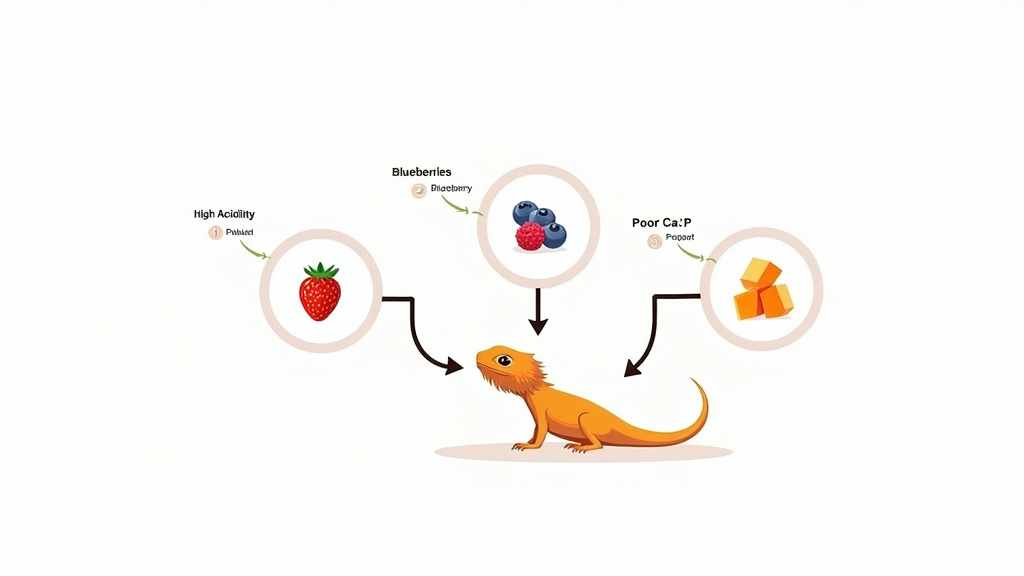
Not all fruits are equal. If you’re using fruit as a treat, some options are objectively less problematic. Strawberries lose in a direct comparison.
Take blueberries. Their calcium-to-phosphorus ratio is still poor, but they are less acidic (pH around 4.5) and pack antioxidants that can support a healthy immune system. Raspberries offer more fiber, which aids digestion. Papaya contains the enzyme papain, which can help break down insect chitin. When you choose a treat, you’re choosing a side-effect profile.
Strawberries bring the worst of both worlds: high acidity and one of the most imbalanced mineral ratios among common feeder fruits. This is why they are a bottom-tier choice. I keep them in rotation only because some dragons go crazy for the red color and sweet smell, making them a powerful tool for bonding or medicating. For pure nutritional benefit, I’d pick blueberries for bearded dragons or blackberries for bearded dragons first.
| Fruit | Calcium : Phosphorus | Acidity (pH) | Best Use Case |
|---|---|---|---|
| Strawberry | 1 : 2 | High (~3.3) | Last-resort high-value treat |
| Blueberry | 1 : 1.5 | Moderate (~4.5) | Occasional antioxidant boost |
| Raspberry | 1 : 1.2 | Moderate (~4.5) | Occasional fiber source |
| Papaya | 2 : 1 | Low (~5.5) | Digestive aid, better mineral balance |
TL;DR: Compared to other safe fruits, strawberries have the worst calcium-phosphorus ratio and highest acidity. Use them sparingly and strategically.
Recognizing the Signs of a Bad Reaction

Dragons can’t tell you their stomach hurts. You have to read the physical signals. A negative reaction to strawberries usually shows up in the digestive tract or in subtle behavioral shifts.
The first sign is often a change in stool. Look for watery, poorly formed feces or diarrhea within 24 hours of feeding. The high water and acid content can rush through their system. Next, watch for lethargy. A dragon that usually basks actively after eating but instead sits hunched and puffed up might be experiencing gut discomfort.
Check the mouth. While rare, acidic fruits can cause small ulcers or redness around the gums. If your dragon is pawing at its mouth or shaking its head after eating, discontinue strawberries immediately. Long-term, the signs of calcium deficiency from overfeeding phosphorus-rich foods are more sinister: a softening of the lower jaw (rubber jaw), tremors in the limbs, or difficulty climbing. These are emergency veterinary symptoms.
If you see any acute signs like diarrhea or mouth-pawing, stop all fruit. Offer extra hydration via a warm bath and stick to bland, easy-to-digest greens like endive for a few days. The dragon’s system will usually reset. This is a key reason why feeding pineapple safely also requires caution due to its similar acidity.
Common mistake: Assuming no immediate vomiting means the fruit is fine, the chronic damage from mineral imbalance is invisible until the skeleton weakens months later.
What to Feed Instead (The Healthy Treat Shortlist)
If strawberries are so fraught, what should you use? The best treats are either nutritionally supportive or behaviorally enriching without the baggage.
For a sweet, safe reward, butternut squash is a champion. Steam a few cubes until soft. It’s high in Vitamin A, has a decent calcium-phosphorus ratio, and most dragons love the texture. Dandelion flowers (from pesticide-free yards) are a fantastic seasonal treat, rich in calcium and beta-carotene. For a protein-based treat, offer a single hornworm. They are hydrating, soft-bodied, and low in fat.
The principle is to choose treats that contribute something, hydration, vitamins, minerals, not just empty calories and chemical conflicts. This is the same logic behind choosing cantaloupe for bearded dragons for hydration or kiwi fruit for dragons for vitamin C over more problematic options like citrus fruits like oranges.
- Butternut Squash Cubes (steamed): Vitamin A source, good Ca:P.
- Dandelion Flower: High calcium, natural foraging enrichment.
- Hornworm: Hydrating, low-fat protein.
- Blueberry (single): Lower acid, high antioxidants.
Rotate these. A dragon that only gets excited for one type of treat is a dragon that’s harder to feed a balanced diet.
Frequently Asked Questions
Can bearded dragons eat strawberry leaves or tops?
Yes, the green leafy top (calyx) of a strawberry is safe for dragons to eat. It’s fibrous and non-toxic. However, it’s also not particularly nutritious. It’s fine to leave it on when you chop the berry, but don’t feed it separately as a green, it doesn’t compare to staple greens like collards or dandelion.
Are strawberry seeds dangerous for bearded dragons?
No. The tiny external seeds on a strawberry are not a choking hazard for an adult bearded dragon. They are soft and pass through the digestive system without issue. The concern about seeds applies to fruits with large, hard pits like those found in peaches as an occasional treat, which must be removed.
My dragon loves strawberries. Can I give them every day?
Absolutely not. Daily strawberry feeding is a direct path to health problems. The calcium-phosphorus imbalance is a cumulative issue. Even a small amount every day adds up to a significant weekly phosphorus load that will leach calcium from bones. Stick to the once-weekly maximum for adults.
Can I use strawberries to hide medication for my bearded dragon?
Yes, this is one of their best uses. The strong sweet scent and red color can mask the taste of liquid or powdered medication. Use a tiny piece (the size of a single seed) soaked in the medication. Ensure the dragon eats the entire medicated piece before offering any other food.
What about frozen or dried strawberries?
Avoid them. Frozen strawberries often have added preservatives and lose their texture, becoming a mushy, watery mess that can cause diarrhea. Dried strawberries are concentrated sugar with all water removed, making them too dense and sweet. They also frequently contain added sulfites as preservatives, which are toxic to reptiles. Only feed fresh.
The Bottom Line
Strawberries are a permissible, not a recommended, part of a bearded dragon’s diet. Their role is strictly that of a rare, high-value treat used for bonding or administering medicine. The 12-gram weekly limit for adults is a guardrail against their poor calcium-phosphorus ratio and natural acidity.
The dragon that gets a single berry piece once a month is fine. The dragon that gets a whole berry every Saturday is on a slow path to metabolic bone disease. Weigh the fruit. Cut it small. Dust it with calcium. Bury it in greens. Those four steps are the difference between a harmless indulgence and a nutritional mistake.
When in doubt, choose a butternut squash cube or a dandelion flower. Your dragon’s skeleton will thank you in a year.