
Can Bearded Dragons Eat Celery? The Vet’s Honest Take
This post contains affiliate links. As an Amazon Associate, we earn from qualifying purchases.
Bearded dragons can eat celery, including the stalks and leaves, but only as an occasional, well-prepared addition to a diet built on more nutritious staple greens. It is safe in moderation due to its low oxalate content, but its primary value is hydration and fiber, not vitamins or minerals.
Most owners get this wrong by focusing on safety instead of nutrition. They hear “celery is safe” and assume it’s also good, which leads to a bowl of watery, fibrous filler that pushes out the calcium-rich greens their dragon actually needs.
This guide breaks down the real nutritional score, shows you the only safe way to prep it, and names the specific, better vegetables you should be feeding instead.
Key Takeaways
- Celery is over 95% water and fiber, offering negligible amounts of the calcium and vitamins bearded dragons require from their daily salad.
- The oxalate content in celery is relatively low, making it a minor concern compared to its overall nutritional emptiness.
- Always dice celery into pieces smaller than the space between your dragon’s eyes and mix it with superior greens like turnip greens or dandelion greens.
- Feed celery no more than once a week for adults, and avoid it entirely for dragons with a history of Metabolic Bone Disease (MBD) or kidney issues.
- Organic celery is strongly preferred. The conventional crop consistently ranks high for pesticide residue, which a bearded dragon’s small body cannot process well.
The Celery Reality Check: Nutrition vs. Hype
Headline safety answers miss the bigger picture. The VCA Animal Hospitals feeding guide for reptiles explicitly advises against light green, fiber-rich, nutrient-poor vegetables like celery, classifying them as vitamin-deficient. That’s the professional veterinary stance.
Celery’s nutritional profile is weak for a bearded dragon. A typical stalk is about 95% water. The remaining 5% is mostly indigestible fiber, with trace amounts of Vitamin K, Vitamin C, and potassium. It contains almost no calcium, which is the single most critical mineral in a bearded dragon’s diet. Feeding it regularly creates what reptile nutritionists call a “full belly but empty tank” scenario.
A 100-gram serving of raw celery provides approximately 40mg of calcium and 260mg of oxalates. This results in a calcium-to-oxalate ratio that is unfavorable for absorption, though the total quantities are low enough to be managed with strict moderation.
TL;DR: Celery is a hydrating snack, not a food. It should never form the base of a salad.
How to Prepare Celery for a Bearded Dragon (Step-by-Step)
Proper prep mitigates the two biggest risks: choking on stringy fibers and exposing your dragon to pesticides. Doing it wrong once can cause an impaction that requires a vet visit.
Before you start: Disconnect the trimmer from its power source and allow the head to cool completely. The cutting blade can engage unexpectedly if the bump mechanism is tapped, and the monofilament line retains enough heat from friction to cause a minor burn.
- Wash Like Your Dragon’s Health Depends On It. Hold the stalk under cold running water and scrub every ridge and crevice with a stiff vegetable brush. Celery’s thin skin absorbs pesticides readily. If you can source organic, do it.
- Trim the Ends and Remove Leaves. Cut off the tough, white base and the leafy tops. The leaves are safe but often bitter and fibrous. You can chop them finely if you use them.
- Dice to Impaction-Proof Size. Slice the stalk into thin coins. Then, dice each coin into pieces no larger than the space between your dragon’s eyes. This is the universal safe-size rule for all bearded dragon veggies.
- Perform the String Test. Take a few diced pieces and gently pull them apart. If you see long, white fibrous strings, peel them away. These strings are the primary impaction risk, especially for juveniles.
- Mix, Don’t Heap. Combine a teaspoon of diced celery with a heaping cup of chopped staple greens. The celery should be a minor component, not the main event.
Skipping the dicing step is the most common shortcut. A dragon will try to swallow a large piece whole. That chunk can lodge in the throat or, worse, block the intestines. The first sign is often a lack of bowel movements for several days.
Celery Leaves vs. Stalks: Is There a Better Part?
The leaves contain slightly higher concentrations of vitamins and antioxidants than the stalks. They are also more aromatic.
This doesn’t make them a staple food. It just makes them a slightly less empty vehicle for water. The same preparation rules apply: wash thoroughly, chop finely, and serve sparingly. Many dragons will ignore the leaves due to their stronger, sometimes bitter flavor. If yours eats them, consider it a minor bonus, not a dietary win.
I tried using celery leaves as a “healthy topper” for my picky adult dragon for a month. He picked around them every time, leaving a wilted green confetti at the bottom of his bowl. I wasted more than I served. Now I compost the leaves and focus on herbs he actually eats, like basil.
How Often Can Bearded Dragons Eat Celery?
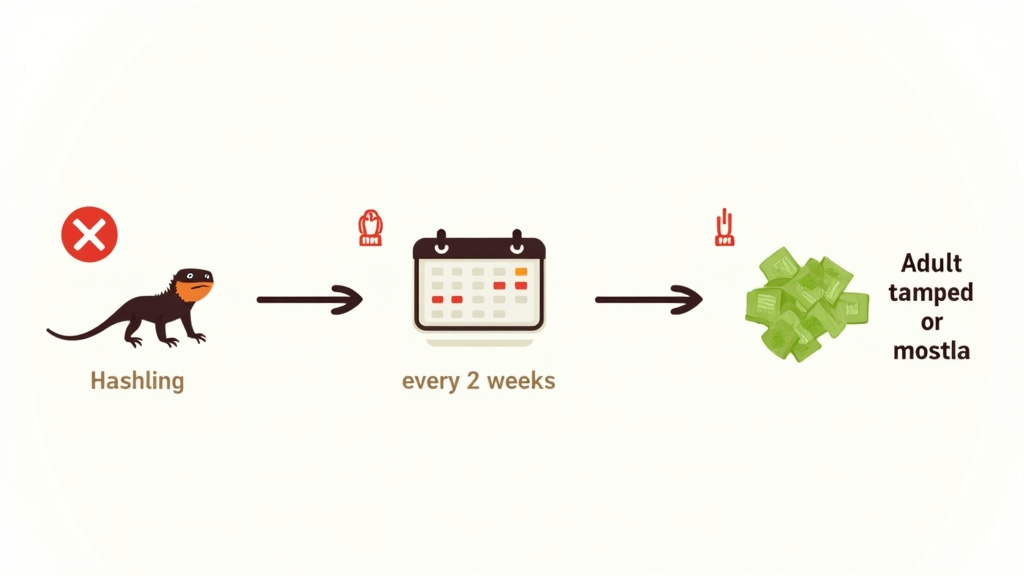
Frequency is where “safe” becomes “harmful.” Because celery displaces better food, you must limit it strictly.
| Dragon Life Stage | Recommended Celery Frequency | Primary Risk |
|---|---|---|
| Hatchling (0-4 months) | Avoid or once a month | Nutritional displacement during critical growth |
| Juvenile (4-12 months) | Once every 2 weeks | Impaction from improper dicing |
| Adult (12+ months) | Once a week maximum | Long-term nutrient deficiency |
This schedule treats celery as a dietary condiment. An adult dragon’s weekly salad might include celery one time, bell peppers another time, and zucchini another. The core should always be dark, leafy greens.
Common mistake: Feeding celery 2-3 times a week because it’s “hydrating” — this dilutes the dietary calcium intake consistently. Within a few months, you may see softer bones or reduced activity, early signs of calcium deficiency.
The Oxalate Question: Should You Worry?
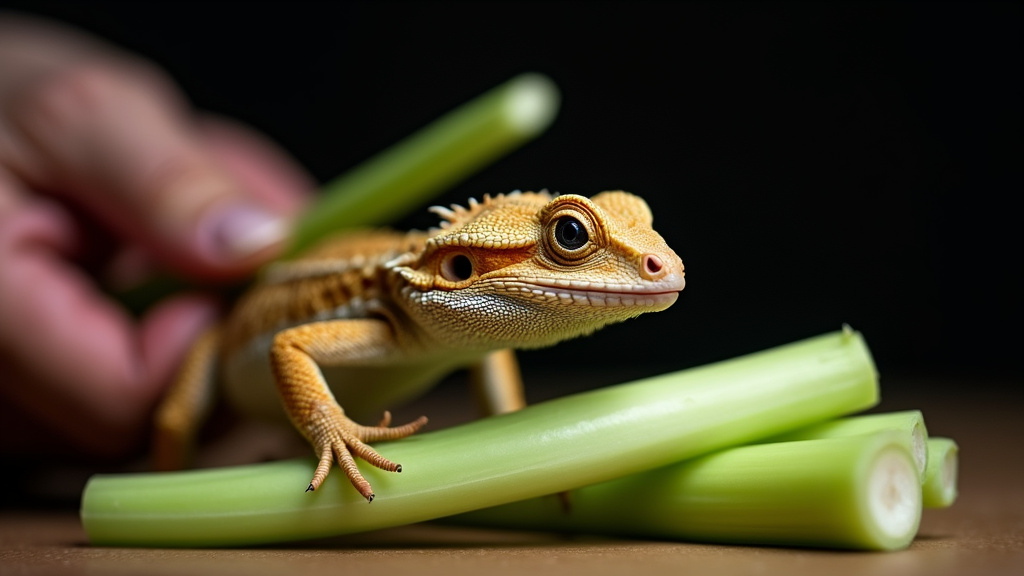
Oxalates are compounds that bind to calcium, preventing its absorption in the gut. Foods like spinach and beet greens are dangerously high in oxalates for bearded dragons.
Celery contains oxalates, but at a much lower level. The real issue isn’t the oxalates in the celery itself. It’s that feeding celery instead of calcium-rich greens creates a cumulative dietary deficit. For a healthy adult dragon fed a proper staple diet, the oxalates in an occasional celery serving are negligible.
The danger exists for dragons with pre-existing conditions. Any dragon with a history of Metabolic Bone Disease (MBD) or kidney issues should not eat celery. Their systems cannot afford any calcium-binding interference, no matter how small.
What to Feed Instead: Building a Better Salad
Celery should only ever be a minor player. Your goal is to build a salad bowl where every ingredient pulls its weight nutritionally. Here are superior choices, many of which can be fed daily.
- Staple Greens (Daily): These are the foundation. Turnip greens, dandelion greens, and collard greens offer excellent calcium-to-phosphorus ratios.
- Other Veggies (Regular Rotation): Zucchini and summer squash are soft and hydrating. Bell peppers (all colors) provide great vitamin C. Green beans and asparagus (steamed and chopped) offer variety and fiber.
- Herbs (Occasional): Basil, parsley, and cilantro add aroma and can stimulate appetite.
A strong weekly meal plan leans on those staple greens. You might mix dandelion greens with a few strips of bell pepper one day, and turnip greens with some grated zucchini the next. This variety ensures a broad spectrum of nutrients.
The Baby Bearded Dragon Exception
Baby and juvenile bearded dragons have non-negotiable dietary needs. Their bodies are building bone and tissue at a staggering rate, requiring a diet that is 70-80% live insects dusted with calcium powder.
There is no room for nutritionally empty vegetables. Offering celery to a baby dragon fills its tiny stomach with water and fiber, reducing its appetite for the protein and calcium it desperately needs. This directly stunts growth.
If you choose to introduce it for enrichment, wait until they are well into the juvenile stage (over 6 months) and offer a single, perfectly diced piece once a month at most. Their primary veggies should be finely chopped staples like turnip greens.
Frequently Asked Questions
Can bearded dragons eat celery every day?
No. Daily celery leads to nutritional deficiencies. It is an occasional treat, not a dietary staple. Think of it like a cracker for a human—it’s edible, but it doesn’t nourish.
Is cooked celery okay for bearded dragons?
You should not feed cooked celery. The cooking process further degrades its minimal vitamin content and softens the fibers into a gummy texture that can adhere to the mouth and cause rot. Raw, finely diced is the only safe form.
My bearded dragon won’t eat celery. What should I do?
This is a good thing. Your dragon is instinctively avoiding a low-value food. Do not try to coax them to eat it. Redirect that effort into offering more appealing, nutritious options like arugula or dandelion greens.
Can celery help with bearded dragon constipation?
The high water and fiber content can have a mild laxative effect if a dragon is slightly dehydrated. However, it is not a cure. Chronic constipation is usually a sign of dehydration, improper temperatures, or a serious impaction. Address the underlying cause, don’t just throw celery at the problem.
Are there any bearded dragons that should never eat celery?
Yes. Dragons diagnosed with or recovering from Metabolic Bone Disease (MBD), gout, or kidney disease should not be fed celery. The oxalates pose an unnecessary risk, and their diets must be precision-engineered for recovery. Always follow your exotic veterinarian’s specific bearded dragon vegetable diet facts.
Before You Go
Celery is on the safe list, but it’s at the very bottom. Its value is minimal. Your dragon won’t suffer from never eating it, but it can suffer from eating it too often.
Focus your energy on sourcing and preparing truly excellent staple greens. Wash everything thoroughly, dice it to a safe size, and keep the variety high. That routine, far more than any occasional treat, is what builds a healthy, active bearded dragon that thrives for years. Skip the celery most weeks and double down on the greens that matter.