
Can Bearded Dragons Eat Cantaloupe? The Safe Feeding Guide
This post contains affiliate links. As an Amazon Associate, we earn from qualifying purchases.
Adult bearded dragons can eat cantaloupe as an occasional treat, limited to 1-2 small, bite-sized cubes no more than 2-3 times per week. You must remove all seeds and the tough rind, and chop the flesh finely to prevent choking. Cantaloupe is high in sugar and water, so overfeeding leads directly to diarrhea and long-term weight gain.
Most owners get this wrong because their dragon goes nuts for the sweet smell. You see the eager head-bobbing and think you’ve found the perfect veggie alternative. So you hand over another piece. And another. That’s how a weekly treat becomes a daily sugar habit that crowds out the nutrient-dense greens their body actually needs.
This guide walks through the exact safe portion size, the step-by-step prep you can’t skip, and what happens inside their gut when you give them too much. We’ll also compare cantaloupe to other melons and show you how to slot it into a balanced weekly meal plan.
Key Takeaways
- Feed only the ripe orange flesh, never the seeds or rind. Seeds pose a choking and impaction risk; the rind is indigestible.
- Limit portions to 1-2 cubic centimeter pieces, 2-3 times per week maximum for adults. Juveniles should get half that, or none.
- The primary risk is osmotic diarrhea from the high water content, observable within 12-24 hours of overfeeding.
- Cantaloupe should never exceed 10% of the plant-based portion of the diet. The remaining 90% must be dark leafy greens.
- Always mix cantaloupe pieces into a base salad of staple greens. Serving it alone teaches selective eating.
The Short Answer: Yes, But With Strict Limits
Cantaloupe is not toxic. The ripe orange flesh contains vitamins A and C, along with beta-carotene, which supports skin and eye health. These are real benefits.
Cantaloupe (Cucumis melo var. cantalupensis) provides approximately 34% of the daily human value of Vitamin A and 61% of Vitamin C per 100-gram serving. For bearded dragons, these vitamins aid in immune function and vision, but the fruit’s 8.16 grams of sugar per 100g and 90% water content mandate strict portion control.
The problem is the sugar-to-nutrient ratio. A bearded dragon’s digestive system isn’t built for fructose loads. Their gut flora shifts, favoring bacteria that thrive on simple sugars. This disrupts their ability to break down fibrous greens. You’ll notice the change in their stool consistency first.
TL;DR: Cantaloupe is a safe, vitamin-rich occasional snack, but its high sugar and water content make it a treat, not a food group.
Why Moderation Isn’t Just a Suggestion
The 10% rule for fruits exists because of pancreas stress. A bearded dragon’s pancreas must secrete insulin to manage blood sugar spikes. Consistently high sugar intake can lead to insulin resistance over time. This isn’t speculation, it’s a documented issue in reptiles fed high-sugar diets.
The water content causes a more immediate problem. Reptile intestines absorb water slowly. A large piece of cantaloupe introduces a bolus of water that pulls electrolytes into the gut via osmosis. The result is watery, urgent stools. It dehydrates them even as they’re consuming liquid.
I learned this the hard way with a juvenile dragon named Ember. I gave her a piece of cantaloupe roughly the size of her head after a hot day, thinking it would hydrate her. Within six hours, her enclosure was a mess. The diarrhea was so watery it soaked through the paper towel substrate. She became lethargic for a full day afterward. I now use a kitchen scale to weigh portions.
Common mistake: Doubling the portion because your dragon “loves it”, this floods their gut with fructose and water, causing diarrhea within hours and teaching them to refuse their staple greens.
How to Prepare Cantaloupe Safely
The preparation steps are non-negotiable. Each one addresses a specific physical hazard.
Step 1: Scrub the whole melon under running water. Use a vegetable brush. The rind carries salmonella and pesticide residue. Cutting through it transfers those contaminants to the flesh your dragon eats. Skip this, and you’re feeding them microbes that cause reptilian gastrointestinal infections.
Step 2: Cut the melon in half and remove all seeds and stringy pulp. The seeds are a dual threat. They are a choking hazard for smaller dragons. Even if swallowed, their hard shell can cause a gut impaction, a blockage in the intestines that requires veterinary intervention. The stringy pulp is mostly insoluble fiber that can wrap around other food in the gut.
Step 3: Slice off the entire rind. The tough, greenish netted skin is cellulose-heavy and impossible for a bearded dragon to digest. It will pass through undigested, risking an intestinal tear or contributing to an impaction. Your knife should reveal only the uniform orange flesh.
Step 4: Dice the flesh into pieces smaller than the space between your dragon’s eyes. This is the universal choke-prevention metric. For an adult, this means cubes about 1/2 inch (1 cm) square. Any larger, and they might try to swallow it whole and block their esophagus.
Step 5: Pat the pieces dry with a paper towel. Reducing surface moisture minimizes the water bolus effect and helps the pieces stick to their salad greens instead of rolling away.
The Exact Feeding Schedule and Portion Size
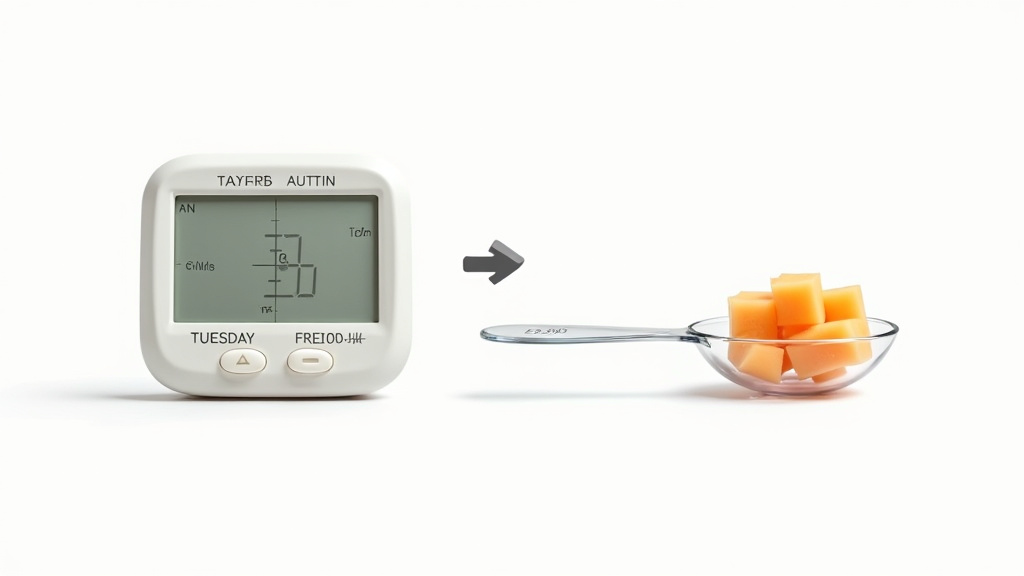
Portion control is where most guides get vague. Let’s fix that.
| Dragon Age | Max Portion Size | Max Frequency | Key Risk If Exceeded |
|---|---|---|---|
| Juvenile (2-12 months) | 1 cube (0.5 cm³) | Once every 10-14 days | Stunted growth from reduced appetite for protein-rich feeder insects. |
| Adult (12+ months) | 1-2 cubes (1 cm³ each) | 2-3 times per week | Chronic diarrhea, weight gain, and refusal of staple greens. |
| Senior (8+ years) | 1 cube (1 cm³) | Once per week | Digestive slowdown leading to impaction from combined fiber and sugar. |
An adult portion is literally one or two small cubes. That’s it. Use a measuring spoon if you have to, a standard 1/4 teaspoon is roughly the right volume for two pieces.
The timing matters. Never feed cantaloupe on a day when you’re also offering other high-sugar fruits like mango or peaches for bearded dragons. Space fruit treats out across the week. I serve cantaloupe on Tuesday and Friday mornings, mixed into a large base of collard greens. By afternoon, any uneaten fruit is removed.
This schedule prevents sugar stacking and ensures their gut microbiome stays geared for breaking down vegetation. It also turns cantaloupe into a predictable highlight, not a constant expectation.
Cantaloupe vs. Other Melons: A Quick Comparison

Not all melons are equal. Knowing the differences helps you rotate treats safely.
| Melon Type | Sugar Content (per 100g) | Water Content | Safe for Bearded Dragons? | Best Use Case |
|---|---|---|---|---|
| Cantaloupe | 8.2g | 90% | Yes, as occasional treat | Vitamin A boost; summer hydration aid. |
| Honeydew | 8.1g | 90% | Yes, with same limits | Slightly lower Vitamin A; similar to cantaloupe. |
| Watermelon | 6.2g | 92% | Yes, but less nutritious | Mostly water; useful for hydration during shed. |
| Canary Melon | ~8.5g (estimate) | ~89% | Not recommended | Sugar content often higher; not well-studied. |
Honeydew is nutritionally similar to cantaloupe and can be used interchangeably. Watermelon is the outlier. Its lower sugar content seems better, but it’s also lower in vitamins. It’s essentially flavored water. This makes it a decent choice for a hydration boost during a difficult shed, but it provides little nutritional value. The Green Packs bearded dragon diet guide reinforces that all melons should be considered high-water treats, not dietary staples.
I won’t recommend watermelon as a regular treat. The nutritional payoff is too low, and it still teaches a preference for sweet, watery food over greens. Stick to cantaloupe or honeydew for a treat that at least delivers vitamins.
TL;DR: Cantaloupe and honeydew are interchangeable treats. Watermelon is mostly water with few nutrients. Avoid exotic melons with unknown sugar profiles.
Integrating Cantaloupe Into a Balanced Weekly Diet
A healthy adult bearded dragon’s diet is roughly 80% plant-based and 20% insect-based. The plant portion itself should be 80-90% leafy greens and 10-20% vegetables and fruits combined. Cantaloupe belongs in that tiny 10-20% sliver.
Here’s what a balanced week of plant-based meals might look like with cantaloupe included:
- Monday: Collard greens, shredded butternut squash, 2-3 dubia roaches.
- Tuesday: Mustard greens, 1-2 cantaloupe cubes, bell pepper slivers.
- Wednesday: Dandelion greens, grated carrot, 2-3 black soldier fly larvae.
- Thursday: Escarole, snap peas, a single blueberry.
- Friday: Turnip greens, 1-2 cantaloupe cubes, chopped green bean.
- Saturday: Collard & mustard green mix, yellow squash, 2-3 dubia roaches.
- Sunday: Dandelion greens, bell pepper, a small piece of apple for bearded dragons.
Notice the pattern. Cantaloupe appears twice, paired with a different sturdy green each time. The other fruits (strawberries for bearded dragons, blueberry, apple) are scattered on other days. This variety prevents nutrient gaps and keeps your dragon from fixating on one sweet item.
If you’re also offering other treats like mango for bearded dragons or bananas for bearded dragons, you must reduce the cantaloupe frequency accordingly. The total volume of fruit for the week shouldn’t exceed a few teaspoons.
What to Do If You Overfeed Cantaloupe
You’ll know. The signs are physical and fast.
First, check their enclosure for unusually watery or foul-smelling stool within 12-24 hours. The dragon may seem lethargic or bask more intensely, trying to raise its core temperature to speed up digestion. In severe cases, you might see undigested orange pieces in the waste.
Stop all fruit and high-water vegetables immediately. Switch their diet to a simple, binding mix for the next 48 hours: primarily chopped collard greens and a bit of cooked, plain pumpkin (not pie filling). The pumpkin provides soluble fiber that can help solidify stools. Ensure their basking spot is at the correct temperature (100-110°F) to support metabolism.
Offer water via a dropper if they seem sluggish, but don’t force it. Monitor closely. If the diarrhea persists beyond two days, or if the dragon stops eating entirely, contact an exotic veterinarian. Prolonged diarrhea can lead to dangerous electrolyte imbalance and dehydration.
Common mistake: Panicking and offering more water or watery foods, this exacerbates the osmotic pull in the gut. Switch to low-moisture, high-fiber greens and monitor basking heat.
Frequently Asked Questions
Can baby bearded dragons eat cantaloupe?
It’s best to avoid it. Juveniles require a protein-heavy diet for rapid growth. The sugar in cantaloupe can suppress their appetite for crucial feeder insects. If you do offer a taste, make it a single, rice-sized piece once a month at most.
Are cantaloupe seeds poisonous?
They are not toxic like apple seeds, but they are a serious mechanical hazard. Their size and hard shell can cause choking or intestinal blockage. Always remove them completely.
My bearded dragon loves cantaloupe but ignores his greens now. What do I do?
Stop offering cantaloupe and all other fruits immediately. For the next 7-10 days, offer only their staple greens and insects. They may hunger-strike for a day or two. Be patient. Once they are reliably eating greens again, you can reintroduce cantaloupe in the correct, tiny portions, always mixed into the greens.
Can I feed canned or pre-cut cantaloupe?
No. Canned fruit is packed in syrup, adding insane amounts of sugar. Pre-cut fruit from a store salad bar often contains preservatives and has a higher risk of bacterial contamination. Always use fresh, whole cantaloupe that you wash and prepare yourself.
Is cantaloupe good for a constipated bearded dragon?
This is a common misconception. While the water might seem helpful, the sugar can actually worsen gut motility issues. For constipation, use a drop of pure olive oil on the nose or a small amount of cooked, plain pumpkin instead. These are safer, more effective lubricants.
Before You Go
Cantaloupe is a safe, enjoyable treat when you respect its place on the menu. One or two small cubes, a couple of times a week, is the absolute ceiling. The preparation ritual, washing, de-seeding, de-rinding, and dicing, is what keeps it safe.
The real goal is a varied diet built on dark leafy greens. Use cantaloupe, kiwi for bearded dragons, and other fruits from a comprehensive list of safe fruits as occasional highlights, not the main event. Watch their stool and their weight. Those are the best indicators you’ve got the balance right.