
Can Bearded Dragons Eat Pineapple? Vet-Approved Guide
This post contains affiliate links. As an Amazon Associate, we earn from qualifying purchases.
Yes, bearded dragons can eat pineapple. It must be fresh, ripe yellow flesh, cut into tiny pieces, and served only as an occasional treat—no more than once or twice a month. Its high sugar and acidity, plus a poor calcium-to-phosphorus ratio, make it unsuitable for regular feeding or for baby dragons.
Bearded dragons can eat pineapple, but only the fresh yellow flesh, cut into tiny pieces, and served no more than once or twice a month as a rare treat. The high sugar and acidity, along with a suboptimal calcium-to-phosphorus ratio, make it unsuitable for regular feeding. Baby dragons should not eat pineapple at all.
Most owners get this wrong by treating “safe” as “staple.” They see a dragon happily munch a chunk and assume it’s a healthy daily snack. That mistake leads to weight gain, digestive upset, and over time, a real risk of metabolic bone disease from the phosphorus load.
This guide covers the exact nutrition numbers, the step-by-step prep to avoid impaction, and how pineapple stacks up against other occasional fruits like mango or kiwi. You’ll also learn the one visual cue that tells you your dragon shouldn’t get pineapple again for a while.
Key Takeaways
- Feed only fresh pineapple flesh, never canned, dried, juice, or any part of the skin, leaves, or core.
- Limit servings to one teaspoon for adults, half for juveniles, once or twice monthly maximum.
- Pineapple’s calcium-to-phosphorus ratio is roughly 1:1, far from the ideal 2:1 dragons need, so it hinders calcium absorption.
- High oxalate content means you shouldn’t pair pineapple with other high-oxalate treats (like raspberries or kiwi) in the same week.
- Baby bearded dragons have developing digestive and skeletal systems; pineapple’s sugar, acid, and oxalates are harmful for them.
The Nutrition Breakdown: Sugar, Acid, and Oxalates
Pineapple isn’t just sweet. It’s a cocktail of sugar, acid, and oxalates that hits a dragon’s system three ways. The sugar content runs about 10 grams per 100 grams of fruit. For a reptile that evolved eating insects and fibrous plants in arid Australia, that’s a massive glucose spike.
Ripe pineapple contains approximately 10% sugar by weight and has a calcium-to-phosphorus (Ca:P) ratio between 1:1 and 1.6:1, according to analysis cited by Oddly Cute Pets. This ratio is inverted from the 2:1 minimum bearded dragons require for skeletal health.
The acidity, measured as pH around 3.5, irritates the digestive tract. You’ll know it’s too much if your dragon passes loose, watery stool within 12 hours of eating it. That’s the gut telling you it can’t handle the citric and malic acid load.
Oxalates bind calcium. Pineapple has them. When oxalates lock up calcium in the gut, the dragon can’t absorb it, even if you’re dusting insects with supplements. Feeding pineapple alongside another high-oxalate fruit like kiwi or raspberries in the same week compounds the problem.
TL;DR: Sugar causes obesity, acid causes diarrhea, oxalates block calcium. Pineapple delivers all three.
How to Prepare Pineapple Safely (Step-by-Step)
Head design changes the entire process. Look at the business end of your trimmer. A bump-feed head needs line wound tight against the arrow direction. A fixed-line head just needs the ends threaded through the exit holes. Universal heads often require a specific adapter for your shaft size.
Before you start: Pineapple leaves contain compounds that are difficult for reptiles to digest and may be toxic. The core is fibrous and can cause intestinal impaction. The skin is tough and covered in small thorn-like structures that can injure the mouth or esophagus. Always use a sharp knife and cut on a stable surface.
Here is the sequence that prevents problems.
- Select a ripe, fresh pineapple. Avoid canned pineapple packed in syrup, dried pineapple, or frozen chunks. Canned fruit has added sugars and preservatives like citric acid that intensify the acidity. Dried pineapple is essentially candy. Frozen pineapple thawed turns mushy and can upset digestion.
- Cut away all non-flesh parts. Slice off the outer skin completely. Remove the tough, fibrous central core. Discard the leafy crown. You should have only the soft yellow interior flesh on your cutting board.
-
Chop into dragon-safe cubes. The piece must be smaller than the space between your dragon’s eyes. For most adults, that’s about a 1/4-inch cube. Use a sharp knife for clean cuts; ragged edges are harder to swallow.
-
Measure the portion. For an adult dragon, one teaspoon of chopped pineapple is the max. For a juvenile over six months, half a teaspoon. For a baby under six months, skip this step entirely, they shouldn’t eat pineapple.
- Mix into a vegetable salad. Never serve pineapple alone. Sprinkle the pieces over a base of staple greens like collard greens, mustard greens, or dandelion greens. The fiber in the greens helps buffer the sugar and acid.
- Observe for 24 hours. Watch for diarrhea, lethargy, or refusal to eat their regular greens. If you see any, pineapple is off the list for your dragon. Note it down.
Skipping step two, leaving the core, is the most common cause of impaction after feeding pineapple. The core fibers clump in the gut and don’t move. Your dragon will stop eating and may strain without passing stool. An X-ray at the vet shows a dense mass in the intestines.
Common mistake: Serving pineapple as a standalone treat, the sugar hits the system alone, causing a sharper insulin response and almost guaranteeing diarrhea within a day. Always mix it with greens.
TL;DR: Fresh flesh only, tiny cubes, one teaspoon max, mixed with greens, watch for diarrhea.
Pineapple vs. Other Treat Fruits: Which is Safer?
Not all treat fruits carry the same risk profile. Pineapple sits in a middle tier, more problematic than papaya or cantaloupe, but slightly better than bananas or cherries if you control the portion. This table compares key factors.
| Fruit | Sugar Content | Oxalate Level | Ca:P Ratio | Best Frequency |
|---|---|---|---|---|
| Pineapple | High (~10%) | Moderate | ~1:1 (poor) | Once/month |
| Mango | High (~14%) | Low | ~1.5:1 (better) | Twice/month |
| Papaya | Moderate (~8%) | Very Low | ~2:1 (good) | Weekly |
| Kiwi | Moderate (~9%) | High | ~1.2:1 (poor) | Once/month |
| Cantaloupe | Low (~8%) | Very Low | ~1.8:1 (fair) | Weekly |
Mango has more sugar than pineapple but fewer oxalates and a slightly better calcium-to-phosphorus ratio. That makes mango for bearded dragons a slightly safer occasional option if your dragon isn’t prone to weight gain. Papaya is the winner here, lower sugar, minimal oxalates, and enzymes that aid digestion. I use papaya for bearded dragons weekly in my rotation.
Kiwi is tricky. It’s high in oxalates like pineapple, so you shouldn’t feed both in the same month. If you gave pineapple last week, skip kiwi for bearded dragons this week. The oxalate load stacks.
Cantaloupe and watermelon are mostly water with low sugar. They’re hydrating and low-risk. You can offer cantaloupe for bearded dragons or watermelon for bearded dragons weekly in summer without much concern. The key is removing seeds and rinds.
Bananas and cherries are high-sugar, high-oxalate, and have very poor Ca:P ratios. They’re true once-a-month treats. I treat bananas for bearded dragons and cherries for bearded dragons like dessert, a tiny taste on a special occasion.
TL;DR: Papaya and cantaloupe are safer weekly treats; pineapple and kiwi share a once-month slot; bananas and cherries are rare desserts.
Why Baby Bearded Dragons Should Never Eat Pineapple
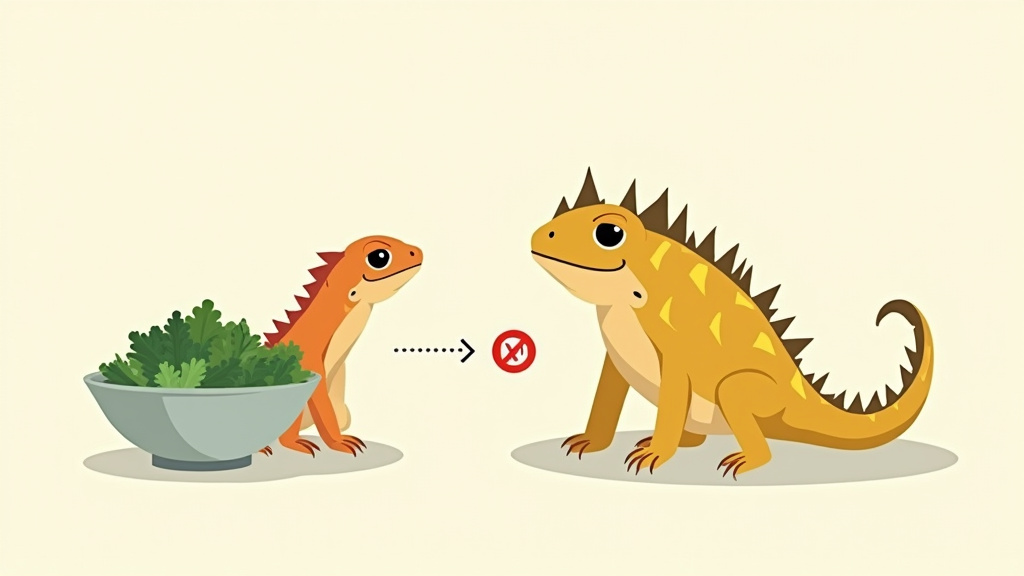
Juvenile dragons under six months are building bone mass at a rate adults don’t match. Their digestive systems are also more sensitive. Pineapple attacks both fronts.
The sugar disrupts their developing metabolism. In babies, a high-sugar treat can trigger a preference for sweet foods over greens, a habit that’s hard to break. They’ll start ignoring their collard greens and wait for fruit.
The acidity is more damaging to their gut lining. Baby dragon diarrhea isn’t just messy, it leads to dehydration and nutrient loss fast. They have less body mass to buffer the acid.
Oxalates binding calcium during growth phases is the real danger. Metabolic bone disease (MBD) in juveniles often starts with cumulative calcium blockage from high-oxalate foods. Even with perfect supplement dusting, if oxalates lock the calcium in the gut, the dragon’s growing bones can’t use it. The first signs are softened jawbones, a wobbly gait, and tremors in the limbs.
The safe fruits for bearded dragons list for babies is much shorter. Stick to papaya, cantaloupe, and occasional berries like blueberries. Avoid pineapple, kiwi, bananas, and all citrus entirely until they hit adult size, around 18 months.
If you’re raising a baby dragon, focus on insect protein and leafy greens. Fruit is a distraction their system doesn’t need. Wait.
What Happens If You Overfeed Pineapple? (The Timeline)
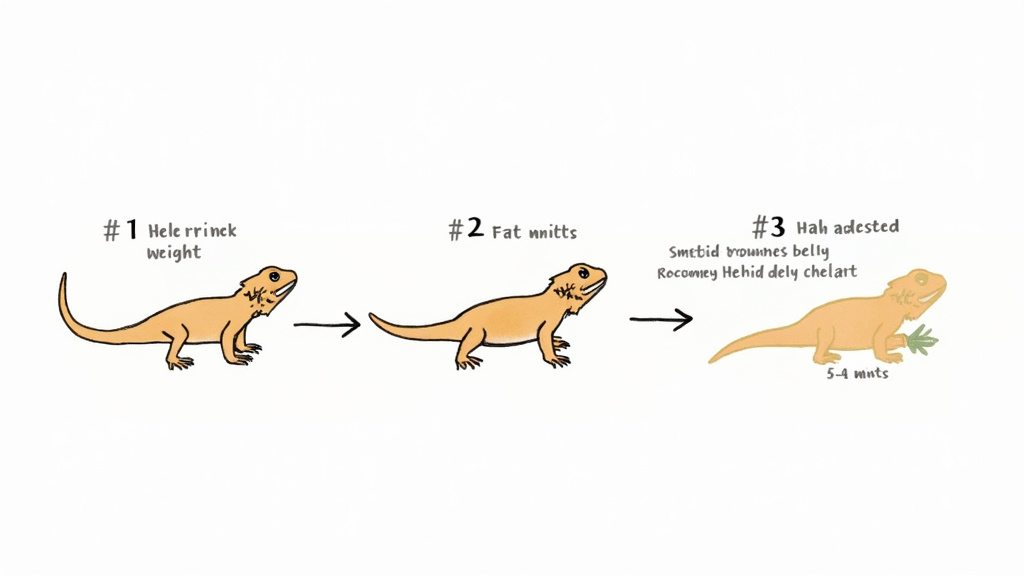
The consequences follow a predictable timeline. Day one looks fine. Day thirty shows the problem.
Within 12 hours: If the portion was too large or the dragon is sensitive, diarrhea appears. The stool is watery, often greenish from the rapid transit, and may contain undigested pineapple pieces. The dragon might also become lethargic, sitting in one spot without basking normally.
After 2-3 weekly servings: Weight gain becomes visible. The dragon’s belly rounds out, and the fat pads behind the arms start to bulge. You’ll notice a decreased interest in chasing insects, the sugar satisfies their appetite without protein.
After 4-6 months of monthly servings: The calcium deficiency effects surface. The lower jaw may soften, feeling pliable when you gently touch it. The dragon might struggle to climb the usual branches, slipping more often. In advanced cases, the tail develops a permanent kink or the spine curves.
This is why the “once or twice a month” rule isn’t arbitrary. It’s the frequency that keeps the sugar, acid, and oxalate loads below the threshold where they cause measurable harm. Exceed it, and you’re buying problems.
I learned this with my first dragon, Zilla. I gave him pineapple weekly because he loved it and seemed fine. After four months, he started refusing his dubia roaches and his stool was consistently loose. The vet pointed to the sugar habit and early weight gain. We cut all fruit for two months, retrained him on greens, and his energy returned. Now pineapple is a birthday treat, literally once a year.
Common mistake: Feeding pineapple after another high-oxalate fruit like kiwi or raspberries within the same week, the combined oxalate load can drop calcium absorption by 40% for that week, per reptile nutrition studies.
TL;DR: Diarrhea within hours, weight gain within weeks, bone issues within months if you overfeed.
Frequently Asked Questions
Can bearded dragons eat canned pineapple?
No. Canned pineapple is packed in syrup, adding even more sugar, and often contains preservatives like citric acid that increase acidity. The texture is also softer, making it less fibrous and more likely to cause digestive upset. Only fresh pineapple flesh is acceptable.
Can bearded dragons eat pineapple leaves or skin?
Never. The leaves are potentially toxic and indigestible. The skin is tough, covered in thorn-like structures that can injure the mouth and esophagus, and impossible for them to digest. Only the soft yellow interior flesh is safe.
How much pineapple can I give my bearded dragon?
For an adult dragon, a maximum of one teaspoon of chopped fresh pineapple. For a juvenile over six months, half a teaspoon. For a baby under six months, do not feed any pineapple. This small portion should be offered no more than once or twice a month.
My bearded dragon had diarrhea after eating pineapple. What should I do?
Stop feeding pineapple immediately. Ensure your dragon stays hydrated by offering water via misting or a shallow dish. Focus their diet on staple greens and insects for the next week to let the gut recover. If diarrhea persists beyond 24 hours or the dragon becomes lethargic, consult a reptile veterinarian.
Are there any benefits to feeding pineapple?
Pineapple contains vitamin C, vitamin K, and some antioxidants. However, these benefits are vastly outweighed by the high sugar, acidity, and poor calcium-to-phosphorus ratio. You can provide vitamin C more safely through lower-sugar options like papaya or bell peppers. The risks make pineapple a treat, not a nutrient source.
Before You Go
Pineapple is a yes, but a very qualified yes. It’s a rare treat, not a routine food. The rules are strict: fresh flesh only, tiny pieces, one teaspoon max, mixed with greens, once a month.
Remember the three strikes, sugar, acid, oxalates. They’re why babies can’t have it and why adults get it so seldom. Compare it to other fruits; papaya and cantaloupe are better choices for weekly variety.
If your dragon loves it, use that love strategically. Make it a special occasion reward. That keeps them happy and healthy. For everything else, stick to the staple greens and insects that built this species. Their health depends on that balance.