
Can Bearded Dragons Have Papaya? The Safe Feeding Guide
This post contains affiliate links. As an Amazon Associate, we earn from qualifying purchases.
Yes, bearded dragons can have papaya. Feed only fresh, ripe papaya flesh—never the skin or seeds—in tiny amounts, no more than one to two teaspoons once every week or two. It’s a high-sugar treat, not a dietary staple.
The mistake is thinking its bright color and vitamin content make it a health food. In a bearded dragon’s diet, papaya is dessert. Its sugar content is the problem, not its safety.
This guide covers exactly how to prepare it, how much to give, and what happens when you get the ripeness or portion wrong. We’ll also compare it to other fruits so you know where it fits in your dragon’s menu.
Key Takeaways
- Papaya is safe only when fully ripe; unripe fruit contains papain and latex, which are gut irritants.
- Serve a maximum of one to two teaspoons of diced flesh per feeding, mixed into a salad of staple greens.
- Limit papaya to once every 7–14 days to avoid digestive upset and weight gain from excess sugar.
- Always avoid canned, dried, or syrup-packed papaya due to added sugars and preservatives.
- The fruit’s high Vitamin A is beneficial, but its poor calcium-to-phosphorus ratio means it cannot replace calcium-rich greens.
The Nutritional Breakdown: Why Papaya is a Treat, Not a Staple
Headline nutrition charts list papaya’s benefits: high in Vitamin A for vision and immune function, loaded with Vitamin C, and a good source of fiber. For humans, it’s a superfood. For a bearded dragon, it’s a sugar bomb wrapped in a vitamin package.
The critical numbers are in the calcium-to-phosphorus ratio. A healthy ratio for bearded dragons is 2:1 or higher (more calcium than phosphorus). Papaya has a ratio of roughly 1:4. It’s phosphorus-heavy. Feeding it frequently without proper calcium supplementation pulls calcium from your dragon’s bones. That’s a direct path to Metabolic Bone Disease (MBD).
Fresh, ripe papaya flesh contains approximately 11 grams of sugar per 100-gram serving. Bearded dragons lack the digestive enzymes to process large amounts of simple sugars, which can ferment in the gut and cause bacterial imbalances, diarrhea, and long-term obesity.
The fiber is good. The vitamins are good. But the sugar and mineral imbalance define its role. Think of it as a dietary accessory, not a foundation. Your dragon’s primary comprehensive diet guide should be built on low-oxalate greens and appropriate insects.
TL;DR: Papaya’s vitamin content is offset by its high sugar and bad calcium-to-phosphorus ratio. It’s a garnish, not a green.
How Much Papaya Can a Bearded Dragon Eat?
Portion control is non-negotiable. An adult bearded dragon’s stomach is about the size of its skull. A little fruit goes a very long way.
For a full-grown adult, one to two teaspoons of finely diced papaya flesh is the absolute ceiling per serving. For a juvenile, half a teaspoon is plenty. This small amount is enough to provide a taste and the vitamin benefits without overwhelming their system with sugar.
Frequency matters as much as volume. Once a week is the maximum for a healthy adult. For dragons prone to weight gain or with a history of digestive issues, stretch it to once every two weeks. This aligns with the expert bearded dragon nutrition resource that categorizes fruit as a minor, occasional component.
Common mistake: Doubling the portion because your dragon gobbles it up eagerly — this leads to loose, watery stools within 24 hours and teaches them to pick out only the sweet pieces, ignoring their greens.
The serving must be integrated. Never offer a bowl of just papaya. Always dice it and mix it thoroughly into a larger salad of chopped collard greens, mustard greens, or dandelion greens. This ensures they ingest the necessary fiber and nutrients alongside the treat.
| Dragon Size | Max Papaya Portion | Frequency | Key Risk of Overfeeding |
|---|---|---|---|
| Juvenile (5-12 months) | 1/2 teaspoon diced | Once every 2 weeks | Stunted growth from imbalanced nutrition |
| Healthy Adult | 1-2 teaspoons diced | Once per week | Diarrhea, selective eating, weight gain |
| Adult (Overweight/Inactive) | 1 teaspoon diced | Once every 2 weeks | Accelerated obesity, fatty liver disease |
The Papaya Prep Checklist: From Store to Salad
You cannot just slice and serve. The wrong form introduces real toxicity. Follow this sequence.
Step 1: Select a ripe papaya. The skin should be mostly yellow-orange, giving slightly to gentle pressure. The flesh inside will be a vibrant orange or red-pink. Green skin means unripe. Unripe papaya contains higher concentrations of papain (a proteolytic enzyme) and latex. These compounds can cause mouth irritation, stomach upset, and in severe cases, intestinal inflammation in reptiles. If it’s not soft and sweet-smelling, don’t buy it.
Step 2: Wash and cut. Rinse the whole fruit under cool water, scrubbing the skin. You’re removing potential pesticides and bacteria. Cut it in half lengthwise.
Step 3: Remove seeds and skin. Scoop out the black, peppercorn-like seeds and the white membrane they sit in. The seeds are a choking hazard and not digestible. Then, peel the skin completely with a knife or vegetable peeler. The skin is tough and offers no nutritional value.
Step 4: Dice to the right size. Chop the orange flesh into pieces no larger than the space between your dragon’s eyes. This prevents choking. For most adults, this means pea-sized cubes.
Step 5: Measure and mix. Use a measuring spoon. Take your one or two teaspoons and scatter them over a heaping cup of chopped staple greens. Toss it all together. This is your dragon’s nutritious salad mix.
Skipping any step has a consequence. Not washing risks chemical ingestion. Leaving seeds risks a gut blockage. Not dicing finely enough risks choking. I learned the dicing lesson the hard way with a juvenile who tried to swallow a chunk too large for her. She gagged it back up, terrified both of us, and refused her salad for two days. Now everything is pea-sized.
What to Avoid: The Dangerous Forms of Papaya
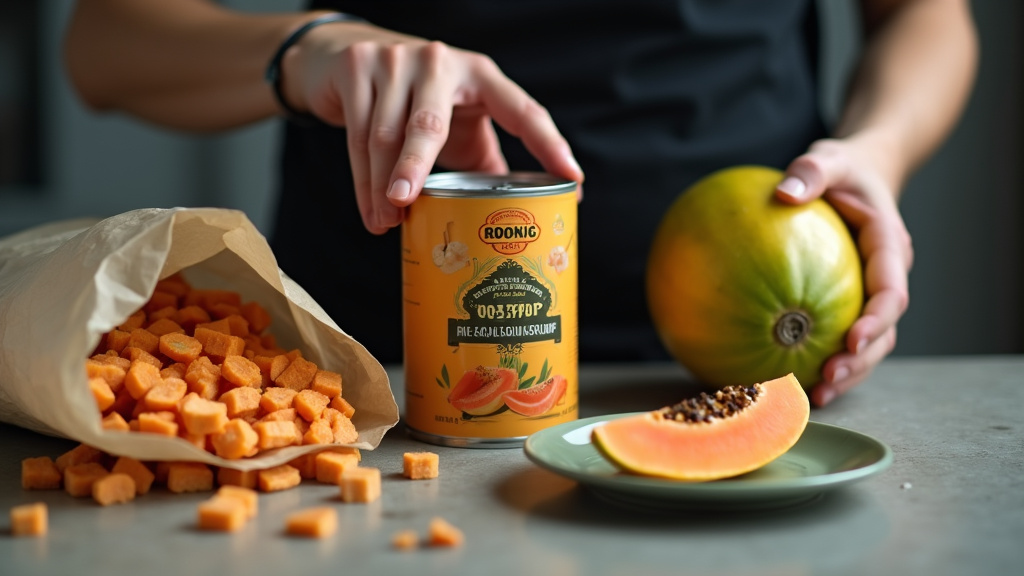
Not all papaya is created equal. The convenient options are often the most dangerous.
Canned Papaya in Syrup. This is poison in a can. The heavy syrup is pure sugar, often with added preservatives like citric acid or potassium sorbate. A bearded dragon’s kidneys cannot process this. Feeding it can cause severe diarrhea and dehydration within hours.
Dried or Dehydrated Papaya. The drying process concentrates the natural sugars. Commercial dried fruit often has added sugar and sulfur dioxide as a preservative. Sulfur dioxide can cause thiamine (Vitamin B1) deficiency, leading to neurological issues. It’s also a choking hazard, becoming sticky and gummy when chewed.
Unripe Papaya. We’ve covered the papain issue. The latex in unripe fruit can act as a potent irritant. If your dragon eats it, watch for signs of mouth-pawing, drooling, or lethargy. Don’t risk it.
Wild or Unwashed Papaya. Unless you’re growing it yourself, assume it’s been sprayed. Always wash.
Your best and only source is fresh, ripe papaya from the produce section. Frozen plain papaya chunks (with no additives) are a safe backup if you thaw and drain them completely. The texture will be mushier, but the nutrients are intact.
I once used dried papaya from a trail mix bag in a pinch, thinking “fruit is fruit.” My dragon, Thor, had watery stools for three days and was noticeably sluggish. The vet visit confirmed it was likely the concentrated sugars and preservatives. Never again.
Papaya vs. Other Common Fruits: Where Does It Rank?
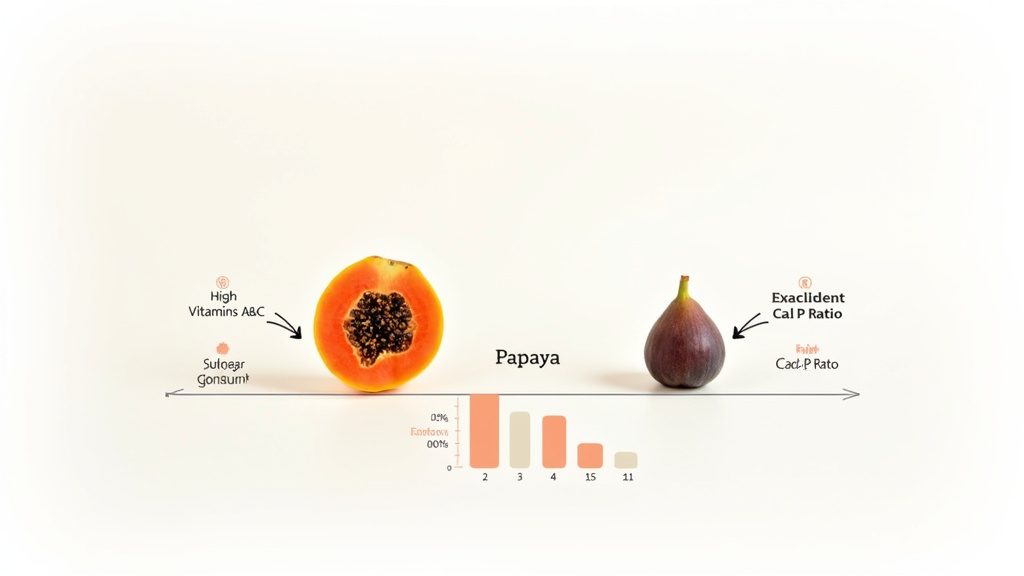
Is papaya the best fruit choice? It’s middle of the pack. Understanding the comparison helps you build a varied, safe safe fruits list.
| Fruit | Sugar Content | Ca:P Ratio | Best Trait | Feed Frequency |
|---|---|---|---|---|
| Papaya | High | Poor (1:4) | High Vitamin A & C | Once every 1-2 weeks |
| Blueberries | Moderate | Okay (1:1.5) | High Antioxidants | Once a week |
| Figs | High | Excellent (3:1) | High Calcium | Rare treat, monthly |
| Mango | Very High | Poor (1:3) | High Vitamin A | Once every 2 weeks |
| Watermelon | High | Poor (1:2) | High Water Content | Rare treat, monthly |
Papaya beats mango in sugar content but loses to figs in mineral balance. Its primary advantage is the vitamin punch. When choosing between tropical fruits like mango and papaya, papaya is slightly better due to marginally lower sugar. But both are treats.
For a vitamin C boost, kiwi fruit is a tart alternative with a similar feeding schedule. For hydration, cantaloupe melon works, though it’s also high in sugar.
The winner for occasional fruit feeding is often the fig, due to its calcium content. But papaya has its place in the rotation for variety. Just never let it crowd out staples like banana as a treat or, more importantly, the leafy greens that form 80% of the plant diet.
Signs You’ve Fed Too Much Papaya
Dragons can’t vomit. When something disagrees with them, the signs come out the other end or change their behavior.
The first and most common sign is diarrhea. Their droppings will be loose, watery, and smell unusually sweet or fermented. This usually appears within 24 hours of an oversized serving.
Next is selective eating. They will nudge through their salad, picking out every last bit of papaya and leaving the greens. This undermines their entire optimal bearded dragon diet. If this happens, stop all fruit for two weeks and offer only greens to reset their expectations.
Lethargy can follow a sugar spike and crash. Your normally active dragon may spend the whole day basking without moving.
Long-term overfeeding leads to weight gain. You’ll notice fat pads building up behind the front legs and a generally rounded, heavy belly. This strains their organs and shortens their lifespan.
If you see any of these signs, halt all fruit immediately. Go back to a baseline diet of appropriate insects and dark leafy greens for at least a week. Ensure their calcium and vitamin D3 supplementation is spot-on. If diarrhea or lethargy persists for more than two days, consult a reptile veterinarian.
Integrating Papaya into a Balanced Feeding Schedule
A treat has a designated slot. Here’s how a typical week looks for an adult bearded dragon, incorporating the occasional papaya serving.
Daily: A large salad of staple greens (collard, escarole, endive) dusted with calcium powder (5x a week) and a multivitamin (2x a week). Live insects (dubia roaches, crickets) offered 3-4 times a week, gut-loaded and dusted.
Weekly (Treat Day): This is when you might add papaya. Prepare the weekly salad as usual. Take one teaspoon of diced papaya and mix it in thoroughly. Offer this as the morning meal. The rest of the week’s feedings remain fruit-free.
Bi-Weekly Rotation: Don’t give papaya every week. Rotate it with other acceptable treats. One week could be papaya, the next a single blueberry, the next a small piece of grated squash. This variety prevents nutrient imbalances and keeps your dragon interested. Your general feeding guide should emphasize this rotational principle.
The goal is to use fruit as a flavor enhancer and enrichment tool, not a calorie source. It makes the healthy greens more appealing. When used this way, it’s a beneficial part of your healthy food choices arsenal.
Frequently Asked Questions
Can bearded dragons eat papaya seeds?
No. Papaya seeds are a choking hazard and offer no nutritional value. They are also slightly pungent and may deter your dragon from eating their entire salad. Always scoop them out completely during preparation.
Is papaya good for a constipated bearded dragon?
The fiber and high water content in ripe papaya can have a mild laxative effect. A single small serving might help move things along. However, for chronic constipation, the underlying cause (dehydration, impaction, poor diet) must be addressed by a vet. Papaya is not a cure.
Can baby bearded dragons eat papaya?
It’s not recommended. Juveniles need a protein-heavy diet for growth. Their tiny digestive systems are especially sensitive to sugar, which can disrupt their gut flora and calcium absorption. Focus on insects and finely chopped greens. If you do offer a taste, make it a tiny piece once a month at most.
How does papaya compare to pineapple?
Both are tropical, high-sugar treats. Pineapple as a treat is more acidic, which can cause mouth sores in some sensitive dragons if fed too often. Papaya is less acidic but has a worse calcium-to-phosphorus ratio. Neither is a staple; both are occasional options in a varied fruit rotation.
What about papaya leaves?
No. There is no reliable nutritional data or safety profile for feeding papaya leaves to bearded dragons. They are tough, fibrous, and may contain higher concentrations of papain. Stick to the known-safe flesh of the ripe fruit.
The Bottom Line
Papaya is a safe, vitamin-rich occasional treat when you follow three rules: only ripe, a tiny portion, and sparse frequency. Its sugar content defines its limit.
Use it to add color and variety to your dragon’s salad, not as a dietary cornerstone. Always mix it with their staple greens, and never let its sweetness train them to be picky eaters. When in doubt, less is always more.
A cube or two every couple of weeks is a harmless pleasure. A daily handful is a recipe for health problems. Keep it special, keep it small, and your bearded dragon can enjoy this tropical fruit without any risk.