
Can Bearded Dragons Eat Apricots? The Vet-Approved Guide
This post contains affiliate links. As an Amazon Associate, we earn from qualifying purchases.
Yes, bearded dragons can eat apricots, but only as a rare weekly treat. The safe limit is one small apricot, diced and pitted, no more than once per week for an adult. The stone is a choking hazard and must be removed. While apricots provide Vitamin A and C, their unfavorable calcium-to-phosphorus ratio (13mg:23mg) means overfeeding directly contributes to metabolic bone disease risk.
Most owners see the bright color and assume “fruit equals healthy.” They miss the numbers. That 2:1 phosphorus-to-calcium imbalance doesn’t cause immediate harm. It quietly leaches calcium from the dragon’s bones over months if apricots become a regular snack. The dragon seems fine, eats eagerly, and then one day its back legs start to drag.
This guide covers the exact weekly frequency, the proper prep to avoid choking, why the skin is fine but the pit isn’t, and how to spot the first signs you’ve given too much. We’ll also compare apricots to other safer fruits and explain when you should choose organic.
Key Takeaways
-Apricots are a low-oxalate, low-sugar fruit, which makes them a better choice than many alternatives, but they are not a staple food.
-The critical danger is the calcium-to-phosphorus ratio. Apricots have roughly 13mg of calcium to 23mg of phosphorus. Feeding them often disrupts calcium absorption.
–Serve only once a week maximum for adults, less for juveniles. One small apricot (about 35g) is the absolute ceiling for a single serving.
–Always remove the pit. It’s a choking hazard and offers zero nutritional value. The skin is safe and contains beneficial fiber.
-Mix apricot pieces into a salad of staple greens like collard or dandelion greens. Never serve fruit alone.
The Calcium-to-Phosphorus Trap
Head straight to the nutrition label. For every 100 grams of apricot, you get about 13 milligrams of calcium and 23 milligrams of phosphorus. That’s the problem.
A bearded dragon’s body needs a calcium-to-phosphorus ratio of at least 1.5:1 or 2:1 to properly absorb the mineral. Phosphorus binds to calcium in the gut. When there’s more phosphorus, it locks up the available calcium and passes it out unused. The dragon’s system then pulls calcium from its own skeletal reserves to maintain blood levels. Do that weekly for six months, and you’ve laid the groundwork for metabolic bone disease (MBD), weak, rubbery bones, tremors, and eventually paralysis.
Apricots contain approximately 13mg of calcium and 23mg of phosphorus per 100g (per USDA FoodData Central). This inverted ratio means the fruit actively inhibits calcium absorption during digestion. Feeding it more than once a week introduces a chronic, cumulative deficit.
This isn’t a guess. I’ve seen the X-rays. A dragon fed a “healthy” mix of fruit three times a week, apricots, peaches, plums, presented with a slightly softened jaw at nine months. The owner was diligent with UVB and calcium dusting on insects, but the constant phosphorus load from the fruit neutralized it. We corrected the diet, upped the calcium supplement, and the jaw firmed up in four weeks. But it was a warning.
TL;DR: The 13:23 calcium-to-phosphorus ratio is the single biggest reason to limit apricots to a strict weekly treat. It’s a silent calcium blocker.
Fresh vs. Dried, Organic vs. Conventional
You have a fresh apricot in one hand and a dried apricot in the other. The dried one is a concentrated mistake.
Drying removes water, which concentrates everything else, sugar, phosphorus, calories. A 10-gram piece of dried apricot can contain the sugar of a 50-gram fresh one. It also becomes tough and sticky, a perfect recipe for impaction in a bearded dragon’s digestive tract. The risk isn’t worth the convenience. Stick to fresh, ripe fruit.
The organic question is simpler. Apricots are on the Environmental Working Group’s “Dirty Dozen” list for pesticide residue. A conventional apricot’s skin holds those chemicals. Since you don’t peel it (the skin has fiber and nutrients), washing helps but doesn’t remove systemic pesticides. If you can source organic, do it. If not, wash the conventional fruit under running water while scrubbing gently with your fingers. Soaking in a vinegar-water solution (1 part vinegar to 3 parts water) for 15 minutes then rinsing is better than just water.
Common mistake: Feeding dried apricots, the concentrated sugar and tough texture lead to digestive slowdown and impaction risk within 24-48 hours, especially in juveniles.
| Type | Primary Risk | Safe for Bearded Dragons? |
|---|---|---|
| Fresh Apricot | Unfavorable Ca:P ratio, high water | Yes, as a strict weekly treat |
| Dried Apricot | Concentrated sugar, impaction hazard | No |
| Canned Apricot | Added syrup, preservatives, mushy texture | No |
| Apricot Jam/Preserve | Extreme sugar content, additives | No |
Step-by-Step: How to Prep an Apricot
This takes three minutes. Rushing it risks the pit.
- Select a ripe, soft apricot. Look for uniform golden-orange color with a slight give when pressed gently. Avoid green, hard, or bruised fruit. A ripe apricot smells faintly sweet at the stem.
- Wash it thoroughly. Hold it under cool running water. Rub the skin with your fingers to dislodge any dirt or residue. Pat dry with a paper towel.
- Find the seam and cut. Apricots have a natural indentation running from stem to bottom. Slide your knife along this seam until you hit the pit. Twist the halves apart.
- Remove the pit. The pit is oval, rough, and about the size of a small almond. Pry it out with your fingers or the tip of your knife. This step is non-negotiable. The pit is a choking hazard and offers no nutrition.
- Dice to the right size. Cut the flesh into cubes smaller than the space between your dragon’s eyes. For an adult, that’s roughly 1/4-inch pieces. Larger pieces can cause choking or be ignored.
- Mix, don’t pile. Add 3-5 cubes to a bowl of their regular greens, collard, mustard, or turnip greens. The fruit should be a minor component, not a pile.
If you skip the dicing and offer a half, the dragon will gum it, get juice everywhere, and likely leave a soggy, uneaten mess that molds in the heat of the enclosure.
How Often and How Much? The Weekly Rule
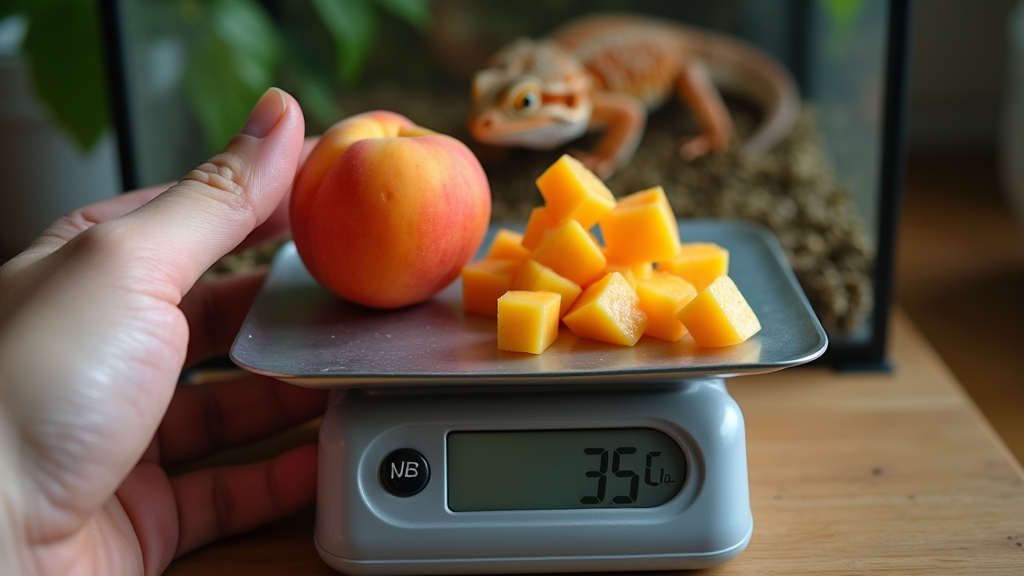
An adult bearded dragon gets one apricot per week. Not two. Not one every few days.
That “one apricot” means a small fruit, about 30-40 grams in weight. After pitting and dicing, you’ll have roughly 25-30 grams of edible flesh. That’s 3-Cubic inch of fruit. For a juvenile (under 12 months), cut that frequency in half, a few small pieces every two weeks. Their growing bones are even more sensitive to the calcium-phosphorus imbalance.
I keep a kitchen scale in my reptile room. Weighing the fruit once gives you a visual benchmark for next time. The first time I eyeballed it, I gave a 70-gram apricot, a large one, to an adult dragon. The next day his stool was loose and unusually fragrant. He was fine, but it was a clear sign of too much sugar and water at once. Now I aim for 35 grams.
I prefer the once-a-week rule over “once or twice a month” because it’s easier to remember. Feed fruit on the same day each week. Sunday treat day. This prevents accidental overfeeding and lets you monitor for any subtle reactions.
The Fruit Budget
Remember, all fruit combined should make up no more than 10% of your dragon’s total diet. The rest is 80% greens and 20% insects (for adults). If you give apricot on Sunday, don’t give other stone fruits like peaches or common fruits like apples on Thursday. Rotate your treats.
| Dragon Age | Max Apricot Frequency | Serving Size (Edible Weight) | Visual Cue |
|---|---|---|---|
| Baby (0-6 mo) | Avoid | None | Stick to insects & finely chopped greens |
| Juvenile (6-12 mo) | Every 2 weeks | 2-cubes (10-15g) | 3-4 pieces, each smaller than eye spacing |
| Adult (12+ mo) | Once per week | 1-cubes (25-35g) | 5-6 cubes mixed into a full salad of greens |
Nutritional Benefits vs. Real-World Value
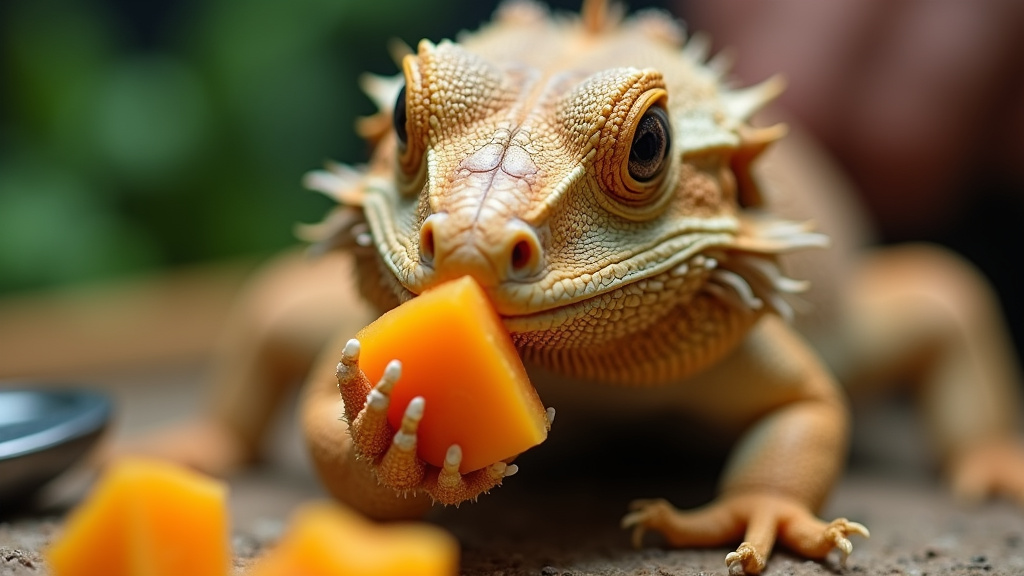
Apricots deliver Vitamin A (from beta-carotene) and Vitamin C. In a human diet, that’s great. For a bearded dragon, the context changes.
Vitamin A supports skin, vision, and immune function. But bearded dragons convert beta-carotene to Vitamin A inefficiently compared to mammals. The amount in a few apricot cubes is a minor boost, not a primary source. You get more usable Vitamin A from properly supplemented insects and orange veggies like butternut squash.
Vitamin C is an antioxidant. It helps with immune response and tissue repair. Again, the dose in a weekly treat is negligible in the grand scheme of their diet. The fiber in the skin is perhaps the most tangible benefit, it aids digestion and helps move ingested substrate through the gut.
So why feed apricots at all? Variety and enrichment. A new smell, color, and taste stimulates foraging behavior. A bored dragon is a lethargic dragon. A few sweet cubes hidden in a pile of greens can trigger active hunting in the bowl.
The real value of apricots isn’t the vitamin content, it’s the behavioral stimulus. A dragon that picks through its salad for a sweet treat is engaging its brain. That’s worth the careful risk management.
Compare that to the risks: the calcium-phosphorus problem, the high water content (86%) that can cause loose stools, and the simple sugar (about 3-4g per fruit). The benefits are soft; the risks are concrete. This is why apricots belong in the “occasional treat” category, not the “healthy supplement” category.
What Happens If You Overfeed? The Symptoms
It doesn’t look like poisoning. It looks like mild digestive upset and, long-term, a slow weakening.
Short-term (within 24 hours):
- Loose, watery stools. The high water content passes through quickly. The stool may smell fruitier than usual.
- Lethargy. A sugar spike can be followed by a slump. Your dragon might bask normally but show less interest in moving around its enclosure.
- Loss of appetite for greens. Why eat collard greens when sweet fruit was just offered? This can last a day or two.
Long-term (months of weekly overfeeding):
- Early signs of Metabolic Bone Disease (MBD). This starts subtly: a slight softening of the lower jaw (the mandible feels less rigid when you gently touch it), a reluctance to climb, or a tremble in the front legs when lifting the body.
- Weight gain without growth. Excess sugar converts to fat. Your dragon may develop a pudgy torso while its limbs remain slim.
- Selective eating. The dragon may start refusing its staple greens, holding out for fruit.
If you see loose stools after an apricot meal, skip the next scheduled fruit treat. Let their system reset for two weeks. If you notice any trembling or jaw softness, stop all fruit immediately and consult a reptile vet. Increase calcium supplementation (dust insects daily) and ensure UVB tube output is fresh (replace every 6-12 months).
Apricots vs. Other Fruits: A Safer Choices List
Where do apricots rank? They’re in the top third, better than most sugary fruits, worse than a few mineral-balanced ones.
The safest fruits for bearded dragons are those with a better calcium-to-phosphorus profile and low oxalates. Papaya and figs (fresh) are top-tier when fed sparingly. Apricots sit in the middle with melons like cantaloupe and watermelon safety. At the bottom are high-sugar, high-acid, or high-oxalate fruits like citrus, rhubarb, and avocado (which is toxic).
Common mistake: Rotating between several moderate-risk fruits like apricots, peaches, and pineapple in the same week, this stacks the phosphorus load and negates the “moderation” benefit of rotating. Space them out.
| Fruit | Ca:P Ratio | Key Risk | Frequency Advice |
|---|---|---|---|
| Papaya | ~20mg:10mg (2:1) | Moderate sugar | Once every 10 days |
| Fig (fresh) | ~35mg:14mg (2.5:1) | High sugar if overripe | Once every 2 weeks |
| Apricot | ~13mg:23mg (0.6:1) | Poor Ca:P, moderate sugar | Once per week (adult) |
| Cantaloupe | ~9mg:15mg (0.6:1) | Very high water content | Once every 10 days |
| Peach | ~6mg:22mg (0.3:1) | Very poor Ca:P, higher sugar | Once every 2 weeks (less than apricot) |
| Pineapple | ~13mg:8mg (1.6:1) | High acidity, bromelain enzyme | Once every 3 weeks (can cause mouth irritation) |
Use this table to build a real rotation. If you feed apricot this Sunday, wait at least 10 days before offering acidic fruits like pineapple or kiwi fruit safety. Your dragon doesn’t need fruit every week. A bi-weekly schedule is safer and maintains interest.
Frequently Asked Questions
Can bearded dragons eat apricot skin?
Yes, the skin is safe and contains beneficial fiber. Wash it thoroughly to remove pesticide residue. There’s no need to peel it.
Are apricot pits or seeds poisonous to bearded dragons?
The pit itself isn’t toxic like apple seeds (which contain cyanide), but it is a serious choking hazard and can cause intestinal blockage. Always remove it.
Can baby bearded dragons eat apricots?
It’s best to avoid giving apricots to babies (under 6 months). Their digestive systems are delicate, and their rapid growth makes calcium balance critical. Stick to insects and finely chopped staple greens.
My bearded dragon ate a dried apricot. What should I do?
Monitor closely for the next 48 hours. Ensure they stay hydrated (offer water via dropper if needed) and watch their bowel movements. Dried fruit can cause impaction. If they stop passing stool, become lethargic, or show a bloated abdomen, contact a reptile vet.
Can I feed canned or jarred apricots?
No. These products are packed in syrup, contain added sugars, and often have preservatives. The texture is also mushy and offers no chewing benefit. Only fresh, raw apricots are suitable.
Do apricots count towards the 10% fruit rule in a bearded dragon’s diet?
Absolutely. Every piece of apricot, safe fruits for bearded dragons like berries, or other stone fruits like cherries contributes to that 10% weekly fruit allowance. Exceed it, and you imbalance the entire diet.
The Bottom Line
Apricots are a permissible treat, not a dietary staple. The 13:23 calcium-to-phosphorus ratio is the hidden tax, feed too often, and you’ll pay it in bone health.
Serve one small, pitted, diced apricot per week to an adult dragon. Mix the pieces into a hearty salad of greens. Never offer dried, canned, or cooked apricots. Watch for loose stools as a sign you’ve given a bit too much.
The goal is enrichment, not nutrition. Let your dragon hunt for a few sweet cubes. Then go back to the basics: fresh greens, gut-loaded insects, proper UVB, and calcium powder. That combination keeps them thriving for years, not just interested for a moment.