
Do Bearded Dragons Climb? Why and How They Love to Climb
This post contains affiliate links. As an Amazon Associate, we earn from qualifying purchases.
Do bearded dragons climb? Absolutely. They are opportunistic, semi-arboreal climbers by nature. In the wild, Pogona vitticeps ascends rocks, fallen trees, and low shrubs to bask, survey for threats, and find food. In captivity, this instinct remains strong, making climbing structures non-optional for their physical and mental health.
Most owners see the scrambling and think it’s just play. They miss the primal wiring. That climb to the highest branch isn’t random, it’s a lizard checking for hawks. Skip the structures, and you’re ignoring a core survival drive.
This guide breaks down the science behind the climb, how to build a habitat that uses it, and what to do if your dragon seems grounded.
Key Takeaways
- Climbing is a fundamental behavior for thermoregulation, exercise, and mental stimulation, not a hobby.
- The minimum enclosure size for an adult is 4x2x2 feet, but a taller 5x2x3 or 6x2x2 foot design better supports climbing instincts.
- Use stable, wide branches and cork bark, flimsy vines and thin dowels cause falls and stress.
- Baby and juvenile bearded dragons are more agile and semi-arboreal; adults are heavier and more terrestrial but still require climbing opportunities.
- A sudden refusal to climb is a red flag pointing to potential illness, injury, or improper basking temperatures.
Why Bearded Dragons Are Born Climbers
Forget the image of a lizard that just lies flat. Bearded dragons are built for rugged, uneven terrain. Their natural range across Australia’s arid and semi-arid zones is not a flat desert. It’s a landscape of sun-baked rocks, termite mounds, fallen timber, and sparse, hardy vegetation. Elevation equals opportunity.
A 2024 EnviroLiteracy article on climbing behavior details how wild Pogona vitticeps use vertical elements for three key survival functions: reaching optimal basking temperatures, gaining a vantage point to spot predators and prey, and escaping immediate ground-level threats.
The drive to climb is hardwired. It’s how they find the morning sun fastest. It’s how they scan for a moving insect. It’s their first escape route when something rustles in the grass below. In your living room, the “predator” might be the cat outside the glass, and the “prey” might be a dubia roach you just dropped. The instinct doesn’t care about the context.
TL;DR: Your bearded dragon climbs because its ancestors who climbed lived longer and reproduced. It’s a survival toolkit, not a party trick.
The Right Setup for a Climbing Bearded Dragon
An enclosure that stifles climbing creates a bored, stressed, and potentially obese animal. The goal isn’t just to add a stick. It’s to create a three-dimensional environment that mirrors the utility of their native landscape. This starts with space.
The universally accepted minimum for an adult is a 4x2x2 foot enclosure (120x60x60 cm). This provides critical horizontal roaming space. For better climbing, the gold standard shifts. A 5x2x3 foot or 6x2x2 foot enclosure gives more vertical room without sacrificing floor area. A taller front-opening tank is safer than a tall top-opening one, you avoid looming over them from above, which triggers a predator response.
The furniture matters more than the dimensions. You need structures that are stable, traversable, and lead to a purpose.
| Climbing Structure | Best Use Case | Risk If Unstable |
|---|---|---|
| Cork Bark Rounds/Flats | Primary climbing surface & hide. The texture is perfect for grip. | Can roll if not secured, launching the dragon. |
| Large Manzanita or Oak Branches | Creating aerial pathways to the basking zone. | Thin branches flex; a heavy adult can slip. |
| Stacked Slate or Flagstone | Building a stable, heat-retaining ramp to the basking spot. | Sharp edges can cause scale abrasions. |
| Commercial Reptile Hammocks | Supplemental lounging area, not primary climbing. | Claws can snag in the fabric, leading to panic. |
Cork bark is the MVP. It’s lightweight, gnarly for traction, and serves as a hide. The PLOS One enclosure design study found that bearded dragons significantly preferred enclosures with cork bark over standard setups, using it extensively for climbing and exploration. That’s a peer-reviewed vote for natural materials.
Placement is tactical. Every major climb should have a “why.” The main branch should terminate at the basking platform. A secondary route might lead to a mid-level hide or a view of the room. Avoid dead-end perches that force a clumsy backward shuffle.
Common mistake: Placing a smooth ceramic hide directly under the highest branch, a fall from 18 inches onto a hard surface can break a toe or a rib. Put a softer substrate area or a lower platform underneath climbing routes.
Safety is non-negotiable. Anchor everything. You should be able to push firmly on any branch without it wobbling. The basking platform itself must be immovable. I learned this after a poorly seated piece of driftwood shifted under my adult male, Rex. He didn’t fall, but the sudden tilt spooked him so badly he refused to climb for a week. Everything gets a stability check during weekly cleaning now.
Climbing Through Life Stages: Babies vs. Adults
Their relationship with height changes as they grow. A hatchling is a fearless, lightweight acrobat. A full-grown adult is a powerful, sometimes clumsy, bulldozer. Your setup must adapt.
Juveniles (0-12 months): These are the true semi-arboreal phase. They are incredibly agile, spending more time off the ground. Their climbing structures can be more vertical and intricate. However, their bones are softer. Falls are less likely due to weight, but the consequences can be worse. Provide plenty of branches at varying diameters to build foot strength. The Reptiles and Research care guide emphasizes that enrichment for young dragons directly impacts confident adult behavior.
Adults (18+ months): They become more terrestrial, but “terrestrial” doesn’t mean flat. It means their climbs are more purposeful and less frequent. They’ll climb to bask, then descend to patrol. Their structures must be stout and low-angled. A wide, gently sloping branch is better than a skinny vertical one. An adult can weigh over 500 grams; that mass needs a sturdy highway, not a tightrope.
VCA Animal Hospitals notes this shift, stating young dragons are semi-arboreal while adults are mostly terrestrial but will climb occasionally. “Mostly terrestrial” is the key. They still need the option. Denying it because they’re bigger is like taking the stairs away from a person because they now prefer the elevator. You’ve removed their choice.
When Your Bearded Dragon Won’t Climb
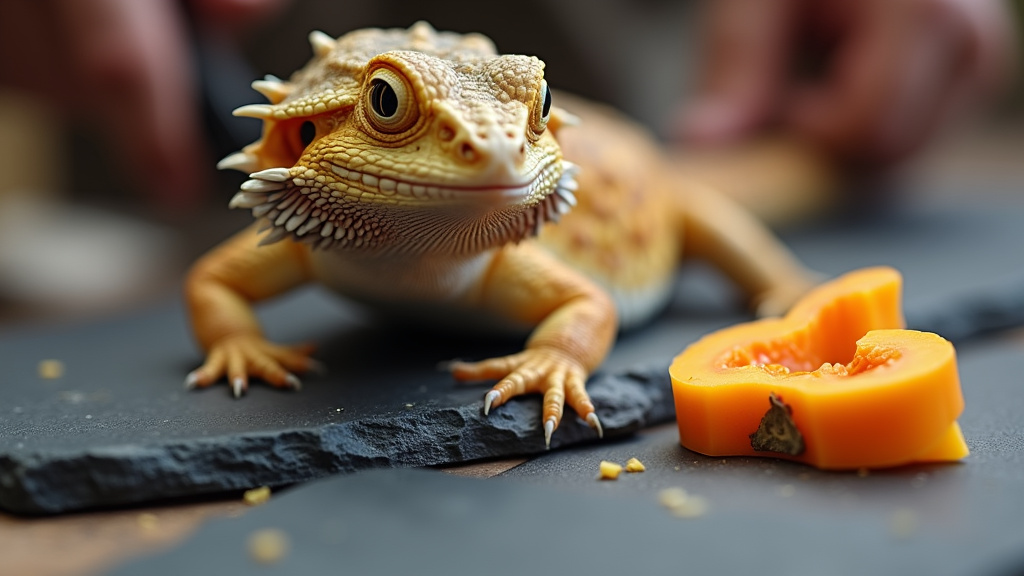
What if your dragon is a couch potato? First, rule out the physical. A refusal to climb is a symptom, not a personality trait.
Start with health. Metabolic Bone Disease (MBD) from calcium deficiency weakens bones, making climbing painful. An overweight dragon lacks the strength and motivation. Respiratory infections sap energy. A vet check is step one.
Next, audit the environment. Is the basking spot at the summit actually the warmest point? Use a temp gun. The surface should be 100-110°F (38-43°C). If the top perch is cooler than the floor, there’s no incentive. Is the climb itself intimidating? A single, sheer branch is a barrier. Add intermediate steps.
I had a rescue, Greta, who would only pancake on the floor. Her previous tank had a wobbly plastic vine as the only climb. It took two months of offering a solid, textured slate ramp leading to her basking rock before she tentatively used it. The problem wasn’t her; it was the poor tool she was given.
Consider personality. Some dragons are just more cautious. That’s fine. Forcing them isn’t the answer. Instead, make the climb irresistible. Place a favorite treat (like a piece of butternut squash) halfway up a secure ramp. Let them discover the vertical world on their terms, with a food reward.
TL;DR: A non-climber is a dragon telling you something is wrong, with its health, its habitat, or its confidence. Listen.
The Link Between Climbing and Other Behaviors
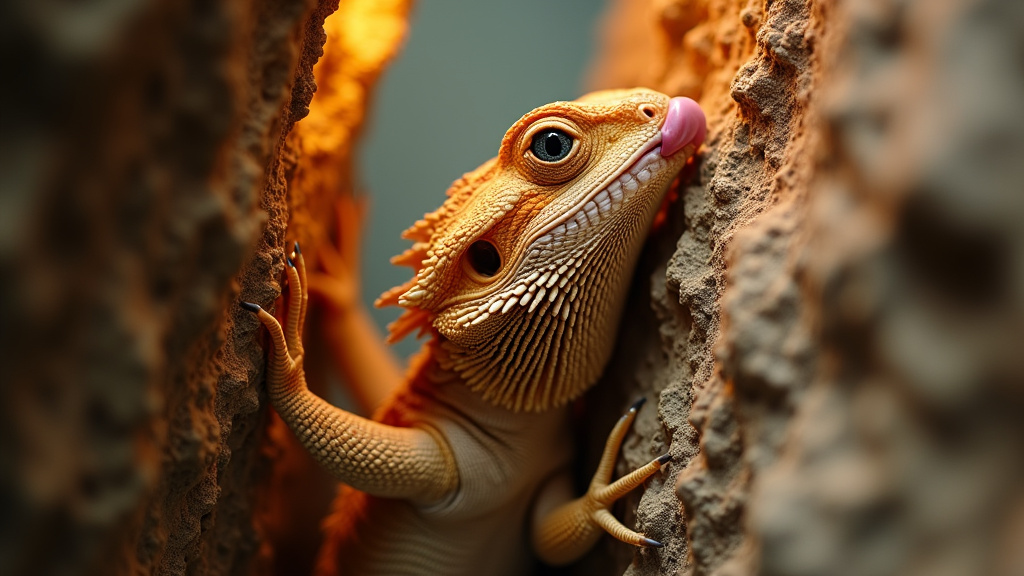
Climbing doesn’t exist in a vacuum. It’s woven into their entire behavioral repertoire. You’ll see it connect to other actions you’re observing.
Basking and Thermoregulation: This is the primary link. The climb is the journey to the sun. Their basking habits are governed by the quality of that perch. A good climb leads to efficient heating.
Stress and Glass Surfing: A dragon that wants to climb but has nowhere to go will often resort to glass surfing, scratching at the walls in a frustrated attempt to escape a barren, flat environment. Climbing enrichment is a direct antidote to this stress behavior.
Exploration and “Licking”: Bearded dragons use their tongue to gather chemical information. You’ll see increased licking behavior when they reach a new high point, “tasting” the unfamiliar air currents and scents.
It’s a feedback loop. Good climbing options reduce stress. Reduced stress encourages exploration. Exploration includes climbing. Breaking this loop by having a barren tank creates a lethargic, sometimes neurotic, pet.
Safety First: Preventing Falls and Injuries
Gravity is the enemy. A fall that seems short to you can be catastrophic for a reptile. Your job is to engineer out the risk.
- Eliminate Slippery Surfaces. Glass, smooth plastic, and glazed ceramic are ice rinks for lizard feet. Always cover these with textured tiles, cork, or reptile carpet.
- Secure Everything. Nothing should tip, rock, or slide. Use aquarium-safe silicone or zip ties to anchor branches to the background or frame.
- Create Fall Zones. Under any elevated path, use a softer substrate like a deep layer of topsoil/playsand mix or a foam pad hidden under a rug. Never have tile or rock directly below.
- Mind the Gap. Ensure there’s no dangerous drop between the end of a branch and the enclosure wall. They will try to bridge gaps and can get stuck.
- Trim Nails Regularly. Overgrown nails can catch on fabrics or screen tops during a climb, leading to a torn nail or a panic-induced fall.
The goal is a challenging but secure landscape. Think of a jungle gym for toddlers, it’s fun because the parents know the netting and padding are there. You are the netting.
Frequently Asked Questions
Can I let my bearded dragon climb on me?
Yes, with supervision. It’s excellent bonding. Sit on the floor and let them climb over your legs or up your arm. Always support their belly fully and never let them climb high on furniture they could fall from. Watch for signs of stress, like a black beard.
How high can a bearded dragon climb?
In a proper enclosure, they can and will climb several feet. Their jumping ability also comes into play for short gaps. The limit is less about height and more about having secure, textured surfaces to grip. In the wild, they’ve been observed several meters up in trees.
My bearded dragon falls sometimes. Is this normal?
An occasional minor slip is normal, especially for juveniles learning coordination. Frequent falling is not. It indicates the structures are too narrow, too smooth, or too unstable, or the dragon has a health issue like MBD affecting its grip strength. Redesign the climb.
Do they need ropes or nets?
Most commercial reptile ropes and nets are unsafe. Their claws can get irreversibly caught in the loops, leading to broken toes or severe panic. Stick to solid wood, rock, and cork.
Is climbing related to their burrowing instinct?
They are separate but complementary instincts. Climbing is for basking and surveying; burrowing is for cooling down, security, and sleep. A good habitat offers both options, height to reach and depth to hide in.
The Bottom Line
Do bearded dragons climb? Unequivocally. It’s as fundamental as eating. Providing for this instinct isn’t about adding decoration; it’s about fulfilling a biological imperative for exercise, mental engagement, and thermoregulation. A proper enclosure isn’t a flat box with a food dish. It’s a textured, multi-level landscape with highways to the sun and safe routes back down.
Invest in stable, natural materials like cork bark and wide branches. Build within a spacious tank, 4x2x2 feet is the starting line, not the finish. Watch how your dragon uses the space. A confident climb is a sign of a healthy, enriched animal. If they’re grounded, start troubleshooting their health and habitat immediately. Their vertical world is waiting.