
Can Bearded Dragons Get Fleas? Learn the Facts and Risks
This post contains affiliate links. As an Amazon Associate, we earn from qualifying purchases.
Bearded dragons do not get true flea infestations like cats or dogs. Fleas are mammalian parasites that cannot complete their life cycle on a reptile’s dry, scaly skin. What owners often mistake for fleas are usually reptile mites, tiny external parasites that appear as moving black or red dots, or symptoms of common internal parasites like pinworms and coccidia.
The confusion starts because people see their dragon scratching or find tiny black specks and jump to “fleas.” That misdiagnosis leads to using the wrong treatments, flea shampoos or powders that are toxic to reptiles. You waste money and risk your dragon’s health.
This guide cuts through the noise. You will learn how to identify the real culprits, walk through a vet-backed diagnostic protocol, and implement a cleaning routine that stops parasites before they become a problem.
Key Takeaways
- True fleas (Ctenocephalides spp.) cannot live on bearded dragons; the dry, cool reptile skin and different body temperature break the flea lifecycle.
- Reptile mites (Ophionyssus natricis) are the most common external parasite mistaken for fleas. They look like moving black or red specks, often around the eyes, vent, and skin folds.
- Internal parasites like pinworms and coccidia are far more prevalent and cause symptoms, lethargy, weight loss, runny stool, that owners wrongly attribute to “fleas” or general illness.
- Diagnosis requires a veterinarian’s fecal float test; visual inspection alone misses microscopic eggs. Over-the-counter “parasite remedies” are ineffective and dangerous.
- Prevention hinges on strict quarantine for new animals, proper habitat hygiene, and sourcing feeder insects from reputable suppliers to avoid introducing parasites.
The Short Answer: Can They Get Fleas?
A bearded dragon’s body is a hostile environment for the common cat or dog flea. The CDC notes that fleas are highly host-specific, with preferred mammalian hosts for breeding. A reptile’s ectothermic (cold-blooded) physiology, combined with its dry, keratinous scales, does not provide the consistent warmth and fur coverage fleas need to embed, feed, and reproduce.
You might see a single flea jump onto a dragon from a carpet or a pet dog, but it won’t stay. It cannot lay viable eggs there. The flea will either leave or die within a day or two without establishing an infestation. The real issue is what happens next. An owner spots the single flea, panics, and douses the tank in over-the-counter flea spray. That spray contains permethrin or pyrethrin, compounds that are neurotoxic to reptiles. I’ve seen a dragon come into a clinic with full-body tremors because an owner used a single pump of dog flea spray on its bedding.
The cat flea (Ctenocephalides felis) and dog flea (Ctenocephalides canis) require a mammalian host’s body temperature and fur environment to complete their life cycle. Their mouthparts are adapted to pierce mammalian skin, not reptilian scales, and they cannot reproduce on reptilian hosts.
TL;DR: Fleas don’t infest bearded dragons. If you see tiny bugs, they are almost certainly reptile mites or another parasite.
What You’re Actually Seeing: Reptile Mites vs. “Fleas”
When you see tiny, fast-moving black or red dots on your dragon or crawling on the white tank decor, you are looking at reptile mites. Ophionyssus natricis is the species that commonly infests snakes and lizards. They are arachnids, like ticks, not insects like fleas. This distinction matters because treatment is different.
Mites spend part of their life cycle off the host, hiding in substrate, under cage trim, and in wood decor. They emerge to feed on blood, causing intense itching. Look for them in specific spots: under the chin folds, around the eyes, inside the armpits, and near the cloacal vent. A heavy infestation leaves a dusting of black and white specks, the black is mite feces, the white is shed exoskeletons.
Here is the sensory reality. A dragon with a bad mite infestation smells faintly sour. They often soak in their water bowl relentlessly, trying to drown the mites. You will see them rubbing their face against rocks until the scales raw.
Common mistake: Treating mites with a dilute bath of dish soap or olive oil, these home remedies suffocate a few surface mites but do nothing to the eggs and nymphs hiding in the habitat. The infestation rebounds in 10 days, stronger because the dragon is now stressed and its skin is compromised.
The protocol for mites is a two-front war: treat the animal and obliterate the environment. For the dragon, a reptile vet will prescribe a topical like ivermectin diluted to a precise ratio. For the tank, you need to go scorched earth.
The Full Habitat Reset for Mites
- Remove the dragon. Place it in a simple, temporary plastic tub with paper towel substrate and a single hide. This is its hospital tank.
- Dump all substrate. Bag it and take it outside immediately.
- Soak all decor and the empty tank in a reptile-safe disinfectant. I use a 1:10 dilution of chlorhexidine solution. Soak for 10 minutes.
- For porous wood items, baking is non-negotiable. Place them on a foil-lined tray and bake at 200°F for 30 minutes. The heat penetrates the wood and kills every egg.
- Rinse everything with scalding hot water and let it air-dry completely before reassembly.
Skip step 4, and you will reintroduce mites. Every time.
Common Parasites That Mimic Flea Problems
The itching and discomfort owners blame on “fleas” often stem from internal parasites. These are far more common than mite infestations and are a silent drain on your dragon’s health. The symptoms overlap in a way that sends owners down the wrong Google rabbit hole.
| Parasite | Primary Symptoms | How It’s Confused with Fleas | Confirmed By |
|---|---|---|---|
| Pinworms (Oxurids) | Weight loss despite good appetite, slight lethargy, occasional watery stool. | Owner sees dragon scratching its vent on decor, assumes bugs are biting. | Fecal float test; eggs are visible under microscope. |
| Coccidia (Coccidia spp.) | Diarrhea, dehydration, severe lethargy, loss of appetite. Blood in stool in advanced cases. | General “sick” behavior and poor coat condition blamed on unseen external parasites. | Fecal float test; requires specific anticoccidial medication (e.g., ponazuril). |
| Reptile Mites | Visible moving dots, soaking in water bowl, rubbing face, black/white specks on skin and decor. | Directly mistaken for fleas due to small, crawling appearance. | Visual inspection with magnifier; often seen crawling on white paper. |
Pinworms are almost a given in captive bearded dragons. A low-level burden might not cause overt illness, acting as a constant low-grade irritant. The dragon might scratch more, eat well but not gain weight, and have the occasional odd stool. This is the classic presentation that makes someone ask, “Can bearded dragons get fleas?” online. The answer is no, but they can absolutely have intestinal worms.
Coccidia is more serious. It causes inflammatory damage to the intestinal lining. A dragon with coccidiosis looks depressed, sits with its eyes closed, and produces foul-smelling, runny poop. This level of digestive distress is a veterinary emergency, not a flea problem.
The 3-Step Diagnostic Protocol (Forget the Flea Powder)
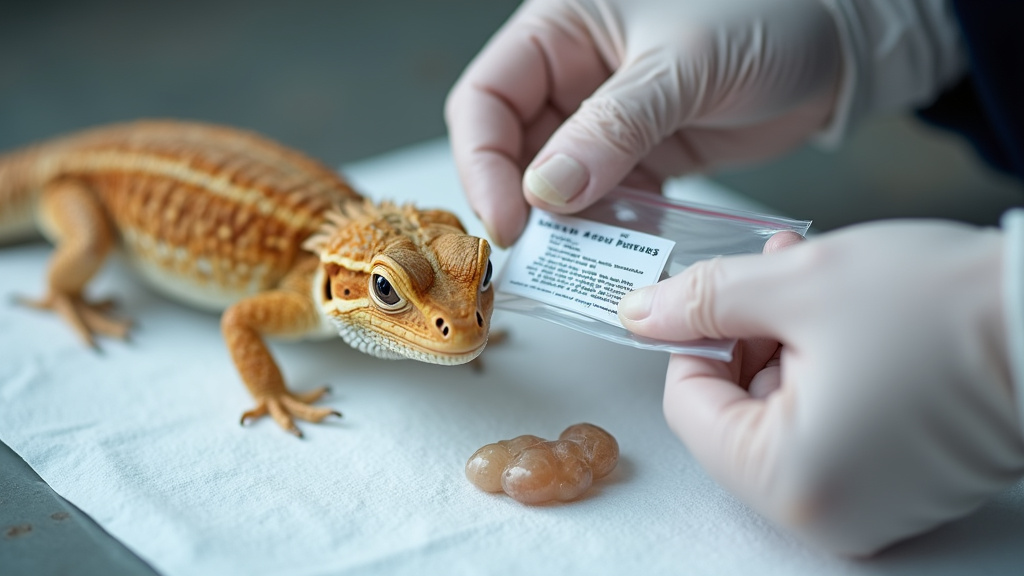
If your dragon is scratching, lethargic, or has abnormal droppings, follow this sequence. Do not skip to treatment.
Step 1: The White Towel Inspection.
Place your dragon on a dry, white paper towel under a bright lamp. Wait five minutes. Watch for any tiny black specks moving on the towel. Use a jeweler’s loupe or phone camera on macro mode to examine its skin folds and vent area. This rules out (or confirms) a visible mite infestation. If you see moving dots, you have your answer, mites, not fleas. Proceed to the habitat reset protocol.
Step 2: The Fresh Fecal Sample.
If the towel test is clean, the problem is likely internal. The next step is non-negotiable: get a fecal test. Bag a fresh dropping, less than 2 hours old, and refrigerate it if you can’t get to the vet immediately. Do not freeze it. Freezing ruptures parasite eggs and makes the test useless. Tell the vet you need a fecal float and direct smear to check for pinworms, coccidia, and flagellates.
Step 3: The Veterinary Consultation.
Bring the sample and your dragon to an exotic veterinarian. A general dog-and-cat vet will not have the reference charts for reptile parasite eggs. The vet will perform the fecal float, identify the specific parasite, and prescribe the correct antiparasitic. Fenbendazole for worms. Ponazuril for coccidia. The dose is weight-based and precise.
I learned the hard way about vague symptoms. A dragon I raised from a hatchling started eating less and sleeping more. Its poop was normal. I checked for mites, found nothing, and assumed it was just a slow phase. Two weeks later, it presented with bloody stool. The fecal float revealed a massive coccidia load that had been simmering for a month. We caught it, but the recovery took six weeks of daily medication and fluid support.
Skipping the fecal float means guessing. Guessing with reptile medications can kill. The margin for error with drugs like ivermectin is tiny.
Prevention: Building a Parasite-Resistant Habitat
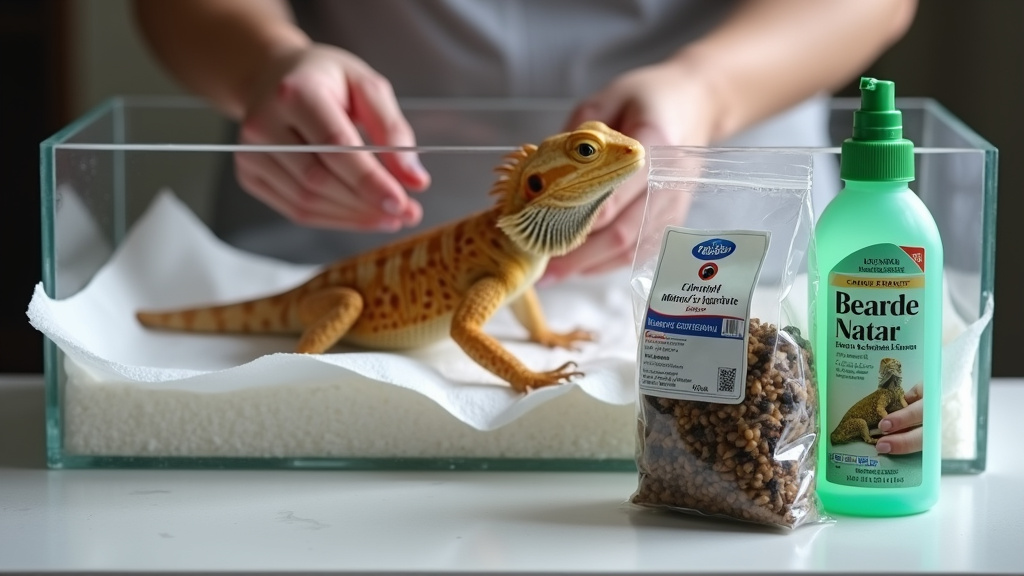
Treatment is a reaction. Prevention is control. Your goal is to create an environment where parasites struggle to gain a foothold. This starts before a new dragon even enters your home.
Quarantine Is Non-Negotiable.
Any new reptile, whether a dragon, feeder insect shipment, or tankmate, should be quarantined for a minimum of 60 days in a separate room. House it on simple paper towel substrate. Perform a fecal test at the start and end of this period. This breaks the life cycle of most parasites and prevents introducing mite infestations or coccidiosis infection to your established collection.
Source Feeders Intelligently.
Crickets and roaches from unclean breeding facilities are classic vectors for pinworm and coccidia eggs. Buy from reputable suppliers who guarantee parasite-free colonies. Avoid wild-caught insects entirely; they carry an unpredictable parasite load. Gut-load your feeders with clean, dry commercial diet, not watery fruits that promote wet, bacteria-filled droppings in the cricket bin.
Master Substrate and Cleaning Hygiene.
For juvenile or sick dragons, use non-particulate substrate: paper towel, slate tile, or reptile carpet. Loose substrate like sand or soil can harbor parasite eggs if contaminated. For bioactive setups, ensure your clean-up crew (isopods, springtails) is well-established before introducing the dragon, they consume waste before parasites can proliferate.
Spot-clean feces daily. Perform a full habitat breakdown and disinfectant soak every 4-6 weeks. This routine is the cornerstone of proper husbandry.
TL;DR: Quarantine new arrivals, buy clean feeders, and maintain strict cleaning schedules. This trio prevents over 90% of parasitic issues.
When to See a Vet Immediately
Some symptoms signal that a parasitic problem has escalated beyond home care. Do not wait.
- Visible worms in stool or around the vent. This indicates a severe worm burden.
- Prolonged lethargy where the dragon does not bask or open its eyes for more than a day. This is a key sign of lethargy linked to systemic illness.
- Blood in the stool or urates. This points to possible coccidia or severe intestinal inflammation.
- Rapid weight loss visible along the spine and hip bones.
- Persistent diarrhea causing dehydration (sunken eyes, lack of skin elasticity).
These are red flags. Your action is not to Google more but to call an exotic vet, describe the symptoms, and get an appointment. Bring a fresh fecal sample with you.
Frequently Asked Questions
Can fleas from my dog or cat live on my bearded dragon?
No. Fleas are host-specific. A flea may jump onto your dragon out of curiosity but will not feed or reproduce. It will leave or die within a short period. The greater risk is your dragon ingesting a flea preventative chemical from contact with a treated dog.
What do reptile mites look like compared to fleas?
Mites are much smaller, about the size of a poppy seed. They are round and move slowly. Fleas are larger, dark brown, laterally flattened, and jump. Mites are often seen clustered around a dragon’s eyes, vent, or under scales; fleas would not cluster on a reptile.
My bearded dragon is scratching a lot but I see no bugs. Why?
Internal parasites, particularly pinworms, can cause irritation around the cloaca that leads to scratching. Dry skin from low humidity, an impending shed, or fungal infections can also cause itchiness. A veterinary exam and fecal test are needed to rule out internal parasites as the cause of lethargy and discomfort.
Are over-the-counter mite sprays safe for bearded dragons?
Most are not. Sprays labeled for birds or small mammals often contain pyrethrins, which are toxic to reptiles. Never use a product not explicitly labeled for reptiles by a known brand. The safest course is a vet diagnosis and prescription treatment.
Can a bearded dragon get parasites from eating vegetables?
It is possible but less common than from feeder insects. Parasite eggs can be present in soil on unwashed greens. Always thoroughly wash and dry all vegetables and fruits before feeding. This simple step removes a major potential source of protozoan parasites.
How often should I get a fecal test done for my healthy dragon?
For a healthy adult dragon with no symptoms, an annual fecal exam during its regular check-up is sufficient. For new acquisitions, dragons introduced to a multi-reptile home, or those showing any signs of digestive issues, test immediately and after treatment.
The Bottom Line
Forget the idea of fleas. The real threats to your bearded dragon are reptile mites and internal parasites like pinworms and coccidia. Diagnosing the correct culprit requires moving past visual guesses to a veterinarian’s fecal float test, the only tool that shows the microscopic truth.
Prevention is straightforward but demands discipline: quarantine every new arrival, source feeders from reputable suppliers, and maintain impeccable habitat hygiene. When symptoms appear, act on the protocol, inspect, sample, consult. Using dog flea products on your dragon is a dangerous misstep. Understanding the actual parasites your dragon can get is the first step in providing the essential care that keeps it truly healthy.