Can Bearded Dragons Eat Yams? The Safe Feeding Guide
This post contains affiliate links. As an Amazon Associate, we earn from qualifying purchases.
Yes, bearded dragons can eat yams, but only as an occasional treat. They must be cooked, peeled, and cut into tiny pieces. Raw yams are unsafe. Due to high carbs and poor calcium balance, yams should never be a staple food.
Bearded dragons can eat yams as an occasional treat, provided the yam is always cooked, peeled, and cut into tiny, manageable pieces. Raw yams are indigestible and risky. This starchy vegetable should never become a daily staple due to its high carbohydrate content and potential to disrupt the critical calcium-to-phosphorus balance in your dragon’s diet.
Most owners get this wrong by treating yams like a regular vegetable. They either serve them raw, feed them too often, or confuse them with nutritionally different sweet potatoes. The result is often a lethargic dragon with digestive upset or, over time, a subtle nutritional deficiency that weakens their bones.
This guide walks through the exact preparation steps, explains the real nutritional trade-offs, and shows you how to spot the difference between a safe treat and a dietary mistake.
Key Takeaways
- Yams must be cooked and peeled. Raw yam flesh contains hard-to-digest starches and potential irritants that can cause impaction or bloating.
- Serve tiny portions once a week at most. Their high carb and calorie content promotes weight gain and can skew the essential calcium-phosphorus ratio if overfed.
- Distinguish true yams from sweet potatoes. While both are safe when prepared correctly, their vitamin A profiles differ, which matters for long-term supplementation plans.
- Watch for signs of overfeeding: unusually watery or infrequent stools, a lack of appetite for staple greens, and noticeable weight gain around the belly.
- Never feed seasoned, canned, or candied yams. Added sugars, oils, and preservatives are toxic to reptiles and can cause severe digestive distress.
Why Cooking Yams is Non-Negotiable
Raw yam tuber contains complex starches and certain compounds that a bearded dragon’s digestive system cannot process effectively. The Wikipedia entry on the yam notes that many yam species, particularly African varieties, must be cooked to neutralize naturally occurring irritants like calcium oxalate raphides. These microscopic crystals can cause mouth and gut irritation.
Common mistake: Feeding raw yam chunks — the dragon may seem to eat it, but the undigested starch ferments in the gut, leading to bloating, gas, and a high risk of impaction within 24–48 hours.
Cooking via boiling, steaming, or baking breaks down these starches into simpler sugars. It also softens the cell walls, making the nutrients marginally more accessible and the texture safe to swallow. The process is identical for true yams and sweet potatoes, even though they are botanically distinct. Think of it as pre-digesting the food for them.
The peel presents a separate issue. It’s fibrous and often holds soil residues or waxes. Peeling eliminates a choking hazard and removes the layer most likely to harbor unwanted compounds.
TL;DR: Always cook and peel yams. Raw yams are a direct path to a vet visit for impaction.
How to Prepare Yams for Your Bearded Dragon
Follow this sequence precisely. Skipping a step usually leads to a feeding refusal or a health problem.
Step 1: Select and Wash
Pick a firm yam or sweet potato without wrinkles, soft spots, or mold. Rinse it under cool water while scrubbing lightly with your fingers. This removes surface dirt that could contaminate the flesh when you peel it.
Step 2: Peel Completely
Use a standard vegetable peeler. Remove every bit of skin. If you miss patches, the tough fibers can wrap around the tongue or cause minor intestinal blockages, especially in younger dragons.
Step 3: Cook Until Soft
Cut the peeled yam into 1-inch cubes. Boiling is the most straightforward method—submerge the cubes in water and simmer for 10–15 minutes until a fork slides in easily. Steaming works too. You can also bake a whole peeled yam at 400°F (200°C) for about 45 minutes. Cooking neutralizes irritants and gelatinizes the starch.
Step 4: Cool and Dice
Let the cooked yam cool to room temperature on a plate. Never serve it warm. Then, chop it into pieces smaller than the space between your dragon’s eyes. For an adult, this is roughly a 1/4-inch cube. Larger pieces are a choking hazard.
Step 5: Serve and Store
Mix one or two of these tiny cubes into their regular salad of staple greens like collard or mustard greens. Refrigerate any leftover cooked yam in a sealed container for up to three days.
I tried skipping the peeling step once with a sweet potato, thinking the skin was thin enough. My dragon, Rex, ate a piece and then refused his next three meals. He passed the undigested skin two days later, whole and clearly irritating him. I never skip the peel now.
Yams vs. Sweet Potatoes: Does the Difference Matter?
In a grocery store, the labels are often swapped. For a bearded dragon, the botanical distinction has minor but real implications. True yams (genus Dioscorea) are starchier and often have white, purple, or yellowish flesh. Sweet potatoes (Ipomoea batatas) are the orange-fleshed variety common in the US.
| Characteristic | True Yam (Dioscorea) | Sweet Potato (Ipomoea batatas) |
|---|---|---|
| Primary Nutrient | Higher in complex carbohydrates | Higher in beta-carotene (Vitamin A precursor) |
| Typical Flesh Color | White, purple, or yellow | Orange (most common), sometimes white or purple |
| Key Consideration | Slightly higher in indigestible starch if undercooked | High Vitamin A content requires careful supplementation balance |
| Best Preparation | Must be cooked thoroughly | Must be cooked thoroughly |
The practical takeaway is about vitamin A. Orange sweet potatoes are loaded with beta-carotene. While vitamin A is essential, bearded dragons are susceptible to hypervitaminosis A from over-supplementation. Feeding orange sweet potatoes frequently while also using a vitamin supplement containing preformed vitamin A (retinol) can push levels too high over months.
A ScienceDirect Chinese yam nutritional review details the diverse bioactive compounds in Dioscorea species, supporting their role as a functional food. This complexity is why they are a treat, not a staple.
For your dragon, the safest approach is to treat all orange tubers as sweet potatoes and all other tubers as yams. Prepare them identically, but be mindful of your overall vitamin A sources if you frequently offer the orange kind.
The Nutritional Trade-Off: What Yams Offer and What They Lack
Yams are energy-dense. They provide carbohydrates for quick calories and small amounts of potassium and manganese. They are not a nutritional powerhouse for insectivorous-omnivorous reptiles.
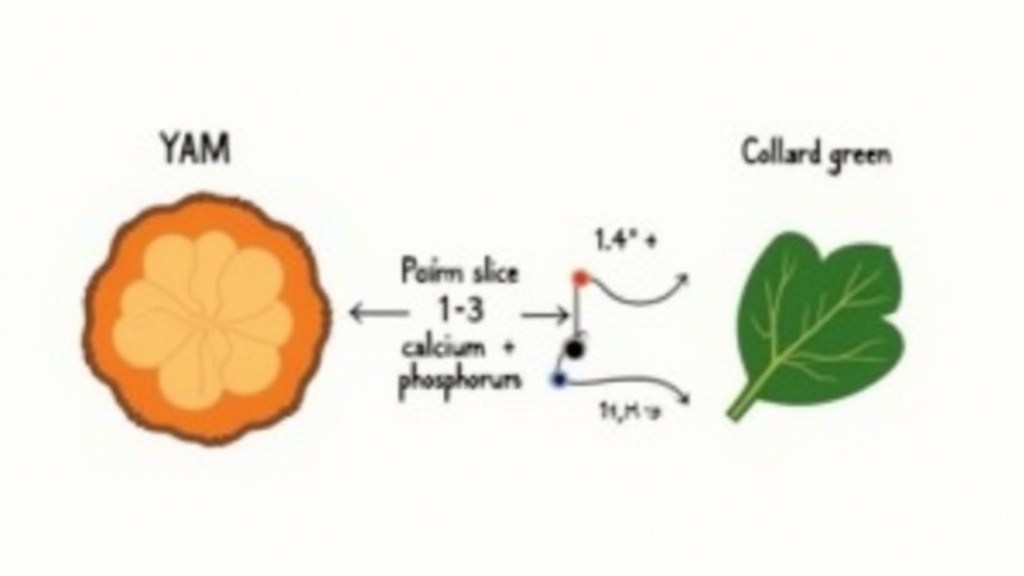
Cooked yam is approximately 70% water, 27% carbohydrates (mostly starch), and minimal protein and fat. It is low in the calcium bearded dragons need and contains phosphorus, which worsens the calcium-phosphorus ratio if fed in excess.
Compare this to staple vegetables. Collard greens have a strong 14.5:1 calcium-to-phosphorus ratio. Yams have a ratio closer to 1:3, which is inverted and problematic. Every bite of yam displaces a bite of a more beneficial green.
Here’s how yams stack against other occasional treats like corn or zucchini:
| Treat Vegetable | Primary Benefit | Primary Risk | Feed Frequency |
|---|---|---|---|
| Yam / Sweet Potato | Quick energy, some potassium | High carbs, poor Ca:P ratio, weight gain | Once every 7–10 days |
| Zucchini | High moisture, low calories | Very low nutritional density | Once a week |
| Corn | Some fiber | High phosphorus, starchy, can cause impaction | Once a month |
| Bell Peppers | High Vitamin C | Moderate oxalates, higher sugar | Twice a month |
This table shows yams are a middle-ground treat. They are safer than corn but more calorie-dense than zucchini. Their best use is as a rare flavor enhancer to encourage a picky dragon to eat its salad. A study in the Springer Nature yam functional food study highlights yam’s bioactive properties like antioxidant diosgenin, but these benefits are studied in humans, not reptiles.
Rely on a proven safe vegetables list for daily staples. Use yams like you would use approved fruits—sparingly for variety.
How Often and How Much to Feed
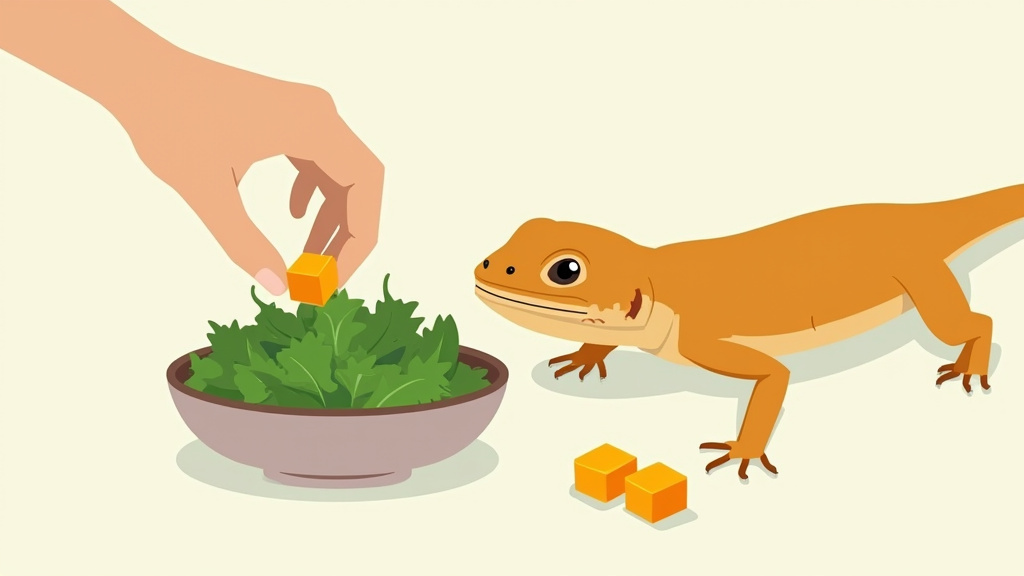
Portion control is everything. An adult bearded dragon should get no more than one or two bite-sized pieces of cooked yam, once a week. For a juvenile (under 12 months), offer half that amount, and only once every two weeks.
Their primary diet should be built around leafy greens. The yam pieces should be mixed into a salad, not served alone. This ensures they still consume their nutritionally complete staples.
Common mistake: Replacing a portion of greens with yams several times a week — this reliably leads to weight gain and a drop in calcium intake within 3–4 weeks, often manifesting as weaker grip strength or less active basking.
What does overfeeding look like? Watch for these signs:
– Change in stool: Unusually soft, watery, or foul-smelling feces. Alternatively, no bowel movement for several days.
– Salad avoidance: The dragon picks out the yam pieces and leaves the greens behind.
– Weight gain: The belly becomes rounder and fuller between the ribs and hips, and the dragon becomes more lethargic.
If you see these signs, eliminate yams and other starchy treats like carrots for two weeks. Revert to a diet of staple greens and appropriate insects. Hydration helps, so offer warm baths to encourage digestion and defecation.
Risks and What to Avoid
The risks extend beyond raw preparation. Several common human preparations are dangerous.
Canned Yams: These are a hard no. They are often packed in syrup with added sugar. They can also contain preservatives like sodium metabisulfite, which is toxic to reptiles.
Candied Yams or Sweet Potato Casserole: These dishes contain butter, sugar, marshmallows, and spices. The dairy, fat, and sugar content can cause severe pancreatitis and digestive shutdown.
Seasoned or Fried Yams: Any amount of salt, garlic, onion powder, or cooking oil is harmful. These ingredients can cause kidney damage, anemia, and fatty liver disease.
Stick to plain, cooked, peeled yam. It’s the only safe version. When building your dragon’s menu, always cross-reference new items with a reliable vegetable feeding guide to ensure balance. For instance, while green beans are a safe occasional vegetable, they shouldn’t replace leafy greens either.
TL;DR: Only feed plain, cooked yam. Anything from a can, casserole dish, or restaurant is a serious health hazard.
Frequently Asked Questions
Can bearded dragons eat yam skin?
No. Yam skin is tough, fibrous, and difficult to digest. It can cause impaction or irritate the digestive tract. Always peel the yam completely before cooking.
Are yams better than sweet potatoes for bearded dragons?
Not significantly. Both require identical preparation. The main difference is vitamin A content in orange sweet potatoes, which requires you to be slightly more cautious with vitamin A supplements. For practical feeding, treat them the same: as rare, cooked treats.
My bearded dragon ate a big piece of raw yam. What should I do?
Monitor closely for the next 48 hours. Ensure the basking temperature is correct (100-110°F) to support digestion. Offer warm baths to promote hydration and bowel movement. Watch for signs of impaction: lethargy, bloating, lack of droppings, or dragging the hind legs. If any symptoms appear, contact an exotic vet immediately.
Can I feed yams to a baby bearded dragon?
You can, but extreme caution is needed. Baby dragons have delicate digestive systems and need protein for growth. If you do, offer a piece half the size of an adult portion, fully cooked and mashed to a soft paste, no more than once a month. Their focus should be on insects and finely chopped staple greens.
Do yams help with a bearded dragon’s digestion?
Not directly. Their high starch content can actually slow digestion. For digestive health, focus on hydration and feeding appropriate high-fiber greens like dandelion greens or endive. Yams do not provide the same fibrous benefit.
The Bottom Line
Yams are a permissible treat, not a food group. The rule is simple: cook it, peel it, dice it small, and feed it rarely.
Their value lies in adding variety, not nutrition. Use them to tempt a picky eater, not to fill the bowl. Always prioritize a balanced diet built on proven staples from a comprehensive safe vegetables list. When in doubt, skip the tuber and offer a piece of bell pepper or some grated zucchini instead. Your dragon’s long-term health depends on what you feed every day, not on the occasional treat.
Stick to the weekly limit, prepare the yam correctly, and you’ll have a happy dragon that enjoys a little extra color in its salad without any of the risks.