
Feeding Asparagus to Bearded Dragons: A Complete Vet Guide
This post contains affiliate links. As an Amazon Associate, we earn from qualifying purchases.
Yes, bearded dragons can eat asparagus, but it is a strict occasional treat, not a staple. You must feed it raw or plain-cooked, chopped into tiny pieces, and limit it to once every two weeks due to its high phosphorus and oxalate content, which can interfere with calcium absorption.
Most owners see a green vegetable and assume it’s automatically healthy. The mistake is treating asparagus like kale or collard greens. It isn’t. This vegetable carries specific nutritional risks that, if ignored, directly contribute to a debilitating and irreversible condition.
This guide covers the exact calcium-to-phosphorus math, shows you how to prepare it safely, and lists the vegetables you should feed instead for a balanced diet.
Key Takeaways
- Asparagus has a calcium-to-phosphorus ratio of roughly 1:2.7, which is backwards for a bearded dragon’s needs and promotes Metabolic Bone Disease (MBD).
- It contains oxalates that bind to calcium in the gut, making it unavailable for your dragon’s skeletal system.
- Feed asparagus at an absolute maximum of once every two weeks, and never to baby or juvenile dragons.
- Always chop it smaller than the space between your dragon’s eyes and mix it with calcium-rich staple greens.
- If you feed asparagus in a given week, avoid other high-oxalate or high-phosphorus treats like bell peppers or broccoli to prevent nutrient overload.
The Nutritional Breakdown: Why Asparagus is Problematic
Headline safety is not the same as dietary suitability. The VCA Animal Hospitals feeding guide lists asparagus as an acceptable food item, but it categorizes it among vegetables that should make up a smaller percentage of the diet. This is a critical distinction.
The primary issue is a dual threat: a poor mineral ratio and antinutrients.
Asparagus contains approximately 24 mg of calcium and 65 mg of phosphorus per 100-gram serving, creating a calcium-to-phosphorus (Ca:P) ratio of about 1:2.7. It also contains oxalic acid, which binds to dietary calcium, forming insoluble calcium oxalate crystals that pass through the digestive system unused.
Bearded dragons require a diet where calcium significantly outweighs phosphorus, ideally a ratio of 1.5:1 or 2:1. A backwards ratio tells the body to pull calcium from its own bones to balance the excess phosphorus in the blood. Combine that with oxalates locking up what little dietary calcium is present, and you have a direct recipe for calcium deficiency.
TL;DR: Asparagus fights calcium absorption twice: first with too much phosphorus, second with calcium-binding oxalates.
How Often Can Bearded Dragons Eat Asparagus?
Frequency is your main control lever. Because the nutritional downsides are cumulative, you must space out servings.
For a healthy adult bearded dragon, offer asparagus no more than once every two weeks. Some sources suggest once a week, but that frequency is risky if you are also feeding other moderate-oxalate foods. I use the two-week rule. It’s simple and creates a safe buffer.
Never feed asparagus to baby or juvenile bearded dragons. Their bodies are allocating over 80% of their dietary calcium to building bone. Introducing a food that actively blocks that process is negligent. Stick to proven, calcium-rich staples for growing dragons.
Common mistake: Feeding asparagus weekly because the dragon seems to like it, within 3-4 months of this pattern, early signs of MBD like softened jawbones or slight limb tremors can appear, especially under UVB bulbs that are past their prime.
Your dragon’s weekly diet should follow a rough template. Here’s how to slot in an occasional treat like asparagus without unbalancing everything.
| Diet Component | Frequency | Example Foods | Notes |
|---|---|---|---|
| Staple Greens | Daily | Collard greens, mustard greens, dandelion greens | Should constitute 80-90% of the vegetable offering. Always dusted with calcium. |
| Other Safe Vegetables | 2-3 times per week | Butternut squash, zucchini, snap peas | Lower in oxalates, better Ca:P ratios than treats. |
| Occasional Treats (e.g., Asparagus) | Once every 2 weeks | Asparagus, bell peppers, broccoli, brussel sprouts | High in oxalates or phosphorus. Never feed two in the same week. |
| Live Insects | As per age schedule | Dubia roaches, crickets, black soldier fly larvae | Always gut-loaded and dusted according to your dragon’s life stage. |
How to Prepare Asparagus for Your Bearded Dragon
Preparation mitigates some physical risks, but it doesn’t fix the underlying chemistry. Your goal is to make it safe to eat and to control the dose.
Before you start: Wash your hands and all surfaces. Reptiles are susceptible to salmonella and other bacteria from produce. The tough ends of asparagus are a choking and impaction hazard, if you skip trimming, the fibrous strands can knot in the gut.
First, select 2-3 fresh, green spears. Avoid any that are wilted or have slimy tips. Rinse them under cool running water, rubbing the surface gently. I use a dedicated produce brush for reptile veggies.
Next, break off the woody end. Hold a spear at both ends and bend it. It will snap naturally at the point where the tough, fibrous part meets the tender stalk. Discard the bottom third. You only want the top, edible portion.
Now, chop. The pieces must be smaller than the space between your dragon’s eyes. For an adult, this is roughly a quarter-inch cube. Use a sharp knife for clean cuts; ragged edges are harder to digest.
You have a choice between raw and cooked.
* Raw: Retains all vitamins but also all oxalates. It’s crunchier, which some dragons prefer.
* Cooked: Steaming or boiling can reduce oxalate content by 15-30%, but it also leaches water-soluble vitamins. If you cook it, do so plainly, no oil, salt, butter, or seasoning. Steam for 3-4 minutes until just fork-tender, then let it cool completely to room temperature.
I steam asparagus for my older dragon because it’s slightly softer for his jaw. The key is the cool-down. Serving it even slightly warm can cause digestive upset.
TL;DR: Wash, snap off the woody end, chop tiny, and serve raw or plain-steamed at room temperature.
What Are the Specific Health Risks?
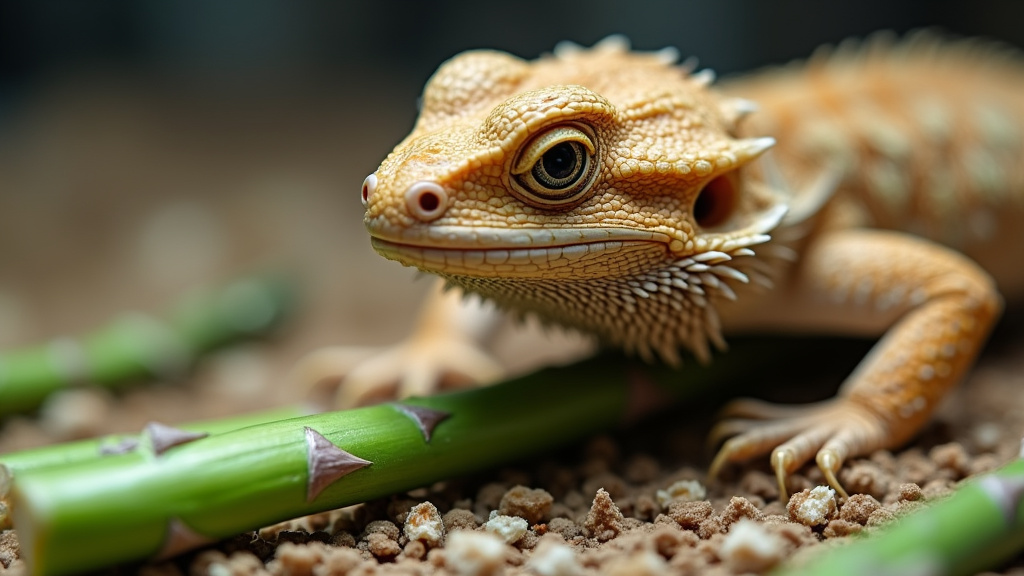
The worst-case outcome of overfeeding asparagus is Metabolic Bone Disease (MBD). It’s a slow, painful crippler. The mechanism is straightforward: chronic calcium deficiency forces the body to resorb calcium from the skeleton, leaving bones soft and rubbery.
Early signs are subtle. You might notice a slight quiver in the fingers when your dragon is reaching. The lower jaw may feel softer when you gently touch it. Later stages are unmistakable: bowed limbs, a curved spine, difficulty walking, and fractures from minimal activity. Treatment involves intensive veterinary care, calcium injections, and dietary overhaul, but some bone deformities are permanent.
Asparagus also presents a hydration problem. It has a diuretic effect in mammals, and while the exact effect on reptiles isn’t documented, the vegetable is not water-dense like cucumber or zucchini. Relying on it for moisture is a mistake. Always provide fresh water via a bowl and regular misting of staple greens.
Finally, there’s the risk of nutritional tunnel vision. An owner feeds asparagus once, the dragon gobbles it up, and they interpret that as “it’s his favorite, so it must be good.” This leads to increasing the frequency and displacing the boring but essential collard greens. The dragon’s diet becomes a series of tasty nutrient blocks.
Better Vegetable Alternatives to Asparagus
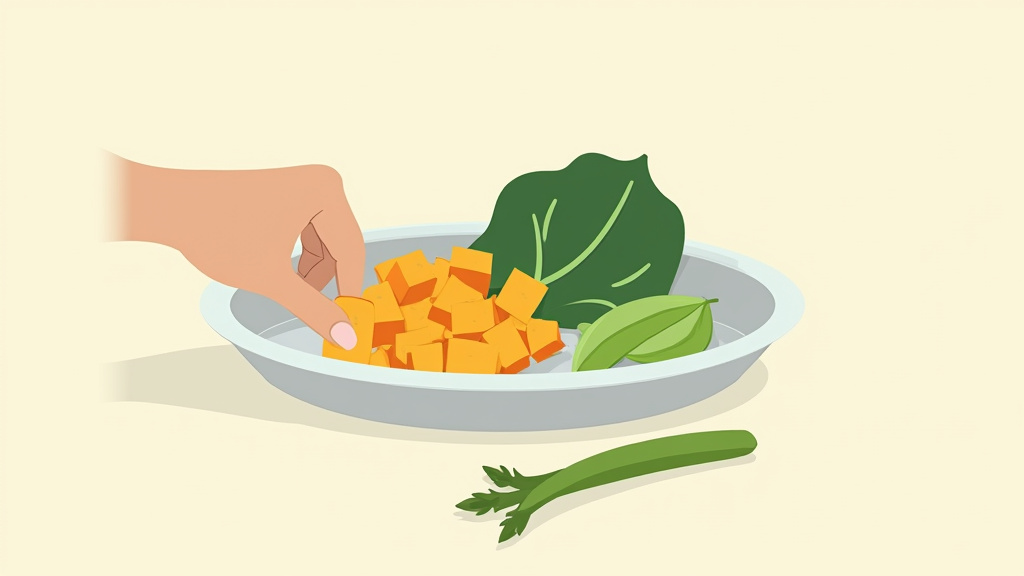
If you want to provide variety, choose vegetables that support your dragon’s health instead of challenging it. A robust list of safe vegetables for bearded dragons is your best resource for building a weekly menu.
For a “treat” that’s still beneficial, consider these options. They have better calcium profiles and lower oxalate levels.
- Butternut Squash: Shredded or cubed. Excellent vitamin A source, good Ca:P ratio.
- Snap Peas: Chopped. A hit of sweetness, some protein, and low oxalates.
- Zucchini: Diced. Very high water content, great for hydration, and virtually no oxalates. Our guide on zucchini covers the ideal preparation.
- Collard Greens: The gold standard. A staple for a reason, high calcium, low oxalates, readily available.
Compare that to other common treats with similar caveats to asparagus. Bell peppers (especially red and yellow) are high in vitamin C but have a poor Ca:P ratio and should also be limited, our article on bell peppers details the safe approach. Broccoli is another occasional item due to its goitrogens, which can interfere with thyroid function if fed too often.
The goal is to rotate a few of these safer options, not to hunt for exotic veggies. Your dragon’s digestive system thrives on consistency with mild variation.
The Critical Role of Calcium Supplementation
When you do feed a high-oxalate food, calcium dusting is not optional, it’s damage control. The powder provides a flood of bioavailable calcium that, hopefully, saturates the system enough that some gets absorbed before the oxalates can bind it all.
Use a plain calcium carbonate powder without added vitamin D3 for most feedings, assuming your dragon has proper UVB lighting. The UVB allows them to synthesize their own D3, which is necessary for calcium absorption. Dust the entire salad, including the asparagus pieces, lightly. A fine coating is sufficient; you shouldn’t see a thick, snowy layer.
For dragons without adequate UVB exposure (which is a separate, serious husbandry issue), you may need a calcium powder with D3 as directed by a vet. This is a common point of confusion. The UVB bulb is non-negotiable. I replace mine every six months, regardless of whether it still lights up, because the UV output decays long before the bulb dies.
Common mistake: Doubling the calcium dose on salads containing asparagus, this doesn’t neutralize the oxalates in the gut and can lead to hypercalcemia over time, causing kidney and vascular issues. Stick to the standard light dusting.
Frequently Asked Questions
Can baby bearded dragons eat asparagus?
No. You should never feed asparagus to baby or juvenile bearded dragons. Their calcium demands for skeletal growth are immense. Introducing a food that inhibits calcium absorption can stunt their growth and set the stage for severe Metabolic Bone Disease before they even reach adulthood.
Is cooked asparagus better than raw for bearded dragons?
Lightly steaming asparagus can reduce its oxalate content by 15-30%, which is a marginal benefit. However, cooking also degrades heat-sensitive vitamins like vitamin C. If you choose to cook it, steam it plainly with no additives and let it cool completely to room temperature before serving. The difference is minor, so raw is perfectly acceptable if it’s prepared correctly.
How much asparagus can I feed at one time?
serving should be 2-3 small, diced pieces mixed into a much larger base of staple greens like collard or mustard greens. The asparagus should constitute no more than 5-10% of the total vegetable offering for that meal. For an adult dragon, this is roughly one tablespoon of chopped asparagus mixed with a cup of greens.
What are the first signs of Metabolic Bone Disease I should watch for?
The earliest signs are often behavioral and subtle: decreased appetite, lethargy, and a slight trembling in the fingers or toes when moving. As it progresses, you may feel softening of the lower jaw (the “rubber jaw” effect) and notice swelling or bowing of the long bones in the legs and arms. If you see any of this, consult an exotic vet immediately and audit your diet and UVB lighting.
Can I feed asparagus if I also feed other treats like broccoli or bell peppers?
You should not. Both broccoli and bell peppers also contain compounds (goitrogens and high phosphorus, respectively) that require moderation. Stacking them with asparagus in the same week creates a compounded nutritional burden. Space these treats out by at least two weeks from each other. For a safer alternative that week, offer zucchini or shredded carrots.
Before You Go
Asparagus is a permissible, not a recommended, food. Its place in your dragon’s diet is on the far fringe, a rare curiosity, not a dietary pillar. The work of feeding it safely (trimming, chopping, scheduling) outweighs any negligible nutritional benefit it provides.
Focus your energy on sourcing fresh, dark leafy greens. Perfect your calcium dusting routine. Monitor your UVB lamp’s replacement schedule like clockwork. Those three habits will do more for your bearded dragon’s long-term health than any occasional treat ever will.
When you do offer asparagus, do it with precision: once a fortnight, a few tiny pieces, always within a mountain of healthier greens. That’s how you provide variety without introducing risk. Your dragon might enjoy the novelty, but its bones will thank you for the restraint.