
Are Bearded Dragons Good Pets? The Real Pros and Cons
This post contains affiliate links. As an Amazon Associate, we earn from qualifying purchases.
Bearded dragons can be excellent pets for the right person, offering a unique blend of docile temperament, interactive behavior, and manageable size. They are good pets if you can provide a large, correctly lit enclosure, a varied diet of insects and vegetables, daily time for care, and a budget for specialized veterinary services over their 7-12 year lifespan.
The mistake most people make is seeing the cute, calm lizard in the pet store and thinking “low maintenance.” They buy a 20-gallon tank, a single heat bulb, and a bag of crickets. Within a year, the dragon is lethargic, its bones are softening, and the owner is facing vet bills that dwarf the initial setup cost. The animal suffers because the commitment was misunderstood.
This guide strips away the marketing. We’ll cover the real daily schedule, the non-negotiable equipment, the common health pitfalls, and the financial reality. You’ll know exactly what “good pet” means for a bearded dragon.
Key Takeaways
- Bearded dragons require a minimum 4x2x2 foot enclosure for an adult, with specific UVB lighting that must be replaced every 6-12 months regardless of whether it still emits visible light.
- Their omnivore diet demands daily fresh vegetables and live insects, which can cost $50-$100 per month; skipping variety causes nutritional deficiencies.
- They are solitary and territorial; housing two together leads to stress, injury, and dominant individuals blocking food access.
- Brumation, a hibernation-like state, can last 2-4 months; during this time they may eat little and sleep deeply, requiring monitoring but not forced feeding.
- Finding an exotics veterinarian before you buy is critical; general pet vets often lack the expertise for reptile-specific issues like metabolic bone disease.
The 5 Core Traits That Define a “Good” Pet
A pet’s suitability isn’t a universal yes or no. It’s a match between its inherent traits and your ability to meet them. For bearded dragons, five traits set the terms of the contract.
Their docile personality is the biggest draw. Central Bearded Dragons (Pogona vitticeps) are typically calm and tolerate handling well. This doesn’t mean they’re inert. They exhibit curiosity, will often watch you move around the room, and can learn to associate you with positive outcomes like feeding. This friendly nature makes them engaging.
They are diurnal, active during the day. This aligns with human schedules, allowing for interaction when you’re home. Their daily activity patterns mean you’ll see them basking, exploring, and eating in your daylight hours, not hiding in a burrow all afternoon.
A healthy bearded dragon rests with its chest and head held upright by its front legs, eyes wide open, and saliva clear. Any deviation—sunken eyes, lethargic sprawl, or stringy mucus in the mouth—is a first-order sign of illness requiring a vet.
Their size is manageable. Adults reach 18-22 inches long. They’re substantial enough to handle confidently but don’t require room-sized enclosures like some large reptiles. This manageable scale is a key part of their popularity.
They are long-lived. A lifespan of 7-12 years, with proper care, means a serious commitment. This isn’t a hamster you’re replacing in two years. It’s a decade-plus relationship that will see you through life changes.
Finally, they are vocal but quiet. They don’t bark or meow. Communication is through body language: head bobbing, arm waving, beard puffing. They may hiss if severely threatened. This makes them excellent for quiet apartments or households sensitive to noise.
The Daily Reality: Time, Cost, and Commitment
The fantasy is a lizard that lounges beautifully on a rock. The reality is a daily checklist of specific tasks. If you can’t integrate this into your routine, the dragon isn’t a good pet for you.
Morning (10-15 minutes):
- Check temperatures: basking spot 95-110°F, cool side 75-85°F.
- Turn on UVB and basking lights (they run 12-14 hours).
- Remove any overnight feces.
- Offer fresh salad (collard greens, bell pepper, squash).
Evening (20+ minutes):
- Feed live insects (Dubia roaches, crickets, silkworms). Juveniles need insects daily; adults get them 2-3 times a week.
- Clean insect debris from enclosure.
- Spot-clean any new waste.
- Observe behavior for signs of illness (lethargy, imbalance).
- Handle/interact if the dragon is receptive.
Weekly (30-60 minutes):
- Full enclosure clean: remove all substrate, wipe down surfaces with reptile-safe disinfectant.
- Replace water.
- Weigh dragon to track growth/health.
- Bath for hydration and potential shedding aid (15-20 mins in shallow warm water).
Monthly/Bi-annually:
- Replace UVB bulb even if it still lights up. UV output degrades unseen after 6-12 months.
- Deep-clean decor items.
- Vet check-ups (annual at minimum).
The financial commitment hits in three waves.
| Cost Phase | Essential Items | Typical Price Range |
|---|---|---|
| Initial Setup | 4x2x2 ft enclosure, UVB fixture + bulb, basking lamp, thermostat, substrate, decor, thermometer/hygrometer | $500 – $800+ |
| Ongoing Monthly | Live insects, fresh vegetables, replacement substrate, electricity for lighting | $50 – $150 |
| Veterinary & Emergency | Annual check-up, parasite treatment, metabolic bone disease care, impaction surgery | $100 – $300+ per visit; emergencies can exceed $1000 |
TL;DR: You will spend 30+ minutes daily and $50+ monthly, with an upfront investment of several hundred dollars. The dragon costs little; its correct environment costs a lot.
Essential Care Requirements You Cannot Skip
This is where “intermediate pet” comes from. Leopard geckos need heat and insects. Bearded dragons need a precise replica of an Australian arid zone.
Enclosure Size: A 20-gallon tank is a death sentence for an adult. It prevents proper thermal gradient and exercise. The Reptifiles care guide, a widely cited authority, mandates a 4x2x2 foot (120-gallon) minimum for adults. Juveniles can start in a 40-gallon, but you must plan the upgrade within 6-8 months.
Lighting: This is the most common fatal error.
– UVB Light: Must be a linear fluorescent tube (like Arcadia 12% or Zoo Med T5 HO 10.0) covering at least half the enclosure length. Compact coil bulbs do not provide adequate UV penetration.
– Basking Light: A simple halogen flood bulb creates the 95-110°F hotspot. Use a thermostat to prevent overheating.
– Both lights must run on a 12-14 hour timer synced with daylight.
Diet: They are omnivores, not insectivores. The ratio shifts with age.
– Juveniles (0-12 months): 70-80% live insects, 20-30% vegetables.
– Adults (12+ months): 50-70% vegetables, 30-50% insects.
– Live insects must be gut-loaded (fed nutritious greens) before offering and dusted with calcium powder (without D3 for daily use, with D3 for weekly use).
– > Common mistake: Feeding only crickets and kale — this lacks nutritional variety and leads to vitamin A deficiency and weak bones. Rotate through Dubia roaches, silkworms, hornworms, and vegetables like collard greens, dandelion greens, and butternut squash.
Temperature & Humidity: Digital probes are mandatory; analog dials are wrong too often.
– Basking surface: 95-110°F
– Cool side ambient: 75-85°F
– Nighttime temp: Can drop to 65-70°F (no light needed).
– Humidity: 30-40%. Over 50% promotes respiratory infections.
Substrate: For beginners, paper towel or slate tile is safest. Loose substrates (sand, soil mixes) can cause impaction if the dragon is unhealthy or fed incorrectly. Once you’re confident in its health and diet, a 50/50 mix of topsoil and playsand can be used for enrichment.
Common Health Issues and Prevention
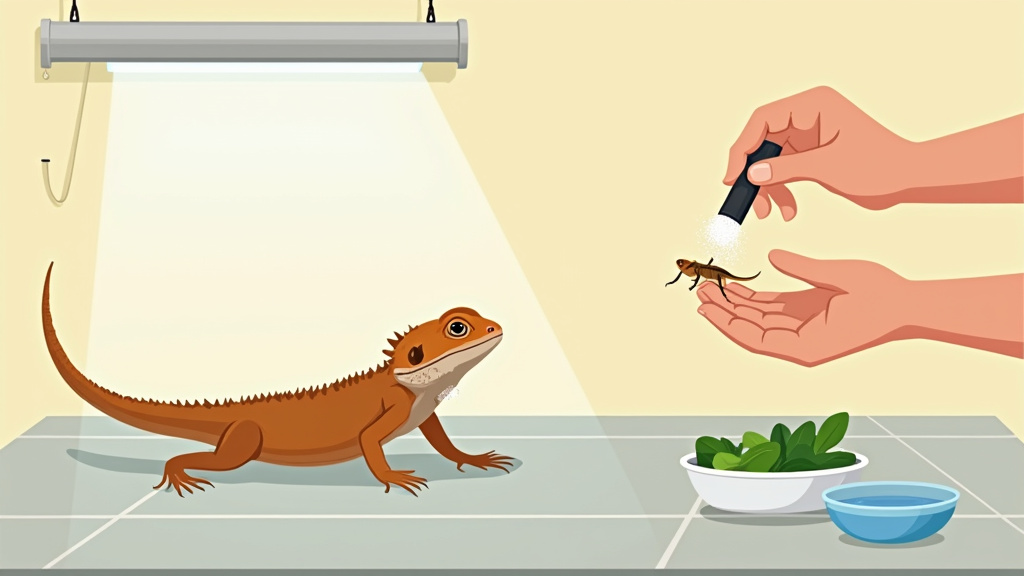
A “good pet” is also a resilient one. Bearded dragons have known health vulnerabilities. Proactive prevention is part of your job.
Metabolic Bone Disease (MBD): The flagship illness of poor care. Causes: insufficient UVB lighting, low dietary calcium. Symptoms: soft jaw, rubbery legs, tremors, spinal deformities. Prevention: correct UVB tube replaced regularly, calcium powder on insects. Treatment: requires vet-prescribed calcium injections and UV correction; advanced cases are often permanent.
Impaction: Bowel blockage. Causes: ingestion of loose substrate, oversized insects, low hydration. Symptoms: no defecation for weeks, bloated abdomen, lethargy. Prevention: proper insect size (no wider than dragon’s eye gap), adequate hydration via baths and veggies, safe substrate choice. Treatment: vet may require enemas or surgery.
Parasites (Pinworms, Coccidia): Common even in captive-bred dragons. Symptoms: watery diarrhea, weight loss despite eating. Prevention: quarantine new insects, clean enclosure regularly. Treatment: vet-prescribed antiparasitic medication (fenbendazole, ponazuril).
Respiratory Infections: Causes: high humidity, cold temperatures, dirty environment. Symptoms: mucus bubbles at nose, wheezing, open-mouth breathing. Prevention: maintain 30-40% humidity, keep cool side above 75°F, clean waste promptly.
Brumation Management: Not an illness, but a natural winter slowdown. They may sleep for weeks, eat rarely, and hide. Do not force feed. Offer water weekly. Keep lights on a reduced schedule (10 hours) to maintain circadian rhythm. Monitor weight; a loss over 10% warrants a vet check to rule out illness masquerading as brumation.
| Symptom | Likely Cause | Action Required |
|---|---|---|
| Stringy saliva, sunken eyes | Dehydration, infection | Vet within 24 hours |
| Lethargy, not basking | Temperature too low, illness | Check temps, then vet if corrected temps don’t revive |
| Black beard persistently | Stress, pain | Vet to diagnose source |
| Loose skin, weight loss | Parasites, malnutrition | Vet for fecal test and dietary review |
TL;DR: Your first line of defense is perfect husbandry. Your second is an exotics vet you’ve already located. Most common issues trace back to a lighting, diet, or hygiene mistake.
Are Bearded Dragons Good Pets for Children?
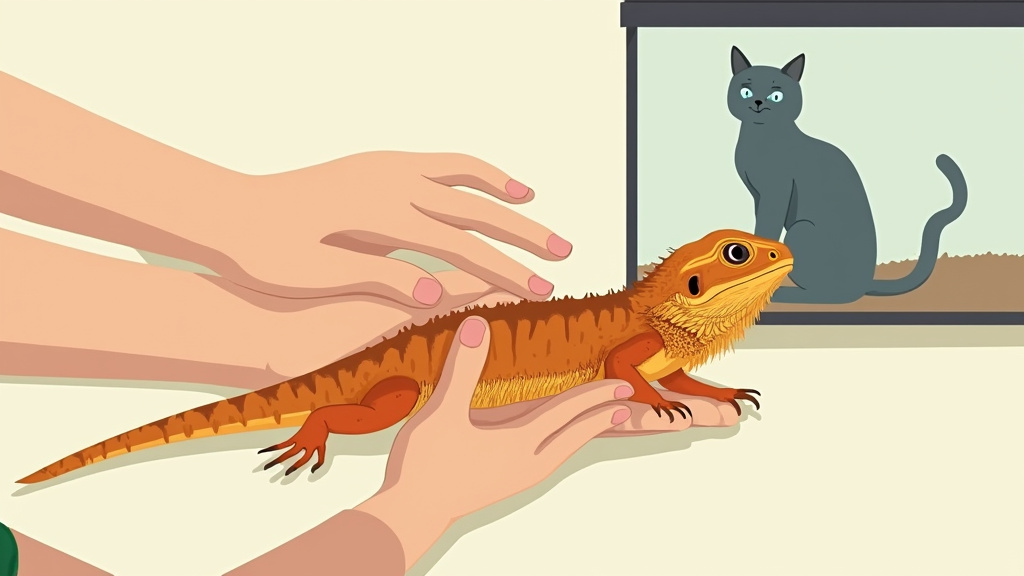
The answer is conditional. For a child under 10, a bearded dragon is a family pet the adults primarily care for. The child can learn gentle handling and observation. For a responsible teenager, it can be an excellent first pet to teach significant responsibilities.
The child must be taught:
– Never grab the tail (it can break off).
– Never squeeze the body.
– Always support the entire belly when holding.
– Wash hands with soap after every handling (Salmonella risk).
– Recognize when the dragon wants to be left alone (black beard, hiding).
Supervision is non-negotiable. A cat or dog in the same household adds complexity. Many dragons become stressed by the predator’s presence, even if the other pet is curious but harmless. This requires careful management of the dragon’s space and the other pet’s access.
The Pros and Cons: A Final Balance Sheet
Let’s stack the advantages against the demands.
Pros:
- Docile and Handleable: Their typical temperament is calm, making them one of the most interactive pet reptiles.
- Day-Active: Aligns with human schedules for enjoyment and care.
- Quiet: No noisy disturbances.
- Long-Lived: Offers a lasting companion relationship.
- Educational: Teaches responsibility, biology, and animal husbandry.
Cons:
- High Initial Cost: The proper setup costs multiples of the animal itself.
- Daily Time Commitment: Feeding, cleaning, and monitoring are not optional.
- Specialized Veterinary Needs: Exotics vets are less common and more expensive.
- Specific, Uncompromising Care: Lighting, temperature, and diet parameters are strict.
- Potential for Serious Health Issues: MBD and impaction are common outcomes of substandard care.
I bought my first bearded dragon with a pet-store “starter kit.” The UVB was a coil bulb, the tank was 20 gallons. After eight months, he started wobbling when he walked. The vet diagnosed early MBD. The treatment cost and the new, correct setup totaled over $700. He recovered, but the guilt of causing that suffering because I followed bad advice changed how I research pet care.
Frequently Asked Questions
Do bearded dragons like to be held?
Most well-socialized bearded dragons tolerate handling well and many come to enjoy it. They seek warmth and may climb onto you to bask. Always let them walk onto your hand rather than grabbing them. A dragon that consistently puffs its black beard and tries to escape handling is stressed; reduce interaction frequency.
Are bearded dragons expensive to keep?
Yes, the ongoing costs are significant. The dragon itself may cost $50-$100. The correct enclosure, lighting, and accessories will cost $500-$800. Monthly food costs for insects and fresh vegetables run $50-$150. Annual vet checks and potential emergencies add further costs. This is not a low-budget pet.
Can I leave my bearded dragon alone for a weekend?
No. They require daily feeding (salad daily, insects regularly), lighting control, and temperature monitoring. A weekend absence risks dehydration, hunger, and temperature drops that can lead to illness. You must arrange for a knowledgeable caregiver.
Do bearded dragons smell bad?
With proper maintenance, they do not produce a strong odor. Their feces have a smell, but prompt removal and regular enclosure cleaning keep it minimal. A foul smell usually indicates a hygiene problem or a health issue like a bacterial infection.
Are bearded dragons good for first-time reptile owners?
They are often recommended as beginner pets, but their care complexity is intermediate. A leopard gecko or corn snake has simpler, more forgiving requirements. A bearded dragon can be a first reptile if the owner commits to extensive research and strict adherence to care guidelines from authoritative sources like the Reptifiles guide.
Before You Go
Bearded dragons are good pets for prepared, committed owners who value a unique interactive companion. They are poor pets for those seeking low maintenance, low cost, or minimal daily involvement.
Your decision should hinge on three verifiable actions:
1. You have read an authoritative essential care guide like Reptifiles and understand every requirement.
2. You have budgeted for the true initial setup ($500+) and monthly food costs ($50+).
3. You have located an exotics veterinarian within a reasonable distance and confirmed they accept reptile patients.
If you can meet those, the decade-plus journey with a bearded dragon can be deeply rewarding. Their docile personality, daily curiosity, and unique behaviors offer a pet experience unlike any cat or dog. If you cannot, consider a simpler reptile. The dragon’s health depends on your readiness.