Bearded Dragon Head Bobbing: What It Means & When to Worry
This post contains affiliate links. As an Amazon Associate, we earn from qualifying purchases.
Bearded dragon head bobbing behavior is a primary form of communication, signaling dominance, mating interest, curiosity, or stress. The meaning depends entirely on the speed of the bob, the context, and the accompanying body language like a black beard or arm waving. Fast, forceful bobs are assertive; slow, subtle bobs are often inquisitive or submissive.
Most owners panic the first time they see it. They assume their calm pet has suddenly turned aggressive or is having a seizure. That fear makes them miss the other clues that tell the real story.
This guide breaks down every type of head bob, from the macho display of a hormonal male to the quiet curiosity of a surveying female. You will learn how to read the speed, spot the triggers, and know the exact moment a normal behavior crosses into a veterinary red flag.
Key Takeaways
- Head bobbing is normal dragon language, not a default sign of illness. Fast bobs assert dominance or court mates; slow bobs show curiosity or submission.
- A black beard combined with rapid bobbing usually means territorial stress or high hormones, especially during spring mating season.
- Head bobbing at reflections is common because the dragon sees a rival. Cover the glass with a non-reflective background.
- Bobbing becomes a problem when paired with other symptoms: lethargy, appetite loss, glass surfing, or most critically, tremors and loss of balance.
- The first response to concerning bobbing is a full husbandry check, correct temperature, UVB, and hiding spots fix many stress-related displays.
What Does Fast vs. Slow Head Bobbing Mean?
Speed is the first decoder. A rapid, piston-like bob carries a completely different message from a lazy, almost thoughtful dip of the head.
Fast head bobbing is an assertive statement. It is the beardie equivalent of a chest-thump. Males use it to claim territory, warn off rivals, or impress a female. You will see the entire front half of the body lift with each forceful bob. The beard often darkens. This is the behavior in those viral videos where a dragon looks like it’s revving up for a fight.
A rapid head bob in a male bearded dragon, especially with a flared and darkened beard, is a definitive dominance display. It functions as a territorial claim over resources like basking spots and food, and as a courtship signal to females.
Slow head bobbing is more nuanced. It can be a sign of curiosity, your dragon surveying a new item in the room or trying to get a better look at you. It is also a common submissive gesture, particularly from females or younger dragons toward a more dominant cage mate or owner. A slow, rhythmic bob without a black beard is usually a calm behavior.
TL;DR: Fast bobs are loud declarations of “this is mine” or “look at me.” Slow bobs are quiet questions of “what’s that?” or polite acknowledgments of “you’re the boss.”
The 5 Common Reasons for Head Bobbing (And How to Tell Them Apart)
Context turns a simple bob into a sentence. Here are the five scenarios where you will see it, and the specific clues for each.
- Territorial Display. This is the most common reason for fast bobbing in males. The trigger is often the sight of another bearded dragon, their own reflection, or even a distant movement perceived as a threat. The body language is stiff, the beard is usually black, and the dragon may even puff up its body to look larger. It is a warning shot.
- Mating Ritual. During breeding season (typically spring), males become relentless bobbers. The display is exaggerated and persistent, directed at anything, walls, furniture, you. It is often accompanied by a constant black beard and obsessive pacing. Females may respond with slow, subtle bobs and an arm wave to signal receptiveness.
- Exploratory or Curious Surveying. This is the harmless one. Your dragon hears a new sound or sees a shadow and gives a few slow, deliberate bobs to triangulate. The body is relaxed, the beard is normal, and the dragon often returns to basking afterward. It is simply using head movement to gauge distance and interest.
- Establishing Social Hierarchy. In multi-dragon setups (which are generally not recommended), head bobbing establishes the pecking order. The dominant dragon bobs fast and hard; the submissive one responds with slow bobs and arm waving. This is constant, stressful communication, not a one-off event.
- Stress or Agitation. This is where normal communication tips into a problem. The bobbing is frequent, seems out of context, and is paired with other stress signs: a persistent black beard, frantic glass surfing, hiding, or refusing food. The trigger is usually a poor environment, wrong temperatures, lack of hides, or too much activity around the tank.
| Behavior Context | Typical Bob Speed | Key Accompanying Signs | Owner Action |
|---|---|---|---|
| Territorial Claim | Fast, forceful | Black beard, puffed body, staring at threat | Remove visual trigger (cover glass) |
| Courtship Display | Very fast, rhythmic | Constant black beard, pacing, tail twitching | Ride out seasonal hormones; ensure proper nutrition |
| Curiosity | Slow, deliberate | Normal beard, relaxed posture, focused gaze | None needed; normal behavior |
| Submission | Slow, subtle | May include arm waving, retreating | Ensure no bullying in shared enclosures |
| Agitation/Stress | Variable, often fast | Black beard, glass surfing, loss of appetite | Perform full husbandry check for temps, UVB, and hides |
When Head Bobbing Signals a Problem
Head bobbing itself is not a disease. It becomes a symptom when it is a new behavior for your dragon or when it arrives with a cohort of other worrying signs. The shift from “talking” to “crying for help” is obvious if you know the checklist.
The first red flag is a change in baseline behavior. A normally placid dragon that starts bobbing aggressively every day is telling you something is wrong. Pair that bobbing with a black beard that doesn’t fade, and you have a stressed animal.
Common mistake: Dismissing springtime head bobbing as “just mating behavior” when it’s paired with a complete refusal to eat for over a week. Hormonal drives are strong, but anorexia is not a normal part of the ritual and can lead to rapid weight loss.
The most critical warning signs are neurological. If the head movement looks less like a deliberate bob and more like a tremor, shake, or seizure, this is a veterinary emergency. Similarly, if the dragon is bobbing and also tilting its head, circling, or falling over, the problem is likely an inner ear infection, injury, or metabolic issue like Metabolic Bone Disease from poor UVB exposure.
Here is a diagnostic table for when to move from observation to action.
| Symptom Cluster | Possible Cause | Urgency | Action Plan |
|---|---|---|---|
| New fast bobbing + black beard + glass surfing | Environmental stress (improper temps, reflections, overcrowding) | Moderate (Address within days) | Do a full husbandry audit. Cover tank sides, check thermometer readings, add more hides. |
| Persistent bobbing + constant black beard + no eating (Spring) | Intense hormonal mating drive | Moderate to High | Ensure hydration. Offer favorite foods. Vet visit if weight drops >10% or lethargy sets in. |
| Bobbing + lethargy + swollen jaw/limbs + weakness | Metabolic Bone Disease (MBD) | High (Schedule vet within 48 hrs) | Vet for calcium injection & X-ray. Immediately verify UVB bulb is correct type and not expired. |
| Erratic bobbing/tremors + head tilt + loss of balance | Neurological issue (infection, trauma, toxicity) | Emergency (Go now) | Seek an exotic vet immediately. This will not resolve on its own and can deteriorate quickly. |
| Bobbing + gaping mouth + wheezing/ mucus | Respiratory Infection | High (Schedule vet within 24-48 hrs) | Vet for antibiotics. Check basking and cool-side temps; ensure enclosure is not damp or cold. |
How to Respond to Normal (But Annoying) Head Bobbing
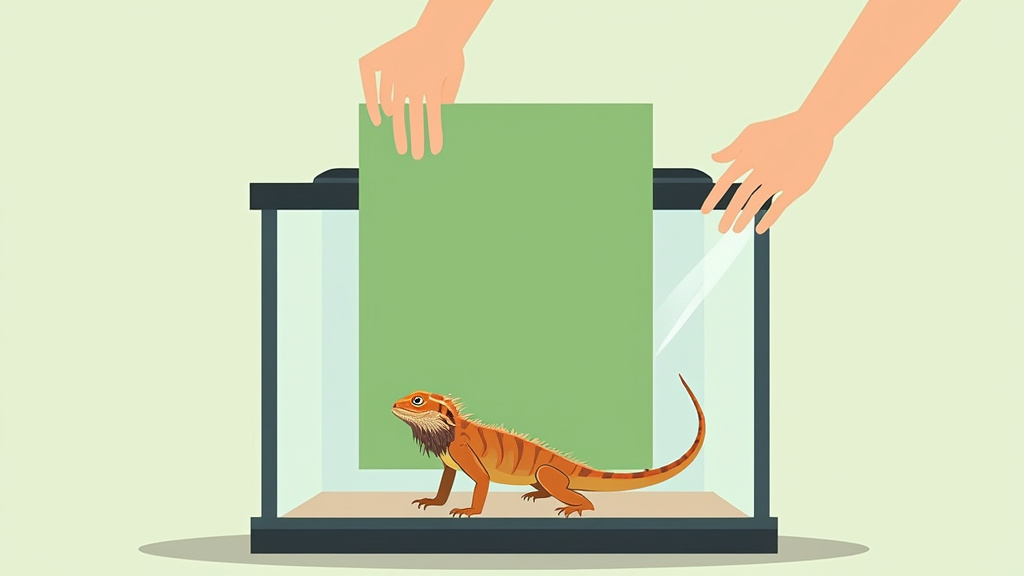
For behaviors that are natural but disruptive, like a male bob-bombing his tank all spring, your job is management, not cure. You cannot turn off his hormones, but you can reduce the triggers that amplify the behavior.
Start with the environment. Reflective glass is public enemy number one. A dragon seeing its own reflection will interpret it as a rival and bob incessantly to drive it away. Apply a static-cling background or poster to the outside of the tank walls. This single step can eliminate 80% of territorial bobbing in solo dragons.
Next, assess the tank’s location. Is it in a high-traffic hallway where people, dogs, or other pets constantly pass by? Each passing shape can be seen as a threat. Relocate the enclosure to a quieter, low-traffic area where the dragon can observe without feeling besieged.
For the dragon lost in mating season fervor, focus on support. Increase hydration by offering water via dropper or fresh baths. Keep offering food, even if he refuses salads; try irresistible treats like hornworms to keep calories coming in. This phase is exhausting for them. Do not handle him excessively, as this adds stress. Let the hormone surge burn itself out over a few weeks.
TL;DR: Cover the glass, move the tank to a calm spot, and support the dragon’s basic needs through hormonal phases. You are reducing stressors, not training the behavior out.
The Female Head Bob: Subtle but Significant
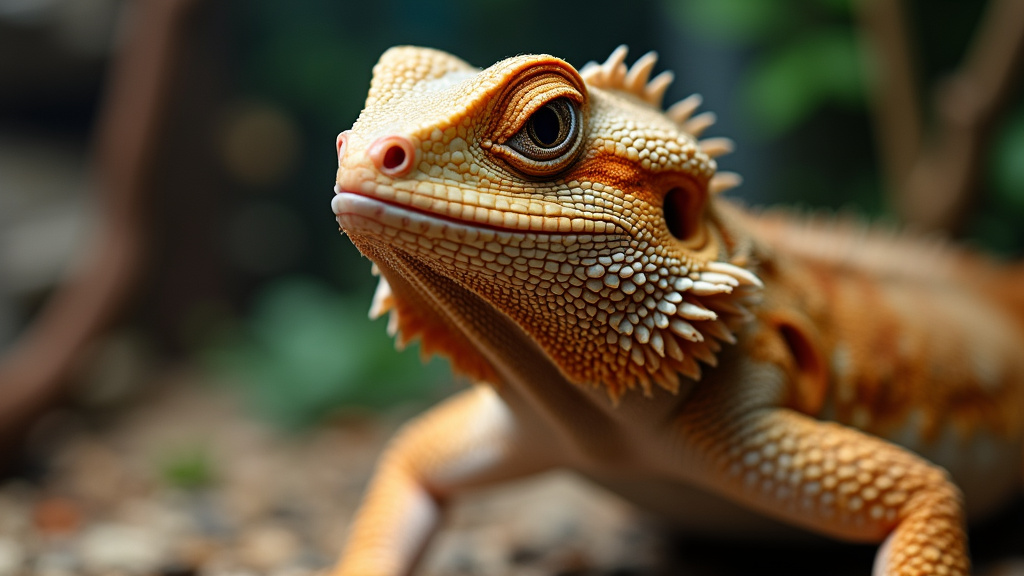
Female head bobbing is often overlooked or mislabeled as “weaker” male behavior. It is its own distinct communication. While females can and do display territorial fast bobs, especially toward other females, their bobbing is frequently more contextual.
A female may give a few slow, deliberate bobs when you approach the tank. This is often a recognition signal, not submission. She is acknowledging your presence. During interactions with a male, a receptive female will combine very slow head bobs with a distinct arm waving motion, a clear “I am not a threat” gesture that can escalate to mating.
However, sudden, new head bobbing in a female can be a more serious sign than in a male. It is a less common default behavior for them. If your female starts bobbing aggressively, immediately check for gravid (egg-bearing) behavior like frantic digging. She may be stressed by a lack of a suitable egg-laying site. Also consider the possibility of follicular stasis, a condition where eggs develop but are not laid, causing discomfort and behavioral changes.
Preventing Stress-Induced Bobbing: The Husbandry Checklist
The best way to deal with problem bobbing is to prevent the stress that causes it. Almost all non-hormonal, non-communicative bobbing stems from a flaw in the dragon’s living conditions. Run through this list every month.
- Temperatures: Basking spot surface temp 95-110°F (35-43°C), measured with a digital infrared thermometer. Cool side 75-85°F (24-29°C). A too-cold dragon is a stressed, inactive dragon.
- UVB Lighting: A tube-style UVB light (10.0 or 12% output) spanning 2/3 of the enclosure, mounted inside the screen or according to manufacturer distance guidelines. Replace it every 6 months for T5 bulbs, 12 months for T8. This is non-negotiable for mental and physical health.
- Hiding Places: At least one snug hide on the warm side and one on the cool side. Dragons need to retreat from view to feel secure. Lack of hides creates chronic anxiety.
- Diet and Hydration: A varied diet of appropriate greens and live insects, dusted with calcium and vitamins. Regular soaks or water bowl access. Malnutrition is a direct stressor.
- Enclosure Size: A minimum of a 120-gallon (4’x2’x2′) tank for an adult. Cramped space is a direct trigger for territorial frustration and repetitive enclosure behavior.
When you fix these, you fix the dragon’s world. The need to bob from agitation plummets.
Frequently Asked Questions
Why is my bearded dragon head bobbing at nothing?
It is almost never at “nothing.” The most common culprit is its own reflection in the glass. Other triggers include subtle vibrations, shadows from a window, or the sight of a small insect on the outside of the tank. It is a territorial or curious response to a stimulus you might not perceive.
Is head bobbing during sleep normal?
Small, occasional head bobs during sleep are normal, usually as the dragon drifts between sleep cycles. However, full, awake-style bobbing while the eyes are closed is rare. If it is vigorous or frequent, it could indicate discomfort or a low-grade seizure activity, and warrants a vet check.
My dragon head bobs and turns black. Should I be worried?
This combination is the classic sign of high arousal, either from territorial defense, mating drive, or significant stress. Context is key. If it happens for a few minutes when he sees his reflection and then stops, it’s normal. If the black beard persists for hours or days alongside the bobbing, it indicates chronic stress or illness that needs investigation.
Can female bearded dragons head bob?
Absolutely. Females head bob for all the same reasons males do, territory, curiosity, stress, though often with less frequency and force. Slow bobbing combined with arm waving is a particularly female social signal, often used in courtship or submission.
How do I stop my bearded dragon from head bobbing?
You do not stop normal communication. For stress-related bobbing, you stop the trigger. Cover reflective surfaces, ensure proper husbandry, and provide a secure, quiet environment. For hormonal bobbing, you must wait out the seasonal cycle while supporting the dragon’s health.
When is head bobbing a sign of illness?
When it is a new behavior for that individual and is accompanied by other symptoms: lethargy, loss of appetite, weight loss, labored breathing, tremors instead of deliberate bobs, or discharge from the mouth or nose. Any head bobbing that looks like a seizure requires immediate veterinary attention.
The Bottom Line
Head bobbing is your bearded dragon’s native language. Your job is not to silence it, but to become fluent. Listen to the speed, fast for declarations, slow for questions. Watch the accompanying body like a hawk, especially for that black beard. And always, always let the dragon’s overall health and environment be your guide.
Most bouts are just dragon talk. But when that talk becomes a scream of stress or a whisper of illness, your informed response is what matters. Check the tank, cover the glass, support them through the hormonal spring. And never hesitate to call a reptile vet when the story the bobs are telling shifts from communication to crisis.