
Can Bearded Dragons Eat Parsley? The Safe Feeding Guide
This post contains affiliate links. As an Amazon Associate, we earn from qualifying purchases.
Yes, bearded dragons can eat parsley, but it must be a minor, occasional component of a varied diet. Feed a teaspoon of finely chopped leaves mixed into a base of staple greens no more than once a week for adults, and even less often for juveniles. The primary risk is its high oxalate content, which can bind to calcium and contribute to nutritional deficiencies over time.
Most owners get this wrong by focusing on parsley’s vitamin content and ignoring the oxalates. They treat it like a staple green instead of a potent garnish. That mistake can quietly undermine your dragon’s calcium balance.
This guide breaks down the exact trade-off, shows you how to prepare it safely, and explains the long-term consequences of getting the frequency wrong.
Key Takeaways
- Parsley is safe only as a weekly garnish, not a daily green, due to high oxalates that bind dietary calcium.
- Its excellent calcium-to-phosphorus ratio (up to 3.2:1) is beneficial, but the oxalates negate much of that calcium’s availability.
- Always mix a teaspoon of chopped parsley into a larger base of low-oxalate staple greens like collard or dandelion.
- Never feed the root, which is toxic, and avoid any parsley seasoned with oils, salt, or garlic.
- For dragons with a history of Metabolic Bone Disease or kidney issues, skip parsley entirely and consult a vet.
The Parsley Dilemma: Nutrients vs. Oxalates
Parsley sits in a frustrating category for reptile keepers. Its nutrient profile looks fantastic on paper. A 100-gram serving packs a serious punch of vitamin K, vitamin A (from beta-carotene), vitamin C, and trace minerals like iron and potassium. More importantly, it boasts a calcium-to-phosphorus ratio between 2.4:1 and 3.2:1. For a breeding female or a growing juvenile, that ratio is textbook perfect.
The problem is the oxalates.
Parsley contains between 100–200 mg of oxalates per 100-gram serving, placing it in the high-oxalate category for reptile diets. These organic acids bind to calcium in the digestive tract, forming insoluble calcium oxalate crystals that pass through the system unused, effectively robbing your dragon of available calcium.
This binding action is why you can’t rely on parsley’s good Ca:P ratio. The calcium is present, but a significant portion gets locked up before the bloodstream can absorb it. Long-term, frequent feeding creates a calcium deficit. That deficit is the direct pathway to Metabolic Bone Disease (MBD), a debilitating condition that softens bones and leads to deformities.
TL;DR: Parsley’s good nutrients are real, but its high oxalate content acts as a calcium thief. You must account for that theft in your overall feeding plan.
How to Prepare and Feed Parsley Safely
The goal is to deliver the flavor and micronutrient boost without delivering a problematic dose of oxalates. The sequence matters.
First, select a fresh bunch. Curly parsley is more common, but Italian (flat-leaf) parsley has a slightly stronger flavor some dragons prefer. Avoid any bunches with wilted, slimy, or yellowing leaves. Give it a thorough rinse under cool running water for at least 30 seconds. The water should flow over every leaf surface. Pesticide residue is the hidden threat here, and a quick dunk won’t remove it.
Pat the leaves dry with a paper towel or use a salad spinner. Wet greens spoil faster in the enclosure and can encourage bacterial growth. Now, chop. Use a sharp knife or herb scissors to mince the leaves into pieces no larger than the space between your dragon’s eyes. This prevents choking and makes it easier to mix evenly.
Common mistake: Adding parsley as a separate pile on top of the salad. This lets a picky eater consume only parsley, concentrating the oxalate dose. Always mix it in thoroughly so it’s inseparable from the staple greens.
The final, non-negotiable step is mixing. Sprinkle no more than one teaspoon of your chopped parsley over a hearty base of staple greens like collard greens or mustard greens. The parsley should constitute less than 15% of the total green volume in the bowl. This dilution is your primary defense against oxalate overload.
Parsley Feeding Frequency: A Schedule That Works
How often is “occasional”? The answer splits by life stage and health status. For a healthy adult bearded dragon, once a week is the safe ceiling. Some conservative guides, noting the oxalate load, recommend pulling that back to once every two weeks. I lean toward the weekly mark for a healthy adult, provided the rest of their diet is impeccable.
For juveniles under one year, the stakes are higher. They are building bone mass at a rapid rate and cannot afford any calcium disruption. For them, parsley is a once-a-month treat at most. Better yet, wait until they’re adults.
The schedule changes completely for dragons with existing health concerns.
| Dragon Status | Recommended Parsley Frequency | Critical Reason |
|---|---|---|
| Healthy Adult | Once per week | Allows micronutrient variety without cumulative oxalate buildup. |
| Juvenile (<12 mo) | Once per month (or avoid) | Growing bones are too vulnerable to calcium binding. |
| History of MBD | Avoid | Their calcium balance is already compromised; any binding agent risks relapse. |
| Kidney Issues | Avoid | Their system may struggle to process and excrete calcium oxalate crystals. |
If your dragon falls into the “avoid” category, don’t feel like they’re missing out. Plenty of other safe herbs for bearded dragons like basil offer flavor without the same oxalate burden.
TL;DR: Healthy adults get a weekly teaspoon; juveniles get a monthly pinch; dragons with MBD or kidney issues get none.
What Happens If You Feed Too Much Parsley?

The consequences aren’t immediate. You won’t see acute toxicity. Instead, you get a slow, insidious drain on your dragon’s health. The first sign is often a subtle change in their eating habits for their staple salad. They might pick around the collard greens to get to the parsley, having developed a taste for the stronger herb.
Within a few weeks of overfeeding, the calcium binding starts to show its effects. You might notice weaker-looking stools or a slight decrease in activity. The real damage is internal. Blood calcium levels begin to dip. The body then pulls calcium from its largest reservoir: the bones.
This is the onset of Nutritional Secondary Hyperparathyroidism, the clinical name for MBD. The physical signs follow—softening of the jaw (rubber jaw), tremors in the limbs, difficulty climbing, and eventually visible bone deformities like kinks in the tail or spine.
I used parsley as a “healthy green” daily for a rescued adult named Spikes for about three months. His previous diet was awful, and I was trying to pack in nutrients. He stopped climbing his basking log. An X-ray showed the early stages of bone demineralization. We cut the parsley, upped his UVB exposure, and used a liquid calcium supplement. It took six months for his strength to return. That mistake cost him half a year of his life.
The other risk is nephrolithiasis—kidney stones. Calcium oxalate crystals can form in the kidneys, especially if the dragon is chronically dehydrated. This is a more silent, painful condition often only discovered during a veterinary exam or at a severe stage.
Curly vs. Italian Parsley: Is There a Better Choice?
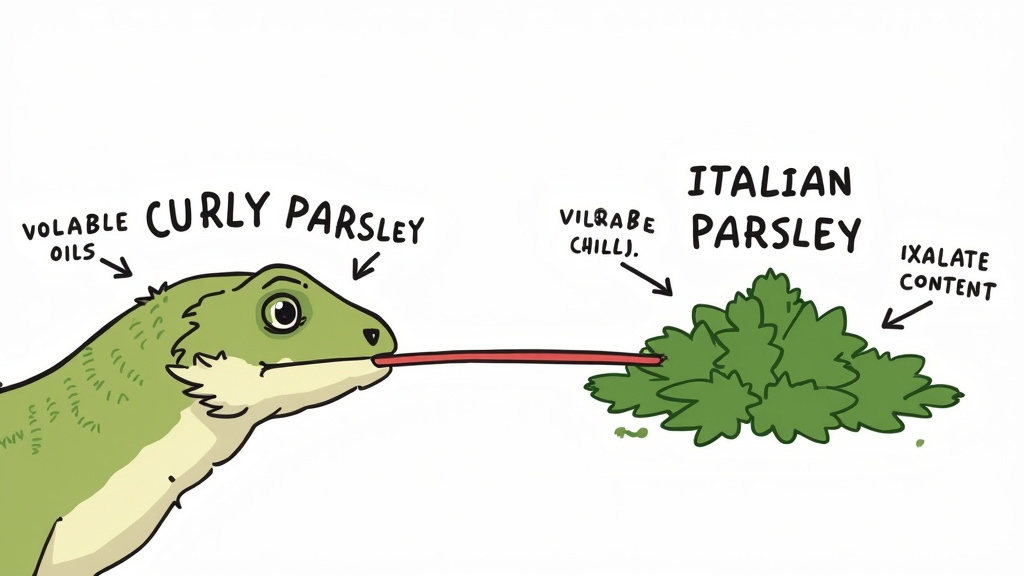
You’ll find both varieties in the grocery store. From a purely nutritional standpoint, the difference is minor but worth noting. Italian parsley tends to have a slightly higher concentration of certain volatile oils, giving it that more robust, peppery flavor. Some dragons show a clear preference.
The oxalate content is comparable, though some analyses suggest curly parsley might be marginally higher. The difference isn’t significant enough to make one “safe” and the other “dangerous.” The controlling factor is always the amount you feed, not the subtype.
The more important choice is between parsley and other herb options.
| Herb | Oxalate Level | Best Trait | Feeding Frequency |
|---|---|---|---|
| Parsley | High | Excellent Ca:P ratio, Vitamin K | Occasional (weekly) |
| Basil | Low | Rich in antioxidants, appealing aroma | 2-3 times per week |
| Cilantro | Low | Natural detoxifier, high vitamin A | 2-3 times per week |
| Mint | Moderate | Digestive aid, strong flavor | Rare treat (bi-weekly) |
As the table shows, herbs such as cilantro and basil are far more permissive in a weekly diet. Use parsley for its specific micronutrients, not as your go-to herb.
Building a Balanced Salad with Parsley
Parsley should never be the star. It’s a supporting actor. A balanced salad for an adult bearded dragon might look like this:
1. Base (70%): Two large leaves of chopped collard greens or a handful of dandelion greens.
2. Secondary Greens (20%): A few sprigs of shredded mustard greens or turnip greens.
3. Accent & Color (10%): One teaspoon of finely chopped parsley, plus a couple of grated carrot shreds or a single blueberry.
4. Supplementation: A light dusting of calcium powder (without D3 if using proper UVB) over the entire salad.
This structure ensures the oxalates from the parsley are overwhelmed by the abundant, bioavailable calcium from the staple greens and the powder. It’s the dietary equivalent of dilution as a solution to pollution.
Always wash all components, even pre-washed greens. Chop everything to an appropriate size. And remove uneaten salad after 2-3 hours to prevent spoilage.
Frequently Asked Questions
Can baby bearded dragons eat parsley?
No. Avoid feeding parsley to babies and juveniles. Their rapid growth makes them exceptionally vulnerable to calcium deficiency. The risk from oxalates far outweighs any potential benefit. Stick to proven staple greens and appropriate calcium supplementation.
Is dried or cooked parsley safe?
No. Dried parsley is concentrated, making portion control nearly impossible and often containing added preservatives. Cooking breaks down some nutrients and can concentrate oxalates. Only offer fresh, raw, thoroughly washed parsley leaves.
What are the signs my dragon ate too much parsley?
Watch for decreased appetite for their regular greens, lethargy, and weaker or unusually smelly stools. More advanced signs include tremors, soft jaw, or difficulty walking. If you see these, remove all parsley from the diet immediately and consult a reptile veterinarian.
Can parsley help a constipated bearded dragon?
Not reliably. While the fiber can aid digestion, the oxalates could potentially complicate matters. A safer choice for mild constipation is a drop of olive oil on the nose to lick or a warm bath. For persistent issues, see a vet.
What are good parsley substitutes?
Basil, cilantro, and a small amount of mint are excellent lower-oxalate alternatives. For a nutrient-packed green that’s a true staple, focus on collard greens, mustard greens, and turnip greens.
Can bearded dragons eat parsley stems?
The thin, tender stems attached to the leaves are generally fine when chopped small. However, avoid the thick, central stems and never, ever feed the root. The root contains higher concentrations of potentially toxic compounds called furanocoumarins.
The Bottom Line
Parsley isn’t a forbidden food, but it demands respect. Treat it as a potent seasoning—a tiny bit adds interest, too much ruins the dish. That weekly teaspoon mixed into a robust base of staple greens is the safe, effective way to use it.
The moment you start thinking of it as a “green” instead of a “garnish,” you’re on the path to nutritional trouble. Your dragon’s long-term bone health depends on a calcium-positive diet. Parsley, fed correctly, can be a small part of that. Fed incorrectly, it becomes a slow-acting antagonist.
Stick to the schedule, prioritize low-oxalate staples, and always observe your dragon’s response. Their health is built one careful meal at a time.