
Are Bearded Dragons Nocturnal? Diurnal Sleep Cycle Facts
This post contains affiliate links. As an Amazon Associate, we earn from qualifying purchases.
Bearded dragons are not nocturnal. They are strictly diurnal reptiles, meaning they are active during daylight hours and require a period of complete darkness to sleep at night. In captivity, this means providing 10-12 hours of bright light and UVB followed by 12-14 hours of uninterrupted darkness, with ambient heat maintained by a lightless source like a ceramic heat emitter.
Most new owners get this wrong because they see their dragon resting with its eyes closed during the day and assume it’s just a lazy pet. That daytime “laziness” is almost always a sign of incorrect lighting, temperatures, or a disrupted circadian rhythm, not natural behavior. A dragon sleeping in daylight is a dragon telling you its world is out of sync.
This guide breaks down the science of bearded dragon sleep, explains how to replicate their natural day-night cycle, and details what to do, and what never to do, if you see unusual nighttime activity. We’ll cover the lighting setup that prevents stress, the temperature drop they need, and the health red flags that masquerade as simple insomnia.
Key Takeaways
- Bearded dragons are diurnal and require absolute darkness to trigger sleep; any light at night disrupts their circadian rhythm and leads to chronic stress.
- They experience both REM and non-REM sleep in short, 2-3 minute cycles repeated hundreds of times per night, a finding from bearded dragon sleep research.
- Nighttime heat must come from a lightless source like a ceramic heat emitter; colored “night lights” are harmful and disrupt sleep.
- Unusual nighttime activity is a major red flag, pointing to environmental stress, incorrect temperatures, or underlying illness, not natural curiosity.
- A consistent photoperiod is non-negotiable. Use a timer for lights to guarantee 10-12 hours on, 12-14 hours off, every single day.
Are Bearded Dragons Nocturnal? The Straight Answer
No. Bearded dragons (Pogona vitticeps) are diurnal reptiles. Their entire physiology and behavior are tuned to the sun’s schedule. In the Australian deserts they call home, they emerge at dawn to bask, forage for insects and greens, and engage in social behaviors. As dusk falls, they seek shelter in burrows or under rocks, where they remain inactive until morning.
This isn’t a preference, it’s a biological imperative. Their ectothermic (cold-blooded) metabolism depends on external heat to function. They must bask under a sun-equivalent (your basking lamp) to reach their core operating temperature, which aids digestion, immune function, and activity. A nocturnal lifestyle would be metabolically impossible for them in the wild. Providing a proper bearded dragon photoperiod in captivity is the cornerstone of mimicking this natural cycle.
Bearded dragons are diurnal, sun‑basking reptiles endemic to Australia. They are active during daylight hours, relying on external heat sources to regulate their body temperature, and require a daily cycle of light and darkness to maintain healthy circadian rhythms, as outlined in their species profile from National Geographic.
TL;DR: They are daytime animals. Any significant activity after lights out is a problem you need to diagnose.
The Science of Bearded Dragon Sleep
Their sleep is more complex than just “lights out, dragon sleeps.” Research from the Max Planck Institute for Brain Research shows bearded dragons experience two distinct sleep stages: slow-wave sleep (non-REM) and rapid eye movement (REM) sleep. This mirrors the sleep architecture of mammals and birds.
The cycle is incredibly short. They transition through these stages in bursts of just 2 to 3 minutes, repeating the pattern about 300 times over a full night’s rest. This might be an evolutionary adaptation for a vulnerable animal sleeping in the open, frequent, shallow sleep cycles allow for quicker arousal if threatened.
During deep sleep, you might see slight twitching, especially in their toes or beard. REM sleep is when more pronounced movements occur. This structured sleep is vital for cognitive function and health. Disrupting it with light or poor temperatures doesn’t just make them tired, it compromises their immune system.
| Sleep Stage | Physical Signs | Brain Activity | Purpose |
|---|---|---|---|
| Non-REM (Slow-Wave) | Very still, eyes closed, breathing steady. | Synchronized, slow brain waves. | Physical restoration, energy conservation. |
| REM (Rapid Eye Movement) | Twitching eyelids, slight limb or beard jerks. | Fast, desynchronized waves similar to waking. | Memory consolidation, neural processing. |
| Sleep Cycle | A 2-3 minute loop of Non-REM → REM → brief arousal. | Repeats ~300 times per night. | Allows light sleep for environmental awareness. |
Why Getting the Light Cycle Wrong Hurts Your Dragon
The most common mistake in bearded dragon husbandry is mismanaging light. Their pineal gland, sensitive to light, regulates hormone production for sleep, appetite, and stress. Light at night suppresses melatonin and spikes cortisol.
Common mistake: Using red or blue “night lights” for heat, these wavelengths are still visible to reptiles and completely disrupt melatonin production, leading to chronic sleep deprivation and stress within a week.
The consequences are cumulative and serious:
1. Chronic Stress: Elevated cortisol weakens the immune system. Your dragon becomes susceptible to infections and parasites it would normally fight off.
2. Lethargy & Appetite Loss: A tired dragon is an inactive dragon. You’ll see a lack of interest in food and exploration, classic signs of lethargy.
3. Metabolic Disruption: Improper light cycles can confuse their system, potentially disrupting natural processes like bearded dragon shedding or triggering off-cycle bearded dragon brumation.
Ambient light pollution is a silent culprit. Streetlights, a bright digital clock, or a hallway light seeping into the room can be enough to fragment their sleep. The enclosure must be in a room that gets truly dark.
The 5-Step Setup for Perfect Dragon Sleep
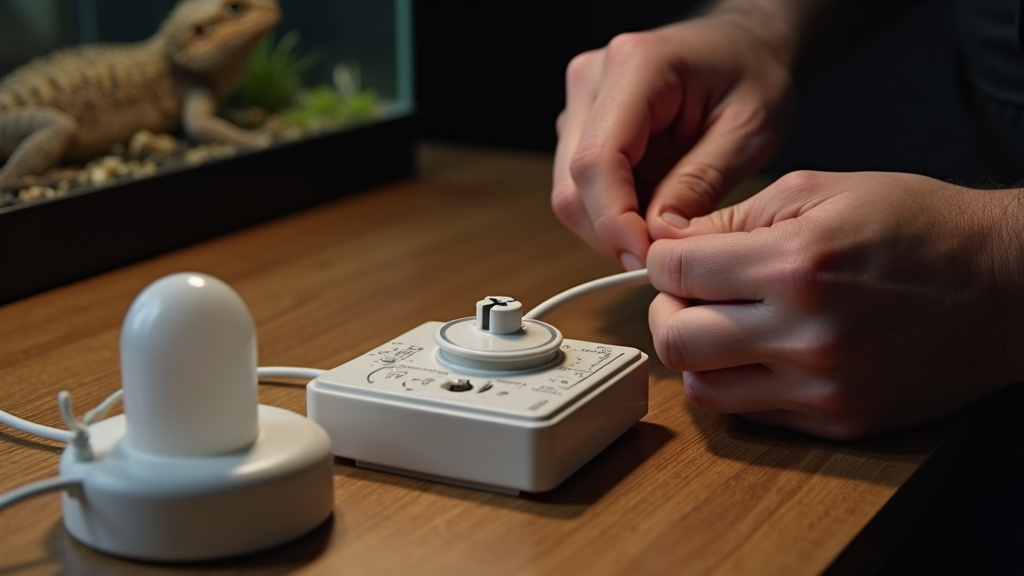
Getting this right is simpler than most think. It requires four pieces of hardware and a timer. The goal is to automate their sun.
Step 1: Install Lights on a Timer
Your basking light and UVB tube should be plugged into a digital timer. Set it for a 10-12 hour “day.” Consistency is key, turning lights on and off manually leads to irregular cycles. This regular schedule supports all other aspects of their general dragon behavior.
Step 2: Provide Absolute Darkness at Night
When the timer clicks off, it should be dark. No night lights, no moonlights, no room lamps. If the room isn’t dark, use blackout curtains or drape a blanket over the back and sides of the enclosure (leave ventilation open). This allows their natural sleep hormones to flow.
Step 3: Add a Ceramic Heat Emitter for Night Heat
Bearded dragons can handle a temperature drop at night, but it shouldn’t get cold. If your home dips below 65°F (18°C), install a ceramic heat emitter (CHE). Screw it into a dome lamp fixture and connect it to a thermostat. A CHE emits infrared heat without any visible light. It’s the only safe way to provide nighttime warmth.
Step 4: Offer Secure Hiding Places
A hide on the cool side gives them a sheltered, enclosed space to sleep, reducing anxiety. Some dragons also appreciate a flat piece of slate or a hammock under the CHE for gentle, radiant warmth.
Step 5: Verify with a Digital Thermometer
Place a probe from a digital thermometer/hygrometer in the sleeping area. Nighttime ambient temperatures should stay between 65-75°F (18-24°C). Guessing doesn’t work. You need data.
Skipping the timer leads to an irregular schedule. Skipping the CHE in a cold house leads to a sluggish, digestively compromised dragon. Skipping the hide can leave a nervous dragon sleeping in the open, never reaching deep sleep.
What Does Unusual Nighttime Activity Really Mean?
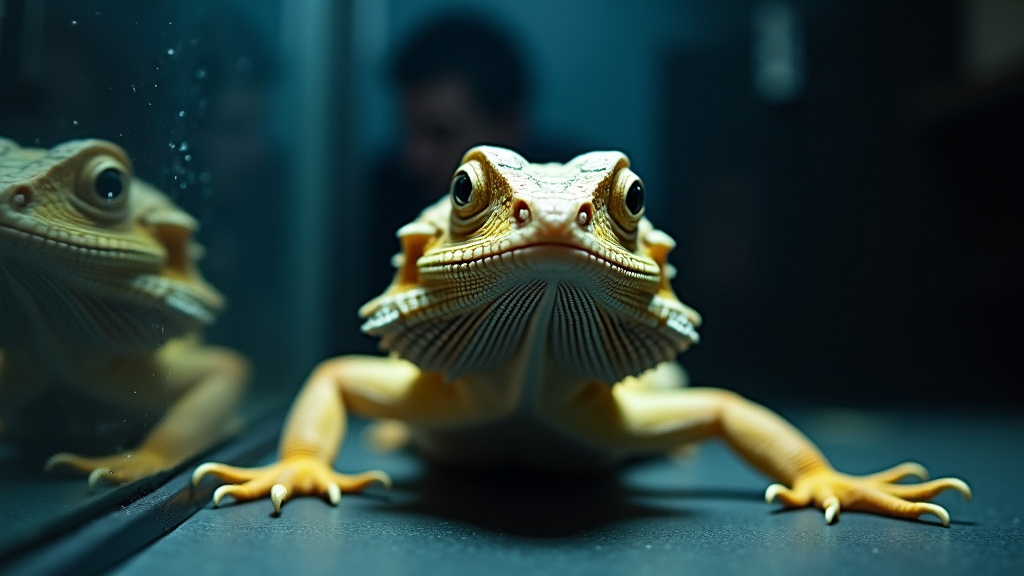
If your dragon is regularly active after lights out, glass surfing, pacing, digging, it is not exploring. It is signaling distress. This is one of the most critical behavioral red flags.
First, rule out the environment. Is there a light source you missed? Is the temperature too high or too low? Is the enclosure near a TV or speaker causing vibrations? Fix those first.
If the environment is correct, the activity points to health issues. Common causes of lethargy like parasites, impaction, or metabolic bone disease can also manifest as restless, uncomfortable behavior at night. A dragon in pain can’t sleep. A vet visit is the next step.
I learned this the hard way with a sub-adult dragon named Ember. She started frantic midnight glass-surfing. Her temperatures and lights were perfect. A fecal test revealed a severe pinworm load. The internal discomfort was keeping her awake. After treatment, she was sound asleep within 48 hours of lights-out, every night.
TL;DR: Nighttime activity is always a problem. Diagnose environment first, then health.
Basking by Day, Sleeping by Night: The Daily Rhythm
A healthy diurnal dragon follows a predictable pattern. Understanding this helps you spot deviations.
Morning (Lights On): They will emerge from their hide and move to the basking spot. You’ll see them flatten their body to maximize surface area, a behavior called “pancaking,” to absorb heat. This can last an hour or more.
Mid-Day: Once at their preferred temperature (around 95-105°F / 35-40°C at the basking surface), they become active. This is when they should eat, explore, and show alert dragon behavioral quirks like head-bobbing or arm-waving.
Afternoon: Activity slows. They may move between the basking spot and cooler areas, digesting food. They might take short naps but should be easily roused.
Evening (Lights Off): As darkness falls, they will find their sleeping spot, often in a hide or a corner. They will settle in, often tucking their head down or against a wall. Breathing slows. They should not move again until morning.
Deviations from this, like sleeping all afternoon on the basking spot, indicate a problem with your bearded dragon temperatures or UVB output.
How Brumation Changes the Sleep Rules
Brumation is a hibernation-like state triggered by cooler temperatures and shorter days. It’s a natural part of their cycle, not an illness.
During brumation, their sleep patterns change dramatically:
* Sleep Duration: They may sleep for days, weeks, or even months at a time, waking only occasionally to drink.
* Activity Level: All daytime activity ceases. They are not basking, not eating, not moving.
* Care Shift: You turn OFF the basking and UVB lights for the duration. Ambient room temperature should be kept cool (60-70°F / 15-21°C). A shallow water dish remains.
It’s crucial to distinguish brumation from illness. A dragon going into brumation will have a clean bill of health, a good weight, and will have gradually slowed down over weeks. A sick dragon crashes suddenly. When in doubt, a pre-brumation vet check is a wise part of your essential dragon care routine.
Frequently Asked Questions
Do bearded dragons need light at night?
No. They need total darkness. Any light, including red or blue bulbs, disrupts their sleep cycle and stresses them. Use a ceramic heat emitter if supplemental heat is required.
Is it normal for my bearded dragon to sleep all day?
No. Occasional short naps are fine, but sleeping through the day is a major sign of incorrect bearded dragon lighting (weak UVB), temperatures that are too low, or illness. Investigate your setup and consult a vet if conditions are correct.
What time should I turn my bearded dragon’s lights off?
Maintain a consistent schedule that roughly matches natural sunrise/sunset in your area. A common cycle is 7 AM on / 7 PM off, or 8 AM on / 8 PM off. The exact times matter less than the consistency and the provision of 10-12 hours of light.
Can I use a heat mat at night instead of a ceramic heat emitter?
Heat mats (under-tank heaters) are not recommended for bearded dragons. They sense heat from above, not below, and risk causing thermal burns without providing meaningful ambient warmth. A ceramic heat emitter is the safer, more effective choice.
Why is my bearded dragon digging at night?
Nighttime digging is almost always a sign of stress or discomfort. Check that the enclosure is truly dark and the temperatures are correct. In females, it can also indicate egg-binding, which is a medical emergency requiring immediate veterinary attention.
The Bottom Line
Bearded dragons are hardwired for the sun. Their health hinges on you replicating that reliable day-night cycle. Get the lighting right, bright, timed days and pitch-black nights. Get the heat right, basking by day, ambient and lightless by night. When you do, you’ll have a dragon that is active, hungry, and curious during the day, and peacefully asleep when you are.
Ignore this rhythm, and you invite a cascade of health issues that start with stress and end with vet bills. The setup isn’t complicated: a timer, a proper UVB light, and a ceramic heat emitter. Those three tools build the foundation for a thriving diurnal pet. Watch their behavior. A sleeping dragon at night is a healthy dragon. A sleeping dragon at noon is a dragon telling you something is wrong. Listen to it.