
Bearded Dragon Eating Behavior: What’s Normal & What’s Not
This post contains affiliate links. As an Amazon Associate, we earn from qualifying purchases.
Normal bearded dragon eating behavior is active, focused, and predictable for their life stage. A healthy dragon will hunt insects with a quick lunge, chew greens deliberately, and have a consistent feeding response to your presence. Appetite changes are your first warning sign for temperature issues, dietary imbalances, or illness.
Most owners misinterpret the signals. They see a dragon that’s “picky” or “lazy” and tweak the food, when the real problem is almost always two feet away in the temperature gradient or the UV-B bulb’s age.
This guide breaks down the normal feeding rhythms from hatchling to senior, explains how to read the physical and behavioral red flags, and gives you the step-by-step diagnostic checklist vets use when a dragon goes off its food.
Key Takeaways
- Appetite is a direct thermometer for enclosure health, if eating stops, check basking surface temp (100-110°F for juveniles) and UV-B output first.
- Life stage dictates diet ratio: hatchlings eat 60-80% insects; adults flip to 70-80% vegetables. Feeding an adult like a juvenile causes fatty liver disease within months.
- Gut-loading is short-term nutrient loading of insects 24-48 hours before feeding; feeder feeding is their long-term diet. Most owners do the latter and call it gut-loading, which delivers minimal nutrition.
- A hidden calcium deficiency shows as weak jaw muscles, the dragon seems to “play” with insects, biting and releasing them repeatedly because it can’t generate crushing force.
- Brumation is a winter slowdown, not a food strike. A dragon preparing to brumate will eat less but still bask; a sick dragon stops eating and hides in the cool corner all day.
Normal Bearded Dragon Eating Habits: From Hatchling to Adult
Head design changes the entire process. Look at the business end of your trimmer.
Juvenile dragons eat like they’re fueling a rocket. A hatchling under three months old should devour 20-50 appropriately sized insects per day, spread across three feeding sessions. They will actively hunt, chase, and lunge. You’ll see a rapid tongue flick to gauge distance, then a quick snap of the head. The tail might twitch. After a big meal, they often retreat to their basking spot and flatten out to digest, that’s normal post-meal behavior, not lethargy.
Adults are grazers. Their metabolism slows. A healthy adult might ignore its morning salad, take a few bites in the afternoon, and then eagerly eat 8-10 large Dubia roaches when offered twice a week. They are deliberate chewers. They use their strong jaw muscles to crush insect exoskeletons and tear fibrous greens. An adult that basks after eating is regulating temperature for digestion; one that immediately hides in a cool corner is signaling discomfort.
A bearded dragon’s feeding response is governed by core temperature. Digestion requires a basking spot surface temperature of 100-110°F for juveniles and 95-105°F for adults. At temperatures below 85°F, digestive enzymes slow and appetite shuts down as a protective measure against gut impaction from undigested food.
The transition period between four and twelve months is where most mistakes happen. The dragon’s body is shifting from insectivore to herbivore, but its behavior hasn’t caught up. It will still act ravenous for crickets but ignore a bowl of collard greens. This is the critical window to enforce the balanced dragon diet by offering salad first thing in the morning, before any insects. Hunger is a powerful teacher.
TL;DR: Hatchlings are insect-fueled machines; adults are deliberate grazers. The juvenile transition phase demands you offer salad before bugs to train herbivorous habits.
What Abnormal Eating Behavior Looks Like
Loss of appetite is the big one, but it’s rarely the first sign. The subtle cues come earlier.
A dragon that approaches its food dish, sniffs, and walks away is communicating. It might be the temperature. It might be the food itself, rotting greens smell like ammonia to them, and a bowl left for two days is inedible. A dragon that bites a cricket then immediately drops it, repeatedly, has a physical problem. Weak jaw muscles from early-stage metabolic bone disease (MBD) prevent a crushing bite. The insect escapes, and the dragon gives up.
Black bearding during feeding is a major red flag. A slight darkening under the chin can be excitement or dominance, but a fully black, puffed-out beard while looking at food signals pain or severe stress. This is common with internal parasites or impaction. The dragon associates eating with stomach pain.
Common mistake: Calling a dragon “picky” and swapping its staple greens for fruit, the sugar rush spikes energy for a day, but the lack of fiber leads to loose stools and long-term nutritional deficits. Fruit is a monthly treat, not a bargaining chip.
Complete refusal with weight loss follows a timeline. Day one: misses a meal. Day three: ignores favorite treats. Day seven: weight drops 5-7%. Day ten: muscle wasting over the hips and base of the tail becomes visible. That’s the point where a vet visit is urgent, not optional. This food refusal timeline is your benchmark.
Here are the physical signs that accompany bad eating behavior, in order of severity:
| Symptom | Likely Cause | Timeline to Vet |
|---|---|---|
| Sniffs food, walks away | Incorrect temperature, stale food | Check temps, refresh food |
| Bites & releases insects | Weak jaw (early MBD), mouth rot | 1-2 weeks |
| Black beard while feeding | Pain (parasites, impaction) | 3-5 days |
| Gaping while eating | Respiratory infection | 1-3 days |
| Weight loss >10% | Systemic illness, parasites | Immediate |
Juveniles hide problems poorly. A baby dragon not eating for 48 hours is an emergency, they have no fat reserves. An adult can weather a short strike if it was previously plump.
TL;DR: Abnormal eating starts with disinterest or inefficient hunting, progresses to refusal and black bearding, and culminates in rapid weight loss. The timeline dictates urgency.
The Husbandry Checklist: Fix the Environment First
When a dragon stops eating, 80% of fixes are in the enclosure. Go through this list in order. Skip a step, and you’ll chase ghosts.
Before you start: Unplug all heat sources before reaching into the enclosure. Heat rocks are banned, dragons sense heat from above via their parietal eye and will sit on a too-hot rock until they burn their belly. Also, UV-B does not pass through glass or plastic; a dragon basking by a window is getting zero usable UV.
- Measure basking SURFACE temperature. Use an infrared temperature gun. Place the probe on the exact spot where your dragon’s belly rests. The number on the digital thermostat is ambient air temp, not the rock’s surface. If it’s below 95°F for an adult, raise the wattage or lower the fixture.
- Check the UV-B bulb’s age and placement. T8 fluorescent tubes must be replaced every 6 months; T5 HO tubes every 12 months. The bulb must be mounted inside the screen, not on top of it, and within 12-18 inches of the basking spot. No UV-B means no vitamin D3 synthesis, which means no calcium absorption. The dragon’s body will eventually shut down appetite to avoid pulling calcium from its bones.
- Verify the gradient. The cool side must be 75-85°F. A dragon that can’t cool down won’t have an appetite cycle. Use a second digital thermometer probe at the farthest point from the heat lamp.
- Assess hydration. Offer a shallow water dish and watch. Some dragons drink from bowls; most get moisture from greens and baths. Chronic mild dehydration suppresses appetite. A 15-minute lukewarm bath 2-3 times a week can stimulate bowel movements and thirst.
- Review the light cycle. Dragons need 12-14 hours of bright light and 10-12 hours of darkness. A room that’s artificially bright at night disrupts their circadian rhythm and stress hormones, killing appetite.
If all five points are correct, the problem is probably inside the dragon, not outside. The next step is a fecal exam. The cost is about $40-$60. It’s worth it.
I used a T8 UV-B bulb for 14 months because it still looked bright. My two-year-old dragon started refusing salads and losing weight. I checked everything else first. The vet asked for the bulb’s purchase date, then told me to replace it. Appetite returned in four days. I now write the install date on every bulb base with a paint pen.
This environmental foundation is non-negotiable. The most elaborate comprehensive feeding guide fails if the dragon is cold, dark, or stressed.
Diet & Nutrition: Are You Feeding the Right Stuff?
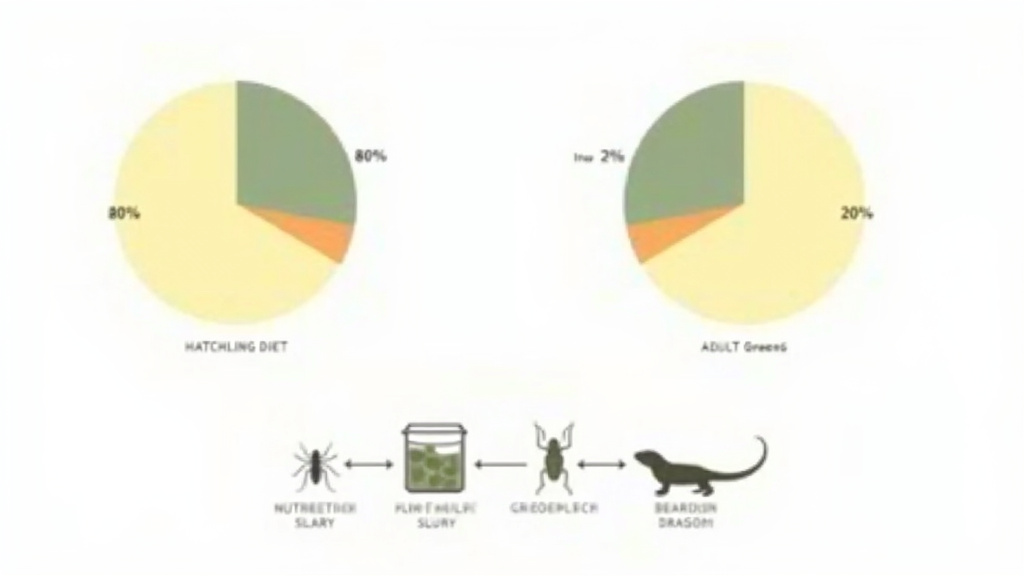
You can have perfect temperatures and still starve your dragon with the wrong food ratios. Life stage is everything.
Hatchlings (0-3 months) are 80% insectivore. Their diet is a volume game for growth. They need three feedings of live insects daily, as many as they can eat in a 10-minute session. The cricket feeding quantity can be 30-50 small crickets per day. Salad is optional but should be offered to expose them to greens.
Adults (12+ months) are 80% herbivore. Their insect intake drops to 20-30% of the diet, that’s about 10-15 large Dubia roaches, twice a week. The rest is daily fresh salad. An adult fed insects daily becomes obese. The fat infiltrates the liver, and the first symptom is, paradoxically, a loss of appetite as the organ fails.
The insect itself matters. Not all bugs are equal.
| Insect Type | Nutritional Role | Feeding Frequency | Risk If Overfed |
|---|---|---|---|
| Dubia roaches | High-protein staple | 2-4x weekly (adults) | None |
| Black soldier fly larvae | High-calcium, low-fat staple | Daily (all ages) | None |
| Crickets | Standard staple | 2-4x weekly | Can bite dragon; parasite risk |
| Hornworms | Hydration treat | 1-2x monthly | Diarrhea if overfed |
| Waxworms/Superworms | High-fat treat | 2-3x monthly max | Obesity, fatty liver disease |
Gut-loading is not just feeding your crickets. True gut-loading is a 24-48 hour process of feeding the insects a nutrient-dense slurry (commercial gut-load formulas, sweet potato, collard greens) immediately before they become food. This transfers those nutrients directly to your dragon. Just keeping crickets in a tub with oatmeal is feeder maintenance, not gut-loading. The difference in nutritional value is measurable.
For plants, oxalates are the silent enemy. Spinach, kale, and beet greens contain oxalic acid, which binds to calcium in the dragon’s gut and prevents its absorption. Feeding these as staples, even with calcium dusting, can still cause metabolic bone disease. They pull calcium out of the system. Stick to low-oxalate recommended dragon foods like collard, dandelion, and mustard greens.
TL;DR: Match insect and plant choices to life stage. Adults need mostly greens. True gut-loading transfers nutrients; feeder maintenance does not. Avoid high-oxalate greens as staples.
Behavioral Quirks & Senior Dragon Changes
Sometimes the behavior is normal, just odd.
Some dragons are messy eaters. They’ll trample through their salad bowl, scattering greens everywhere, then eat them off the substrate later. This isn’t a problem unless you use loose particle bedding like sand, which they’ll ingest. Use a flat tile or reptile carpet under the dish.
Others are “shy” eaters. They won’t touch food while you’re watching. Leave the room for ten minutes, and the dish is clean. This is a personality trait, not a health issue. Respect it.
Senior dragons, those over eight years old, slow down. Their appetite decreases. They may prefer softer foods, grated squash, shredded greens, even a occasional bite of plain scrambled egg. Their insect intake might drop to a few times a month. The key is maintaining weight. Weigh them monthly. A slow, gradual decline is aging; a sudden drop is sickness.
Brumation complicates everything. In winter, an adult dragon may eat very little or nothing for weeks, sleeping most of the day. This is natural. The rule is: a dragon must enter brumation healthy and hydrated. Never let a skinny or sick dragon brumate. It likely won’t wake up. If you’re unsure, keep the lights and heat on a normal schedule to prevent the cycle from starting. The WSU veterinary husbandry guide emphasizes this distinction between natural dormancy and illness.
Common mistake: Assuming a senior dragon’s low appetite is “just old age”, often it’s kidney disease or cancer. A blood panel at the vet every 12-18 months after age eight catches these issues while they’re still treatable.
For the stubborn insect-lover who refuses greens, get sneaky. Chop the greens finely and mix them with a few pieces of butternut squash or a single blueberry. The bright color and sweetness attract attention. Gradually reduce the treat item over two weeks. Another trick: use staple feeder insects like BSFL and drop them directly onto the salad. The dragon hunts through the greens to get the bugs, accidentally tasting the plants in the process.
When to See a Veterinarian: The Red Flags
Time is tissue. Don’t wait.
Take your dragon to an exotic vet (not a standard dog-and-cat vet) if you see any of the following:
* No eating for more than 7 days for an adult, or more than 2 days for a juvenile.
* Weight loss exceeding 10% of total body weight.
* Black bearding that lasts hours, especially if combined with a arched back.
* Swollen jaw or limbs, or a soft, rubbery feel to the lower jaw, this is advanced metabolic bone disease.
* Lethargy with closed eyes during the day, not just resting.
* Runny, foul-smelling stools or visible parasites in the feces.
* Gaping mouth when not thermoregulating, often with a clicking sound on breathing.
The vet will likely start with a fecal float test to check for parasites like coccidia or pinworms. These are incredibly common, especially in dragons fed wild-caught insects or from certain chain pet stores. Treatment is straightforward with prescribed medication.
They may also do a blood panel to check calcium levels, kidney function, and liver enzymes. This is critical for seniors. The cost of a full workup is a fraction of the cost of emergency surgery for an impaction or organ failure caught too late. Many appetite loss reasons have simple medical solutions.
Be prepared to answer specific questions: What are your exact temperatures? What is your UV-B bulb type and age? What is your food dusting practice schedule? What did the dragon eat last? Good notes get you a faster diagnosis.
Frequently Asked Questions
Why is my bearded dragon glass surfing around feeding time?
This is usually anticipation or frustration. They see you and associate you with food. If it’s constant, it can also mean the enclosure is too small, temperatures are wrong, or they see their reflection. Ensure they have adequate space and enrichment outside of feeding.
My dragon only eats one type of insect. Is that okay?
No. This leads to nutritional deficiencies and “addiction.” The insect might be low in a key nutrient. You must rotate staples. Try withholding the favorite bug for a week, offering only a different nutritious insect feeder. A healthy dragon will eventually eat.
How can I tell if my dragon is drinking enough water?
Their urates (the white part of their poop) should be soft and mostly white, not chalky or yellowish. Hydrated skin snaps back quickly when gently pinched. Most dragons get enough water from their healthiest food options, but a weekly bath ensures they can drink if needed.
Is it normal for my dragon to eat its shed skin?
Yes. This is common behavior. It’s a source of protein and helps hide their presence from predators in the wild. It’s not harmful.
My dragon ate a piece of substrate (like sand or mulch). What should I do?
Monitor closely. Offer extra hydration via baths and feed high-fiber greens like pumpkin to help pass it. If they stop eating, become lethargic, or have no bowel movement for over a week, see a vet immediately for potential impaction.
Can handling affect my dragon’s eating behavior?
Yes, especially for new or skittish dragons. Handling right before or after a meal can cause stress and regurgitation. Handle during mid-day, well outside of feeding times, and keep sessions short until they are comfortable.
The Bottom Line
Your dragon’s appetite is its primary health report card. It tells you about temperature, light, diet, and internal wellness long before weight loss or visible symptoms appear.
Start with the environment every single time. Fix the heat, replace the UV-B, ensure hydration. Then audit the diet against the dragon’s life stage, more greens for adults, more bugs for babies. Finally, learn its personal quirks. A shy eater is fine; a dragon that bites and releases insects is not.
When in doubt, weigh them. The scale doesn’t lie. A stable weight covers a multitude of minor quirks. A dropping weight demands action. Use the timelines in this guide to know when to troubleshoot at home and when to call the vet. That line is usually drawn at one week of no food for a healthy adult, or when any of the major red flags, black bearding, swelling, gaping, show up.
Good husbandry prevents most problems. Consistent observation catches the rest.