
Understanding Metabolic Bone Disease in Your Bearded Dragon
This post contains affiliate links. As an Amazon Associate, we earn from qualifying purchases.
Metabolic bone disease (MBD) in bearded dragons is a calcium metabolism disorder caused primarily by inadequate UVB light exposure, which prevents Vitamin D3 synthesis and calcium absorption. The body then leaches calcium from the skeleton, leading to soft, deformed bones, neurological issues, and, if untreated, death. Treatment involves veterinary intervention with calcium and D3 supplementation alongside immediate correction of husbandry, while prevention rests on proper UVB lighting, correct calcium dusting, and a balanced diet.
Metabolic bone disease (MBD) in bearded dragons is a calcium metabolism disorder caused primarily by inadequate UVB light exposure, which prevents Vitamin D3 synthesis and calcium absorption. The body then leaches calcium from the skeleton, leading to soft, deformed bones, neurological issues, and, if untreated, death. Treatment involves veterinary intervention with calcium and D3 supplementation alongside immediate correction of husbandry, while prevention rests on proper UVB lighting, correct calcium dusting, and a balanced diet.
Most owners spot MBD six months too late. They see the wobbly walk or the bent legs and think it’s an injury. By then, the skeleton has already started turning to rubber. The real failure happens silently, inside a light bulb that stopped working three months prior.
This guide walks through the mechanics of MBD, the early signs most people miss, the sobering reality of treatment, and the non-negotiable prevention checklist. We’ll cover what you can fix and what damage is permanent.
Key Takeaways
- The single most common cause of MBD is a failed or incorrect UVB bulb. A T5 HO tube must be replaced every 12 months, regardless of whether it still lights up.
- Early symptoms are behavioral: lethargy, reduced appetite for hard foods, and fine tremors in the jaw or tail tip. The front legs often weaken before the back legs bow.
- Severe skeletal deformities and kinks in the spine are permanent. Treatment can stabilize the dragon and manage pain, but it cannot straighten bones that have already remodeled.
- Juveniles under one year old can show bone demineralization in as little as 6–8 weeks under inadequate UVB due to their rapid growth rate.
- The cost of treating moderate to severe MBD often exceeds $500–$1,500, while a proper UVB setup costs under $100. Prevention is not just better, it’s cheaper.
What Is Metabolic Bone Disease (MBD)?
Metabolic bone disease isn’t one illness. It’s an umbrella term for skeletal disorders stemming from chronic calcium deficiency, formally known as nutritional secondary hyperparathyroidism or fibrous osteodystrophy. The process is a physiological robbery.
Calcium isn’t just for bones. It’s a critical electrolyte for nerve transmission and muscle contraction. When blood calcium levels drop, because the dragon can’t absorb dietary calcium, the parathyroid gland panics. It secretes a hormone that pulls calcium directly from the bones to keep the blood concentration stable. The bone matrix is replaced with weak, fibrous tissue. The skeleton loses its rigidity.
Technical Snapshot: In bearded dragons, MBD is most often nutritional secondary hyperparathyroidism (NSHP). This condition arises from a dietary calcium deficiency or, more commonly, a failure of calcium absorption due to insufficient bioactive vitamin D3. Without D3, calcium passes through the gut unabsorbed. The parathyroid gland compensates by increasing hormone secretion, which stimulates osteoclasts to resorb bone mineral, leading to pathologic fractures and fibrous replacement of bone marrow.
The chain of failure is almost always the same. It starts with light.
TL;DR: MBD is a calcium deficiency disorder where the body steals calcium from bones, weakening them. The root cause is usually broken UVB light preventing Vitamin D3 creation.
What Are the First Signs of MBD in Bearded Dragons?
You won’t see bent legs first. The earliest warnings are shifts in energy and subtle tremors. A dragon that used to sprint after crickets now watches them pass. It might hesitate before biting a piece of collard green, as if its jaw is sore.
The front legs often go first. You’ll notice a splayed, weak posture as the dragon struggles to lift its chest off the ground. The lower jaw, when gently pressed between your thumb and finger, should feel like solid bone. In early MBD, it has a slight, unsettling give, like pressing on a firm rubber eraser.
Common mistake: Dismissing a fine tail-tip tremor as “excitement” or “cold.”. This is a neurological misfire from low blood calcium. Within a month, it often progresses to full-limb twitching and difficulty climbing.
Here is the symptom progression, from first alarm to critical failure:
| Stage | Key Symptoms | Typical Timeline from Onset |
|---|---|---|
| Early | Lethargy, reduced appetite, fine jaw/tail tremors, weak front limbs, rubbery jaw. | 2–6 weeks |
| Moderate | Visible bowing of long bones (legs), swollen jaw (“rubber jaw”), kinked tail, obvious twitching. | 1–3 months |
| Severe | Spontaneous fractures, paralysis in limbs, seizures, severe spine curvature, inability to lift body. | 3+ months |
The neurological symptoms, tremors, twitching, seizures, happen because calcium ions are essential for nerve cells to fire properly. Low calcium makes neuronal membranes hyperexcitable. They fire randomly, causing involuntary muscle contractions. It’s like a network with frayed, short-circuiting wiring.
If you see any single symptom from the early column, stop and audit your setup immediately. This is your last chance to correct course before structural damage begins.
TL;DR: Look for lethargy, a weak grip with the front legs, and a subtle tremor in the jaw or tail tip. These appear weeks before bones visibly bend.
What Causes MBD? (It’s Almost Never Just One Thing)
MBD is a perfect storm of husbandry failures. One weak link is enough, but most cases involve two or three.
- Inadequate or Absent UVB Light (The #1 Cause). Bearded dragons synthesize Vitamin D3 in their skin when exposed to UVB wavelengths (290–315 nm). Without D3, dietary calcium is useless. The most frequent errors are using a compact coil bulb (inadequate output), placing a tube too far from the basking spot, or using a bulb past its expiration. A T5 HO tube still emits visible light long after its UVB output plummets to zero.
- Insufficient Dietary Calcium. Feeding insects without dusting them is like serving empty calories. The insect’s own calcium-to-phosphorus ratio is also terrible. Crickets and mealworms are high in phosphorus, which binds calcium and prevents absorption.
- Incorrect Temperatures. The basking zone must reach 100–110°F (38–43°C) for proper digestion and metabolic function, including D3 synthesis. A dragon kept at 85°F (29°C) cannot metabolize calcium effectively even with perfect UVB.
-
High-Oxalate or High-Phosphorus Greens. Some staple greens are secretly problematic. They contain oxalates that bind to calcium, making it unavailable.
- Spinach (very high oxalates)
- Beet greens (high oxalates)
- Kale (moderate oxalates, controversial, but best limited)
- Swiss chard (high oxalates)
- Over-Supplementation of Vitamin D3. This is less common but dangerous. Fat-soluble D3 can accumulate and cause hypercalcemia (toxic high blood calcium), which also disrupts bone metabolism and damages kidneys.
I learned the UVB lesson the expensive way. My first dragon, a juvenile, had a T8 tube mounted on a mesh top. He seemed fine for four months. Then he started sliding off his basking rock. The vet’s radiograph showed his femur bones were as thin as eggshells. The mesh had filtered out over 40% of the UVB, and the T8 bulb was six months old, effectively dead for UV. The bill for calcium injections and a new T5 fixture was three times the cost of the proper light would have been.
Expert Tip: I won’t recommend a “UVB bulb plus D3 supplement” loophole for indoor dragons. The synthetic D3 in supplements is poorly utilized compared to what their skin makes from real UVB. It’s a backup, not a replacement. Found that out trying to rehab a rescue with a damaged eye who couldn’t bask directly; his blood D3 levels stayed low until I got him under an Arcadia 12% T5.
TL;DR: A failed UVB bulb is the most common trigger, exacerbated by poor diet and low temperatures. It’s a system failure, not a single mistake.
How Is MBD Diagnosed and Treated?
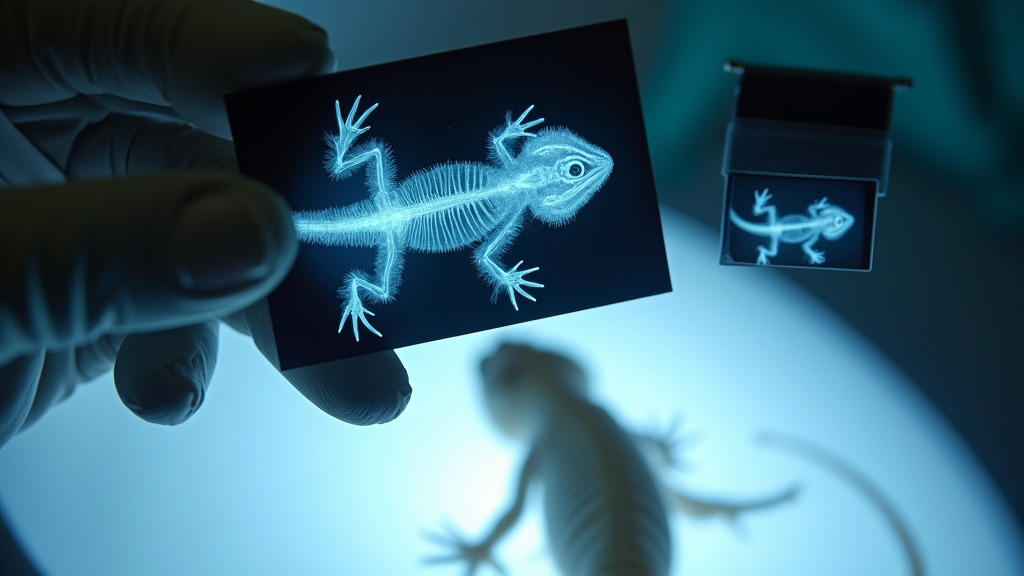
You cannot treat MBD at home. Period. If you suspect it, your next step is a veterinarian who specializes in reptiles. The diagnosis confirms the severity and rules out other issues like parasites or impaction.
The diagnostic triad is:
1. Husbandry Review: The vet will ask detailed questions about your lights, temperatures, diet, and supplements. Be honest.
2. Radiographs (X-rays): This is the definitive test. Healthy dragon bones are white and crisp on film. MBD bones look fuzzy, grey, and thin. They may show old healing fractures or bowing.
3. Bloodwork: Checks serum calcium and phosphorus levels. In early MBD, blood calcium may be normal or low-normal because it’s being pulled from bones. Phosphorus is often elevated. Ionized calcium is a more sensitive test.
The treatment protocol is aggressive and multi-pronged. It has two goals: correct the acute deficiency and fix the underlying husbandry forever.
Immediate Medical Intervention:
- Calcium Supplementation: Oral calcium gluconate syrup or injectable calcium. This floods the bloodstream to stop the body from robbing the bones and to support nerve function.
- Vitamin D3 Injection: A calculated dose to jumpstart calcium absorption. Vets are careful with this due to overdose risk.
- Calcitonin Injections: In severe cases, this hormone tells the body to stop breaking down bone. It’s expensive and not always effective.
- Pain Management and Anti-inflammatories: Fractures and bone pain are real. Meloxicam is commonly prescribed.
- Hospitalization: Critical cases may need IV fluids and intensive care for days or weeks.
Concurrent Husbandry Overhaul (Start the Day You Get Home):
This is your homework. The vet can fix the blood chemistry, but you must fix the environment.
* Install a brand new, correctly rated UVB T5 HO tube (Arcadia 12% or Zoo Med 10.0).
* Verify basking surface temperature with a digital probe thermometer.
* Switch to a low-oxalate green like collard, mustard, or dandelion greens.
* Dust every insect feeding with a plain calcium powder (no D3) and provide a shallow water dish.
Warning with consequence + timeline: Never attempt to “correct” a dragon’s bowed legs by splinting or binding them at home.. The bones are soft and malleable, not broken. Improper pressure will deform them further or cut off circulation, leading to tissue death within hours.
TL;DR: Diagnosis requires an exotic vet, X-rays, and blood tests. Treatment involves calcium/D3 injections and a complete overhaul of your lighting and diet.
Can MBD Be Cured or Reversed?
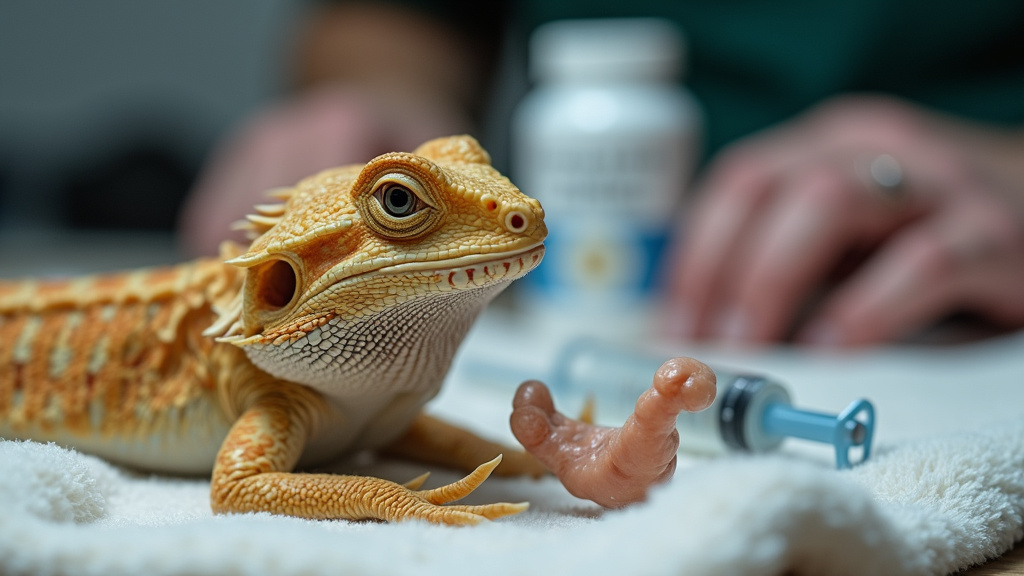
This is the hardest question. The answer is conditional and often disappointing.
Early-stage MBD (only behavioral symptoms, no bone changes on X-ray) is often fully reversible. With prompt veterinary care and perfect husbandry, the dragon can recover completely with no lasting effects. The bone can remineralize.
Moderate to severe MBD (visible bone deformation, fractures, kinks) is manageable, not curable. The body has replaced mineralized bone with fibrous tissue. You can halt the disease and strengthen the remaining bone, but you cannot un-kink a tail or straighten a bowed femur. The structural changes are permanent.
The dragon’s quality of life becomes the priority. Many with moderate MBD live for years with adaptations: lower enclosures, padded flooring, and assistance feeding. They are more prone to arthritis and recurrent fractures. Severe cases with paralysis or constant pain may lead to the ethical discussion of euthanasia.
The financial reality is stark. According to a WSU Veterinary Hospital clinical article, treatment for severe MBD can require weeks of hospitalization. The cost routinely runs into the thousands. For many owners, this is a devastating, unexpected financial burden that could have been avoided with a $70 light fixture.
TL;DR: Early cases can be fully reversed. Once bones are visibly bent or kinked, the damage is permanent, but the disease can be stopped.
Prevention Is the Only Cure (The Non-Negotiable Checklist)
MBD is arguably the most preventable common disease in captive reptiles. This checklist isn’t optional. Every point is a direct counter to a cause of the disease.
-
UVB Lighting: Do It Right.
- Fixture: Use a T5 HO fluorescent tube fixture, not a coil bulb.
- Bulb: 10–12% UVB output (Arcadia Desert 12% or Zoo Med ReptiSun 10.0 T5 HO).
- Placement: Mount inside the enclosure (screen tops block ~40% of UVB) and position so the basking spot is within the manufacturer’s recommended distance (usually 12–15 inches).
- Replacement: Replace the T5 HO bulb every 12 months. Mark the date on the bulb with a permanent marker. It stops producing adequate UVB long before it burns out.
-
Calcium Supplementation: Dust Every Time.
- Use a plain calcium carbonate powder (no D3) for almost every insect feeding.
- If your dragon gets no natural, unfiltered sunlight, use a calcium powder with D3 twice a week.
- For a balanced juvenile dragon diet, dusting is non-negotiable. Their growth demands it.
-
Diet: Manage the Ratios.
- Feed calcium-rich, low-oxalate greens (collard, mustard, turnip, dandelion).
- Limit high-oxalate greens (spinach, kale, beet greens).
- Gut-load your feeder insects with nutritious veggies 24 hours before feeding.
- Choose best feeder insects like dubia roaches and black soldier fly larvae, which have better calcium-to-phosphorus ratios than crickets.
-
Temperature: Verify, Don’t Guess.
- Basking surface temperature: 100–110°F (38–43°C).
- Cool side: 75–85°F (24–29°C).
- Use a digital infrared thermometer or probe thermometer. Stick-on dials are unreliable.
-
Hydration and General Care.
- Provide fresh water daily. Many dragons drink from a dish; some need misting or baths.
- Adhere to a complete proper bearded dragon care routine, including regular enclosure cleaning and health checks.
This table helps you choose the right supplements based on your lighting setup:
| Your UVB Source | Primary Calcium Powder | Secondary Supplement (1–2x/week) |
|---|---|---|
| Quality T5 HO Tube (indoor) | Plain Calcium (No D3) | Multivitamin with D3 |
| Natural, Direct Sunlight | Plain Calcium (No D3) | Multivitamin without D3 |
| Inadequate / No UVB (EMERGENCY) | Calcium with D3 | Fix your UVB immediately. |
For those undertaking the more demanding baby bearded dragon care, these rules are even more critical. Their margin for error is zero.
TL;DR: Prevent MBD with a brand-name T5 HO UVB tube replaced yearly, calcium-dusted insects at every feeding, correct temperatures, and a diet of low-oxalate greens.
Special Considerations: Juveniles and Brumation
Two situations dramatically increase MBD risk: rapid growth and hibernation.
Juvenile Dragons (0–12 months): Their skeletons are building mass at an incredible rate. A calcium deficit during this period has immediate consequences. They can show signs of demineralization in 6–8 weeks. Their baby dragon dietary requirements are protein-heavy, requiring daily insect feedings that must be dusted. Getting the cricket feeding quantity right ensures they get enough fuel without skipping essential calcium.
Brumation: This is a dormant period where dragons eat little to nothing for weeks or months. If they enter brumation with low calcium stores, their body continues to pull from bones to maintain blood levels while they aren’t replenishing it. Always have a vet check your dragon’s health and calcium status before allowing it to brumate. A pre-brumation radiograph can be a lifesaving investment.
Frequently Asked Questions
Can a bearded dragon recover from severe MBD?
They can recover from the disease process but not from the skeletal deformities. Treatment can stop further damage, alleviate pain, and allow the dragon to live a decent quality of life. However, bowed legs, kinked spines, and jaw deformities are permanent.
How long does it take for MBD to develop?
In fast-growing juveniles, signs can appear in as little as 6–8 weeks under no UVB. In adults, it may take 3–6 months of inadequate care for obvious symptoms to manifest. Behavioral changes often start within the first month.
Is MBD painful for bearded dragons?
Yes. Soft bones, microfractures, and nerve irritation from low calcium are painful. Dragons with MBD often become lethargic and reclusive because movement hurts. Pain management is a key part of veterinary treatment.
Can too much calcium cause MBD?
Not directly, but it can cause hypercalcemia, which is toxic and damages kidneys. However, excessive calcium supplementation without adequate D3 and UVB is still useless, the calcium won’t be absorbed, so the dragon remains deficient. The problem is almost always too little usable calcium.
What’s the difference between MBD and calcium deficiency?
In practical terms for owners, they are the same. MBD is the disease caused by long-term calcium deficiency (or failure to metabolize calcium). “Calcium deficiency” is the state that leads to MBD.
Are some bearded dragons more prone to MBD?
All bearded dragons are prone if kept incorrectly. However, juveniles, gravid (egg-bearing) females, and dragons recovering from illness have higher calcium demands and will show deficiencies faster.
Before You Go
Metabolic bone disease is a thief. It steals your dragon’s strength, its posture, and eventually its life. But it’s a coward, it only attacks where care is lax. The battle is won with a light meter, a dusting shaker, and a thermometer.
Remember the sequence: UVB light makes D3, D3 absorbs calcium, calcium builds bone. Break that chain at any link, and the skeleton pays the price. The early signs are whispers, a tired look, a shaky tail. Learn to hear them.
Your dragon’s straight spine and strong grip are the direct products of your diligence. That’s the bottom line.