
Can You Keep Adult Bearded Dragons Together? Expert Advice
This post contains affiliate links. As an Amazon Associate, we earn from qualifying purchases.
You cannot safely keep adult bearded dragons together. They are solitary, territorial reptiles, and forcing cohabitation risks severe injury, chronic stress, and death for one or both animals. The only universally safe setup is a separate, properly sized enclosure for each individual.
Most people ask this question because they project human emotions onto their pets. They worry their dragon is lonely or think two would be cute together. That projection gets dragons killed.
This guide breaks down the specific, brutal mechanics of why cohabitation fails, the exact injuries that happen, and the only responsible path forward if you care about more than one of these animals.
Key Takeaways
- Adult male bearded dragons will fight to the death over territory. Housing two males is an act of negligence.
- Even female-female or male-female pairs risk bullying and stress, which suppresses the immune system and leads to fatal illnesses like metabolic bone disease.
- The required enclosure for any cohabitation attempt is a minimum 125-gallon tank with duplicate everything, basking spots, hides, food bowls. Few owners provide this.
- Baby dragons can sometimes be housed together briefly, but they must be separated by 10-12 months of age before territorial instincts activate. This is non-negotiable.
- A solitary dragon is a content dragon. Their welfare is measured by correct heat, UVB, food, and enrichment, not by the presence of another lizard.
The Solitary Nature of Pogona vitticeps
Bearded dragons do not form social bonds. In the wild, they occupy large, overlapping home ranges and interact primarily to compete for resources or mate. A dragon’s brain is wired for survival, not companionship. Interpreting their solitude as loneliness is a critical error in understanding dragon body language.
They experience the world through competition. Every other dragon is a rival for the best basking rock, the most nutritious insects, and the safest hiding spot. This instinct doesn’t switch off in a glass box. It amplifies.
A 2023 review in the Journal of Herpetological Medicine and Surgery noted that chronic stress from forced cohabitation is a leading contributor to immunosuppression in captive lizards, directly linking shared enclosures to increased susceptibility to parasitic and bacterial infections.
TL;DR: Your dragon is not lonely. Its contentment comes from a perfect thermal gradient and a full belly, not a roommate.
The Inevitable Risks of Forced Cohabitation
The risks are not hypothetical. They are physical, predictable, and often permanent. When you house adults together, you are conducting a stress experiment with a live animal.
The most immediate danger is overt aggression. This isn’t a little scuffle. It’s a systematic dismantling.
| Type of Injury | How It Happens | Long-Term Consequence |
|---|---|---|
| Tail Nips & Loss | Mistaken for food (especially in juveniles) or targeted biting during fights. | Permanent disfigurement, loss of fat storage, impaired balance. |
| Toe & Limb Amputation | Aggressive biting during feeding competition or dominance fights. | Permanent disability, difficulty climbing, chronic pain. |
| Eye Injuries | Scratches from claws during face-to-face confrontations. | Corneal ulcers, blindness, chronic infection. |
| Spinal Damage | Being thrown against enclosure walls during violent tussles. | Paralysis, euthanasia. |
These injuries happen fast. A dominant dragon will seize the smaller one’s foot or tail and thrash. The sound is a distinct, sickening crunch. I’ve pulled a dragon from a cohabitation attempt with a back leg hanging by a thread of skin. The owner was at work. By the time they got home, the limb was necrotic. That dragon lost the leg.
Common mistake: Assuming “they seem fine together” during the day, aggression often erupts at dawn when they both rush to bask, or at dusk when they compete for the prime sleeping spot. You miss the critical window.
The second, slower killer is chronic stress. Without a single bite being thrown, a subordinate dragon can waste away.
Subtle signs of this stress include:
- Refusing to bask, leading to poor digestion and metabolic bone disease.
- Hiding constantly, even when hungry.
- Losing weight despite food being available (the dominant dragon eats it all).
- Developing a permanently darkened, stress-marked beard.
This stress directly suppresses the immune system. A stressed dragon is a magnet for coccidia, pinworms, and respiratory infections. You’ll be treating a sick animal constantly, wondering why it’s so fragile. The cause is the invisible pressure of a cage mate.
Male vs. Female vs. Female: The Dynamic Breakdown
Not all pairings carry equal risk. But even the “safest” combination is still dangerously unstable. Your dragon’s temperament is the wild card. A naturally docile animal can become a tyrant when its territory is challenged.
Two Adult Males: A Guaranteed Fight
This is the one absolute rule. Never house two adult male bearded dragons together. Their entire reproductive strategy is based on territorial dominance. They will fight. The outcome is severe injury or death for the loser, and sometimes both.
The displays start with vigorous head bobbing in bearded dragons, a direct challenge. It escalates to flaring the beard black, circling, and then violent grappling. They bite necks, limbs, and tails. They do not stop until one submits or cannot continue. In a confined space, there is no escape. This is the core of territorial behavior in bearded dragons.
Two Adult Females: The Silent Stress Test
Many owners think two females are safe. It’s the most common attempted pairing after the male-female breeding setup. It’s also where the most insidious chronic stress occurs.
Females can be just as territorial as males, especially around resources. A dominant female will block access to the basking spot, hog the food bowl, and claim the best hide. The subordinate female stops thriving. She may never show a black beard, but she’ll stop growing, stop eating, and eventually die from complications of stress. You won’t see a fight, so you assume they’re fine. The autopsy shows a shrunken liver and atrophied muscles.
One Male, One Female: The Breeding Factory
This pairing has one purpose: reproduction. The male will constantly harass the female to mate, which is incredibly stressful for her. He may bite her neck during breeding attempts, causing wounds. If she is not in peak health with ample calcium reserves, breeding can kill her from egg-binding.
You will also have eggs. Dozens of them. Incubating and caring for 20+ hatchlings is a massive, expensive commitment. This is not an accidental outcome; it is the biological certainty of putting a male and female together.
If You Still Want to Try: The Non-Negotiable Checklist
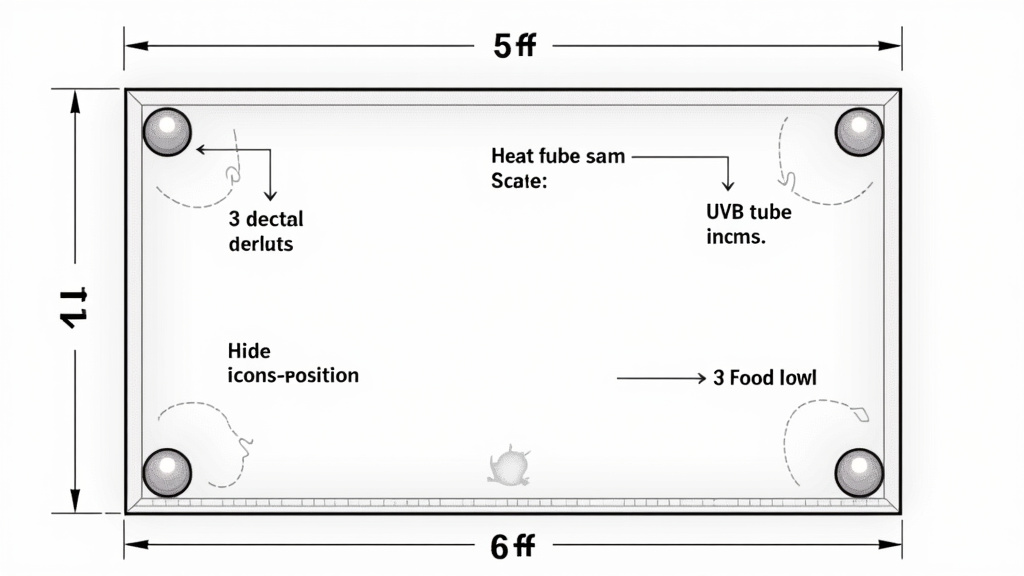
I do not recommend this. The following checklist exists not as encouragement, but as a liability waiver. If you skip any single point, you are guaranteeing failure and animal suffering. This is the bare minimum for a trial, not a guarantee of success.
The absolute prerequisites for any cohabitation attempt:
- Identical Size & Health: Dragons must be within 10% of the same weight and length. Any size advantage becomes a weapon. Both must have a clean bill of health from a reptile vet.
- Giant Neutral Territory: The enclosure must be at least 125 gallons (6x2x2 feet is better). It must be a new space, unfamiliar to both dragons, to avoid resident territoriality.
- Duplicate Everything: Two full, separate basking zones (each with its own heat lamp reaching 100-110°F), two UVB tubes, three hides minimum, two large food bowls placed at opposite ends.
- Constant Baby-Monitor Supervision: You must be able to watch them uninterrupted for the first 72 hours. A security camera is mandatory if you leave the room. The first sign of aggression means immediate, permanent separation.
- A Backup Plan: Two complete, permanent, separate enclosures must be set up and ready to go before the trial begins. Cohabitation is the experiment; solitary living is the default.
I attempted a female-female cohabitation in a custom 150-gallon enclosure five years ago with two dragons I’d raised from hatchlings. They were the same size. I had duplicate everything. After three days, the slightly bolder one started sitting in the doorway of the other’s favorite hide, blocking it. No fighting. Within a week, the blocked dragon stopped eating. I separated them. Her appetite returned in two days. The stress was invisible until it wasn’t.
TL;DR: The checklist is a fantasy for 99% of owners. The cost and space for a proper trial enclosure typically exceed the cost of just setting up a second, separate habitat from the start.
The Safer, Smarter Alternative
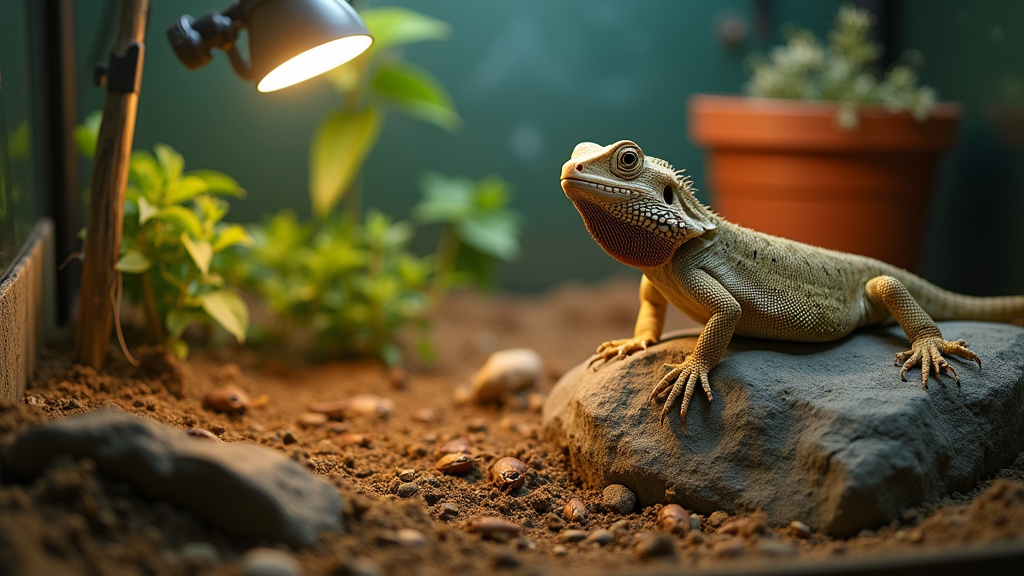
The ethical and practical solution is simple: provide a proper, separate home for each dragon. This is the cornerstone of essential bearded dragon care.
A single adult dragon needs a 4x2x2-foot (120-gallon) enclosure as the modern standard. This space allows for a proper thermal gradient, room to explore, and dedicated basking without competition. Focus your energy and budget here.
Enrichment for a solitary dragon is straightforward and effective:
- Rearrange the furniture every few weeks to create novel exploration.
- Provide digging boxes with organic topsoil or playsand.
- Use feeder insects in a way that encourages hunting behavior (e.g., releasing crickets for chase).
- Take them out for supervised, safe exploration in a secure room.
A dragon living alone in a correctly configured habitat displays all the indicators of a healthy dragon: a strong appetite, alert posture, regular basking, and curiosity. These are the signs of welfare.
This approach eliminates the risk of biting due to stress or fear from a cage mate and fulfills all their husbandry requirements. It respects their nature.
When Separation is Non-Negotiable: The Baby Dragon Exception
Baby bearded dragons are sometimes housed together by breeders for efficiency. This is a temporary, high-management situation, not a recommendation for pet owners.
If you have purchased multiple hatchlings, you have a strict deadline.
You must separate them by the time they are 10-12 months old. Their juvenile tolerance vanishes as sexual maturity and territorial instincts emerge. Waiting for a sign of aggression is waiting too long. The first fight can be fatal.
The risks of competition among hatchlings are already high: size disparities develop quickly, leading to bullying and nipping. The larger one will eat most of the food, stunting the growth of the smaller. This is not camaraderie; it’s a race for resources where there is always a loser.
Plan and budget for their separate adult enclosures from day one. There is no scenario where keeping them together as adults is the easier or cheaper path.
Frequently Asked Questions
Can two bearded dragons live together if they were raised together?
No. Being raised together only delays the inevitable. As they reach sexual maturity (8-12 months), their innate territorial instincts will surface. Siblings will fight just as violently as strangers. The bond you perceive does not exist in their biology.
Do bearded dragons get lonely?
Bearded dragons do not experience loneliness. They are asocial reptiles. Stress and illness in a solitary dragon are always due to incorrect husbandry, wrong temperatures, inadequate UVB, poor diet, never the lack of another dragon. Improving their comprehensive bearded dragon care is the solution.
What are the first signs I should separate my bearded dragons?
Separate them at the first sign of any of the following: rapid head bobbing, black bearding (outside of normal shedding), chasing, blocking access to basking or food, biting (even a single nip), or one dragon consistently hiding and refusing to eat. Do not wait for a serious injury.
Is a bigger tank the solution to aggression?
bigger tank is a prerequisite if you are foolish enough to attempt cohabitation, but it is not a solution. It merely reduces the frequency of violent encounters. It does not eliminate the underlying stress and competition. The potential challenges of dragon ownership include accepting their solitary needs.
Can I temporarily house my dragons together?
Never. Temporary cohabitation is incredibly stressful. Moving a dragon into another’s territory triggers immediate defensive and aggressive behaviors. It serves no purpose except to stress both animals and risk injury. Always handle and interact with them separately.
The Bottom Line
The question isn’t whether you can keep adult bearded dragons together. Technically, you can also keep a hammer in a fish tank. The real question is whether you should.
The evidence from veterinarians, ethologists, and decades of keeper experience is a unanimous no. The risks, maiming, chronic illness, death, far outweigh any perceived benefit, which is zero for the dragon. Their suitability as pets hinges on our willingness to meet their needs, not our desires for a multi-dragon display.
Responsible ownership means providing a dedicated, enriched space for each animal. It means reading their behavioral health cues correctly, not projecting human emotions onto them. Invest in a proper second enclosure. Your dragons will live longer, healthier lives, and you will never have to hear that crunch.