
Vet Explains: Why Is Bearded Dragon Poop White and Black?
This post contains affiliate links. As an Amazon Associate, we earn from qualifying purchases.
Bearded dragon poop is white and black because it consists of two distinct waste products: the white part is urate, a concentrated form of urinary waste, and the black part is digested food waste from the intestines.
Bearded dragon poop is white and black because it consists of two distinct waste products: the white part is urate, a concentrated form of urinary waste, and the black part is digested food waste from the intestines. The white urate is normal. The black stool is not. Black feces signal a problem, often gastrointestinal bleeding, severe impaction, or a diet overloaded with insects.
Most owners see the white urate and assume everything’s fine. They miss the black stool tucked underneath it. That black color means digested blood, impacted material, or parasite waste is passing through. You’ll find it tucked under the white blob, sometimes with a foul, metallic smell. This guide breaks down what each color means, when to act, and how to fix it before a vet visit becomes an emergency.
Key Takeaways
- The white part is urate, a normal, semi-solid urine concentrate. It should be soft and pure white. Yellow, orange, or chalky urate means dehydration.
- Black stool is never normal. It indicates digested blood from internal bleeding, severe impaction, or a parasite-heavy gut.
- Parasites like coccidia produce black, watery, foul-smelling waste. A fecal test is the only way to confirm.
- Immediate steps for black poop: stop feeding insects, offer a warm bath, and check for a hard belly. If the belly is hard or the dragon isn’t pooping, it’s an impaction.
- Prevention hinges on a 70% vegetable diet, proper basking temperatures (95-110°F), and weekly warm baths for hydration.
The White Stuff Is Urate. Here’s How It Works
That chalky white blob attached to the brown poop isn’t undigested food. It’s urate. Reptiles conserve water by excreting uric acid as a paste instead of liquid urine. The kidneys filter waste, the bladder concentrates it, and it exits as a semi-solid mass.
The white urate in bearded dragon poop is a concentrated paste of uric acid, minerals, and other urinary wastes. Reptiles produce urate instead of liquid urine to conserve water in arid environments; a healthy urate is soft, moist, and pure white.
A healthy urate looks like soft, white toothpaste. It shouldn’t crumble. If it’s yellow, orange, or chalk-hard, your dragon is dehydrated. The urate sits in the bladder longer, pulling minerals from the body that stain it. Dehydration also makes it dry and gritty.
Common mistake: Assuming all white excretion is normal, a yellow or orange urate is a dehydration flag that worsens within three days without intervention, leading to kidney strain and lethargy.
Dehydration doesn’t just happen from lack of water. Low humidity, insufficient bath soaks for defecation, and a diet too heavy in dry insects like mealworms will cause it. Dragons get most of their water from vegetables. If you’re feeding 80% crickets and 20% greens, the urate will turn orange within a week.
The first time I saw orange urate, I panicked. My juvenile beardie, Spike, had a Zoo Med Repti Basking Spot Lamp that ran too hot, 110°F at the basking spot, but the cool side was 85°F. He never moved to the cooler area. After three days, his urate was orange and crumbly. I dropped the basking temp to 100°F, added a shallow water dish he could see, and started weekly warm baths. His urate returned to white in four days.
TL;DR: The white blob is normal urate. It turns yellow or orange when dehydrated. Fix it with more vegetables, a lower basking temp, and weekly baths.
Black Poop: The Red Flag Checklist
Black bearded dragon stool is a problem. Healthy stool is brown. Black means something in the digestive tract is bleeding, rotting, or impacted.
| Black Stool Appearance | Likely Cause | Immediate Action |
|---|---|---|
| Black, tarry, sticky | Upper GI bleeding | Vet within 24 hours |
| Black, dry, crumbly | Severe impaction | Stop feeding, warm bath, belly massage |
| Black, watery, foul odor | Parasites (coccidia/pinworms) | Fecal test at vet |
| Black with red streaks | Lower GI bleeding or parasite damage | Vet within 12 hours |
Internal bleeding turns stool black because blood digests in the stomach and small intestine. It oxidizes. The result is a sticky, tarry mess that smells faintly metallic. This isn’t from a minor scratch. It’s from ulcers, ingested sharp objects, or advanced parasitic infections.
Impaction turns stool black because the blocked material, often substrate like sand or too many insect shells, sits in the colon for days. It dehydrates, turns dark, and crumbles when it finally passes. You’ll usually see a hard belly and no poop for a week beforehand.
Parasites like coccidia and pinworms inflame the intestinal lining. The inflammation bleeds slightly, and the parasite waste itself is dark. The stool is often watery and smells rotten. A fecal test at a reptile vet is the only way to diagnose which parasite.
Common mistake: Feeding a diet of 80% insects and 20% vegetables, the excess protein can cause dark, sticky stool that mimics bleeding within two weeks, masking a real impaction or parasite issue.
If you see black poop, don’t wait. Stop feeding insects immediately. Offer a warm bath up to the shoulders for 15 minutes. Gently massage the lower belly from side to side. If the belly feels hard or the dragon strains without passing anything, it’s likely a gastrointestinal blockage. That’s a vet trip.
TL;DR: Black stool is always abnormal. It signals bleeding, impaction, or parasites. Stop feeding insects, offer a bath, and check for a hard belly. See a vet if it persists.
When White and Black Combine. The Scary Mix
White urate sitting atop black stool is the classic “something’s wrong” picture. The urate might still look healthy, which tricks owners into thinking the dragon is fine. The black stool underneath tells the real story.
The combination happens because the urinary system (making urate) and the digestive system (making stool) work independently. One can be fine while the other fails. A dragon with a parasite-infected gut might still drink water and produce normal urate. Its stool will be black and watery.
You need to separate the two parts. Use a paper towel or glove. Pull the urate away. Look at the stool’s true color and texture. Is it sticky? Dry? Watery? That tells you which system is failing.
Here’s the sequence I follow when I see the mix:
1. Isolate the urate. Check its color and texture.
2. Isolate the stool. Note its color, consistency, and smell.
3. Match the stool to the table above.
4. Act on the stool diagnosis, the urate is a secondary clue.
If the stool is black and tarry, the urate’s color is irrelevant. The dragon needs a vet. If the stool is black and crumbly, the dragon is impacted. The urate might be chalky from dehydration, that’s a connected issue. If the stool is black and watery, parasites are likely. The urate might be normal.
Why-layer: Parasites like coccidia damage the intestinal lining, causing micro-bleeds. The digested blood turns stool black. The inflammation also pulls water from the body into the gut, creating watery diarrhea. That’s why the stool is both black and runny.
TL;DR: White urate + black stool means the digestive system is failing while the urinary system might be okay. Separate them. Diagnose the stool. The urate is a secondary clue.
The Parasite Problem: Coccidia and Pinworms
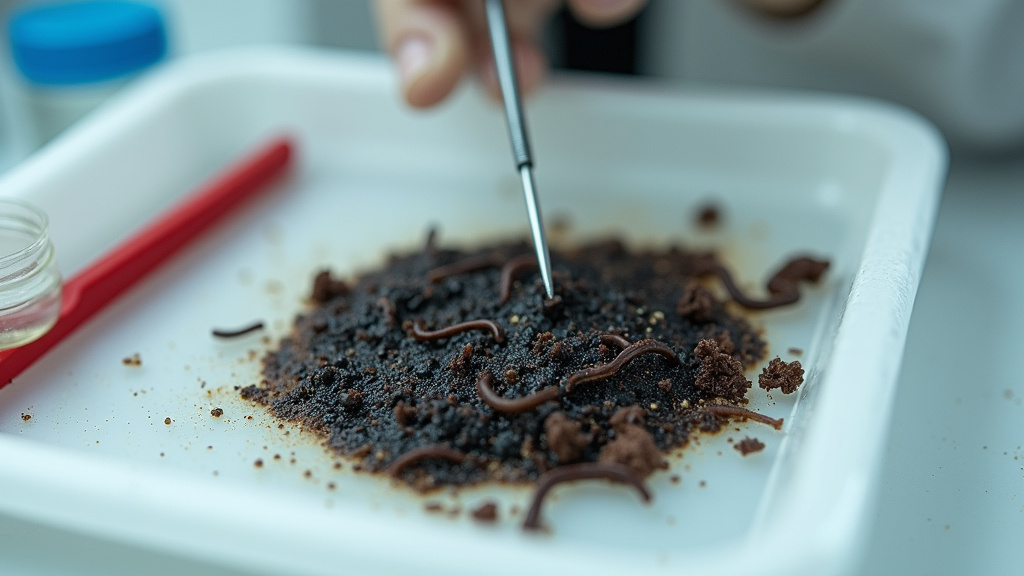
Coccidia and pinworms are the most common parasites that cause black, watery stool. They’re not mutually exclusive, a dragon can have both.
Coccidia (Isospora amphiboluri) is a protozoan. It reproduces inside intestinal cells, rupturing them. The damage causes bleeding and fluid loss. Stool becomes black, watery, and smells like rotten eggs. A 2021 study in the Journal of Herpetological Medicine and Surgery found that 68% of captive bearded dragons presented with gastrointestinal symptoms tested positive for coccidia.
Pinworms are nematodes. They don’t usually cause bleeding, but a heavy infestation inflames the gut, slows digestion, and can lead to impaction. The stool darkens from delayed passage. You might see the worms, small, white, moving threads, in fresh stool.
Diagnosis requires a fresh fecal sample analyzed by a reptile vet. Don’t try home remedies. Over-the-counter bird or dog parasite meds can kill a bearded dragon.
| Parasite | Stool Signs | Other Symptoms | Treatment |
|---|---|---|---|
| Coccidia | Black, watery, foul smell | Weight loss, lethargy, sunken eyes | Prescription antiprotozoal (Ponazuril/Toltrazuril) |
| Pinworms | Dark brown to black, may contain worms | Slowed digestion and defecation, bloating | Prescription anthelmintic (Fenbendazole) |
| Combined infection | Black, watery, with visible worms | Rapid weight loss, refusal to eat | Dual medication under vet supervision |
Treatment is a prescription course. The environment must also be sterilized. Coccidia spores survive in substrate for months. Remove all substrate, disinfect the enclosure with a 10% bleach solution, and replace with paper towel or tile for the treatment period.
TL;DR: Black, watery, foul-smelling stool points to parasites. Get a fecal test. Treat with vet-prescribed meds. Sterilize the enclosure.
Immediate Actions Before the Vet Visit
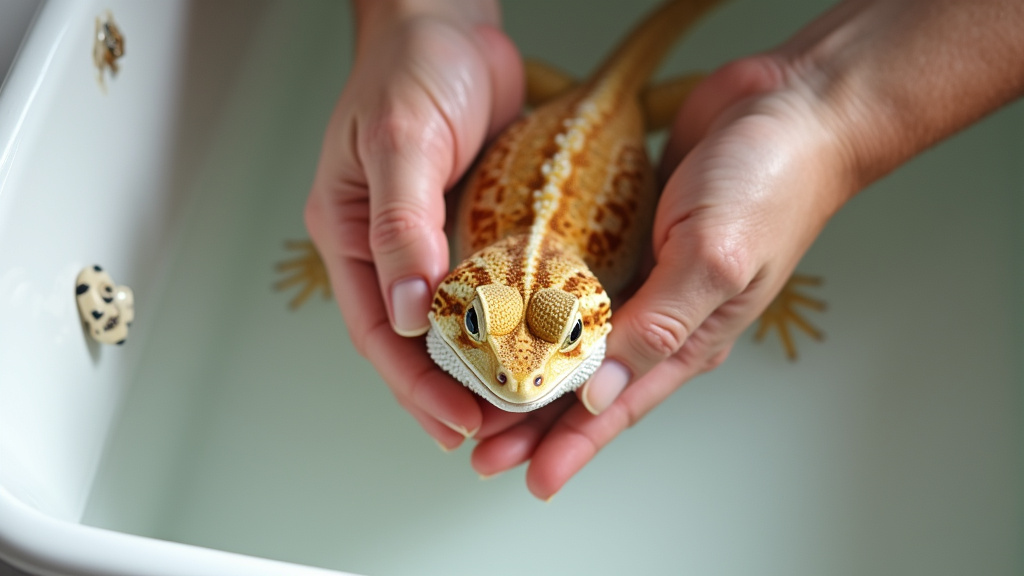
You see black poop. The vet appointment is tomorrow. What do you do tonight?
First, stop feeding. No insects, no vegetables. An empty gut reduces stress on a bleeding or impacted system. Offer water. Use a shallow dish or drip water on the nose.
Second, a warm bath. Fill a tub with 85-90°F water up to the dragon’s shoulders. Let it sit for 15-20 minutes. Hydration can soften an impaction. Gentle belly massage, side to side, not up and down, may stimulate movement.
Third, check the basking temperature. Is the Zoo Med Repti Basking Spot Lamp or your heat bulb providing 95-110°F at the basking site? Too low a temperature slows digestion, worsening impaction. Too high a temperature dehydrates the dragon, worsening the stool color. Adjust it.
Fourth, inspect the enclosure. Remove any loose substrate like sand, walnut shells, or coconut fiber. These cause impaction symptoms. Switch to tile, paper towel, or reptile carpet for now.
If the dragon’s belly is hard, or if it hasn’t passed any stool in over seven days, these steps are first aid only. The dragon needs a vet for X-rays and possible enemas.
I won’t recommend an olive oil or laxative treatment for impaction. The internet says it works. It sometimes does. It also sometimes causes aspiration pneumonia if the dragon inhales the oil during force-feeding. I’ve seen one die that way. Wait for the vet.
TL;DR: Stop feeding, offer a warm bath, check temperatures, remove loose substrate. These are first-aid steps. A hard belly or no poop for a week means vet immediately.
Fixing the Diet That Causes Black Stool
Black stool often starts in the food bowl. Too many insects, too few vegetables.
Adult bearded dragons need a 70% vegetable, 30% insect diet. Juveniles need the inverse, 70% insects, 30% vegetables, but the insect portion must be varied. Feeding only mealworms or only crickets overloads protein and fat, darkening stool.
A safe vegetable list includes collard greens, mustard greens, dandelion greens, and bell peppers. These provide fiber and water. Fiber moves digestion along, preventing the slow transit that darkens stool. Water keeps the urate white.
Here’s a weekly diet fix for black stool:
– Day 1: Only vegetables. Collard greens, bell pepper strips.
– Day 2: Vegetables + one appropriately sized insect (like a dubia roach).
– Day 3: Only vegetables.
– Day 4: Vegetables + one insect.
– Day 5: Only vegetables.
– Day 6: Vegetables + one insect.
– Day 7: Only vegetables.
This reduces protein load, increases fiber, and rehydrates the dragon. The stool should lighten to brown within four to five days if the cause was dietary.
Calcium supplementation methods also matter. Dusting insects with calcium powder is standard. But if you’re also adding calcium to water or over-dusting vegetables, the excess calcium can bind in the gut, contributing to impaction and dark, dry stool. Use a calcium powder like Rep-Cal twice a week on insects only.
TL;DR: Shift the diet to 70% vegetables. Increase fiber and water intake. Reduce insect feeding to 30%. Correct calcium supplementation. Stool color should normalize within a week.
How to Monitor Poop and Prevent Problems
Monitoring poop is the cheapest diagnostic tool you have. You don’t need a lab.
Keep a log. Note the date, the stool color (brown, black, green), the urate color (white, yellow, orange), the consistency (firm, runny, dry), and the smell (normal, foul, metallic). Also note the normal poop frequency, healthy adults poop every 1-3 days, juveniles every day.
Any change in this log is a signal. Black stool on Tuesday when Monday was brown means something changed Monday night, maybe a new insect batch, a temperature drop, or substrate ingestion.
Prevention rests on three pillars:
1. Diet balance: 70% vegetables for adults, varied insects for juveniles.
2. Hydration: Weekly warm baths, a visible water dish, and humidity between 30-40%.
3. Temperature gradient: Basking spot 95-110°F, cool side 75-85°F, measured with a digital thermometer.
Those three things stop most black stool cases. They also prevent runny bearded dragon poop and abnormal stool consistency.
If you see black poop once and it returns to brown after a diet correction, you’re likely fine. If it recurs, even with perfect husbandry, you need a fecal test. Parasites don’t care about your thermostat.
TL;DR: Log poop details. Maintain diet balance, hydration, and temperature. One black stool episode with correction is okay. Recurring black stool means vet and fecal test.
Frequently Asked Questions
Is white poop normal for bearded dragons?
Yes, the white part is normal urate. It should be soft and pure white. Yellow, orange, or chalky urate is not normal, it signals dehydration.
What does black bearded dragon poop mean?
Black stool is never normal. It indicates digested blood from internal bleeding, severe impaction, or a parasite-heavy gut. It requires investigation.
Can diet cause black poop?
Yes. A diet too rich in insects, especially fatty ones like mealworms, can produce dark, sticky stool that looks nearly black. This often masks a developing impaction.
How do I tell if black poop is from parasites or impaction?
Parasite stool is usually black and watery with a foul odor. Impaction stool is black, dry, and crumbly, often preceded by a hard belly and no poop for days. A vet fecal test confirms parasites.
What should I do if I see white and black poop together?
Separate the urate from the stool. Assess the stool’s color and texture using the table in this guide. Then take the immediate actions listed, stop feeding, warm bath, check temperatures. If the stool is tarry or watery, see a vet.
Can bearded dragons pee liquid urine?
Yes, they can excrete clear-yellow liquid urine, but it’s often absorbed by the urate or evaporates quickly. Seeing liquid urine is rare but possible, especially if the dragon is over-hydrated.
Before You Go
Black and white bearded dragon poop is a two-part message. The white urate tells you about hydration. The black stool tells you about digestion. Ignoring the black part because the white looks fine is the mistake that lands dragons in the vet ER.
When you see it, act. Stop the insects, bathe the dragon, check the heat. Log the details. If it doesn’t clear up in two days with those steps, get a fecal test. Parasites and impaction don’t fix themselves.
The fix is usually in the food bowl and the thermostat. Get the diet to 70% greens. Get the basking spot to 100°F. Give a weekly bath. That keeps the urate white and the stool brown.