
Bearded Dragon Accessories: The Essential Setup Guide
This post contains affiliate links. As an Amazon Associate, we earn from qualifying purchases.
Setting up bearded dragon accessories requires getting five core systems right: the enclosure size (minimum 4’Lx2’Wx2’H), the UVB lighting (a T5 HO fixture mounted inside), the heating (a halogen bulb on a thermostat), the substrate (slate tile or a soil/sand mix), and environmental control (digital thermometers and hides). Miss one, and the dragon’s health fails within months.
Most first-time owners buy the cute stuff first. The hammock, the plastic palm tree, the colorful food bowl. They plug in a kit lamp and drop the dragon in. Two months later, they’re at the vet with a lethargic, soft-jawed pet suffering from Metabolic Bone Disease. The decor didn’t cause it. The missing UVB did.
This guide ignores the novelties. We’ll cover the essential bearded dragon accessories that keep your animal alive, active, and thriving. You’ll learn the exact products, their specifications, and the non-negotiable setup sequence that prevents the most common, and costly, mistakes.
Key Takeaways
- UVB is non-negotiable and perishable. You need a T5 HO linear fixture with an Arcadia 12% or Reptisun 10.0 bulb mounted inside the enclosure, 10-12 inches from the basking spot. Replace the bulb every 12 months, even if it still lights up.
- Halogen bulbs are the best heat source. A 50W–75W halogen flood lamp provides infrared-A radiation, which penetrates tissue for deeper warming. Always pair it with a proportional (dimmer) thermostat, not an on/off switch, to prevent dangerous temperature swings.
- Buy the adult-sized enclosure immediately. A 120-gallon (4x2x2 feet) front-opening PVC or melamine cage is the minimum for an adult. Starting with a 40-gallon tank means you’ll spend more money upgrading within a year and never achieve a proper temperature gradient.
- Test everything for 3 days first. Run your lights, heat, and thermostats for a full 48–72 hours before your bearded dragon comes home. This is the only way to verify your basking surface hits 108–113°F and your cool side stays below 85°F.
- Your thermometer is probably wrong. Discard sticky analog dials. You need two digital probe thermometers (for ambient warm/cool temps) and one infrared temperature gun to measure the surface temperature of the basking spot itself.
The Foundation: Choosing the Right Enclosure
Head design changes the entire process. Your enclosure isn’t just a box; it’s the climate you’re engineering. The minimum size for an adult bearded dragon is 4 feet long, 2 feet wide, and 2 feet tall (a 120-gallon equivalent). The welfare-preferred size is 6x2x2 feet. This space is not a luxury, it’s the physical requirement for creating the life-saving temperature gradient from a hot basking zone to a cool retreat.
Front-opening PVC or melamine cages are superior to glass aquariums. PVC retains heat and humidity more consistently, and the front doors eliminate the stress of reaching from above, which mimics a predator attack. Glass tanks are poor insulators, cause temperature fluctuations, and often fail to meet the width and height requirements.
A proper T5 HO UVB fluorescent fixture must be mounted inside the enclosure, spanning two-thirds of its length. The bulb should be an Arcadia Desert 12% or Zoo Med Reptisun 10.0 T5 HO, positioned 10-12 inches above the primary basking surface. Mesh screens can block 30-50% of UVB rays, making internal mounting mandatory for correct exposure.
Your first investment should be the adult-sized habitat. A common mistake is buying a smaller, cheaper tank for a juvenile. You’ll outgrow it in six months, waste money on a second enclosure, and struggle to stabilize temperatures in the cramped space during the transition. Start with the optimal bearded dragon habitat, the 120-gallon, from day one.
TL;DR: Buy a 4x2x2 ft front-opening PVC cage first. It’s the single most important accessory because every other item’s placement and function depends on its dimensions.
The Non-Negotiables: UVB and Heating
Why does a $15 coil bulb cause Metabolic Bone Disease while a $50 T5 HO fixture prevents it? Physics. Compact UVB bulbs produce a weak, concentrated cone of UV that creates a tiny “usable” zone. Your dragon would have to sit directly underneath it, unmoving, to get any benefit. A T5 HO linear bulb produces a strong, even gradient across two-thirds of the tank, mimicking natural sunlight and allowing for natural movement.
The fixture must be mounted inside. Screen tops filter out too much UVB. Use mounting brackets or zip ties to secure the fixture to the ceiling or back wall of the enclosure, parallel to where you’ll place the heat lamp. The UVB lighting fixtures and heat source should be positioned at the same end to create a unified basking area.
For heat, halogen flood bulbs are the gold standard. They emit a significant portion of their energy as Infrared-A (IR-A). IR-A penetrates several millimeters into skin and muscle tissue, providing deep, comfortable warmth that aids digestion. Ceramic heat emitters and deep heat projectors only emit IR-B and IR-C, which merely warm the surface of the skin.
| Heat Source | IR Type Emitted | Best For | Risk If Used Alone |
|---|---|---|---|
| Halogen Flood Bulb | Infrared-A (IR-A) | Primary basking, digestion, natural warmth | Can overheat without a proportional thermostat. |
| Ceramic Heat Emitter | IR-B / IR-C | Supplemental nighttime heat (no light) | Only heats surface; can cause superficial burns. |
| Deep Heat Projector | IR-B / IR-C | 24-hour heat without light disturbance | Expensive; lacks the tissue penetration of IR-A. |
You must control this heat with a proportional thermostat, like a Herpstat or Habistat. An on/off thermostat will cycle the halogen bulb from off to 100% power, causing drastic temperature swings and shortening the bulb’s life. A proportional model smoothly dims the bulb to maintain a steady temperature. Plug the halogen lamp into the thermostat, place the thermostat’s probe at the basking site, and set your target (108–113°F).
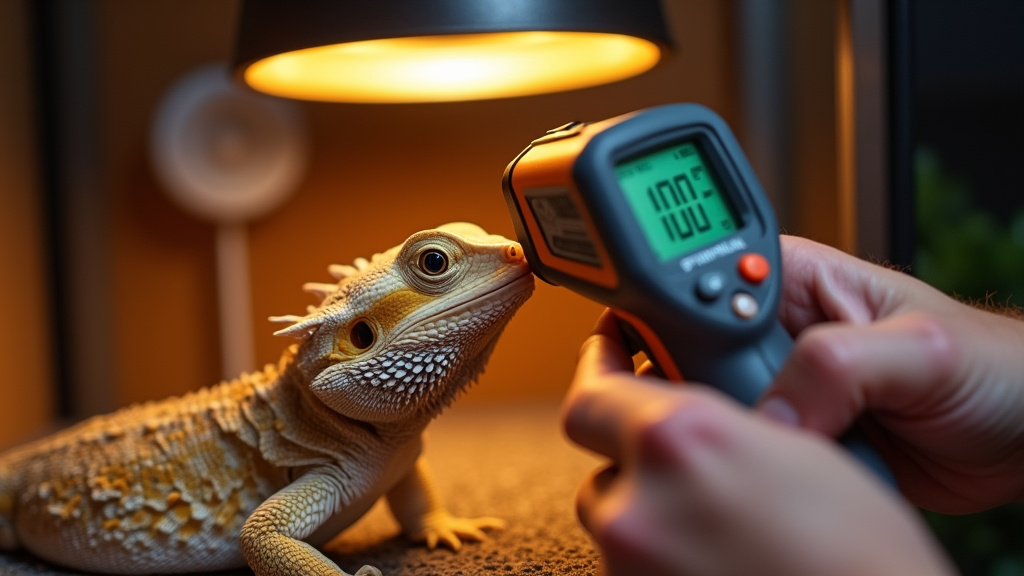
Common mistake: Measuring only air temperature with a stick-on dial, the basking surface itself can be 20 degrees hotter. An infrared temperature gun aimed at the rock under the lamp is the only tool that gives you the real number.
This complete lighting arrangement is useless if not tested. Assemble it and let it run for three full days before your dragon arrives. This burn-in period reveals if your thermostat is stable, if your cool side stays cool, and if any components are faulty.
What About Substrate? The Tile vs. Loose Debate
Substrate choice is the most heated debate in bearded dragon care, and for good reason. The wrong choice kills. For beginners and anyone with a dragon under 12 months, the answer is simple: use slate or ceramic tile.
Tile is inert, easy to clean, retains heat beautifully for basking, and presents zero impaction risk. Impaction, a fatal gut blockage, happens when a dragon ingests loose particles it can’t pass. Juveniles are especially prone as they snap at everything during feeding. Paper towel is the other safe beginner option, ideal for quarantine or sick animals.
For experienced keepers with healthy adults, a 70% organic topsoil (no fertilizers) and 30% play sand mix is a valid, enriching option. It allows for natural digging behaviors, holds burrows, and supports a bioactive cleanup crew. But it requires precise humidity control and vigilant hygiene to prevent bacterial growth.
| Substrate Type | Best For | Maintenance | Key Risk |
|---|---|---|---|
| Slate/Ceramic Tile | All beginners, all juveniles | Daily wipe, monthly sanitize | Can be slippery if not textured; retains heat. |
| Paper Towel | Quarantine, hatchlings, sick dragons | Replace entirely every 1-2 days | Zero enrichment; doesn’t hold heat. |
| 70/30 Topsoil/Sand Mix | Experienced keepers, adult dragons | Spot clean daily, full change every 4-6 months | Impaction if husbandry is off; can harbor mites. |
| Reptile Carpet | Not recommended | Frequent washing, harbors bacteria | Loops can snag claws and teeth, leading to injury. |
The substrate options review often misses a critical point: your substrate decision directly impacts your heating strategy. Loose substrate is a poor conductor of heat. A dragon basking on sand won’t get the same conductive warmth from a halogen bulb as one sprawled on a pre-warmed slate tile. If you choose a loose mix, your basking surface temperature becomes even more critical to monitor with your IR gun.
Avoid calci-sand, crushed walnut shell, or any silica-based sands at all costs. These clump when wet and are notorious for causing lethal impactions. If you want a sand look, a sand substrate best practices guide will steer you toward washed play sand as part of a mix, never alone.
The Support Cast: Hides, Bowls, and Monitoring
The accessories you add after the big three, enclosure, light, heat, fine-tune the environment from survivable to thriving. Each has a specific job.
You need at least two hides. One goes on the warm end, placed near the heat gradient but not directly in the basking spotlight. The other sits on the cool side. They should be snug, allowing the dragon to touch three sides when inside. This contact provides security. A hide that’s too large offers no comfort. I used a large, decorative log for my first dragon’s cool side. He never used it. Swapped it for a half-cork round that he could wedge himself into, and he was in it every night.
Food and water bowls need weight and a shallow profile. A heavy ceramic crock prevents tipping during enthusiastic climbing. A shallow design allows easy access and prevents drowning, bearded dragons are not strong swimmers. Plastic bowls can be scratched by claws, harboring bacteria, and may leach chemicals under heat lamps. Stainless steel or ceramic are sanitizable and durable.
Your monitoring equipment is your diagnostic toolkit. This isn’t optional.
* Digital Probe Thermometers (x2): Place one probe at the level of the basking platform (but not on the hot surface itself) to measure warm-side ambient air. Place the second probe in the cool-side hide. These give you the gradient.
* Infrared Temperature Gun: This is for the basking surface. Point it at the exact spot under the lamp. This reading is what matters for digestion.
* Digital Hygrometer: Place it mid-height on the cool side. Target humidity is 30-40%. Consistently higher levels can lead to respiratory infections.
A digital timer for your lights is a five-dollar lifesaver. It maintains a consistent 12-hour day/night cycle, regulating your dragon’s circadian rhythm and feeding response. Without it, you’ll forget, and irregular photoperiods cause stress.
Can You Go Bioactive?
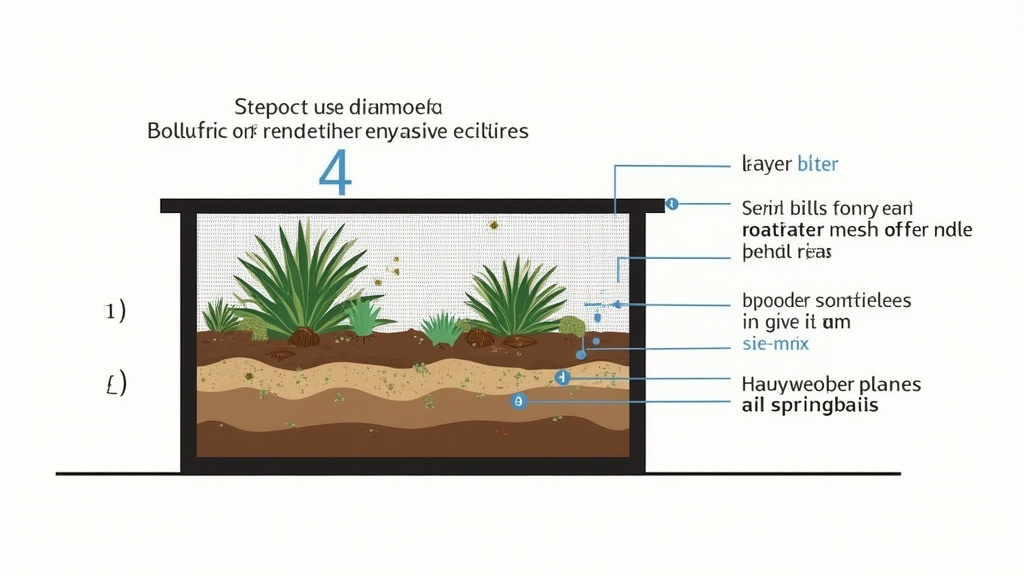
A bioactive enclosure uses a living soil substrate, microfauna (like springtails and isopods), and hardy plants to create a self-cleaning, ecological cycle. It’s the pinnacle of bearded dragon habitat setup for an experienced keeper. It’s also a significant project that fails if you skip steps.
The drainage layer is non-negotiable. You need 2-3 inches of expanded clay balls (Hydroton) or lava rock at the bottom, separated from the soil by a mesh screen. This prevents the soil from becoming a saturated, anaerobic swamp. Your soil mix itself is critical, a common recipe is 40% organic topsoil, 40% coconut coir, and 20% play sand, with added leaf litter.
Plant selection is about survival. Choose drought-tolerant, non-toxic species that can handle the low humidity and occasional trampling. Haworthia, Aloe, and certain hardy succulents can work. They must be well-established in their own pots before planting, and you must protect the roots with cages or rocks.
The cleanup crew must be introduced weeks before your dragon. This gives the isopods and springtails time to establish colonies. They will process feces and shed, but they are not magic. You will still need to spot-clean solid waste; the crew handles the breakdown of the remnants.
I tried a bioactive setup for my adult dragon without a proper drainage layer. The plants rotted within a month, the soil smelled sour, and the springtails died. I had to completely dismantle the enclosure, sterilize it, and start over with tile. The cost of the failed plants and supplies was more than a year’s worth of tile.
Bioactive is rewarding but demands research. It is not a “low-maintenance” shortcut. It’s a different, more involved form of maintenance. For your first dragon, master the fundamentals of a proper bearded dragon tank with solid substrate before considering this advanced step.
The 48-Hour Pre-Flight Checklist
Your dragon’s home is ready. Now, prove it. This checklist is what separates a responsible keeper from a hopeful one. Execute it in order.
- Assemble and position the empty enclosure. Place it in its permanent location, away from windows, air vents, and high-traffic areas. Ensure the stand is level.
- Install all electricals. Mount the UVB inside. Set up the halogen lamp on its thermostat. Plug both lights and the thermostat into a power strip, and plug the strip into your digital timer.
- Add substrate and decor. Place your tile or prepared substrate. Position the basking platform, both hides, and bowls. Do not add the dragon.
- Power on and calibrate. Turn on the timer, lights, and thermostat. Set the thermostat to 110°F as a starting point.
- Monitor for 72 hours. Use your digital probes and IR gun. Check readings every 12 hours.
- Is the basking surface 108-113°F?
- Is the warm-side ambient air 85-90°F?
- Is the cool-side ambient air 75-80°F?
- Is the cool-side humidity between 30-40%?
- Make adjustments. If the basking spot is too cool, raise the platform or increase the thermostat setting. If it’s too hot, lower the platform, use a lower-wattage halogen heat bulb, or adjust the thermostat down. If the cool side is too warm, you may need better room ventilation or a smaller heat bulb.
- Stabilize. Once all parameters hold steady for a full 24-hour cycle, the environment is ready. Now you can bring your bearded dragon home.
Skipping this testing phase is the most common catastrophic error. You are relying on manufacturer specs and guesswork. Real-world conditions, your room’s ambient temperature, airflow, and humidity, change everything. The dragon should never be the test subject.
Frequently Asked Questions
What’s the single most important bearded dragon accessory?
The T5 HO UVB lighting system. Without adequate, properly placed UVB light, your bearded dragon cannot synthesize vitamin D3, which is essential for calcium absorption. Calcium deficiency leads to Metabolic Bone Disease (MBD), a painful, crippling, and often fatal condition. Everything else supports wellness, but UVB prevents a direct, lethal pathology.
Can I use a coil/compact UVB bulb to save money?
No. Compact UVB bulbs have a poor output gradient and a tiny effective zone. They are unreliable for providing the consistent, full-coverage exposure a bearded dragon requires across its basking area. The upfront savings are erased by the high vet bills for treating MBD. The linear T5 HO fixture is a non-negotiable, one-time investment in the animal’s long-term health.
How often do I need to replace my UVB bulb?
Replace linear T5 HO UVB bulbs every 12 months. The visible light will still work, but the UVB output degrades significantly over time. Mark the purchase date on the bulb’s base with a permanent marker. Using an expired bulb is functionally the same as having no UVB at all.
Is a heat mat or under-tank heater a good primary heat source?
Heat mats are useless and potentially dangerous for bearded dragons. They are designed to provide Infrared-C (IR-C), which only heats the surface it contacts. Bearded dragons bask from above to warm their core. A heat mat cannot create a proper basking zone and may cause belly burns if malfunctioning or unregulated. All heat must come from an overhead source.
What size water bowl is best?
shallow, heavy ceramic bowl just large enough for the dragon to sit in if it chooses. The water depth should not exceed the height of the dragon’s elbows when in a normal stance. This allows for drinking and occasional soaking without any risk of drowning. Change the water daily and scrub the bowl weekly to prevent bacterial slime.
Are hammocks and climbing branches necessary?
They are highly beneficial for enrichment but are not “essential” for survival like UVB or heat. Bearded dragons are semi-arboreal and enjoy climbing. A sturdy, wide climbing branch or a reptile-safe hammock provides exercise and mental stimulation. Ensure any hammock is securely fastened and any wood is sterilized (baked) to prevent parasites.
Before You Go
Forget the themed decor kits. The essential bearded dragon accessories are a short, serious list: a spacious PVC enclosure, an internally mounted T5 HO UVB light, a halogen heat bulb on a proportional thermostat, a solid or safe loose substrate, accurate digital thermometers, and two snug hides. Their purpose isn’t decoration, it’s replicating the specific thermal and spectral gradients of an Australian outback.
Set it all up first. Test it for three days. Verify the numbers with an infrared gun. Only then is the environment ready for its inhabitant. This process isn’t just about assembly; it’s about assuming responsibility for a climate. Get the climate right, and the dragon, the curious, personable, rewarding pet you actually wanted, will thrive within it.