Guide to General Bearded Dragon Behavior & Action Meanings
This post contains affiliate links. As an Amazon Associate, we earn from qualifying purchases.
General bearded dragon behavior is a real-time communication system. Your lizard uses specific postures, colors, and movements to express its needs, mood, and health. To interpret it, you must match the observed action, like arm waving or head bobbing, to its context while first ruling out errors in temperature, UVB lighting, and enclosure setup.
Most owners misread the signals. They see constant head bobbing as a quirky personality trait when it’s actually a flashing stress indicator. They assume a hidden dragon is brumating, but it’s often just too cold on the basking spot.
This guide breaks down the behavioral lexicon. You’ll learn to distinguish a friendly greeting from a territorial threat, a healthy heat-up ritual from a defensive panic, and normal curiosity from chronic stress that needs a vet.
Key Takeaways
- Arm waving is submission, not hello. A juvenile or a subordinate adult does it to say “I’m not a threat.” Constant waving at a glass reflection means your dragon sees a rival and is stressed.
- Chronic black bearding is a red flag. A beard that stays dark for hours, especially without a visible trigger, points directly to husbandry failure or underlying illness. Check temperatures with a probe, then call an exotic vet.
- “Brumation” is a diagnosis of exclusion. Before you decide your sleepy dragon is brumating, you must rule out incorrect basking temps, weak UVB, and parasitic infection. A healthy brumating dragon maintains its weight.
- Enclosure size beats fancy decor. A 2024 PLOS One study found that a larger floor space (4x2x2 feet is the modern minimum) improves welfare more than a complex “naturalistic” setup in a cramped tank.
- Digging is a non-negotiable need. Even if you use a solid substrate like tile, you must provide a dedicated dig box filled with sterilized topsoil. Blocking this instinct causes frustration and repetitive glass surfing.
The Communication Breakdown: Arm Waving, Head Bobs, and Black Beards
Your dragon’s head and arms are its primary signal flags. These displays have precise meanings rooted in social hierarchy, a remnant of their life in arid Australian scrublands.
A slow, deliberate head bob functions as a recognition signal between familiar dragons or from dragon to keeper. Rapid, jerky bobbing is a territorial broadcast, most common in mature males during breeding season or when they perceive an environmental challenge.
Head bobbing is the most context-dependent signal. A few slow bobs when you approach the tank in the morning? That’s a “good morning.” A series of fast, aggressive bobs directed at nothing? That’s stress. The dragon is reacting to something you haven’t identified, a reflection, a shadow, a vibration. I learned this the hard way with a male named Rex. His tank was opposite a window. Every afternoon, he’d launch into frantic head bobbing for twenty minutes straight. It wasn’t until I caught the sun hitting a picture frame across the room, casting a moving glare on his wall, that I understood. He thought it was another dragon. Covering the outside back glass with a static-cling backdrop stopped the daily show within two days.
Arm waving looks absurdly cute. One arm lifts and makes a slow circular motion. This is the dragon’s white flag. Juveniles do it constantly toward larger dragons (or you) to avoid conflict. Adults use it less, but it’s a clear sign of submission. If you see it frequently, ask what your dragon is submitting to. The answer is often its own reflection.
The black beard is the urgent alert. Puffing out the throat pouch and turning it jet black signals high arousal. This could be territorial aggression, mating readiness, fear, or acute stress from incorrect husbandry. The key is duration. A beard that goes black during a bath or a vet visit and lightens up afterward is normal. A beard that stays dark for hours on end, especially if the dragon is also lethargic, is a five-alarm fire.
Common mistake: Assuming a black beard is just “anger”, a beard that stays dark for more than an hour after a stressor is gone almost always indicates an environmental problem or the onset of illness, like a respiratory infection or impaction.
TL;DR: Slow head bobs are greetings, fast ones are stress. Arm waving is submission. A temporary black beard is a mood; a chronic one is a symptom.
The Physical Language: Pancaking, Gaping, and Surfing
Beyond the obvious displays, dragons speak with their whole body. These postures are less about social chat and more about internal state and environmental interaction.
Pancaking, flattening the body against a surface, serves two opposite purposes. Under the basking lamp, it’s a thermoregulation strategy. Maximizing surface area absorbs more heat, and you’ll often see the body darken simultaneously (“firing up”) to increase heat absorption. Done when you reach into the tank, it’s a defensive bluff. The dragon is trying to look bigger and more formidable to a potential predator. You.
Open mouth behavior, or gaping, is almost always about temperature control. Like a dog panting, it’s a way to release excess heat once the core body temperature is optimal. You’ll see it consistently when the basking spot surface temperature (measured with a probe thermometer) is correctly between 105-110°F. It’s a sign the gradient is working. If the mouth is open but the dragon is in the cool end, that’s not gaping, investigate for a respiratory infection.
Glass surfing is the frantic scrabbling at the enclosure walls. It’s a captivity-specific stress behavior. The dragon wants out. The causes are a checklist: enclosure too small, lack of mental enrichment, seeing its reflection, or inappropriate temperatures forcing it to constantly search for a better spot. It’s not “exercise.”
| Physical Behavior | Primary Cause | Immediate Action |
|---|---|---|
| Pancaking under lamp | Thermoregulation / Heat absorption | Verify basking surface temp is 105-110°F with a probe. |
| Pancaking when approached | Fear / Defensive display | Move slower, approach from the side, avoid looming overhead. |
| Gaping on basking spot | Normal thermoregulation | None needed. Confirm cool side is 75-80°F for a proper gradient. |
| Glass surfing | Stress / Frustration / Boredom | Cover outside back/sides, add climbing branches, upgrade to 120-gallon tank. |
TL;DR: Pancaking is for heat or fear. Gaping on the hot side is normal cooling. Glass surfing is always a problem with the enclosure, not the dragon.
The Rhythms of Life: Brumation, Shedding, and Digging
Some behaviors are tied to innate biological cycles, not daily mood. Confusing them with sickness is a classic rookie error.
Brumation is a hibernation-like slowdown. Appetite vanishes, sleep hours multiply, and they often bury themselves. It commonly hits in late fall/early winter. Here’s the critical rule: brumation is a diagnosis of exclusion. You must first rule out sickness and bad husbandry. Weigh your dragon on a digital kitchen scale. A healthy brumating dragon will not lose significant weight. A sick, lethargic dragon will. Check your temperatures, a cold dragon is an inactive dragon. If weight and temps are stable, provide a hide and leave them be. They might sleep for weeks.
Shedding makes them act off. Skin gets dull and tight, eyes may look puffy, and they get irritable. Appetite can drop. They’ll rub against rocks and bark. Never, ever pull the peeling skin. You risk tearing the new layer underneath. A warm bath (85°F, shallow) can help loosen it, but the process is mostly wait-and-see.
Digging and burrowing behavior is a hardwired instinct. Females dig to lay eggs (gravid behavior), but all dragons dig to explore, hide, and regulate temperature. Denying this outlet creates a frustrated animal. The solution is a dig box: a sturdy container filled with a moist mix of sterile topsoil and play sand. Place it in the cool end. They’ll use it.
I once used a pure slate tile substrate for easy cleaning. My dragon, Smaug, started obsessively scratching the corners of his tank. He wasn’t glass surfing; he was trying to dig. Adding a simple plastic tub with soil stopped the scratching within 48 hours. The substrate under his hide was always perfectly flattened after that.
Stress Versus Sickness: Reading the Subtle Cues
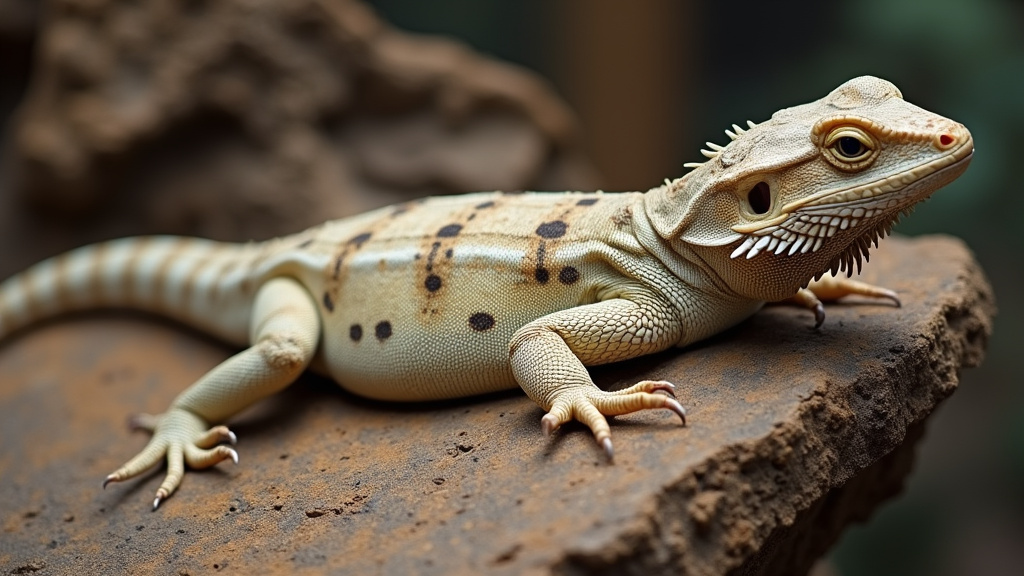
Behavior is your earliest warning system for health trouble. The line between stress and illness is thin, and one often leads to the other.
Lethargy is the biggest red flag. A dragon that sleeps all day, doesn’t bask, and shows no interest in food is not “just chill.” The first step is always a full husbandry check. Is the UVB bulb older than 12 months? It’s dead. Is the basking bulb putting out heat? Measure it. A 2024 academic paper on bearded dragon behaviour in PLOS One reinforced that inadequate thermal resources directly cause lethargy and reduce exploratory behavior.
Stress marks are those dark, oval splotches on the belly. They come and go with mood. Their constant presence, however, indicates chronic discomfort. Pair them with a loss of appetite or unusual hiding behavior, and you’re likely looking at the early stages of a health issue, from parasites to metabolic bone disease.
Abnormal posture like a raised, stiff tail or dragging back legs is not a behavior, it’s a neurological or muscular symptom. That’s a straight-to-the-vet situation. Similarly, a head tilt or circling is a serious sign of inner ear infection or other pathology.
Consider this diagnostic table for common behavioral shifts:
| Observed Change | Most Likely Cause | Secondary Check | Severity |
|---|---|---|---|
| Sudden loss of appetite | Incorrect basking temperature | Probe the basking SURFACE, not the air. | High – Needs immediate fix. |
| Hiding all day, not basking | Weak or dead UVB bulb | Use a Solarmeter 6.5 or replace bulb if >12 months old. | High – Leads to MBD. |
| Constant glass surfing | Enclosure too small / Boredom | Upgrade to 4x2x2 ft (120 gal) minimum, add clutter. | Medium – Welfare issue. |
| Runny, mucus-filled stools | Parasitic infection (Coccidia, Pinworm) | Collect fresh fecal sample for vet analysis. | High – Requires medication. |
TL;DR: Lethargy + stress marks = check husbandry, then call the vet. Strange posture = vet immediately. Your dragon’s behavior is its only way to say it feels wrong.
Setting Up for Success: How Your Tank Shapes Behavior
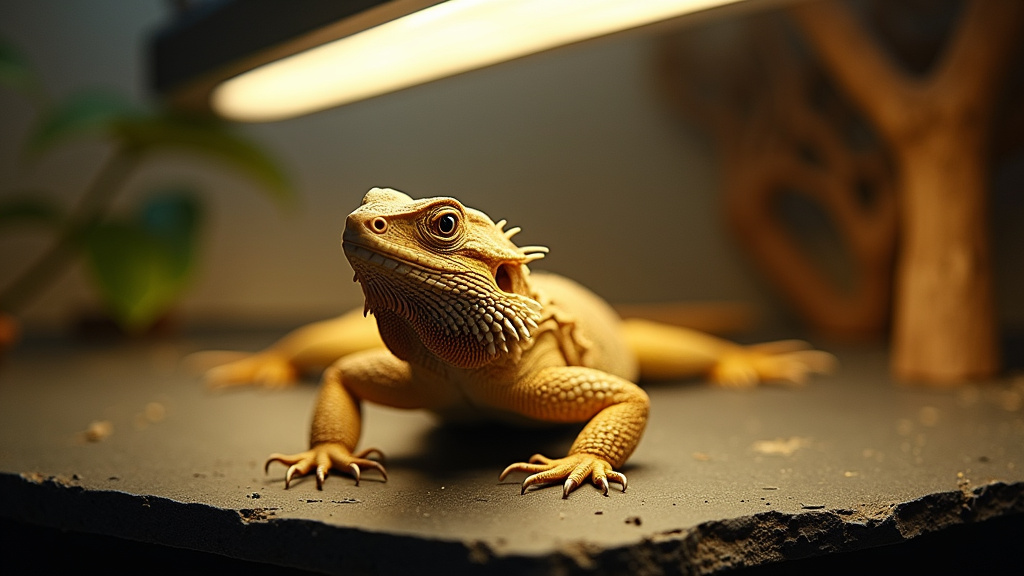
You cannot interpret behavior in a vacuum. The enclosure is the dragon’s entire world, and every dimension of it either satisfies or frustrates their instincts. Modern reptile care has moved past the bare minimum.
The 4x2x2 foot enclosure (120 gallons) is the uncontested new standard. It provides the necessary thermal gradient and space for natural movement. That PLOS One scientific study on enclosure influence found that increased floor space reduced repetitive behaviors and increased exploratory activity more reliably than adding complex decor to a smaller tank.
Within that space, you need a basking zone and a cool zone. The basking spot must be a solid platform (rock, slate) that retains heat, measured at 105-110°F on its surface with a digital probe. The cool end must be 75-80°F. This gradient allows for proper thermoregulation behavior. Without it, you’ll see erratic activity and stress.
UVB lighting is non-negotiable. Use a linear T5 HO fluorescent tube (Arcadia 12% or Zoo Med ReptiSun 10.0) that spans half the tank’s length, mounted inside the screen or according to the manufacturer’s distance guidelines. It must be replaced every 12 months. Weak UVB causes lethargy, poor appetite, and ultimately metabolic bone disease, all of which manifest as “bad” behavior.
Common mistake: Using a “bright” LED plant light and thinking it provides UVB, it doesn’t. UVB is invisible. Your dragon can be sitting under a beautifully lit tank that is slowly crippling it with MBD because the essential UVB spectrum is absent.
Finally, add functional enrichment. This isn’t just plastic plants. It’s thick branches for climbing, a proper dig box for burrowing behavior, and multiple hiding spots (one on the hot side, one on the cool side). These features allow the dragon to express its full natural repertoire, from climbing to digging to hiding, which directly prevents stress-induced actions like glass surfing.
TL;DR: Bigger tank, strong UVB, proper heat gradient, and real enrichment. These aren’t luxuries; they are the prerequisites for normal, healthy bearded dragon behavior.
Frequently Asked Questions
Why is my bearded dragon waving at me?
Your dragon is displaying submissive waving. It sees you as a larger, potentially threatening creature and is signaling it is not a threat. This is very common in juveniles and new rescues. It’s a sign of awareness, not necessarily fear. Respond by moving slowly and predictably to build trust.
Is a black beard always bad?
No. A temporary black beard during handling, bath time, or when seeing another pet is a normal stress response. It becomes a problem when it’s chronic, lasting hours without an obvious trigger. A persistently black beard, especially paired with lethargy, is a major indicator of illness or severe husbandry failure and needs investigation.
How can I tell if my bearded dragon is brumating or sick?
You must rule out sickness first. Weigh your dragon. A brumating dragon maintains weight; a sick one loses it. Check that your basking surface temperature is 105-110°F and your UVB bulb is fresh. If temperatures are correct, weight is stable, and the dragon is choosing to sleep in a hide, it’s likely brumation. When in doubt, a vet check with a fecal exam is the safest path.
What does it mean when my bearded dragon licks everything?
Licking behavior is how they “smell” their world. Their tongue collects scent particles, which are then analyzed by the Jacobson’s organ in the roof of their mouth. It’s a sign of a curious, investigative dragon. It’s completely normal and how they learn about new objects, food, and even you.
Why does my bearded dragon stare at me?
Dragons have excellent eyesight and are visually oriented. Staring is how they gather information. They are likely recognizing you, watching for movement that might signal feeding time, or simply observing their environment. It’s generally a sign of alertness and engagement, not aggression.
The Bottom Line
Your bearded dragon’s behavior is a direct, honest readout of its physical and mental state. There are no hidden meanings, just clear signals we often mislabel. Fast head bobs mean stress, not personality. A chronic black beard means “fix my world,” not “I’m angry.” Lethargy means check the thermometer and the UVB meter before you assume it’s brumation.
The goal isn’t to have a dragon that performs cute tricks. It’s to provide an environment, a 4x2x2 foot space with precise heat, essential UVB, and real enrichment, where natural, calm behaviors can flourish. When you see your dragon bask openly, explore its branches, and dig in its box without a trace of frantic glass surfing, you’ll know you’re speaking its language. You’ve built a world where it doesn’t need to scream for help.