
Why Does My Bearded Dragon Poop On Me? The 5 Real Reasons
This post contains affiliate links. As an Amazon Associate, we earn from qualifying purchases.
Your bearded dragon poops on you for five main reasons: stress, a natural instinct to keep its home clean, a fast metabolism preventing it from holding waste, learned behavior, and underlying health issues like parasites or impaction. Identifying the specific cause is crucial for addressing the problem effectively.
Your bearded dragon poops on you primarily due to five reasons: stress from handling or environment, a natural instinct to keep its enclosure clean, an inability to hold it due to a fast metabolism, learned behavior or habit, and underlying health issues like parasites or impaction. The specific cause dictates your response, from adjusting your routine to a vet visit.
Most owners assume the mess is a personal affront or a sign of poor training. It’s not. You’re reading a biological signal, not a behavioral insult. The mistake is reacting to the symptom, the poop on your shirt, instead of diagnosing the root cause in your dragon’s environment, health, or instincts.
This guide breaks down the five core reasons, teaches you how to read your dragon’s other signals, and gives you a clear action plan to reduce accidents. We’ll cover when it’s a quirky habit and when it’s a red flag for a sick reptile.
Key Takeaways
- Stress is the top trigger. Sudden handling, loud noises, or a new pet in the room can cause a nervous dragon to void its bowels.
- Many dragons instinctively avoid soiling their home territory. To them, your lap is a safe, “outside” space to go.
- A sudden onset of this behavior, especially with runny, smelly, or discolored poop, warrants an immediate exotic vet check.
- You can train against the habit by establishing a pre-handling bathroom routine, like a warm bath or enclosure time.
- Never punish your dragon for pooping on you. It doesn’t understand. You’ll only increase stress and guarantee more accidents.
The 5 Core Reasons Your Bearded Dragon Poops On You
Head design changes the entire process. Look at the business end of your trimmer. Pooping on you is a communication. Your job is to decode which of five messages your dragon is sending. The timeline matters, a new behavior in an otherwise healthy dragon points to environment or stress. A long-standing habit in a healthy dragon points to instinct or training.
A bearded dragon’s digestive tract is relatively short and simple, with limited voluntary control over defecation. The gastrocolic reflex, where a full stomach stimulates the colon, is strong, and physical activity or stress can trigger an urgent bowel movement. This is why handling often precipitates an accident.
The first three reasons are behavioral. The last two are medical. Start your diagnosis here.
1. Stress or Anxiety. This is the most common cause for a one-off accident. Your dragon perceives a threat. Its nervous system goes into “fight or flight,” which includes lightening the load for a quicker escape. The threat could be you, if your handling is too fast or insecure, or something in the environment. A new decoration, a loud TV, the neighbor’s dog barking, or even your own anxiety can transmit to your pet.
Common mistake: Continuing to handle a dragon that is glass-surfing, puffing its beard, or showing a black beard, the poop follows within minutes, and the dragon associates you with the stressful event.
2. Natural Clean Instinct. In the wild, fecal matter attracts predators. A clean hide is a safe hide. Your dragon’s enclosure is its territory, its safe space. To their instinctive brain, pooping outside that territory, on you, the couch, the floor, is the safer choice. This is why so many dragons “hold it” until they are removed from their tank. They aren’t being stubborn; they’re following a survival program written by evolution.
TL;DR: Your dragon isn’t trying to insult your home. It’s trying to protect its own.
3. Inability to “Hold It.” Bearded dragons don’t have a bladder like mammals. They excrete a semi-solid urate and feces together, and the signal to go can be sudden. Combine a fast metabolism (especially in juveniles) with the physical jostling of being handled, and you have a perfect recipe for an accident. If your dragon eats daily and you handle it an hour after feeding, you’re essentially shaking a full garbage bag.
4. Learned Behavior (Habit). This develops over time. If your dragon poops during an outing and you immediately return it to its warm, cozy tank, you’ve just rewarded the behavior. The dragon learns: poop on human = go back to basking spot. Similarly, if you always give a bath to clean off the mess, the dragon may start to associate pooping with the pleasant sensation of a warm soak. You’ve accidentally created a routine.
5. Underlying Health Issue. This is the reason you must rule out. Gastrointestinal distress from parasites, impaction, or an improper diet can cause urgent, uncontrollable bowel movements. Discomfort from the illness itself can also stress the dragon, compounding the problem. A healthy, well-adjusted dragon might still have occasional accidents. A sick dragon will often have frequent accidents accompanied by other symptoms.
| Reason | Typical Scenario | Other Signs to Look For |
|---|---|---|
| Stress/Anxiety | First time handling, after tank cleaning, loud environment. | Black beard, glass surfing, hiding, flattened body posture. |
| Clean Instinct | Dragon consistently “holds it” in tank, then relieves itself shortly after being removed. | No signs of stress; normal appetite and activity. |
| Can’t Hold It | Poops during or immediately after active handling, especially post-feeding. | Young dragon (under 1 year), very regular feeding schedule. |
| Learned Habit | Dragon poops on you, you react (clean up, give bath, return to tank), behavior repeats. | Behavior is predictable and follows a clear pattern. |
| Health Problem | Sudden onset, change in poop consistency (watery, bloody, extremely smelly). | Lethargy, loss of appetite, weight loss, sunken eyes. |
Decoding the Poop: A Health Check You Can’t Skip
The waste itself is a diagnostic tool. Before you clean the mess off your jeans, take a five-second look. What you see tells you if the “why” is behavioral or medical. A dragon with perfect husbandry can still poop on you out of instinct. A dragon with hidden parasites will almost always show evidence in its stool.
Healthy bearded dragon poop has two distinct parts: a firm, log-shaped brown fecal matter (the digested food waste) and a white or off-white chalky urate (the concentrated urine). The urate should be soft, like toothpaste, not hard and crumbly. A small amount of clear liquid is normal and indicates good hydration.
Now, let’s talk about the warning signs. If the poop on you looks wrong, the problem isn’t your handling.
Common mistake: Assuming clear liquid around the stool is diarrhea, it’s actually excess water expelled by the kidneys and is a sign of good hydration. True diarrhea is unformed, mushy, or completely liquid feces.
Abnormal Signs & What They Mean:
- Watery, Runny Feces: Often a diet issue, too many watery vegetables like cucumber or lettuce. Can also signal parasites like Coccidia or flagellates. Rule out diet first.
- Very Smelly Poop: A distinctly foul, rancid odor beyond the normal earthy smell points to a bacterial imbalance or parasitic infection.
- Red Streaks or Blood: This is an emergency. Could indicate a severe parasitic load, a gastrointestinal tear, or in females, a reproductive issue like egg-binding.
- Yellow or Green Urate: Dehydration. The urates should be white. Yellow means the kidneys are concentrating toxins.
- No Urate at All: Severe dehydration or a kidney function problem.
If you see any of these red flags, the “pooping on you” is a secondary symptom. Your next step is not training; it’s a vet visit. Document the abnormal poop with a photo if you can.
Your Action Plan: How to Prevent Future Accidents
Stop the accidents by changing the conditions that cause them. This isn’t about punishing your dragon. It’s about managing its biology and your routine. Your plan will differ if the cause is stress versus a learned habit. Start with the easiest fix: the pre-handling ritual.
1. Master the Pre-Handling “Empty Out” Routine.
This is the single most effective tactic. Before you take your dragon out for cuddles, encourage it to poop in its enclosure. How?
– Offer a warm bath (85-90°F) for 10-15 minutes. The warmth and hydration stimulate the bowels. Many dragons will go in the water.
– If your dragon hates baths, place it in its designated “bathroom” area of the tank (often a cooler corner) right after its basking period. The heat from basking gets things moving.
– Only begin handling after it has pooped in its tank or in the bath. This breaks the learned connection between handling and relief.
2. Optimize the Environment to Reduce Stress.
Stress is a trigger you can control. Audit your dragon’s world.
– Temperatures: Is the basking spot 100-115°F for adults (slightly hotter for babies)? Is the cool side 75-85°F? Use a digital probe thermometer. Incorrect temps disrupt digestion and cause anxiety.
– UVB Lighting: Is your T5 or T8 UVB tube light (like a Zoo Med ReptiSun 10.0) less than 12 months old? Is it mounted inside the screen or correctly positioned? Weak UVB compromises metabolism and calcium absorption, leading to general malaise and stress.
– Security: Does your dragon have at least two solid-sided hides? Can it see other pets, like cats or dogs? Block the line of sight.
3. Handle with Confidence (and Timing).
How you pick up your dragon sets the tone. Scoop from below, supporting the chest and hind legs. Never grab from above like a predator. Keep initial sessions short, 5 to 10 minutes, and always end on a positive note with a return to the basking spot. Most importantly, avoid handling for at least 2-3 hours after feeding. That’s when the gastrocolic reflex is strongest.
4. Break the Learned Habit with Positive Reinforcement.
If your dragon has learned that pooping on you ends the outing, you need to re-teach it. When it poops in its enclosure, immediately clean it up and offer a tiny treat, like a piece of butternut squash or a single waxworm. You’re building a new association: poop in tank = good thing. If it poops on you, stay calm. Clean up without fuss, and simply end the handling session without any dramatic reaction. No bath, no extra attention.
When It’s a Medical Problem: The Vet Checklist
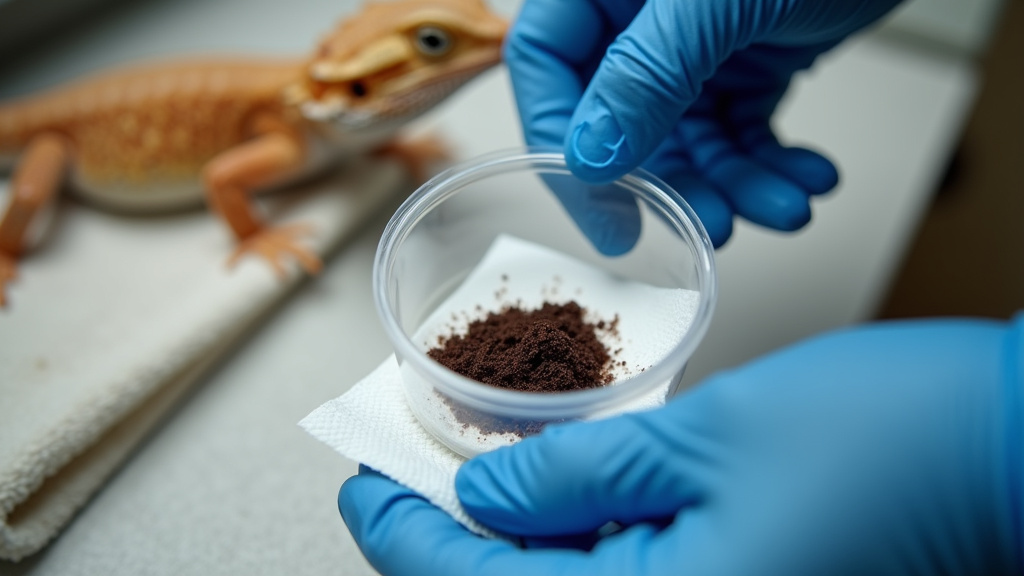
Sometimes, the behavior is a symptom. Your action plan starts in an exotic veterinarian’s office, not your living room. I learned this the hard way with a dragon named Ember. She started pooping during handling out of the blue. Her stool seemed normal, but she was less interested in her roaches. I adjusted temperatures, changed UVB, nothing worked. The third week, I noticed her urate was slightly pink. The vet diagnosed a moderate pinworm infection. Two rounds of Panacur later, the accidents stopped. The timeline was the clue, a sudden change in an established adult.
If your bearded dragon’s pooping-on-you behavior is new, frequent, and paired with a loss of appetite or lethargy, schedule an exotic vet visit within the week. Waiting can allow parasites to multiply or an impaction to become life-threatening.
Symptoms That Demand a Vet Visit:
- Sudden change in behavior (dragon was previously reliable).
- Lethargy or hiding more than usual.
- Loss of appetite for more than three days.
- Weight loss (use a kitchen scale weekly).
- Any of the abnormal poop signs listed in the previous section.
The vet will likely request a fresh fecal sample. Collect one the morning of the appointment. They’re looking for parasite eggs under a microscope. Treatment is usually straightforward. This isn’t a failure of your care; parasites are common in reptiles. It’s a responsible step in ruling out a physical cause for the behavioral issue.
Frequently Asked Questions
Is my bearded dragon pooping on me out of spite?
No. Reptiles do not possess the complex emotional cognition for spite or malice. The behavior is driven by instinct, stress, physiology, or learned association. Attributing human emotions to it will lead you to incorrect and potentially harmful corrections.
How can I tell if it’s stress or a health problem?
Look at the totality of symptoms. A stressed but healthy dragon will have normal appetite, bright eyes, and normal stool consistency. Its only issue is pooping during stressful events. A dragon with a health problem will show other changes: abnormal stool, lethargy, lack of appetite, or weight loss. When in doubt, a vet check provides a clean bill of health, letting you focus on behavioral solutions.
My dragon only poops in the bath now. Is that bad?
It’s not inherently bad, it’s convenient for cleanup! However, it can become a problem if you travel or can’t provide a bath. It means your dragon has formed a strong habit. To encourage enclosure pooping again, try offering the bath inside the tank (a shallow dish) or shift the routine: bath, then immediately place the dragon in a specific corner of its tank to finish. Over time, you may phase out the bath trigger.
Should I punish my bearded dragon for pooping on me?
Absolutely not. Yelling, tapping, or putting the dragon back in a cold tank will only increase fear and stress. Since stress is a primary cause, punishment guarantees more accidents. It also damages the trust between you and your pet. Always respond calmly and neutrally.
Can diet influence this behavior?
Indirectly, yes. A diet too high in watery greens (like iceberg lettuce) can lead to more frequent, urgent bowel movements. A diet lacking proper fiber or with food items too large can cause impaction, leading to straining and discomfort that might result in accidents during handling. Stick to staple greens like collard, mustard, and dandelion greens, and appropriately sized insects.
Before You Go
Your bearded dragon pooping on you is a puzzle with five possible pieces: stress, instinct, physical limitation, habit, or illness. Start by reading the poop itself, its form tells a story. Then, audit your husbandry. Temperatures and UVB are non-negotiable foundations. Implement a pre-handling bathroom routine; it’s the simplest fix with the highest success rate.
Remember the timeline. A new behavior in an otherwise healthy dragon points to environment or routine. A new behavior with other symptoms points to the vet. Never take it personally. You’re not being disrespected. You’re being given a data point, one that helps you provide better care for a creature that depends on you completely. Clean up, adjust your approach, and keep bonding. The trust you build is worth the occasional mess.