
Baby Bearded Dragon Diet: How Many Crickets to Feed Daily
This post contains affiliate links. As an Amazon Associate, we earn from qualifying purchases.
Feed a baby bearded dragon as many appropriately sized crickets as it can eat within a 5 to 10-minute session, repeated 3 to 5 times daily. This typically totals 25 to 80 small crickets per day. The crickets must be no larger than the space between the dragon’s eyes.
The mistake that stalls growth and risks impaction is counting crickets instead of watching the clock. You end up underfeeding a growing baby or offering crickets that are physically too big to digest. A baby dragon’s metabolism runs hot; it needs constant fuel, not a scheduled snack.
This guide breaks down the exact feeding windows, cricket sizing, and the critical shift from baby to juvenile feeding schedules. You’ll learn how to read your dragon’s appetite, when to upgrade cricket size, and why the vegetables you offer today matter for tomorrow’s diet.
Key Takeaways
- Baby bearded dragons (under 3 months) need 3-5 feedings daily, each lasting 5-10 minutes.
- Cricket size is non-negotiable: Use pinhead crickets (1/8-1/4 inch) for hatchlings, never exceeding the width between the dragon’s eyes.
- A varied insect diet prevents nutritional gaps; rotate crickets with black soldier fly larvae and small Dubia roaches.
- Remove uneaten crickets after each session. Leftover crickets can stress or bite your dragon.
- Start offering fresh, finely chopped greens daily, even if ignored, to establish lifelong healthy eating habits.
Why Counting Crickets is the Wrong Approach for Babies
Forget the number. A baby bearded dragon’s stomach is about the size of its head, but its growth rate is explosive. They can double in size within weeks. This demands a feeding strategy based on time and capacity, not a static count.
The goal is to let them eat to satiation during short, focused bursts. A five-minute session lets a hungry hatchling consume 10-15 pinheads. A slower eater might take eight. That’s fine. The total daily intake, anywhere from 25 to 80 crickets, is a result of multiple sessions, not a single target.
A baby bearded dragon’s digestive system processes protein rapidly to support skeletal and muscular development. Feeding by time ensures they ingest enough calories for this growth without the owner arbitrarily capping intake based on a generic number.
TL;DR: Set a timer for 5-10 minutes per feeding, not a cricket quota. Let your dragon’s appetite during that window dictate the amount.
The 5-Minute Feeding Rule and Daily Schedule
Here is the core practice. At each feeding, introduce a batch of gut-loaded, dusted crickets into the enclosure. Start a timer for five minutes. Let your dragon hunt. If it’s still actively chasing after five minutes, extend to ten. When the timer stops, remove every uneaten cricket.
This does two things. It prevents overfeeding in a single sitting, which can lead to regurgitation. More importantly, it removes live crickets that will otherwise hide, die, and rot, or worse, nibble on your sleeping dragon.
A proper daily schedule spaces these sessions out.
| Time of Day | Activity | Notes |
|---|---|---|
| Morning (1-2 hours after lights on) | First cricket feeding | Dragon is warmed up and most active. |
| Midday | Second cricket feeding | Follows a basking period after the first meal. |
| Late Afternoon | Third cricket feeding & greens offered | Place fresh salad in enclosure. |
| Optional 4th/5th Feeding | Extra cricket session | Only for very fast-growing or highly active babies. |
| Evening (2-3 hours before lights off) | No feeding | Allows for complete digestion before nighttime temperature drop. |
I learned the schedule the hard way with my first clutch. I fed three big sessions close together. The dragons ate lazily by the third, and leftover crickets piled up in the cool end. I found a dead, moldy cricket under a hide the next morning. Now I stick to three solid sessions with the salad offered at the third, and I never skip the cleanup.
TL;DR: Feed 3 times a day, 5-10 minutes per session, always removing uneaten crickets. Offer greens at the last session.
Selecting the Correct Cricket Size: The Eye-Space Rule
This is the most common cause of fatal impaction. A cricket’s tough exoskeleton is difficult to break down. If the cricket is too large, it forms a physical blockage in the gut.
The rule is simple: the cricket’s body length should not exceed the distance between your dragon’s eyes. For a hatchling, this means pinhead crickets, which are 1/8 to 1/4 inch (3-6 mm) long. They are barely bigger than a grain of rice.
Common mistake: Using “small” crickets from a pet store for a new hatchling, most store-bought “smalls” are 3/8 inch, which is too large. This can cause impaction within 48 hours, signaled by lethargy, a blackened beard, and no fecal output.
As your dragon grows, so does the space between its eyes. You’ll graduate to slightly larger crickets. Use this guide:
| Dragon Age | Cricket Size | Physical Reference |
|---|---|---|
| Hatchling (0-1 month) | Pinhead (1/8-1/4″) | Grain of rice |
| Baby (1-3 months) | Small (1/4-3/8″) | Width between eyes |
| Juvenile (3-9 months) | Medium (3/8-1/2″) | Re-measure monthly |
From Baby to Juvenile: Transitioning the Feeding Schedule
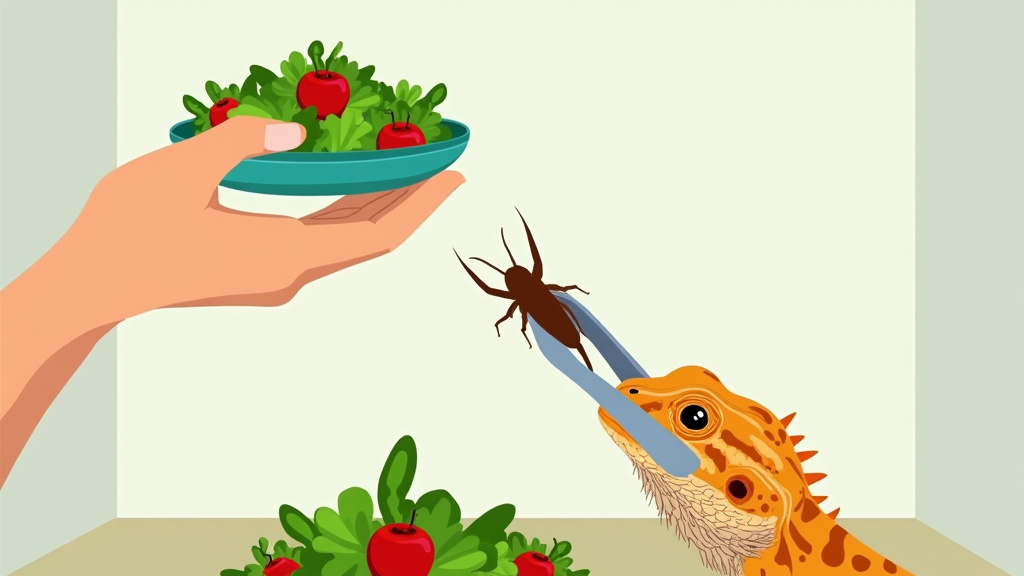
The shift happens around three months of age. Growth slows from a sprint to a jog. Your dragon’s body starts needing more fibrous vegetation and less pure protein. The feeding rhythm must change.
A juvenile (3-9 months) needs 2-3 feedings per day. Each insect session can be longer, 10-15 minutes. The total daily cricket count will drop to maybe 30-50, but the crickets themselves are larger. This is when you actively push the salad. Make the vegetable dish 40% of the daily food volume.
I prefer a two-session day for juveniles: a big insect breakfast and a late-afternoon salad with a smaller insect top-up. It mirrors a natural foraging rhythm and solidifies the plant-eating habit before adulthood.
The danger here is overfeeding. A juvenile with unlimited daily insects will become obese, stressing its liver and joints. You’ll see fat pads bulging over the limbs and a lethargic disposition.
TL;DR: At 3 months, cut back to 2-3 feedings per day, lengthen session time, and make vegetables a major part of every meal.
Essential Practices Beyond the Cricket Count
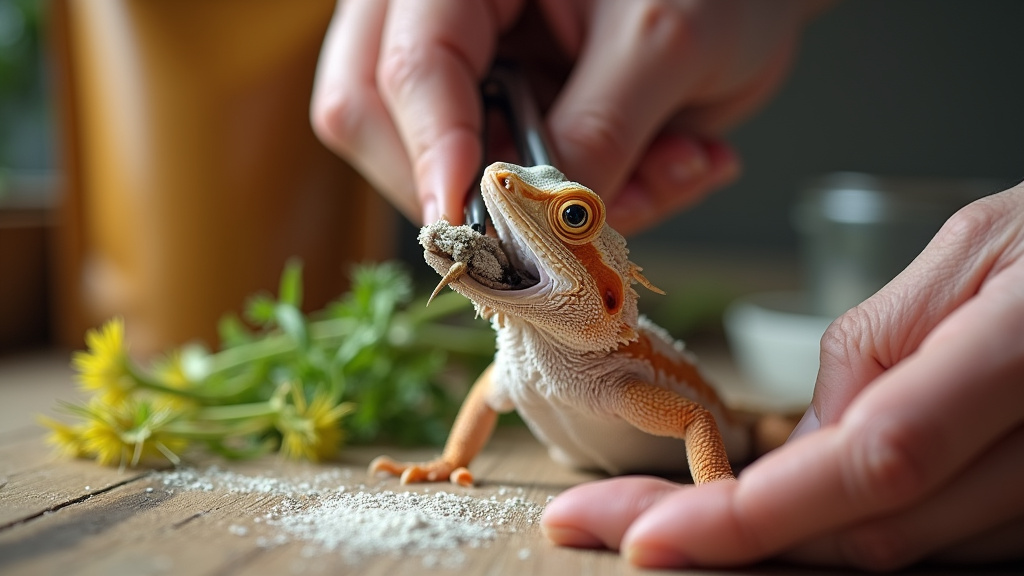
The number of crickets is useless if the crickets are nutritionally empty. Your dragon eats what its food ate.
Gut loading is feeding your crickets nutritious foods (like carrot, squash, dandelion greens, and commercial chow) for 24-48 hours before offering them. This transfers vitamins to your dragon. An empty cricket is just chitin and water.
Dusting is coating those crickets with a fine powder just before feeding. For babies, use a calcium powder with D3 at almost every feeding, and a multivitamin powder 1-2 times a week. The powder sticks to the cricket’s damp body.
Common mistake: Dusting crickets in a separate container and then dumping them in, the powder falls off. Dust them in a bag or cup and immediately offer them with tongs or let them crawl directly into the enclosure.
Finally, variety. Crickets are a staple, but they are not perfect. Rotate with other feeders:
* Black Soldier Fly Larvae (Nutrigrubs): High calcium, no dusting needed.
* Small Dubia Roaches: More meat, less chitin, easier to digest.
* Silkworms: Excellent hydration and protein.
A cricket-only diet can lead to nutritional gaps, especially if you aren’t meticulous with gut loading and supplementation.
Frequently Asked Questions
My baby bearded dragon only eats 5 crickets in 10 minutes. Is that okay?
Yes, if it’s doing that 3-5 times a day. Appetite varies. Focus on consistent energy levels, weekly weight gain, and firm, regular stools. If all three are good, the count is irrelevant.
Can I leave crickets in the tank overnight?
Never. Crickets will seek warmth and moisture, which means they will bite your sleeping dragon, especially around the eyes and toes. These bites can become infected. Always remove uneaten crickets.
How do I know if a cricket is too big?
Place a cricket on a flat surface next to your dragon’s head (from the side). If the cricket’s body is longer than the width of the dragon’s head between the eyes, it’s too large. When in doubt, go smaller.
What if my baby dragon isn’t interested in chasing crickets?
Check your temperatures first. The basking spot surface must be 105-110°F for proper digestion. If temps are correct, try wiggling a cricket with feeding tongs to stimulate the hunting instinct. Persistent lack of appetite warrants a vet check for parasites.
When should I stop feeding daily insects?
When your dragon reaches adulthood (around 18 months), insects become a treat. Adults eat 10-20 appropriately sized crickets 2-3 times per week, not daily. Their main diet should be leafy greens and vegetables.
The Bottom Line
Raising a baby bearded dragon is about fueling growth without causing harm. Ditch the cricket counter. Use a kitchen timer for 5-minute sessions, 3 to 5 times a day. Obsess over cricket size, pinheads only for newborns. Your dragon’s robust appetite and steady growth are the only metrics that matter.
Pair those well-loaded crickets with daily greens from the start. That sets the stage for a smooth transition to a healthy, plant-based adult diet. The work you do in these first three months builds the foundation for a decade of good health.